Things to do in Yerevan: Armenia’s modern capital and pink city

Tucked away in the southwestern corner of Armenia in the foothills of Mount Ararat, you’ll find Yerevan, Armenia’s thoroughly modern capital. Known as the ‘Pink City’ for its pink tuff stone, the architecture lining its wide boulevards and pedestrian streets is most certainly rosy and striking. We uncovered an incredible arts scene, from the giant hillside Cascade steps to the nightly light and music shows centred around the city centre fountains. Life in the capital is lived outdoors, thanks to Yerevan’s generous green spaces and warm climate. Expect parks and streets lined with lively café terraces serving excellent food in generous portions, washed down with local wine and brandy.
This all-year getaway will easily occupy you for at least three days. Beyond that, it makes an excellent base for exploring Armenia’s rich history outside the capital or as part of a wider Caucasian Adventure. If you’re ready to dip into the delights of this city, this guide, with a map of things to do in Yerevan, is for you. It covers must-see sights and essential day trips, too.
This guide may include a few affiliate links. If you choose to buy something through one of them, I may earn a small commission (at no cost to you). Thank you for supporting One Small Bag.
Yerevan Essentials
- Luxury: Armenia Marriott Hotel
- Midrange: Ani Central Inn
- Budget: Yerevan Boutique Hotel
Map of Things to Do in Yerevan
- Gyumri: A guide to Armenia’s Black and Apricot City
- Tbilisi: A Guide to the Capital of Georgia
- Things to Do in Batumi: Georgia’s Unexpected Black Sea Gem
Yerevan Card
If you plan to visit museums in Yerevan or use public transport, there’s a Yerevan Card. I didn’t buy this, but I wish I had. For a start, it would have made it easier to access the metro system. The metro system uses a modern cashless system, but our foreign Visa and Mastercard didn’t let us tap in at the barriers and registering for the Telcell Wallet app required an Armenian phone number.
If you buy the card, you’ll get free admission to around 30 museums, several free tours and transport (including from the airport), plus discounts around the city too. The Yerevan Card also includes a free local SIM card, which could save you buying your own E-Sim. You can pick your duration from 24 hours to 10 days. Purchase it online or at participating museums.
Bear in mind, Tsitsernakaberd is free to everyone. So no need to include that in your decision calculation.
1. Cascade Complex
The number one attraction for tourists in Yerevan. The locals love it too. Expect local gatherings, great views, and art on each level, plus plenty of selfie-taking. Open from early until late,
You might be wondering how such a massive structure arrived there? The Cascades were part of architect Alexander Tamanian’s Master Plan of Yerevan (1924). It was an ambitious project to transform Yerevan from a provincial town into a modern capital with a striking radial-circular urban design. Work on the Cascades didn’t get moving until the 1970s, but in 1988, the Spitak earthquake struck. It devastated the area north of Yerevan, including the second city, Gyumri. Building work stopped again and didn’t resume until 2002, when it was finally completed.
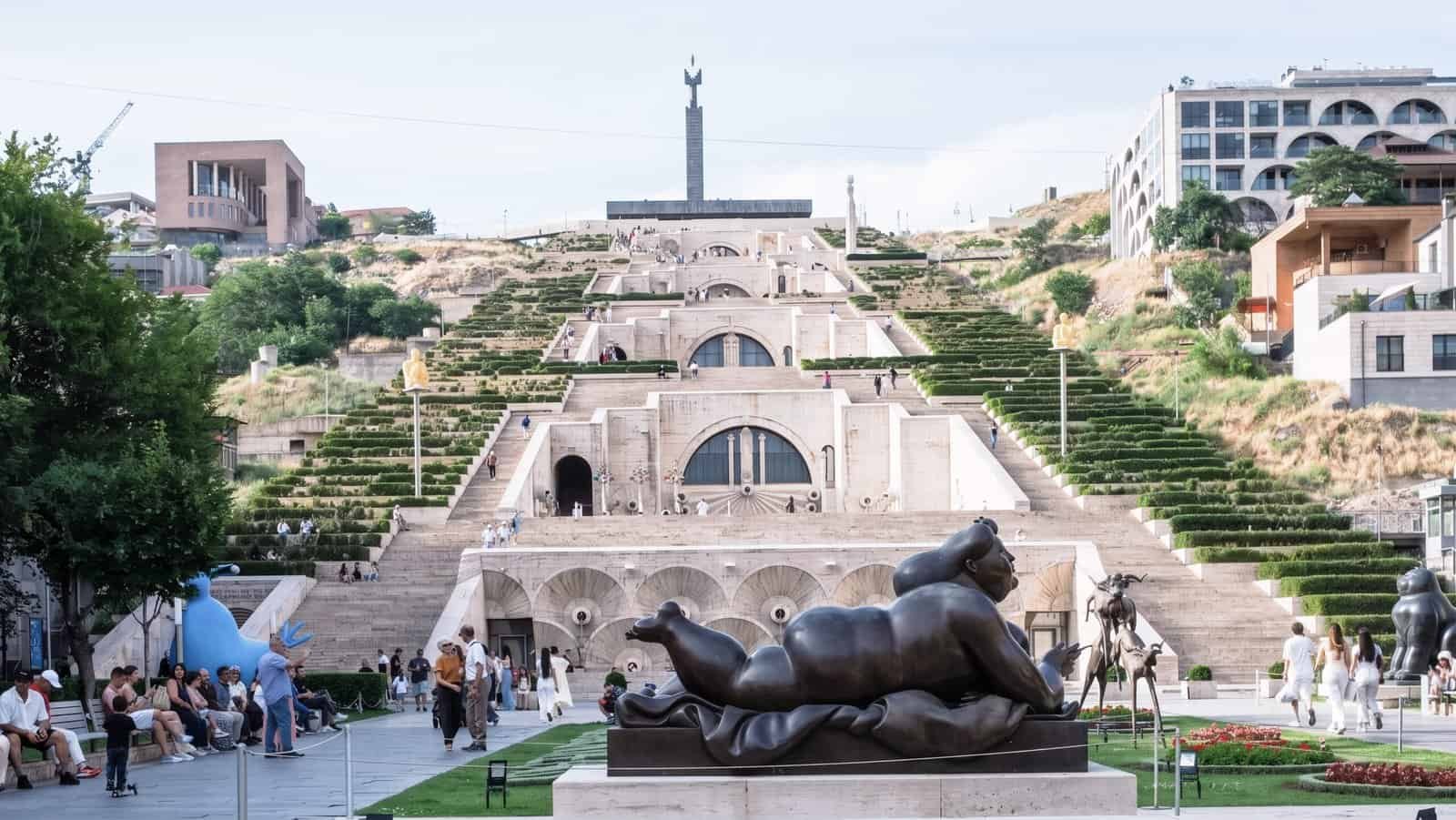
When you arrive, the first thing that strikes you is its sheer size. This is so much more than a pretty fountain and some steps. There are 5 large terraces, each connected by 572 steps. And if you don’t want to walk, take one of the doors on the left-hand side for the escalators. A little unexpected, but very welcome, especially in the full heat of the Yerevan sun.
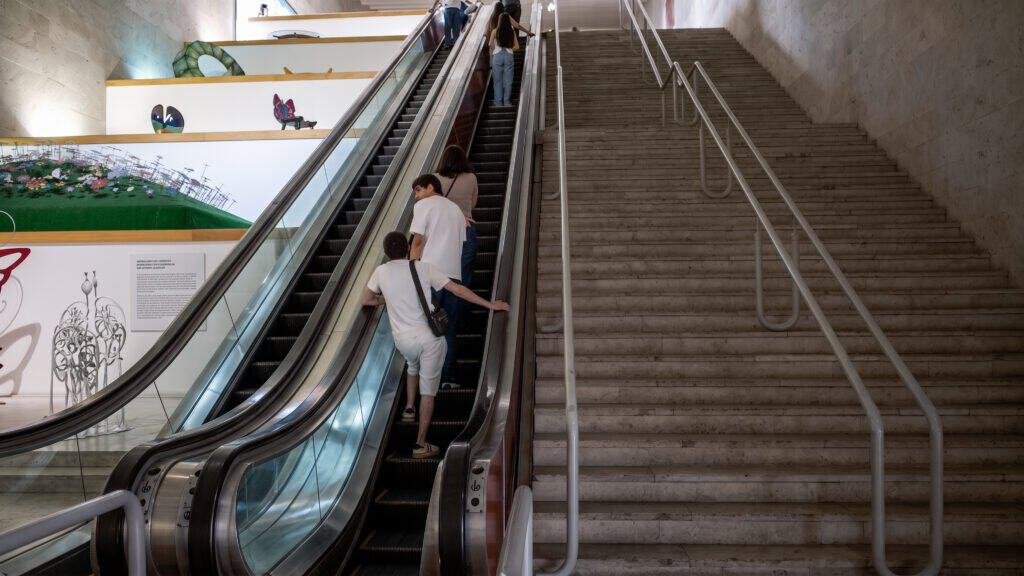
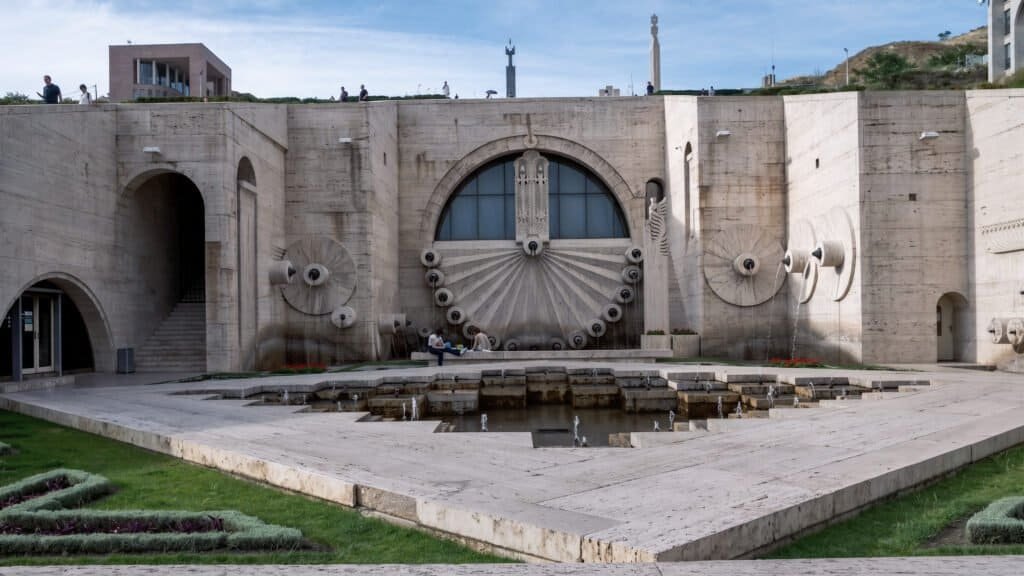
Once at the top, enjoy the views across Yerevan. If you arrive at dawn, before the daytime haze settles, you have the best chance of seeing Mount Ararat, straight ahead, from the top. If you visit late, you’ll see the entire Cascade complex beautifully lit up.
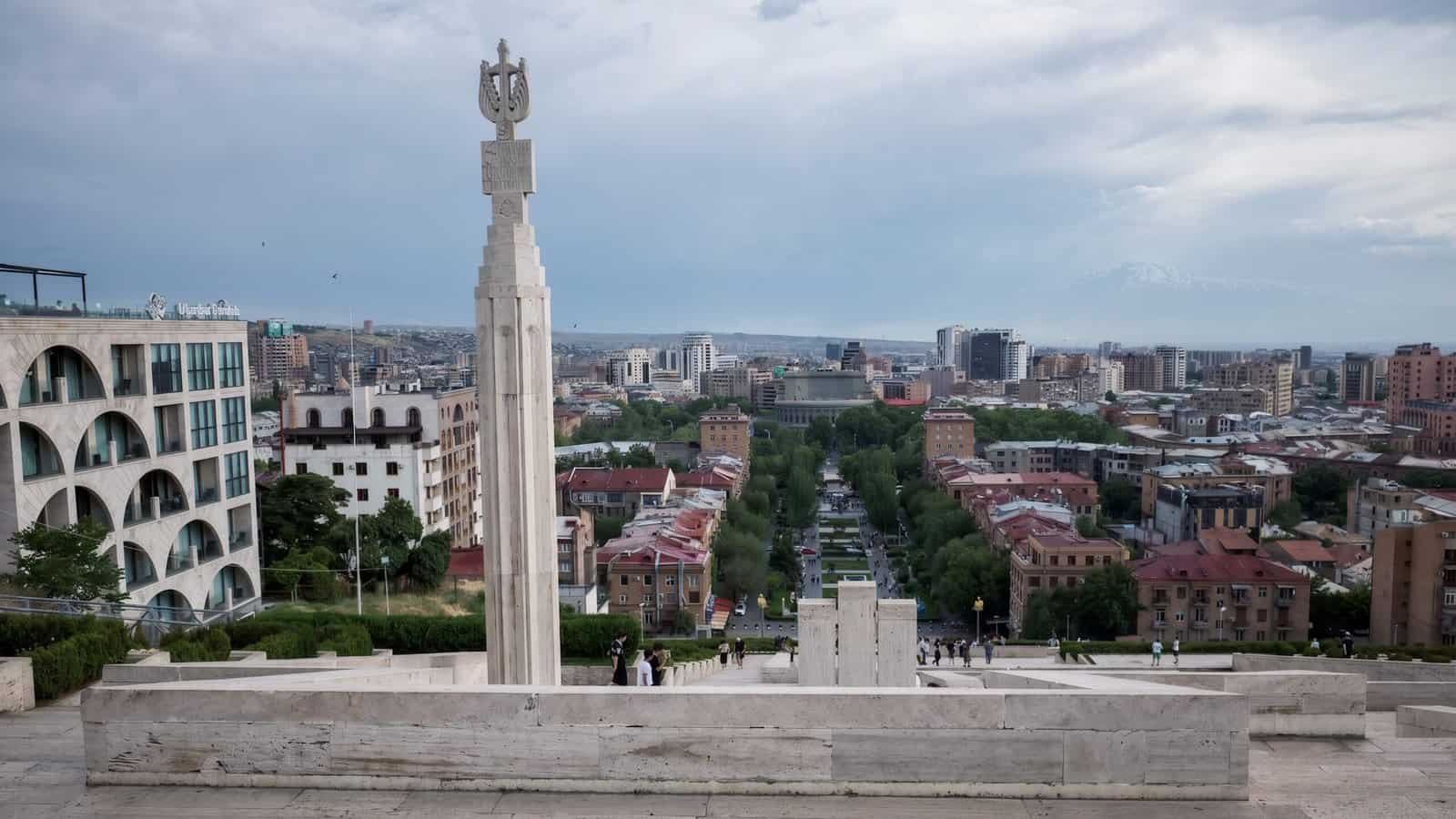
Each level features fountains, statues, and unique geometric reliefs and carvings that represent Armenian history. There’s also an abundance of modern art in the park area at the base, on the outside terraces, and inside, too. It really is a unique place.
I instantly recognised the yellow ‘Poets’ figurines on the top of poles, on the steps. These are from the Catalan contemporary sculptor Jaume Plensa. There are very similar ones in Andorra, the tiny microstate set in the Pyrenees between France and Spain.
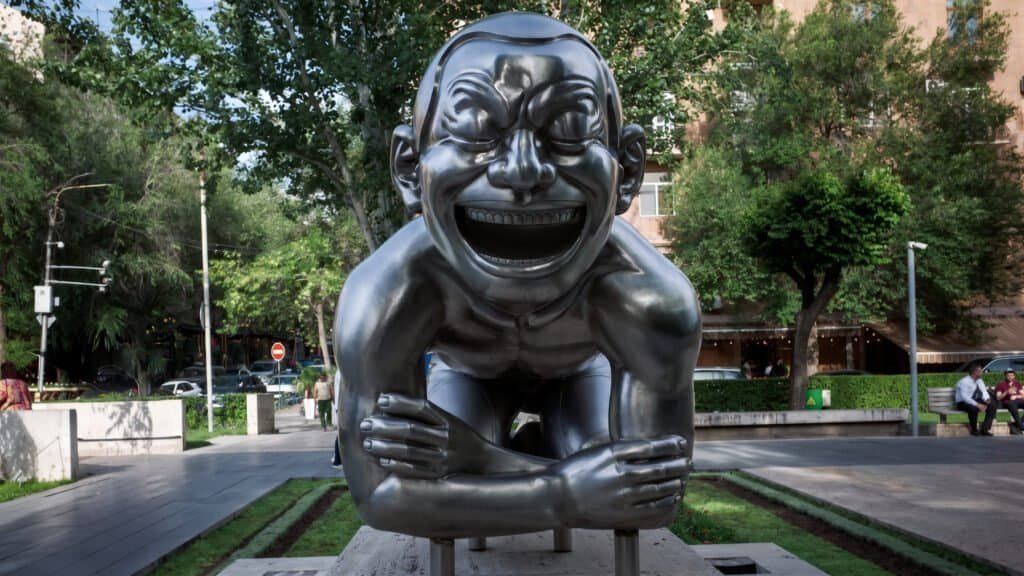
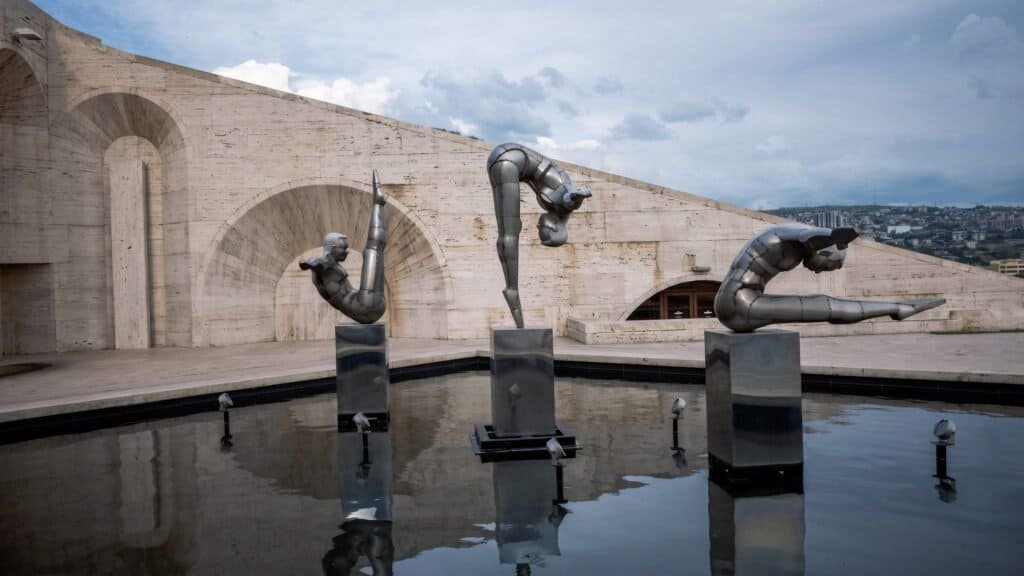
Once you’ve taken in the views at the top and everything around, I’d recommend stopping in one of the restaurants at the foot of the steps. Garten Restaurant and Brewery on the right-hand side was a good choice. We opted for a local lemonade and a beer. The food looked good too.
2. Victory Park and Mother Armenia
Once you’ve visited the Cascades, the next unique thing to do in Yerevan is to visit Victory Park, which is just to the North. It’s walkable uphill from the Cascades, or, if you’ve already got enough steps in for the day, Yandex Go is a good option; they’ll drop you off at the park entrance.
Mother Armenia
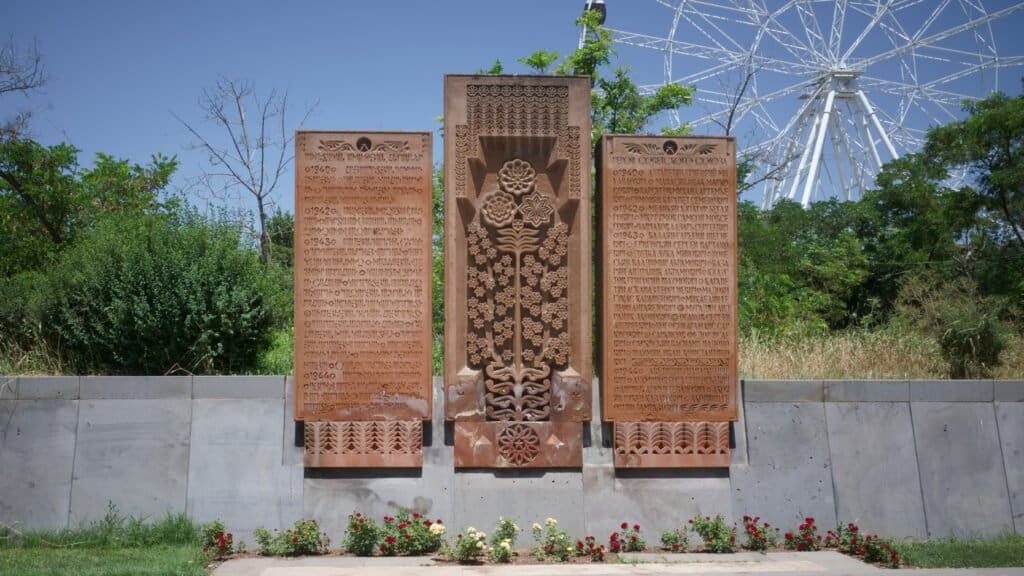
As you enter the park, you won’t see Mother Armenia immediately, despite her massive size (22 meters tall on a 29-meter pedestal). If you continue to the far end, she will appear from behind the trees. Look out for the khachkars along the perimeter, as you go. These are orange-coloured carved stone crosses, arranged in groups 40 metres apart, to commemorate 40 years since the end of WWII. The stones are engraved with the names of the legendary military figures in both Armenian and Russian. Armenian khachkars are on the UNESCO Intangible Cultural Heritage List, and each one is unique.
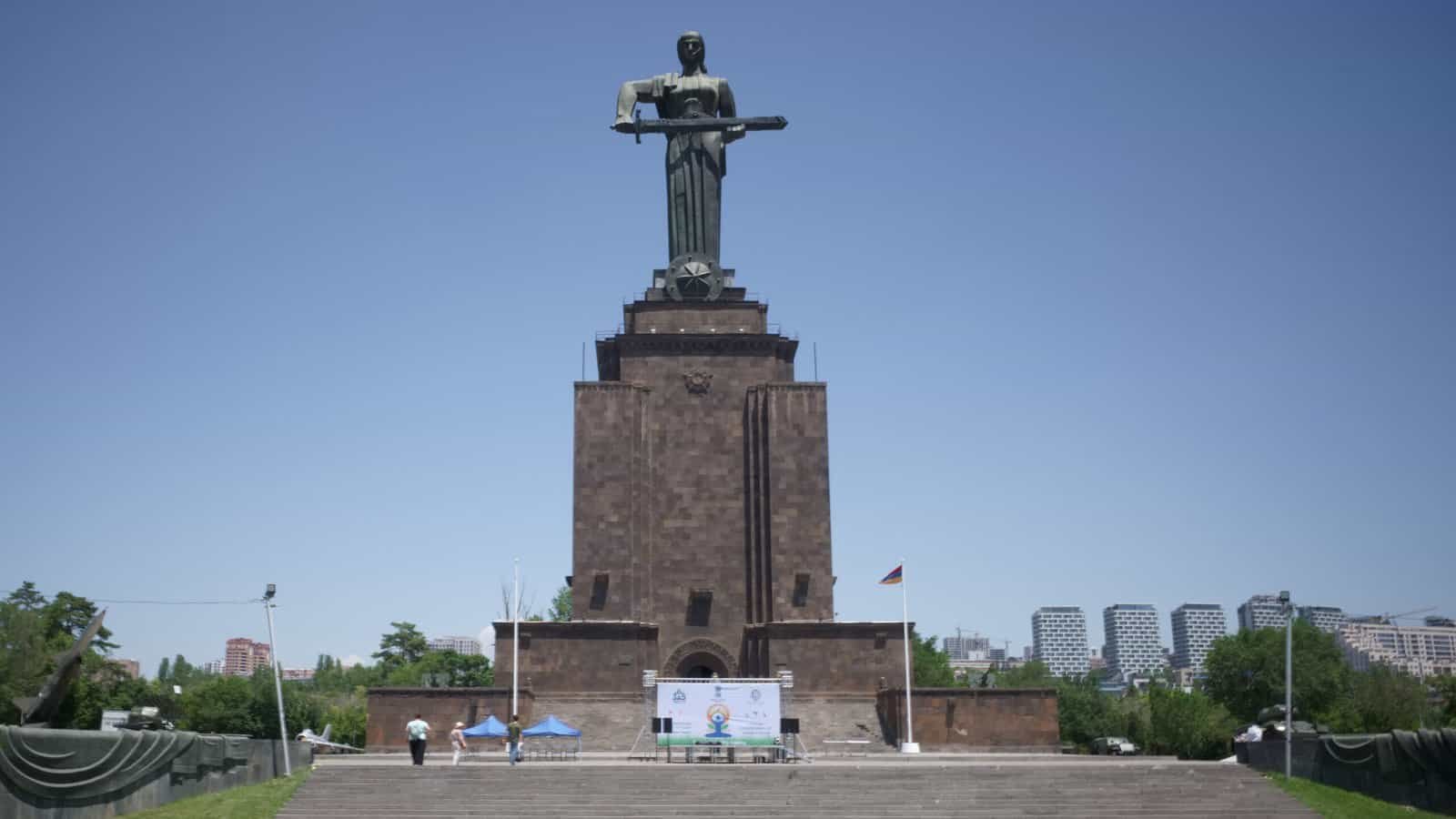
Mother Armenia is a relatively recent addition; she actually replaced a huge statue of Stalin in the 1960s. At the base of the statue, there’s a small free military museum you can visit. There’s also a viewpoint over the city, an eternal flame and a collection of tanks.
Amusement Park & Ferris Wheel
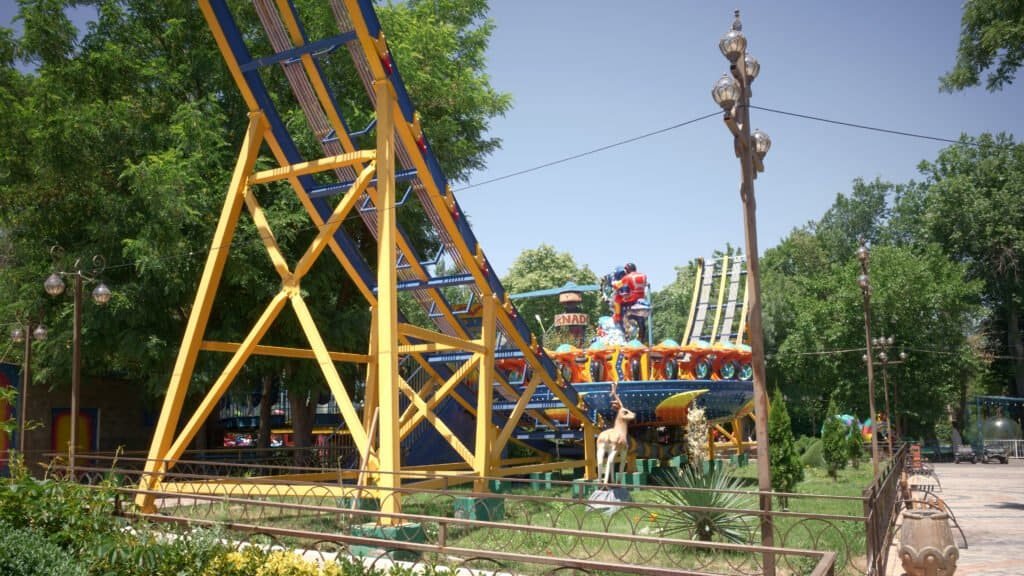
But there’s a lot more to see in the park itself. Much of it is laid out as an amusement park with a huge Ferris wheel visible from across the city. There’s a dino park, a haunted house, many other rides, and a lake. When we visited, the amusement park was quiet, but it gets busier later in the day, as the temperature cools and on weekends. If you want to try the local Kvass drink, which looks like beer but really isn’t, you’ll find vendors selling it. It’s made by soaking Rye or Sourdough bread in water and fermenting it with yeast, sugar and sometimes raisins. It’s non-alcoholic.
3. Opera Theatre Complex and Freedom Square
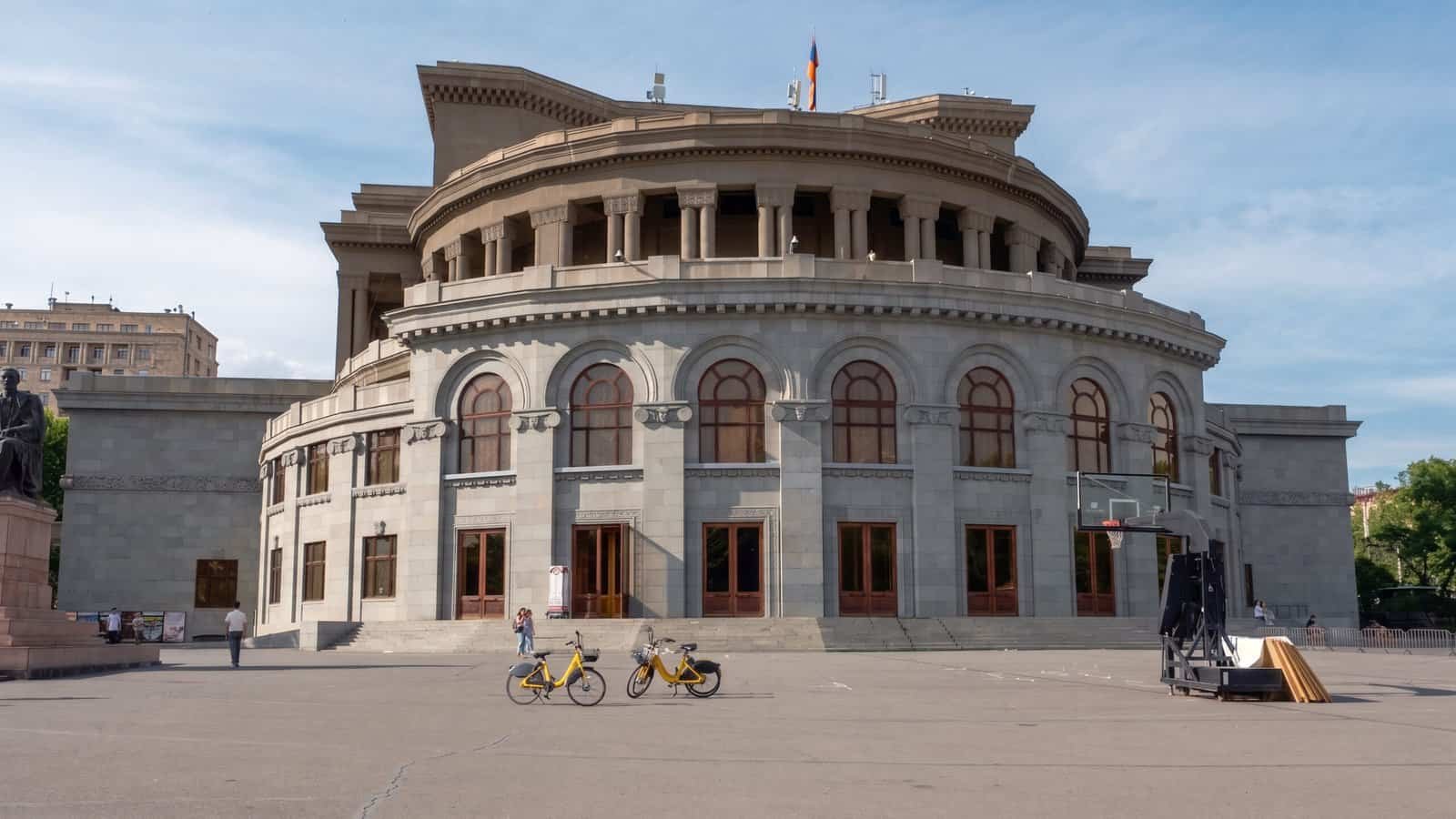
If you’re wandering through central Yerevan, it would be hard to miss this part of the city, filled with grand neoclassical architecture and prominent cultural monuments set in and around a large public square and gardens.
Alexander Spendiaryan Opera and Ballet National Theatre
The showpiece is a stunning white-stone structure in a circular design. It houses the Alexander Spendiaryan Opera and Ballet National Theatre at one end and the Aram Khachaturian Concert Hall at the other, as well as another city flagship by the architect Alexander Tamanian, who designed the modern city.
Do check the listings for your visit. You can expect to pay anywhere from 2,000 to 28,000 Armenian Drams (AMD) – roughly £4 to £55 or €5 to €65, so excellent value. A ticket to a concert, ballet or opera here would be such a special way to enjoy your time in Yerevan.
Martiros Sarian Park
Wander through Martiros Sarian Park where the artists gather to sell their artwork. If you’ve got a sweet tooth, drop into Ponchik Monchik, an Armenian institution that sells a special style of doughnut popular across the Caucasus. Ponchiks are massive hollow balls dusted with icing sugar, filled with cream, usually vanilla, Nutella, or strawberry. They do savoury dishes too.
Swan Lake & Sculptures
Beyond the square to the east, there’s Swan Lake, an artificial pond where swans swim in the summer and it transforms into an ice rink in the winter.
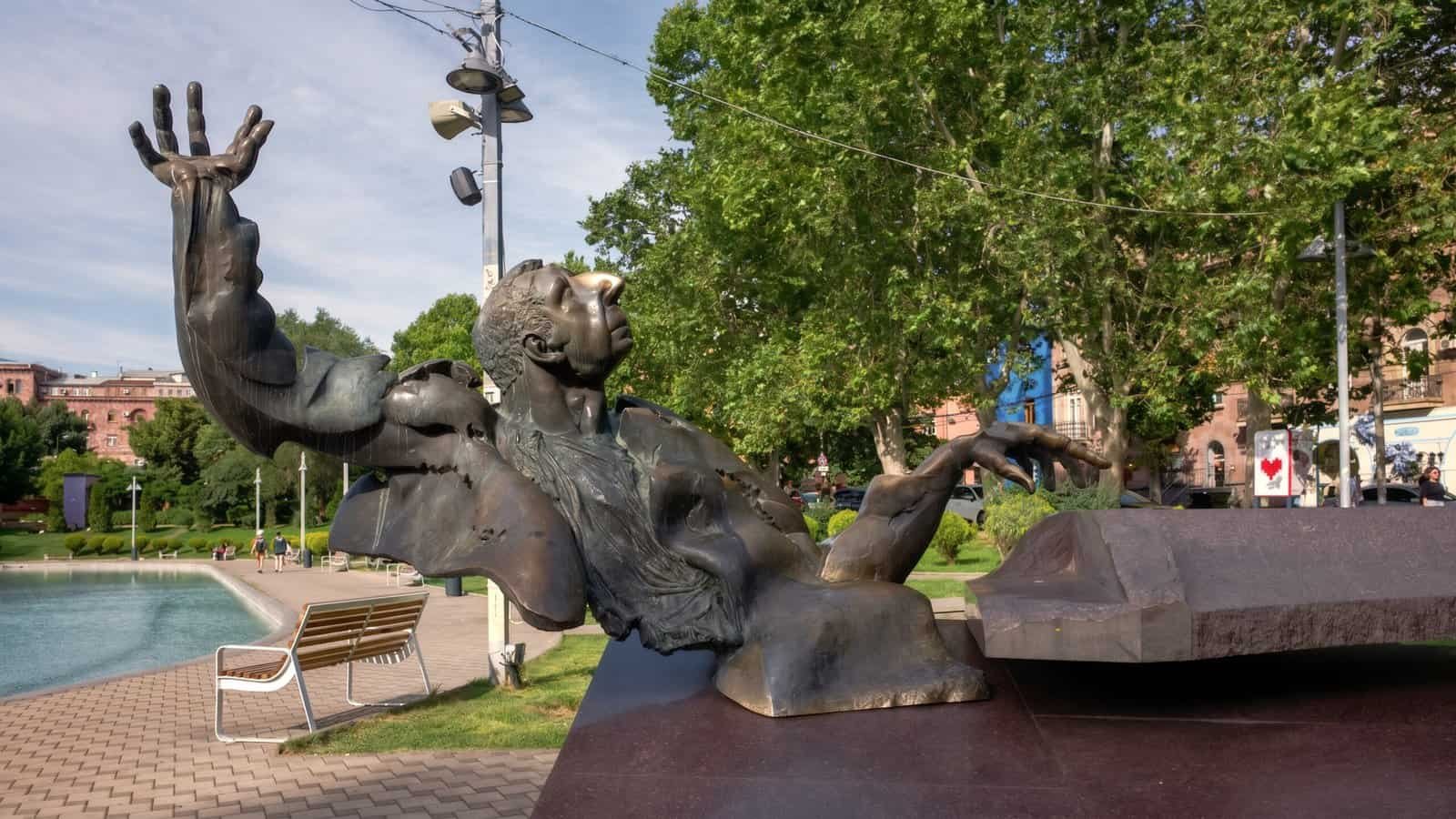
4. Kentron (downtown) district
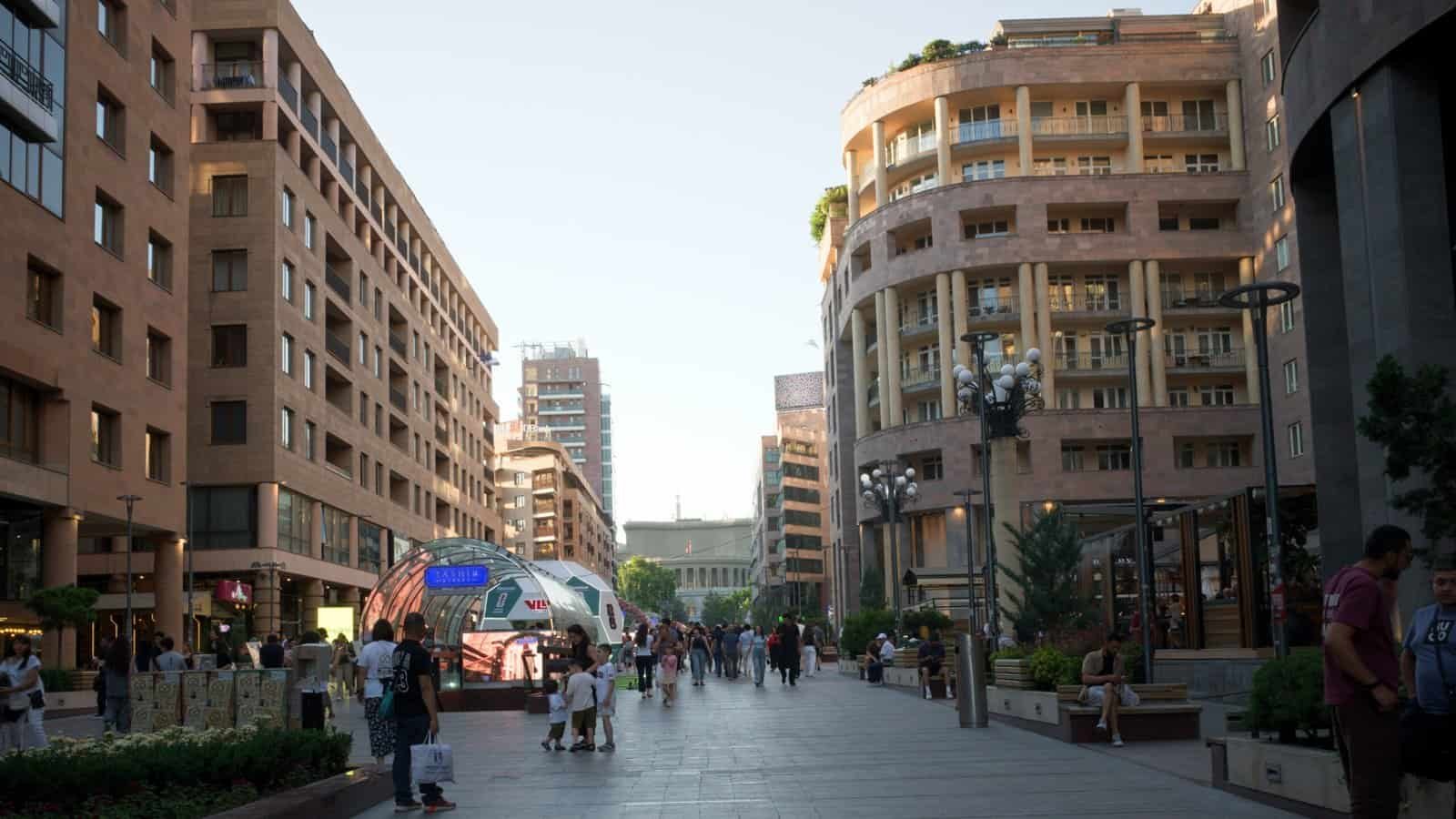
Kentron district is the vibrant heart of the city. Northern Avenue, the central spine, is the pedestrian street that starts at the edge of the Opera Complex and goes south towards Republic Square and the dancing fountains;
Abovyan Street, Tumanyan Street and Pushkin Street are the grand avenues crisscrossing the centre, each with its own personality. I’ve added a few eating and drinking venues on the map, but here’s a little more about the main streets.
Northern Avenue
Unlike the surrounding historic streets, this avenue features upscale postmodern residential complexes, high-end storefronts, trendy cafés and restaurants, and luxury accommodation. It’s the street to find locals strolling, street musicians performing, and it’s especially active in the evening, both before and after the nightly Dancing Fountain show in neighbouring Republic Square
Look out for a giant key hanging in the middle of the street, at the southerly end, where it joins Abovyan Street leading to Republic Square.
Abovyan Street
One of the oldest streets in Yerevan, preserving a grand sense of the late-19th and early-20th-century Belle Époque aesthetic. Look out for the beautiful black-and-red volcanic tuff stone buildings and hidden courtyards. This is also where you will find Charles Aznavour Square, home to the classic Cinema Moskva, the grand Stanislavski Russian Theatre, and a large chess-piece installation.
Tumanyan Street
Tumanyan Street connects the Opera area to the Cascades, and houses the Hovhannes Tumanyan Museum, named after the national poet for whom the street is also named. The street is packed with traditional restaurants, including khinkali houses and traditional bakeries.
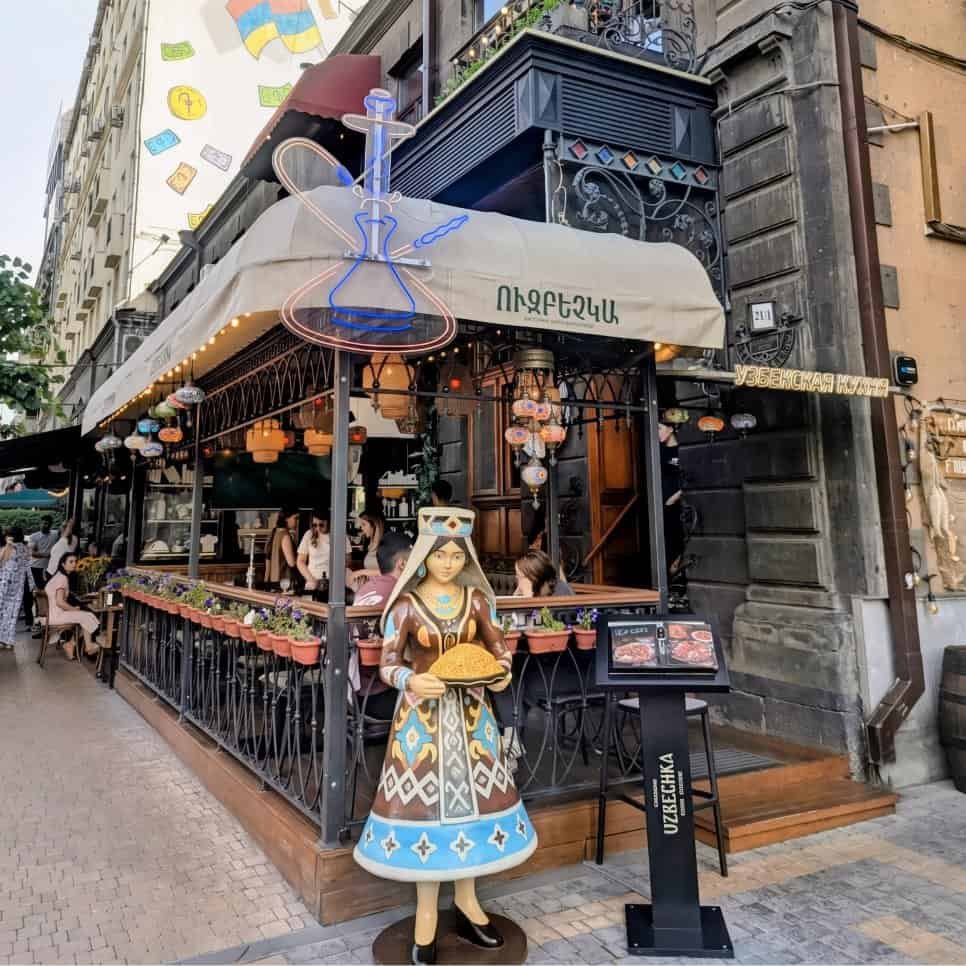
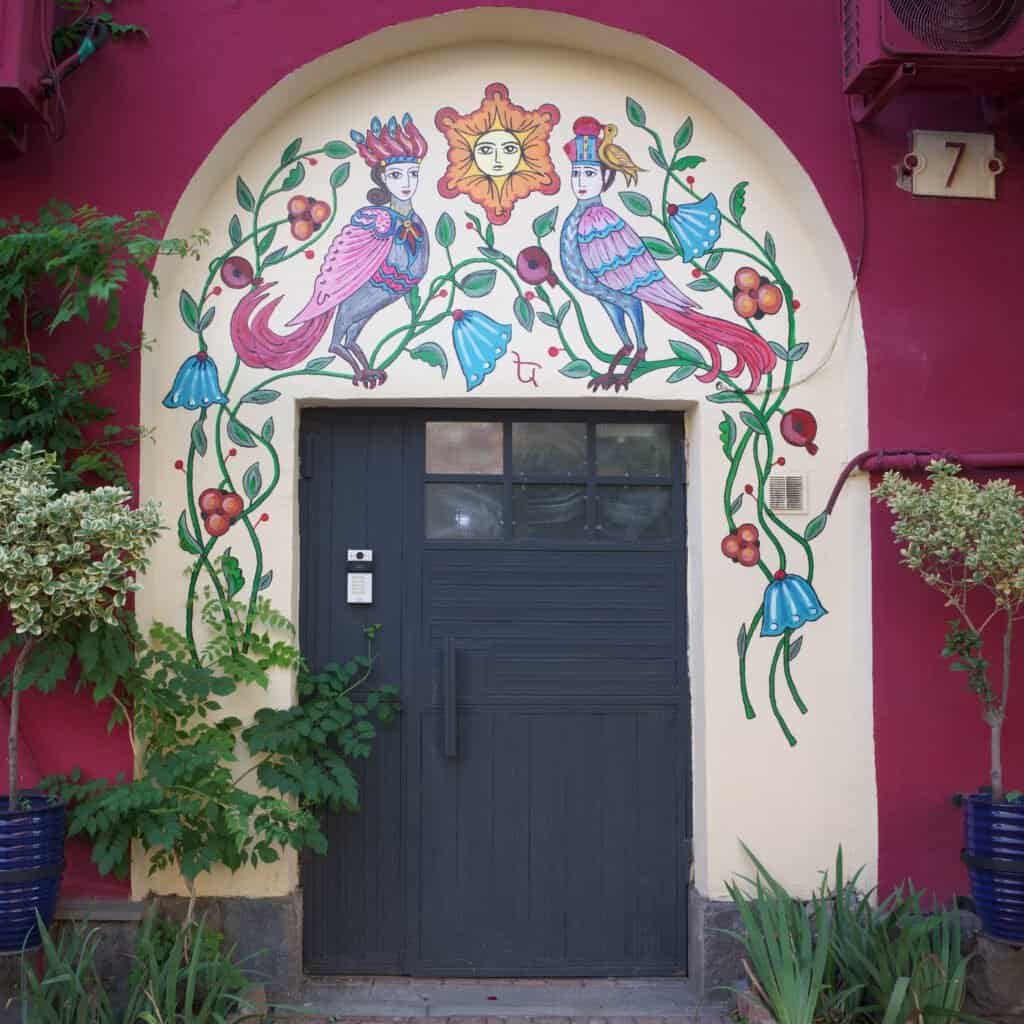
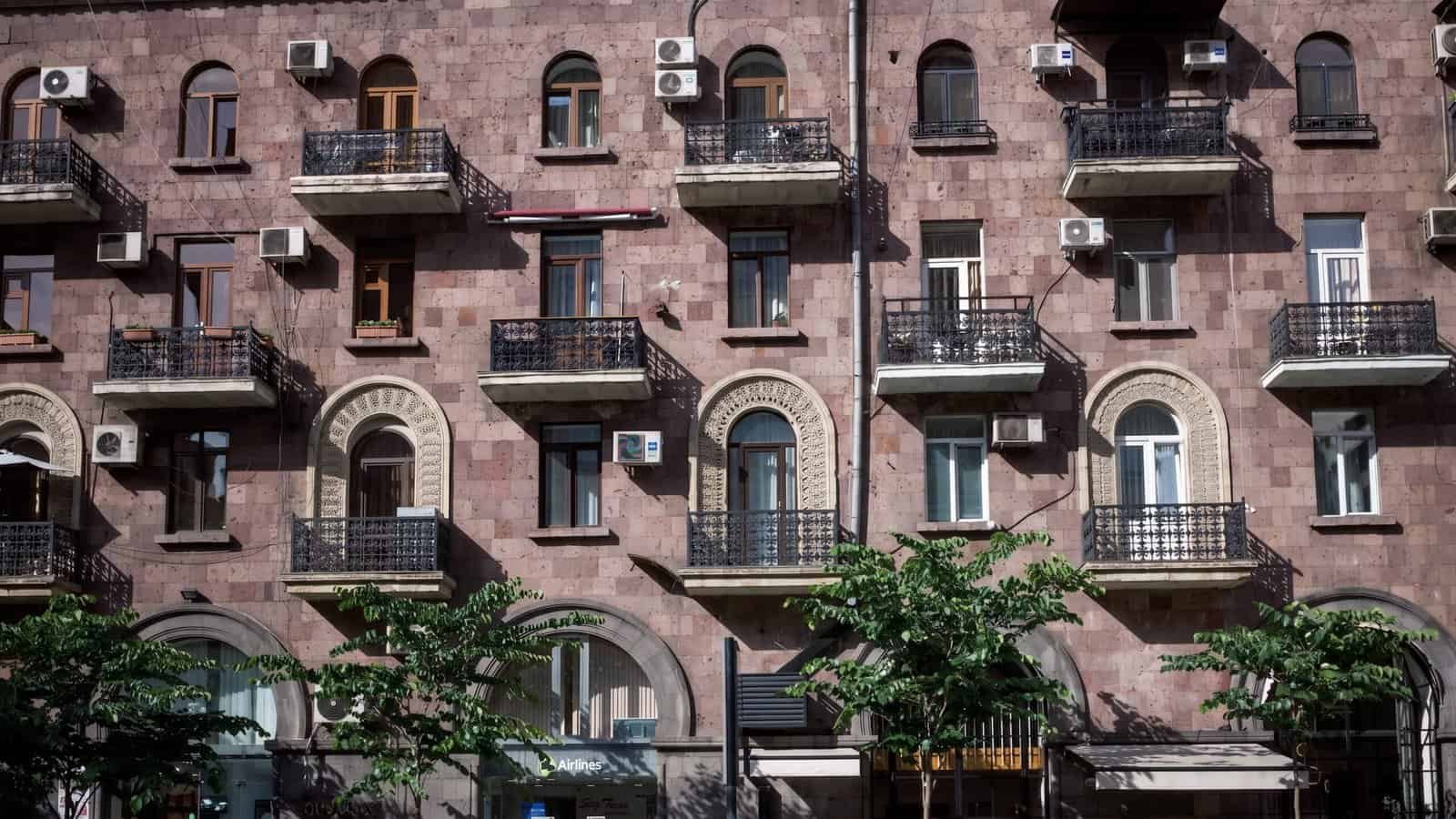
Look out for traditional painted houses and apartment blocks in the traditional pink tuff stone.
5. Republic Square & The Dancing Fountain Show
The square itself is encircled by five major monumental structures, including the History Museum of Armenia and National Gallery, the Government House with its distinctive clock tower, the Central Post Office, and the stunning Marriott Hotel. But the star of the show here is the dancing fountains in the centre. A nightly show enjoyed by locals and tourists alike. It usually starts at 9 pm (check the time for your visit) every day except Tuesday (late May through September). Be there well in advance to secure your spot and enjoy the fountains’ dance during this music-and-light show.

6. Vernissage Market
If you want souvenirs for your trip, there’s no better place to go than Vernissage Market. It’s located in the heart of Yerevan, near Republic Square, and leads to the circular park area. It’s easy to find. While it started out as an artisanal flea market for locals, it’s now geared toward tourists, and you’ll find some beautiful things here.
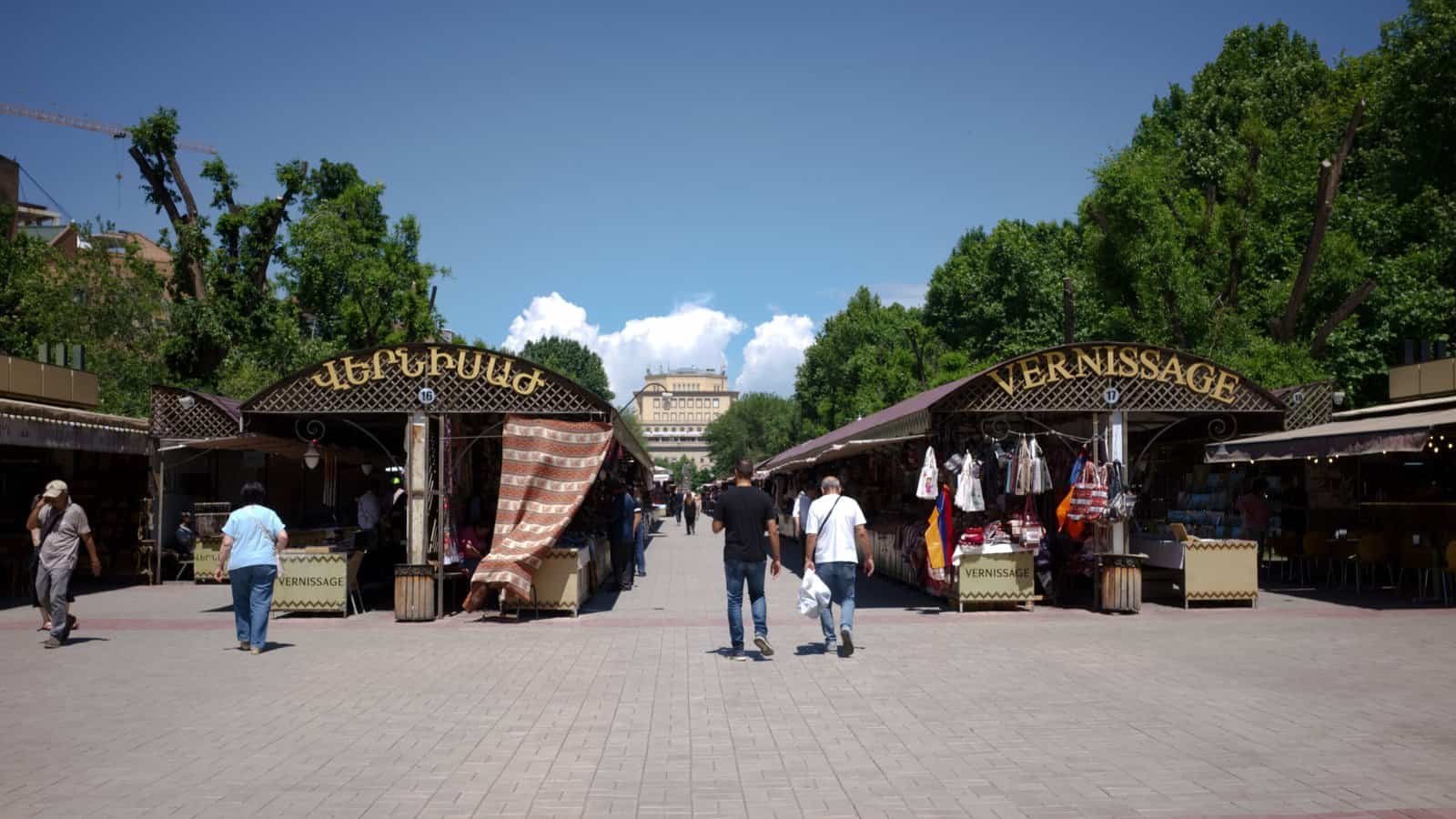
Wood carving was definitely a theme, with beautiful chess and backgammon sets, wooden musical instruments and khoravats skewers with hand-carved handles. Paintings, handmade ceramics, embroidered textiles, and bags were also everywhere.
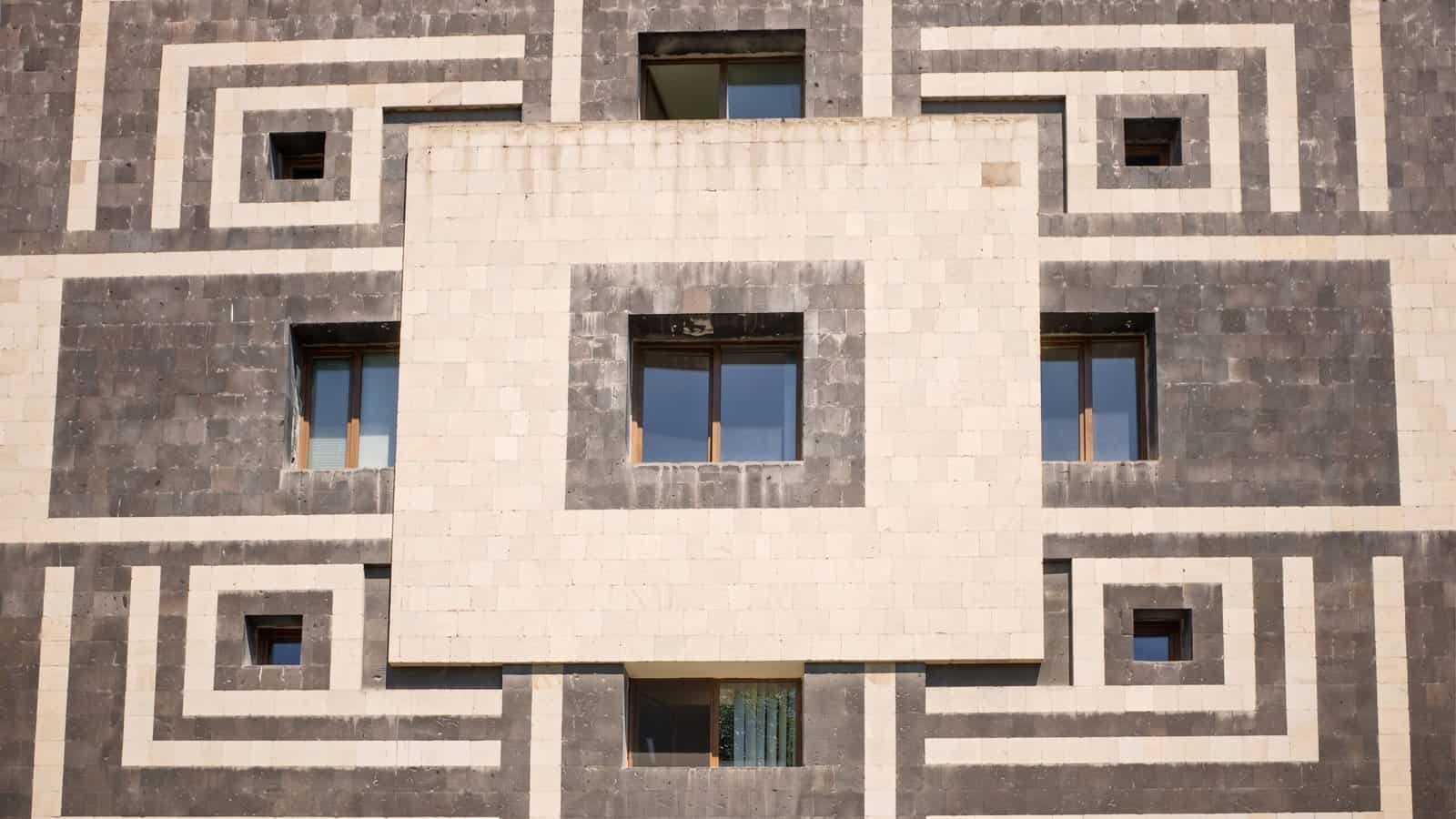
Also take a look around at some of the buildings bordering the market, including the Alexander Spendiaryan Specialised Music School, a Soviet industrial-style building, but with plenty of regional architecture, thanks to the pink tuff stone, which much of the city is built with.
7. Yerevan’s Museums
Yerevan has over 30 museums, but unless you are planning an extended stay, you may find yourself choosing between them. There are two standouts, which should be at the top of your list. A Yerevan Card may save you money if you plan to visit several of them and take advantage of other offers and discounts around the city.
Tsitsernakaberd (The Armenian Genocide Memorial & Museum)
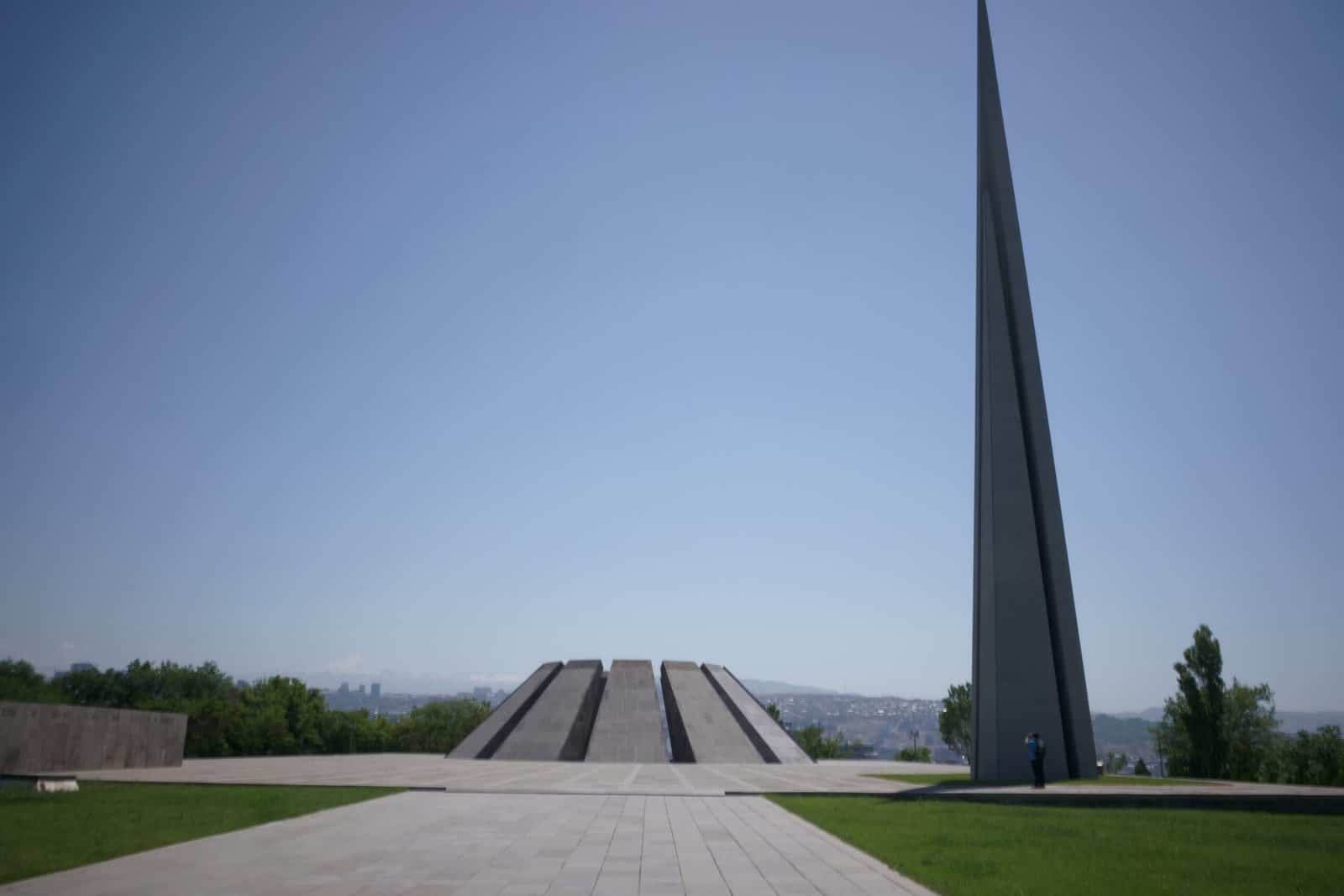
The first is Tsitsernakaberd (The Armenian Genocide Memorial & Museum), taking you through the years of oppression of the Armenian people. While this doesn’t, on the face of it, sound like a fun thing to do on holiday, I am so glad I went, and I urge you to make the time too. The site is perched on a hill overlooking the city, and the setting is immediately striking;
- The Sanctuary of Eternity: Twelve massive stone slabs stand in a circle, leaning inward over an eternal flame. They represent the twelve historic Armenian provinces lost in the Ottoman Empire
- The Reborn Armenia Column: A striking 44-meter-high needle-like obelisk pointing upward, symbolising the survival and cultural rebirth of the Armenian nation.
Once inside the Armenian Genocide Institute, you’ll find doors through to the Memorial Wall: A 100-meter-long engraved wall listing the names of towns and villages where massacres and deportations occurred.
- Medieval Invasions and Deportations: For centuries, Armenia was repeatedly conquered and divided. Over 300,000 Armenians were deported to Persia, with towns torched and many perishing on the journey.
- The Hamidian Massacres (1894–1896): Sultan Abdul Hamid II targeted the Armenian minority in the wider Ottoman Empire, leading to state-sanctioned massacres (100,000 to 300,000 killed).
- The Adana Massacre (1909): Another anti-Armenian pogrom in the Ottoman province of Adana (20,000 to 300,000 killed)
- The Armenian Genocide (1915–1923): A campaign by the Young Turk government during World War I. Intellectuals were executed. Forced death marches and mass starvation resulted in the extermination of approximately 1.5 million Armenians and the near-total erasure of their ancient culture from Western Armenia.
- Post-Soviet Pogroms and Displacement: Following the collapse of the USSR, ethnic Armenians faced violent pogroms in Azerbaijani cities like Sumgait (1988) and Baku (1990). The entire Armenian population was displaced from Nagorno-Karabakh in 2023.
The museum takes you through history with films, storyboards, and exhibitions. Whether you are familiar with the history or, like me, had little idea, you will find it compelling. This is not a museum you march through quickly. It demands your attention.
Matenadaran
Sitting grandly on Mashtots Avenue between The Cascades and Victory Park, sits Matenadaran, a monumental building of yellow Tuff stone. A giant statue of Mesrop Mashtots, the medieval scholar who invented the Armenian alphabet in 405, stands in front of it.
Matenadaran literally translates to ‘manuscripts repository’, and with over 23,000 ancient manuscripts and over 500,000 documents in the archives, it’s a fitting title. The collection is so globally significant that it is inscribed on UNESCO’s Memory of the World Register. The Matenadaran is included in the Yerevan card.
Expect to see illuminated Gospels adorned with gold leaf, ancient maps, and centuries-old treatises on science, medicine, and philosophy. The highlight is the Msho Charentir, a massive manuscript weighing 27.5 kg, which contrasts with one of the museum’s smaller specimens, a tiny church calendar from 1434 that weighs a mere 19 grams. While you can take yourself around with an entry ticket, a guided tour is recommended.
Other Notable Museums in Yerevan
Here are some more museums in Yerevan. There are around 30 listed on the Yerevan Card.
- History Museum of Armenia: Right in Republic Square. It’s the country’s main collection of Armenian artefacts. The oldest known shoe is one of its more famous exhibits. The National Gallery of Armenia is also located in this building.
- Erebuni Historical and Archaeological Museum-Reserve: In the South of the city, beyond the station on Ann Berd Hill, lies the fortress and remains from the 782 BC founding site of Yerevan.
- Sergei Parajanov Museum: a cultural house-museum dedicated to the life and cinematic genius of the famed Soviet-Armenian director.
- Komitas Museum-Institute: Not in central Yerevan; it’s in the south of the city. One of the most modern, beautifully designed, and deeply moving museums in Yerevan. Opened in 2015, Multi-media touchscreens and English captions bring the experience alive. It captures the story of Komitas, an Armenian musician, who travelled to remote villages to write down thousands of traditional songs before they could be lost to history and his life following the Armenian Genocide.
8. Yerevan’s Religious Spaces
As the world’s first Christian nation, you can expect plenty of churches, from ancient medieval structures through to more modern revivals. So let’s start with the biggest of them all.
Saint Gregory the Illuminator Cathedral
The largest Armenian cathedral in the world, it’s a massive structure built from local tuff stone that can hold up to 1,700 people. It commemorates the anniversary of Christianity’s adoption in Armenia and was consecrated in 2001.
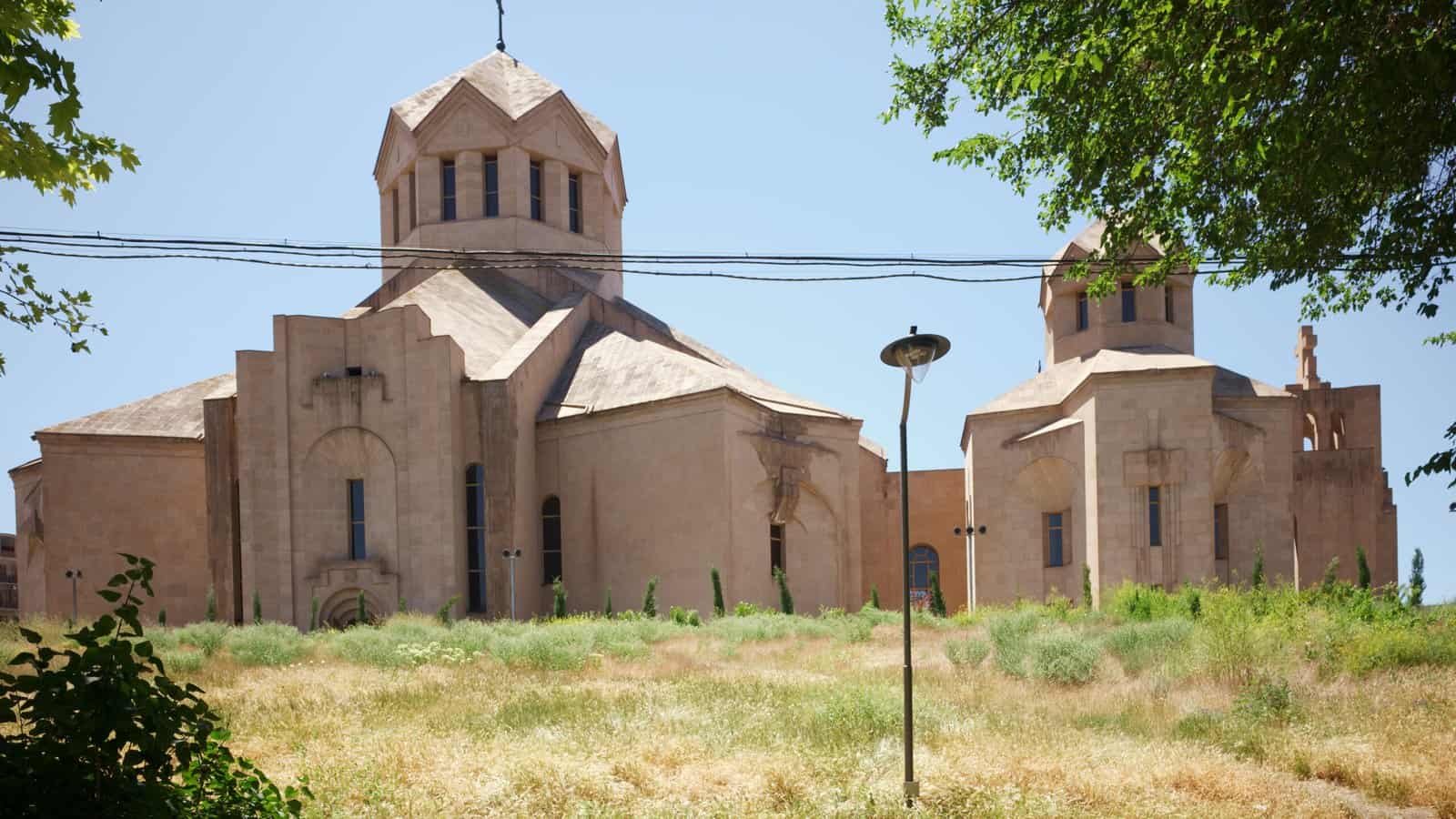
If you’re interested in visiting more of Yerevan’s churches, I’ve marked the most notable ones on the map.
Blue Mosque
The only active Muslim place of worship in Armenia and a rare surviving example of the city’s 18th-century Persian heritage. Built in the classic Shia style, it’s restored and beautiful, featuring striking turquoise-and-yellow geometric tiles, intricate mosaics, and Arabic calligraphy.
9. The Circular Park
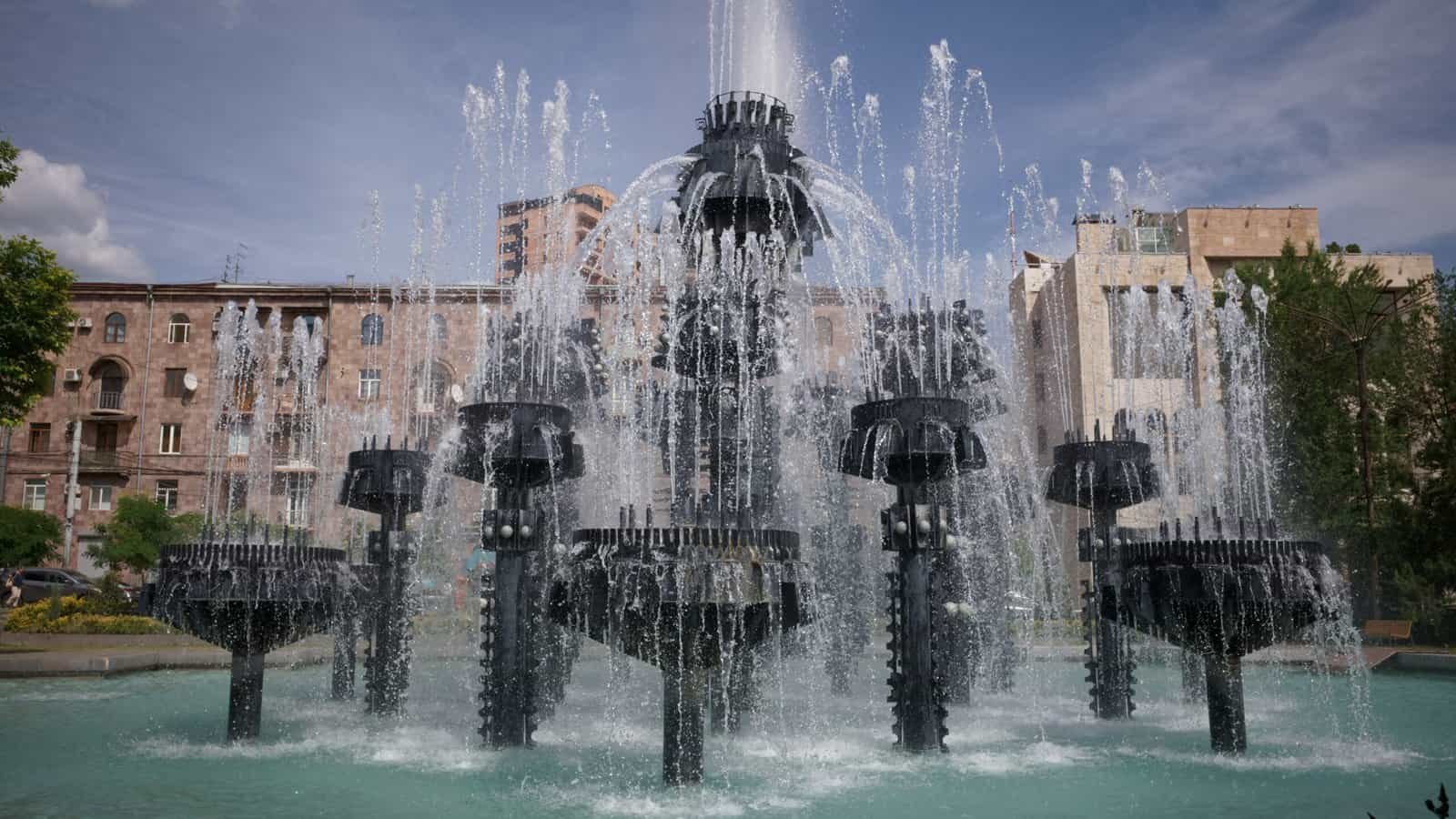
The Circular Park (also called Youth Park) is a 2.5-kilometre-long green space that curves around the eastern edge of downtown Yerevan, stretching from St Gregory the Illuminator in the south, around, and up to the Cascades. It’s another part of Alexander Tamanian’s 1924 vision of a garden city.
While in essence it’s a string of parks circling the centre, in practice it is so much more. Yerevan is a city where the weather is warm, and life is lived outdoors. The parks offer shade during the day and space to meet, eat, and drink late into the evening. We ate and drank at several restaurants here. I can highly recommend Flagman Cafe and Restaurant. The food was exceptional, and the kitchen was open late, which was especially useful when you arrive late in the evening, especially since your accommodation is just across the road. I also rate Bardak Pub, with a huge fountain set in its outdoor space and cosy interior,
10. The Kond Neighbourhood & Pedestrian Tunnel
If the polished pink-tuff buildings of downtown start feeling a little too uniform, there is an escape hatch right under your feet. Hidden near the western edge of the centre lies the Kond Pedestrian Tunnel, a dimly lit, 460-metre concrete passage straight out of the Soviet era.
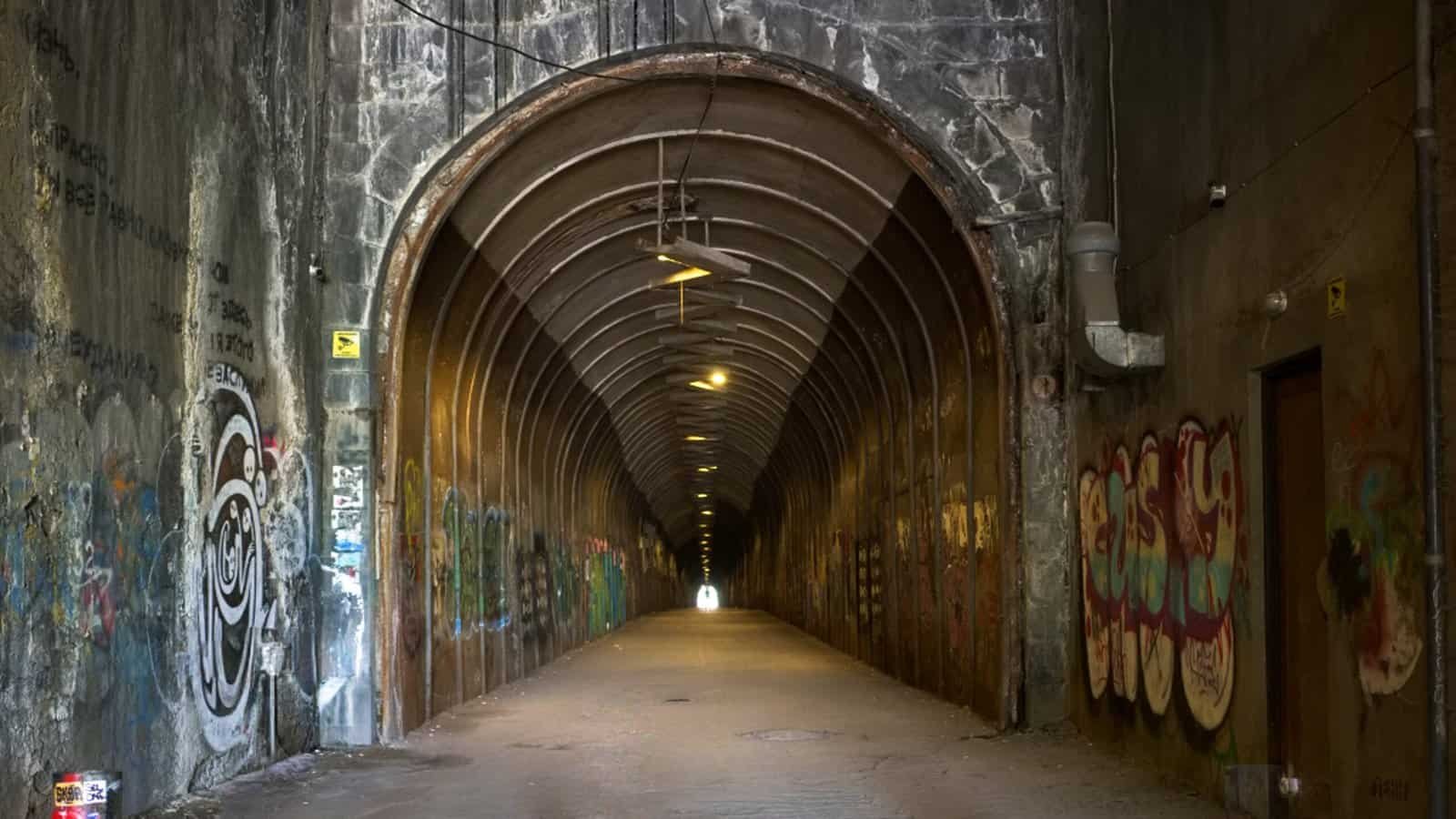
When you emerge on the other side, the modern city completely vanishes. You are standing in Kond, Yerevan’s oldest surviving neighbourhood. Dating back to the 17th century, this labyrinth of crumbling houses feels a world away from the grand avenues nearby. It is gritty and unpolished and a part most tourists completely miss.
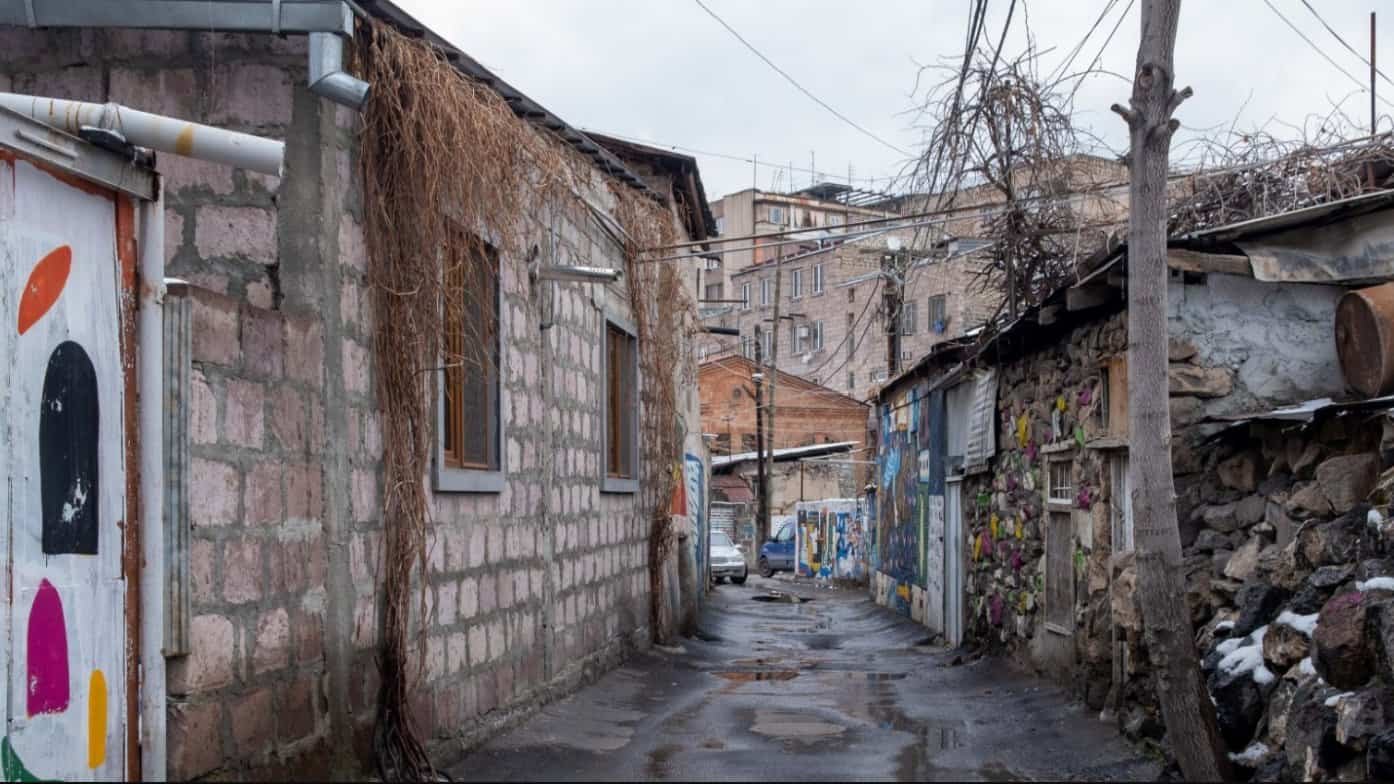
As we wandered the area, we did find a Craft Beer bar with an extensive beer fridge, board and a friendly welcome. We threw dice for prizes at the bar (we lost) and would have returned, had we stayed longer. Open till late. It serves food too. I’d recommend Gargoyle & Kruzhok Pub.
11. Hrazdan Gorge (Brandy District)
The Kond Tunnel also provides access to the Hrazdan Gorge, the dramatic, deep canyon bisecting Yerevan and the home to Yerevan’s two renowned brandy factories. Both factories sit directly opposite one another across the gorge near the Victory Bridge and dominate the skyline. A visit to this part of the city should definitely be on your to-do list if you’re a brandy fan. We’re not, so we skipped it.
Yerevan Brandy Company (ARARAT)
Housed in a grand tuff building from the 1950s, it is visible from various points in the city. The Yerevan Brandy Company (ARARAT) is an active distillery. It’s now part of the French spirits conglomerate Pernod Ricard. The state-of-the-art ARARAT Museum focuses heavily on the art of blending, production standards, and its prestigious worldwide presence.
Of the two, Ararat is the easiest to tour. Visitors can discover the working ageing cellars, inhale the distillate’s aroma in the scenting rooms, and taste world-renowned blends such as Dvin (the potent blend famously favoured by Winston Churchill) and Nairi.
Noy Ararat Brandy-Wine-Vodka Factory
On the opposite side of the riverbank lies Noy Ararat Brandy-Wine-Vodka Factory, on the site of the former 16th-century Erivan Fortress. Tours here are celebrated for their atmospheric and old-world vibe. Visitors descend into extensive underground cellars and hidden fortifications, passing walls built by Persian khans. Contact Noy directly to arrange a visit or a tasting,
12. Historic South Yerevan
Heading south, you’ll find both Shengavit District and Erebuni. While they are both modern commercial and residential areas, some of the oldest remaining parts of Yerevan can also be found here, along with the train station, a modern shopping centre, and GUM market.
Sasuntsi Davit Station
David of Sassoun Square, along Tigran Mets Avenue, sits right on the border of these two districts, about a 30-minute walk from the centre, or you can get there directly by metro. Its exterior is a blend of Socialist Realism and traditional Armenian design. There’s a central soaring clock tower and a statue of David of Sassoun, a figure of Armenian resistance.
Our purpose for visiting was to take a train to Gyumri, Armenia’s second-largest city, but we were surprised there wasn’t more mention of this beauty. If you’re at all interested in railways or just like beautiful buildings, I’d recommend taking a look.

Inside, I was not expecting such a pristine interior, made all the more so by the bright light streaming through the double-height glazed window. The white ceiling is decorated with intricate, traditional Armenian patterns. A cool, calm space, away from the heat and bustle outside.
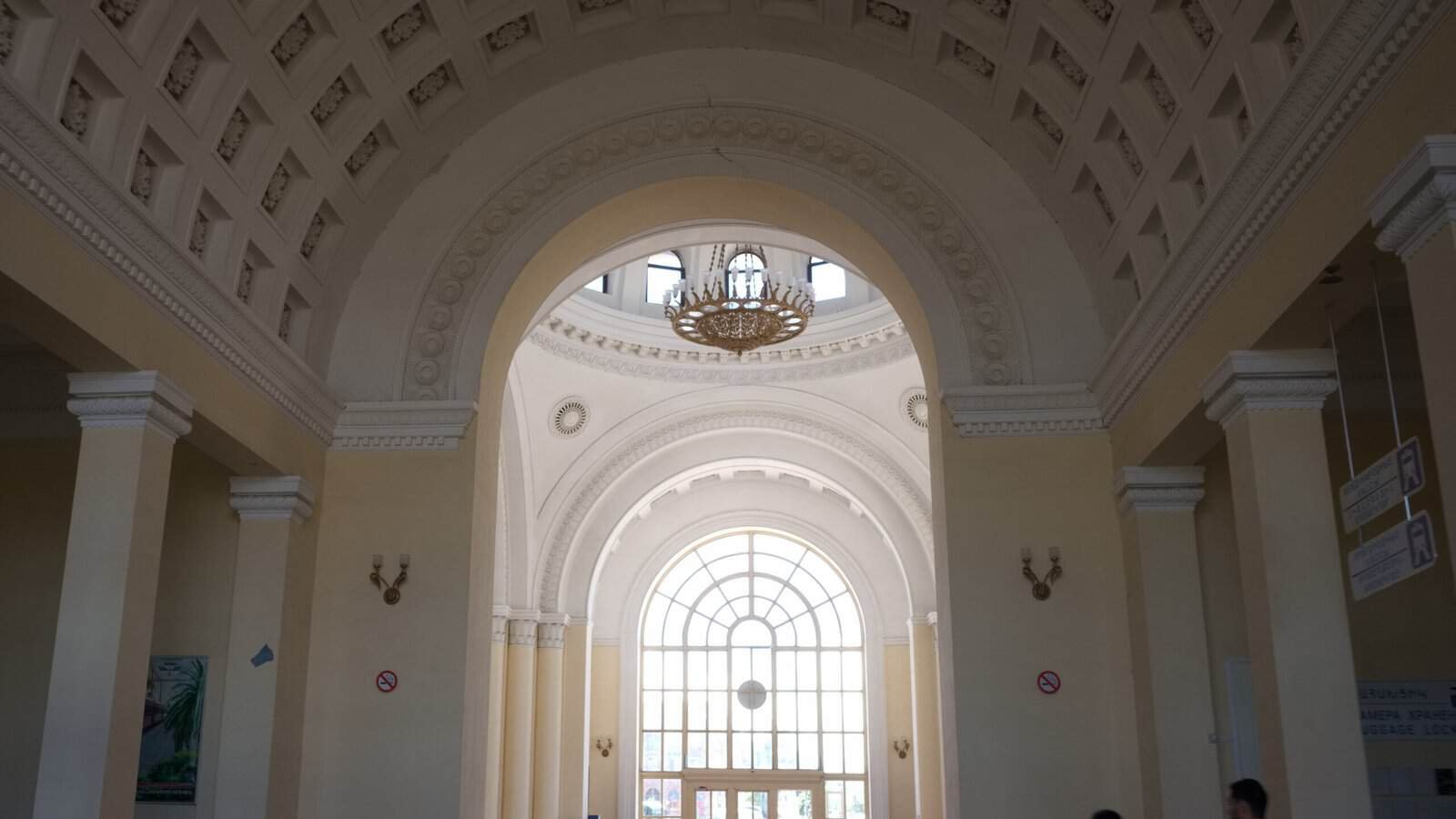
You could spend more time in this part of the city and visit the Komitas Museum Institute, a cultural museum housed in a stunning modern building, or pair the trip with a visit to the main Armenian GUM market and the ultra-modern shopping mall near the rail station. I’ve marked all these places on the map,
Erebuni Fortress and Bronze Age Yerevan
If you want to go back in time to the beginnings of Yerevan, this is the place to visit. Arin Berd Hill (Erebuni) is the site where King Argishti recorded the city’s founding in 782 BCE. In the ruins lie a stone carving bearing the King’s inscription, the remnants of a royal palace and temples, storage rooms for wine and grain, and evidence of basalt-lined drainage systems and pebble-paved ancient streets. A museum with thousands of artefacts excavated from the area completes the set. Expect ancient pottery, bronze weapons, and jewellery. A good time to hire a guide to help make sense of it.
For more Bronze Age remains, there’s also the Shengavit Ancient Settlement with the Shengavit museum not far from Shengavit metro station.
Day Trips from Yerevan
There’s no getting away from it: visiting the major sites in Armenia on public transport requires a fair degree of commitment, flexibility, time and tolerance. And you’ll most likely supplement your minibus rides with a few taxi trips, too. But there are plenty of tours, and we found every one we took to be exceptionally well organised and fantastic value, too.
Gyumri – Armenia’s black and apricot city
The one exception to my comments about public transport in Armenia is a train trip to Gyumri, Armenia’s second-largest city, with its striking volcanic stone, tuff architecture, vibrant centre and emerging arts scene. That trip is straightforward on the train from Yerevan, although I’d recommend staying over to make the most of your time there.
Booking the train on the finicky Armenian train website can be trying, but tickets go on sale about an hour before departure at the stunning Sasuntsi Davit Station. I’d turn up in plenty of time, and there’s a nice place, Sasuntsi Davit Garden, for a drink and something to eat under the arches on the right-hand side if you find you have time to kill. We opted for the beer and a plate of delicious Khinkali.
If you don’t want to DIY your trip, an organised coach trip to Guymri will get you to the main sites quickly and efficiently, but may leave you wanting if you would prefer to explore the city more thoroughly.
Yerevan: Echmiadzin, Hripsime, Gayane, Zvartnots Temple Tour
A short half-day tour, taking you to sites around 20 km from Yerevan. The two main stops are Etchmiadzin, one of the oldest cathedrals in the world and the spiritual and administrative heart of the Armenian Apostolic Church and Zvartnots Temple, another ancient cathedral and a great spot for panoramic views of Mount Ararat. There are also stops at the churches of Hripsime and Gayane, both of which are UNESCO-listed.
Khor Virap, Garni, Geghard, Symphony & Charents Arch + Lavash
An 8-hour day trip to some of Armenia’s most iconic sites. If you only have time for one trip, you want some variety, and you don’t want to be sitting on a coach for one of the longer trips, this one is possibly the best choice,
Enjoy Khor Vrap, one of the most iconic monasteries in Armenia, right on the Turkish border, offering some of the best views of Mount Ararat. The furthest point on the trip. Then return via Gheghard Monastery, a UNESCO World Heritage site, the striking Garni pagan temple and enjoy panoramic views at the Symphony of Stones, Charants Arch and Azat Reservoir. There may be a lunch stop and demonstration of traditional Armenian bread-making (Lavash) on some trips.
Sevan, Dilijan, Ancient Monasteries: Haghartsin & Goshavank
A northern loop of Armenia. At 10 hours, this trip, including Lake Sevan, is one of the longer day excursions. The trip includes a visit to Lake Sevan, one of the largest high-altitude freshwater lakes in the world, which makes for a great photo stop. Stops at two ancient monasteries, Haghartsin & Goshavank, are also included (be prepared for plenty of stairs). Then enjoy the charm of old Dilijan, a mountain town with wooden balconies, stone houses, artisan workshops, and cosy cafés. A glimpse into 19th-century Armenian life.
From Yerevan: Tatev Monastery and Scenic South Armenia Tour
A southern loop of Armenia. At 14 hours, this was the longest day trip we went on. If you don’t like long coach journeys or heights, this one probably isn’t for you, but if that doesn’t faze you, it’s a trip well worth doing and one I thoroughly enjoyed. The guide was outstanding. Our food stops were at an Armenian transport spot, so nothing fancy, but it was a revelation (and in a good way, too).
Tatev Monastery is one of Armenia’s finest and made all the more special because the final leg of your journey there is made on the Tatever Cable Car, the world’s longest reversible aerial cable car. A stop at the Khndzoresk Cave Village was a highlight for me. I like cave settlements. To get to it, you’ll need to cross a swinging bridge over a gorge. There’s also time to stretch your legs at Shaki waterfall, and there may be a brief stop at the Areni wine factory, but it’s a long day with a lot packed in, and by then it’s very late.
Where to Next
Once you’ve explored Yerevan, why not look further afield into the wider Caucasus? Here are some ideas.
- Things to do in Yerevan: Armenia’s modern capital and pink city
- Things to do in Gyumri: A guide to Armenia’s Black and Apricot City
- Iron Fountain Gyumri: Armenia’s Extraordinary Soviet UFO
- Things to Do in Tbilisi: A Guide to the Capital of Georgia
- Things to Do in Batumi: Georgia’s Unexpected Black Sea Gem
- Things to Do in Kutaisi: A Guide to Georgia’s Ancient City
- Visit The Incredible Cave City of Vardzia, Georgia
Unsubscribe whenever you like (Privacy Policy)
I hope you enjoyed reading this. If you have any questions or comments, do let me know in the comments. Thank you for reading my blog.