Things to do in Gyumri: A guide to Armenia’s Black and Apricot City
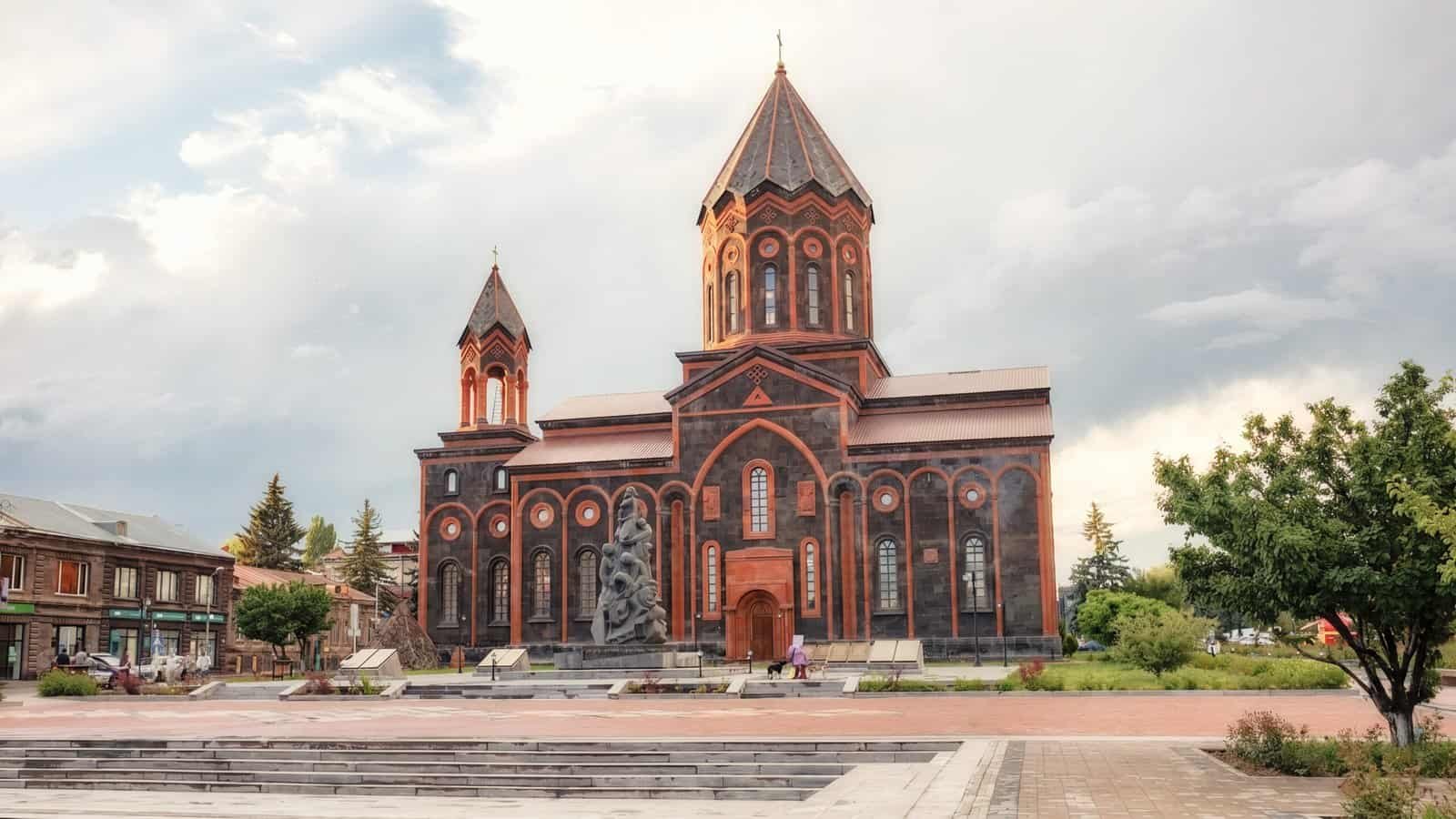
Located near the Turkish and Georgian borders, Gyumri is Armenia’s second-largest city and easily one of its most captivating. With its striking black-and-apricot tuff architecture and lively pedestrian streets, it has an atmosphere unlike anywhere else in the Caucasus. Profoundly shaped by the devastating 1988 Spitak earthquake, Gyumri’s resilient spirit shines through in its restored historic quarters, social enterprises, and burgeoning creative scene.
Gyumri is a scenic two-hour train ride from Yerevan. This guide is a step-by-step journey through what we saw, what we loved, and how to plan your own trip to Armenia’s extraordinary Armenian city.
This guide may include a few affiliate links. If you choose to buy something through one of them, I may earn a small commission (at no cost to you). Thank you for supporting One Small Bag.
Gyumri Essentials
Map of Things to Do in Gyumri
- Tbilisi: A Guide to the Capital of Georgia
- Things to do in Yerevan: Armenia’s modern capital and pink city
Vardanants Square and the Old Town
Vardanants Square and the surrounding Kumayri old town form the historic heart of Gyumri, and it’s the obvious place to start your exploration.
1 Vardanants Square
The square itself is dominated by an imposing city hall and a grand equestrian statue of Vardan Mamikonian, a celebrated Armenian general from 451 AD. Both are Soviet-era additions to a city whose old town is a century older and architecturally very different.
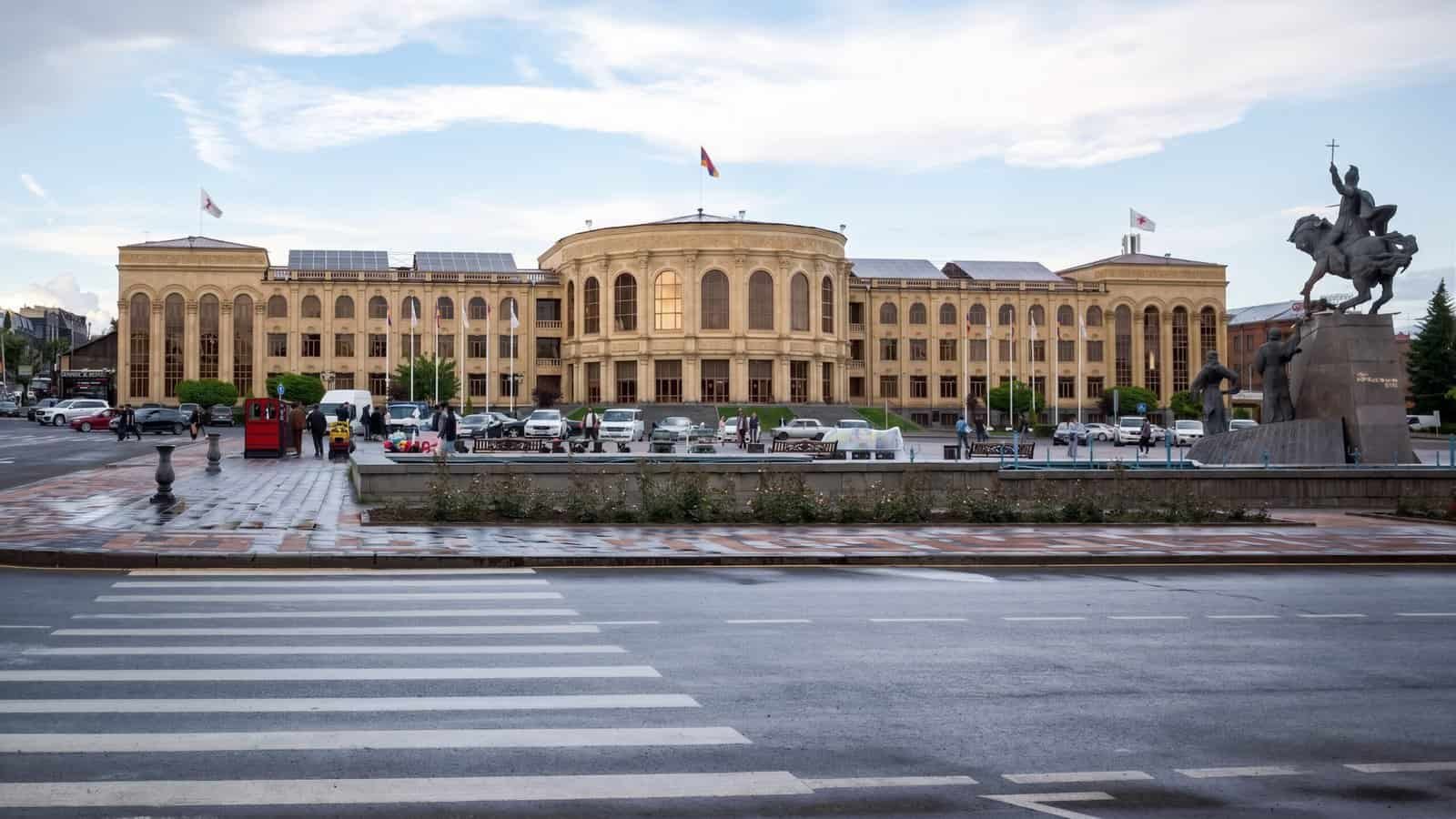
For the ‘everyday’, Vardanants Square feels vastly oversized, although typical of many Soviet-planned cities. But if you time your visit right, you can experience the open-air cultural events held here throughout the year, including traditional Kochari dance circles for International Dance Day (April 29th) and the Armenia-France Friendship Concerts and Europe Day celebrations (both held in May).
2 Amenaprkich (Holy Saviour’s Church)
In a country famous for its ancient stone monasteries, Amenaprkich stands out as one of the most unusual and distinctive urban churches. Dominating the skyline, just off Vardanants Square, it’s in the style of the Cathedral of Ani, now across the border in Turkey and a perfect example of the distinctive tuff stonework dotted around Gyumri.
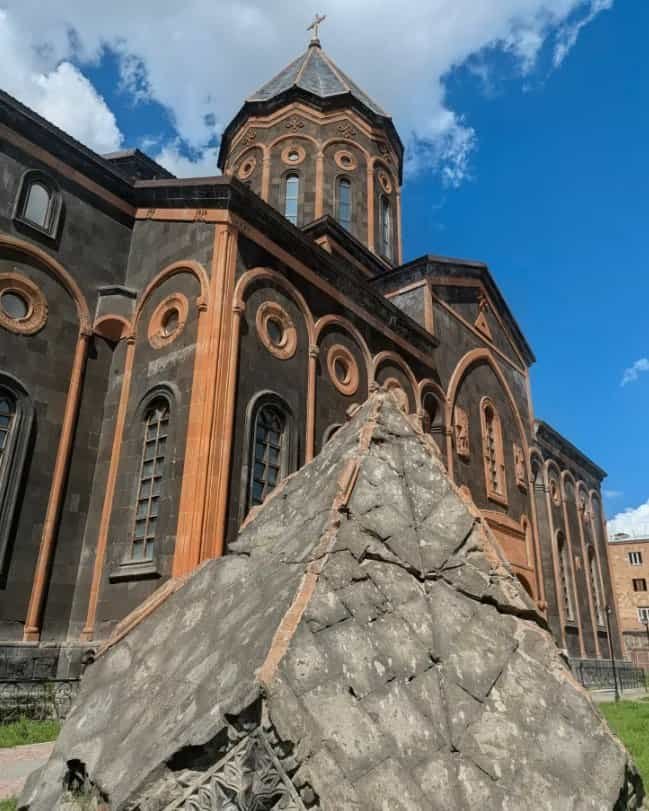
View of Amenaprkich and its original ‘fallen’ steeple 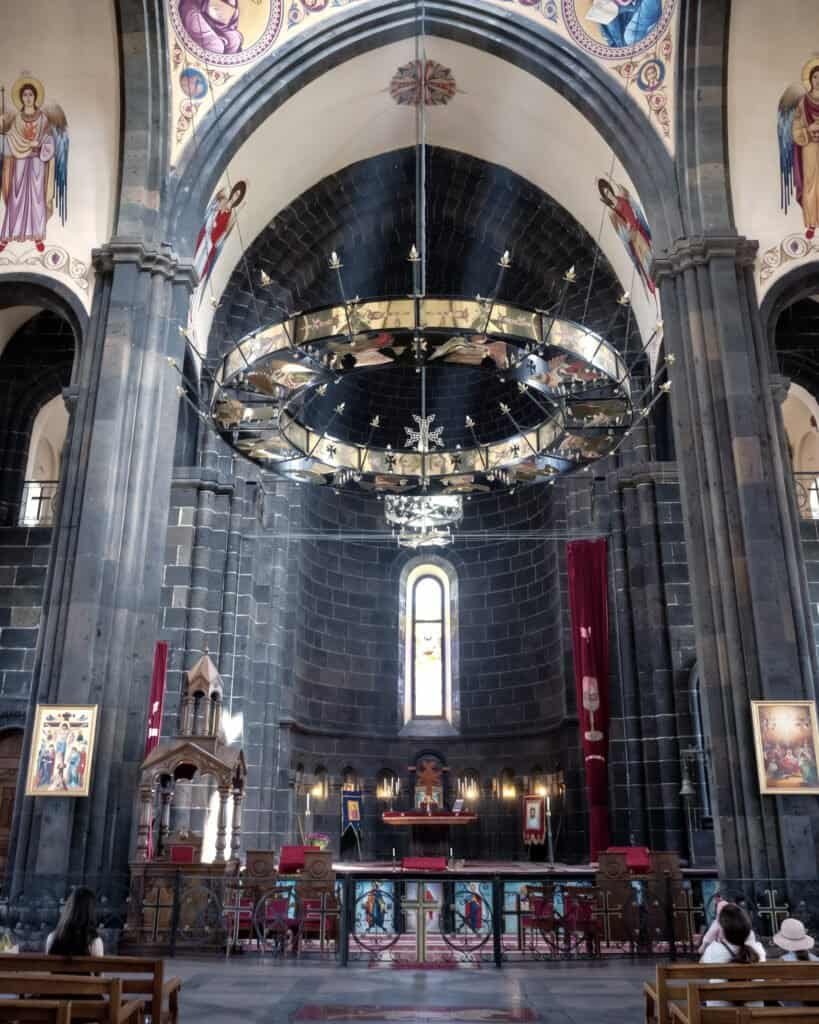
The striking interior of Amenaprkich
History has not been kind to this building. The Soviets shut down its use as a church in the 1930s, then the devastating 1988 earthquake left little more than the foundations standing.
Following a slow, meticulous reconstruction, it was finally completed in 2024, and the result is genuinely magnificent. In the foreground stands a poignant monument to the victims of the earthquake, while on the opposite side, the church’s original fallen steeple rests on the grass: a sobering reminder of that terrible tragedy nearly 40 years ago.
Inside, the space is flooded with natural light from a massive glazed central dome, making it surprisingly bright compared to its dark exterior. When we visited, a steady stream of locals stopped by to reflect and pray; it felt less like a checklist tourist attraction and more like a deeply loved, well-used community space.
3 Yot Verk Church (Seven Wounds)
Tucked away behind the trees on the northern edge of the square lies Yot Verk. Its official name is the Cathedral of the Holy Mother of God, but locals call it Yot Verk (meaning “Seven Wounds”) after a revered icon once housed inside.
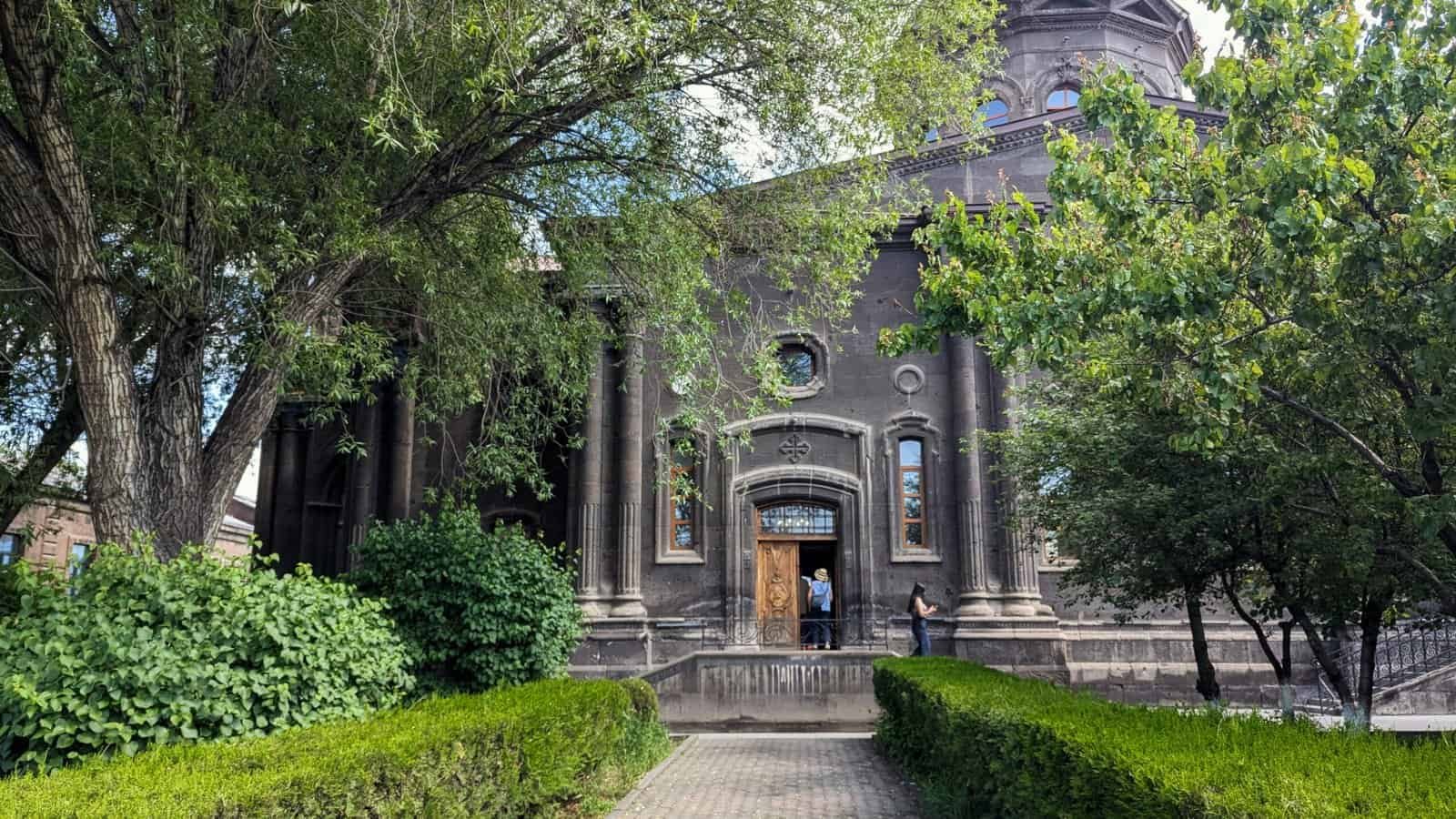
Remarkably, this church remained active throughout the Soviet era, and it wasn’t completely flattened in the 1988 earthquake either. The two smaller domes did come down, but both have since been replaced. The originals still stand in the churchyard as a reminder of what once stood there. Inside, the church was packed with worshippers, so we put the camera away and left without photos.

4 Khachkar Park
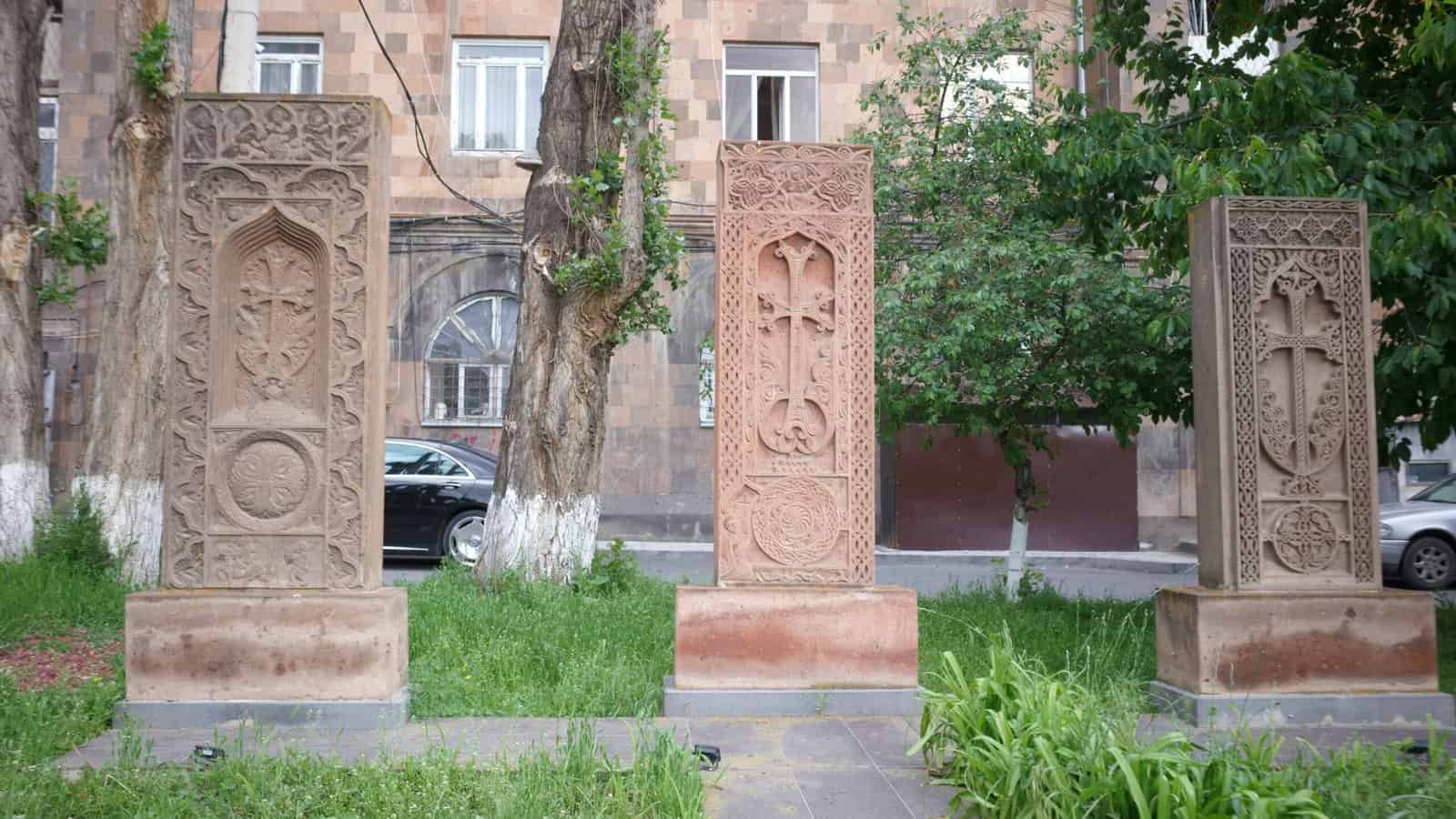
The stretch of Mayakovsky Street between Amenaprkich and Alexandrapol Hotel is known as Khachkar Park, and here’s what you’ll find.
- The Khachkars: This open-air gallery showcases Armenia’s iconic khachkar (cross-stone) art form, recognised by UNESCO. The replicas placed here hold profound, recent significance: they commemorate the vast medieval cemetery of Old Jugha (in Nakhchivan), home to thousands of intricate cross-stones, which was completely destroyed between 1998 and 2005.
- Surrounding Monuments: Nearby, look out for two striking black-and-apricot tuff-stone arches: a working aghbyur (a traditional Gyumri drinking fountain) and the Leninakan 60 monument, erected in 1984 to mark the 60th anniversary of the city’s 1924 renaming from Alexandropol to Leninakan (before officially becoming Gyumri in 1992).
5 Singing and Dancing Fountain
Also located in Khachkar Park, the singing and dancing fountain puts on a synchronised light-and-music show between 8:00 pm and 11:00 pm from May through to mid-October. Timings are not guaranteed. The fountain can close for maintenance, as it was when we visited, but the exposed pipework gave us a hint of what we missed. I imagine it’s a smaller version of the show-stopping singing-and-dancing fountain in Republic Square in central Yerevan.
Recent reviews show it is operating regularly, so check out the Gyumri Facebook Page for up-to-date information. Definitely something to look out for if you can stay in the evening.
6 Kumayri Historic District Gyumri
The district has the feel of a living museum with over 1,000 authentic 19th- and early 20th-century buildings from the Russian Imperial era. This is the prime area to admire Gyumri’s black-and-apricot tuff stone and seek out the traditional artisan workshops.

The Kumayri Historic District is bounded by Vardanants Square and Rustaveli Street to the east, cutting west through Abovyan Street to Gorky Street and Central Park. Beyond the northern edge sit Sev Berd (Black Fortress) and Mother Armenia.
7 Abovyan Walking Street
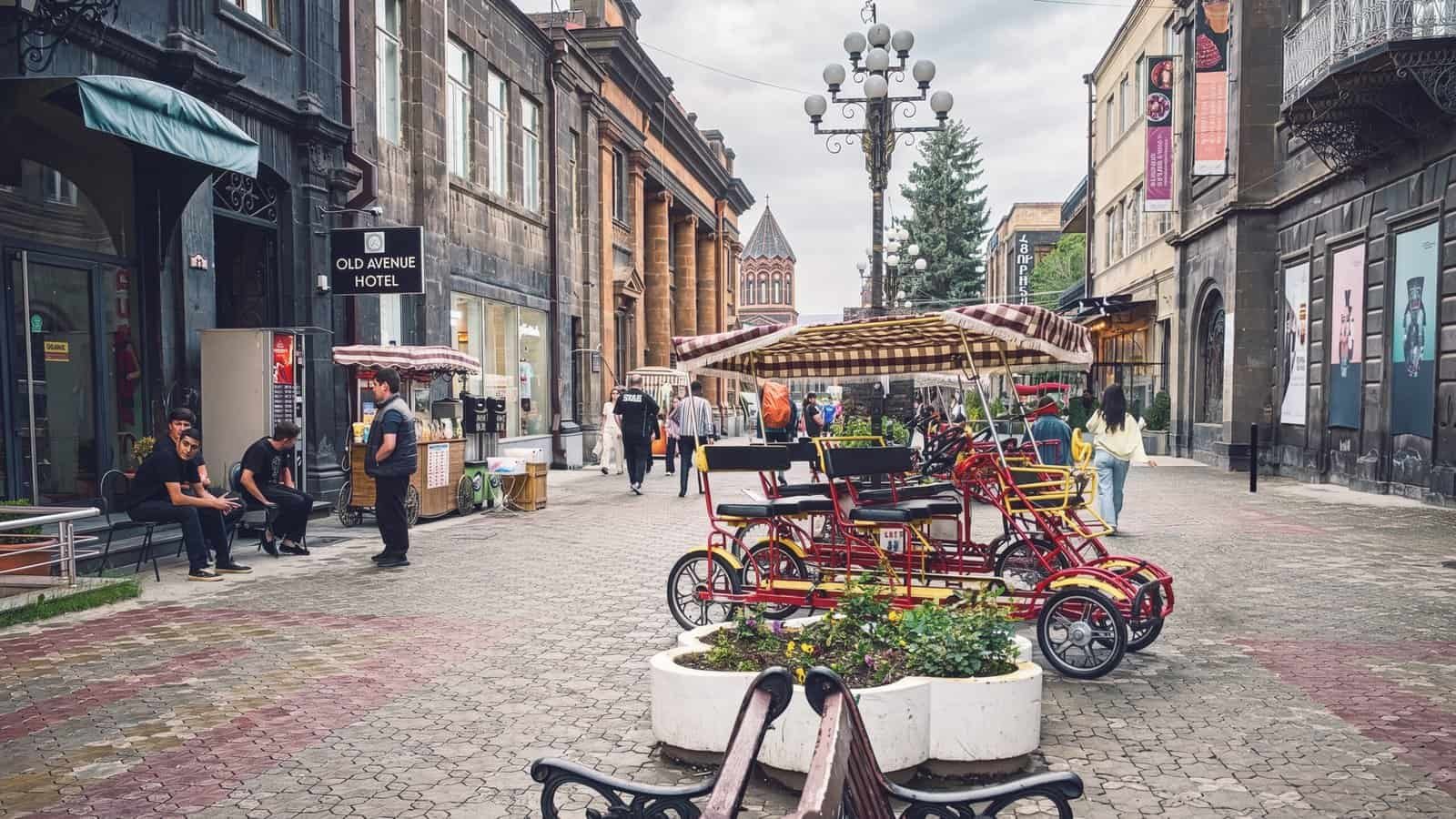
Abovyan is a beautifully cobbled pedestrian street that flanks Vardanants Square and extends outward in both directions. It showcases some of the finest architecture in the city. Look out for ornately carved wooden doors, look up at intricate wrought-iron balconies, and peer through the arched stone gateways to glimpse the traditional hidden courtyards where locals live, socialise, and hang laundry, just as they have done for generations.
The old stone ground floors are packed with independent cafes, artisan craft shops, and bars. Much like Yerevan, the street comes alive in the evenings as locals gather and socialise. Make sure to visit Ponchik Monchik, a cafe famous for its unique doughnuts. Huge hollow crispy pastry balls, filled with different flavours, including chocolate (Ponchik) and vanilla custard (Monchik). You will absolutely want to try both.
If you have time for an art gallery, check out the bold artwork of the Gallery of Mariam and Eranuhi Aslamazyan Sisters, open every day but Monday, right here at 232 Abovyan Street. The street is also home to Armenia’s oldest operational pharmacy and the Stepan Alikhanyan Puppet Theatre.
8 Rijkov Walking Street
Also branching directly off Vardanants Square, Ryzhkov is another pedestrian avenue, with a more modern, European cafe-culture vibe and outdoor dining terraces lining both sides. Do stop at Herbs & Honey Teashop for wonderful traditional teas brewed from fresh, locally foraged Armenian herbs and great coffee too.

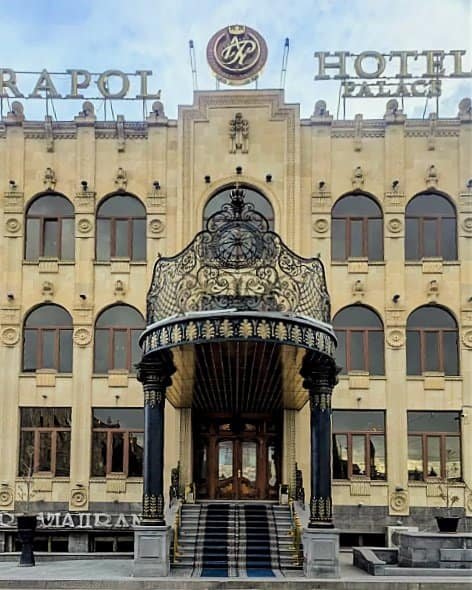
9 Hotel Palace Alexandropol
Sitting just south of Khachkar Park lies the Alexandropol Palace Hotel. We actually stayed here for two nights, which I don’t really recommend, unless you’re too inquisitive for your own good, like we were. It is, though, absolutely worth popping your head through the door, just to take a look!
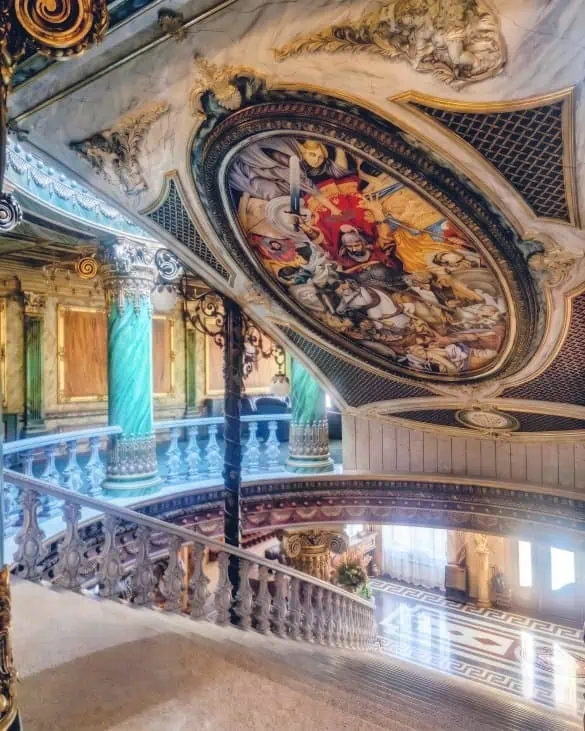
Expect a completely over-the-top, palatial interior dripping with gold trim, massive glass chandeliers, an ornate classical bar, and a grand, sweeping staircase that takes you up to the bedrooms, where the theme continues. It’s as if you’re transplanted to a Tsarist-era Russian palace. I don’t think it’s genuinely of that vintage, though; the modern concrete exterior does give the game away.
Despite being listed online as one of Gyumri’s premier luxury hotels, it was completely deserted when we checked in. The staff spoke Russian, and a confusing booking mix-up left us simply grateful to secure a bed for the night. I have recommendations for where to stay in Gyumri, but this particular time capsule won’t be for everyone!
The Southwestern Hill & Historic Fortification
A 30-minute walk southwest from Vardanants Square brings you to the city’s highest point. This elevated ridge offers sweeping panoramic views of the urban landscape and is home to the Black Fortress (Sev Berd) and the towering Mother Armenia statue. Both monuments sit atop the remnants of the old Russian Imperial Alexandropol military outpost, just eight kilometres from the modern Turkish border.
10 St Michael The Archangel & Hill of Honour
As you make your way up the hill toward the foot of Mother Armenia, you won’t miss an unusual, square-shaped church constructed from local black tuff stone. Its most striking feature: a silver tin-plated dome that sparkles brilliantly in the sun. St Michael the Archangel is known locally as Piplan Zham (the “Shining Church”), and it’s easy to see why. The welcoming interior continues the bright theme, featuring whitewashed walls and bold, yellow-and-gold iconography. A wonderfully peaceful, cool space and a welcome relief from the sun beating down on us as we continued our trek up the hill.


To the left of the church, the grounds are beautifully laid out as a memorial park with a replica monument which commemorates Russian soldiers who fought in the 19th-century Russo-Turkish wars.

11 Mother Armenia
Keep climbing and turn left onto the Kars Highway until you reach the Mother Armenia complex. This park is dominated by a grand, double staircase leading up the hillside. While we certainly weren’t the only tourists visiting, we were struck by just how many locals were out enjoying the space. Groups of schoolchildren were running up and down the massive stone stairs; it may have been their PE/PT class.
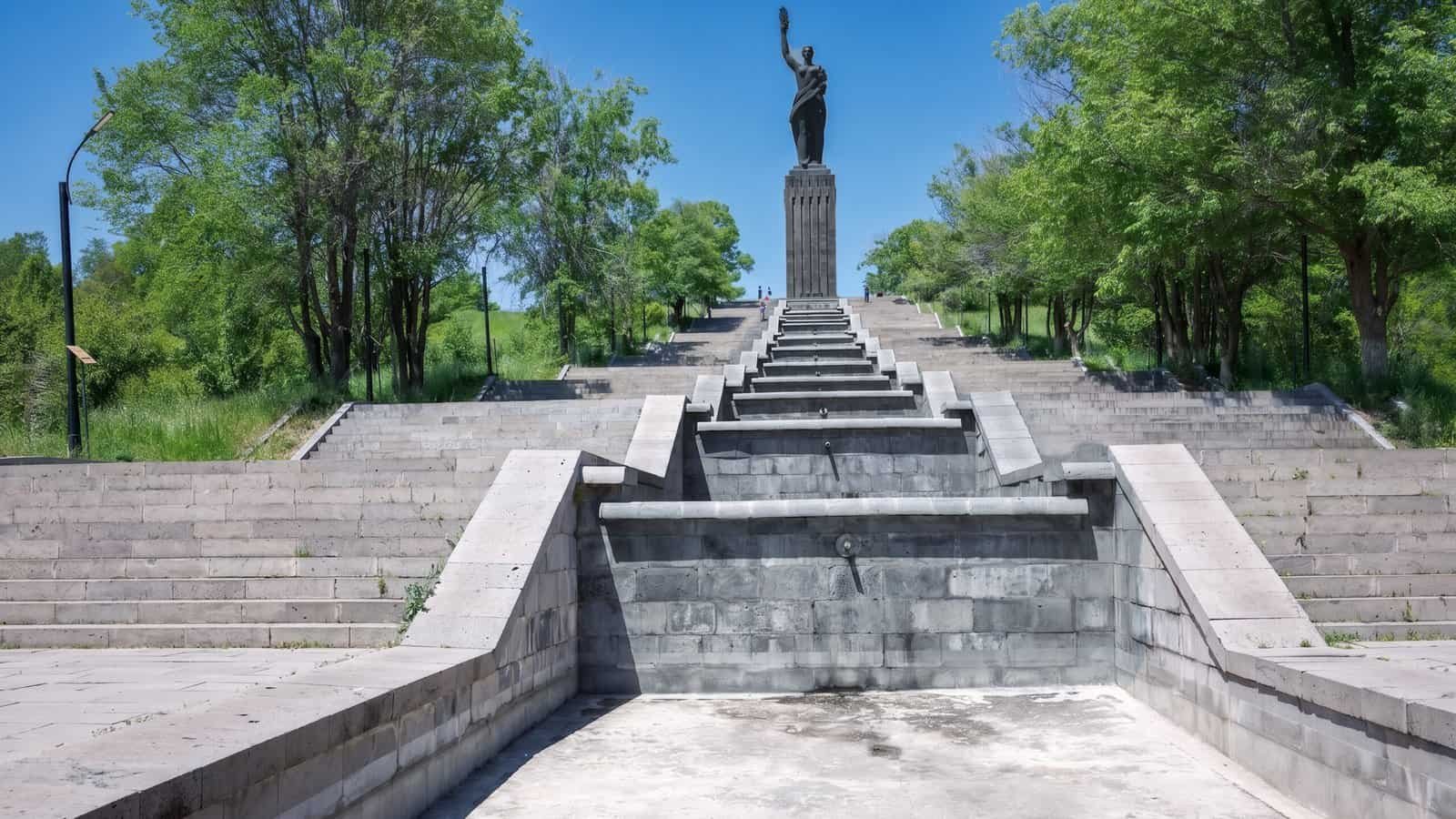
Mother Armenia’s towering silhouette can be seen from almost anywhere in the city. While she’s huge, she feels taller than her 20-metre self because she’s anchored to a massive 21-metre-tall stone pedestal standing at the top of a long flight of stairs at the absolute crest of the hill.
In her left hand, she holds a replica of a column decoration from the 7th-century Zvartnots Cathedral, representing the historic creativity and architectural genius of the Armenian people. In her right hand, she holds a palm branch symbolising peace. A hidden image of Nemesis, the winged Greek goddess of retribution, is carved onto the back of her column facing directly toward Turkey. So all bases covered.
Once you’re at the top of the steps with Mother Armenia, turn towards the Black Fortress and take the path connecting the two. This will take you past the WWII Victory Park and the Tomb of the Unknown Soldier to our next stop, the Black Fortress.

12 Black Fortress
From a distance, the circular, mid-19th-century fortress looks entirely austere, and you might think there is very little to see. However, once you step through the huge, arched double doors outlined in contrasting orange tuff stone, you will find an incredible structural transformation.
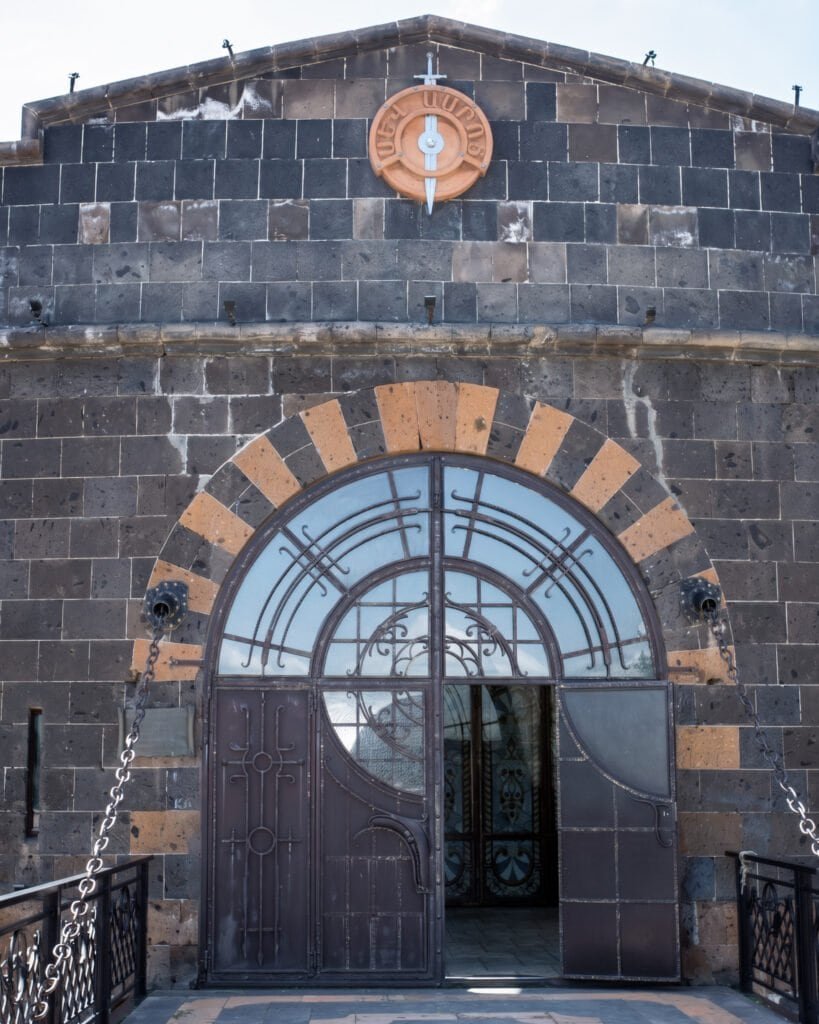
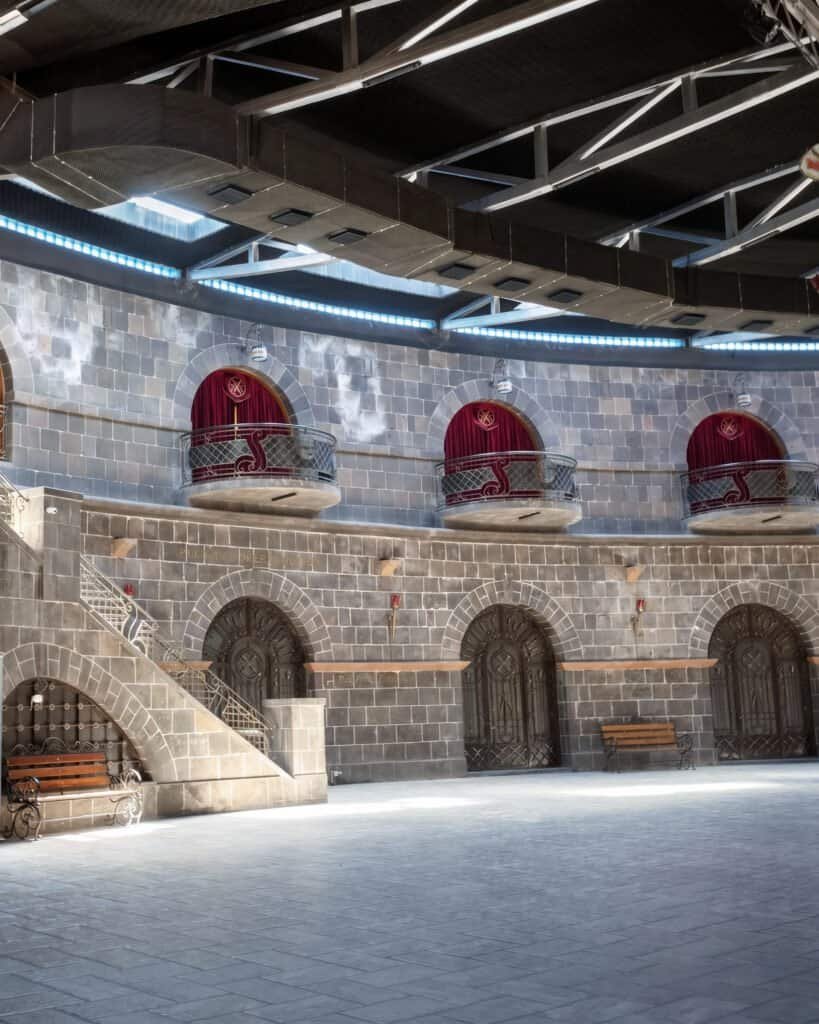
The interior has been completely converted into a sweeping, modern amphitheatre. It is easily one of Gyumri’s best surprises. The central circular stage possesses exceptional natural acoustics and is regularly used for large-scale symphony performances, rock concerts, and traditional Armenian music festivals. The versatile space has even hosted major sporting events and welcomed Pope Francis during his historic 2016 visit to Gyumri.

When we wandered inside, a group of local children were on the central stage practising the intricate steps of a traditional circular folk dance. Entrance to the fortress grounds was completely free.
If you prefer not to tackle the steep 30-minute uphill walk to the fortress complex, it is incredibly easy and inexpensive to order a ride via the Yandex app, and drivers are readily available throughout the city. We opted to save our legs on the way back, catching a Yandex car straight from the fortress to the opposite northeastern corner of the city to visit the iconic Iron Fountain and explore Gyumri’s railway district.
Central Park Area (Gorki Park)
Walking west up Ryzhkov Street from Vardanants Square, you will head directly toward Central Park (known locally as Gorki Park). This green, nostalgic escape sits on a plateau overlooking the city, offering excellent views toward Mother Armenia and the Black Fortress. Look out for the vintage theme park, independent food stalls, and a trail of fascinating Soviet-era monuments.
13. Varem-Marem Balcony: ‘The Tango of our Childhood’
On your way to the park, keep an eye out for a black stone facade displaying the Varem-Marem Balcony. While it may not mean much to international visitors, The Tango of Our Childhood (1984) is a deeply beloved classic film in Armenia. This physical balcony is a legendary cinematic landmark. Portraits of the film’s lead actors, Galia Novents and Gyumri’s own comic genius, Mher “Frunzik” Mkrtchyan, are prominently displayed in the windows. While the 1988 earthquake sadly destroyed most of the original building, this historic exterior wall was carefully saved and reinforced.
The phrase Varem-Marem literally translates to “Should I turn the light on, or should I turn it off?” A direct nod to a famously repetitive, emotionally charged window-shouting scene filmed right here between this building and the art studio opposite.

14. Varem-Marem Art Studio
Directly opposite the balcony sits its namesake art studio, a vibrant local cultural hub and active pottery workshop. A stunning mosaic known as the “Wall of Names” adorns the wall outside. The studio invites visitors to step inside and mould their own initials or names out of raw, local clay. The studio fires and glazes the tiles, then adds them to the wall, creating a beautiful, ever-evolving community art project.
15. Central Park & The Soviet Amusement Park
Entering Gorki Park feels like stepping directly back into the mid-20th century. Immensely popular with local families, the park stays busy throughout the day and well into the evening. Its crowning glory is a Soviet-era amusement park complete with an iconic Ferris wheel that operates during the warmer months. Take a ride for some of the highest panoramic views over Gyumri.
In the centre of the park sits the Oasis Cafe. At first glance from the path, the building looks completely dilapidated and permanently shuttered. However, it is very much open. Step inside the doors to buy a drink among plastic palm trees and vintage exotic animal replicas for a truly unmatched touch of Soviet-kitsch nostalgia.
Wandering through the park, you will encounter a diverse collection of public art. I have marked the most notable landmarks on the map, including a traditional monument to the Russian poet Alexander Pushkin and a fascinating socialist-realist statue of a “Girl with a Paddle.” Don’t miss the massive Soviet-era structural monument known as “Song and Writings” – a dramatic sculptural composition depicting a traditional teacher standing proudly alongside his students.
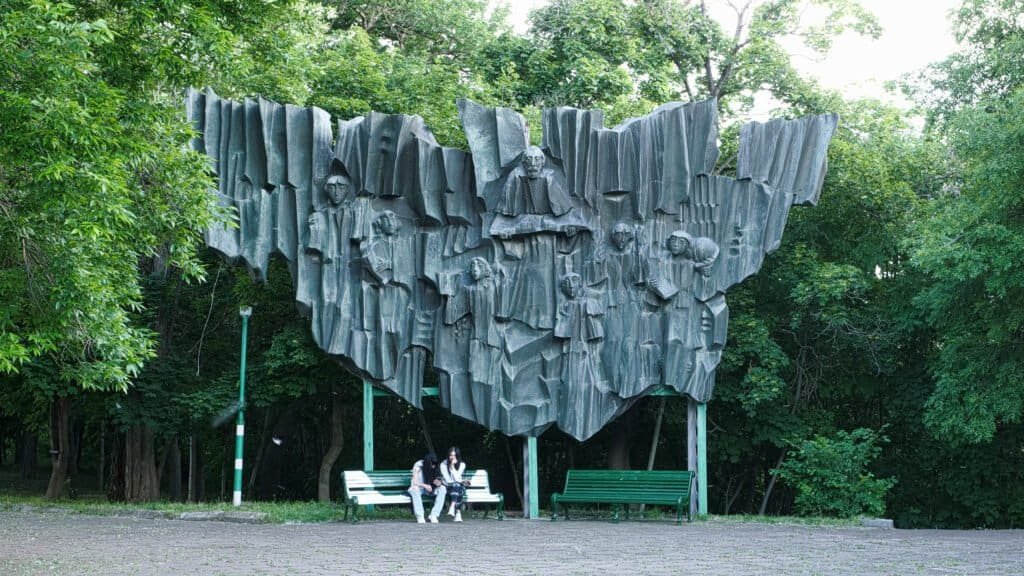
Song and Writings Monument 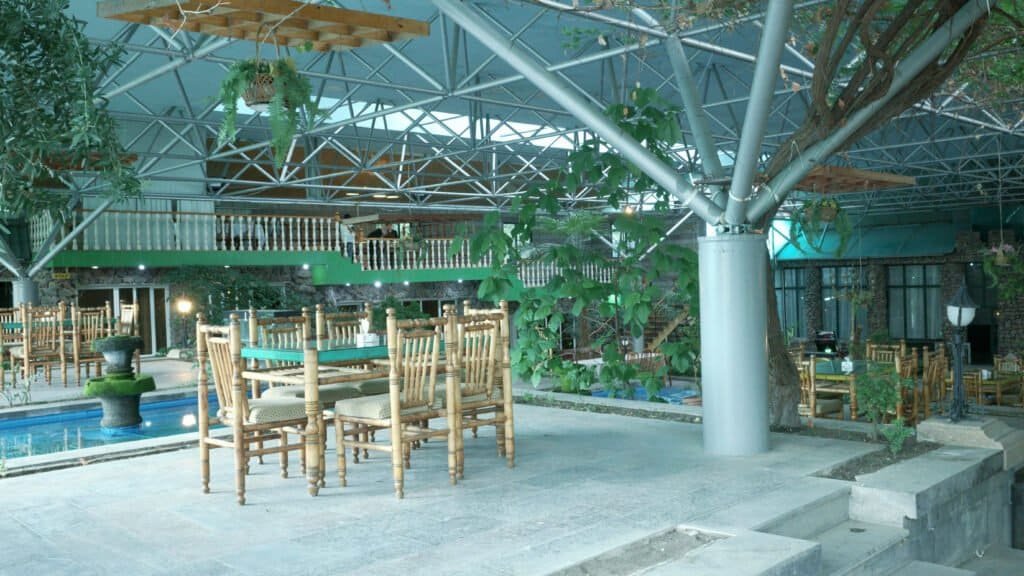
Oasis Cafe
16 Old Hospital Ruins
We ran out of time for this one, but if you like urban exploration (URBEX), you could walk beyond the park, past the new Spitak hospital, and enter the grounds of the old hospital, which was destroyed by the earthquake. Some of the facades and structures of the old hospital are still standing and may photograph well.
Gyumri Museums
Gyumri is often called the cultural capital of Armenia, so if you want to understand the city’s intellectual soul, a visit to a museum feels essential. I have a few recommendations for exploring the history of this fascinating city.
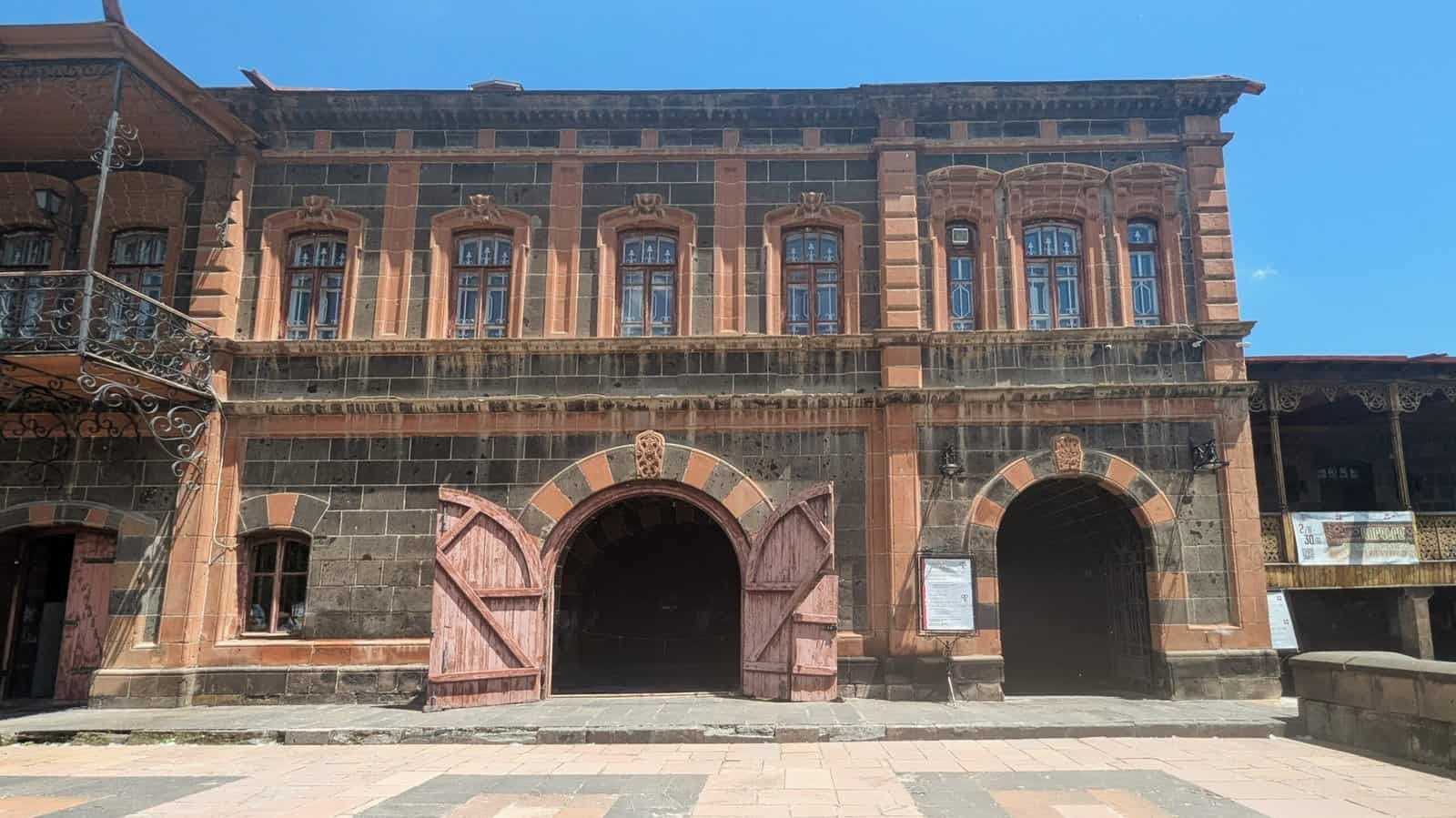
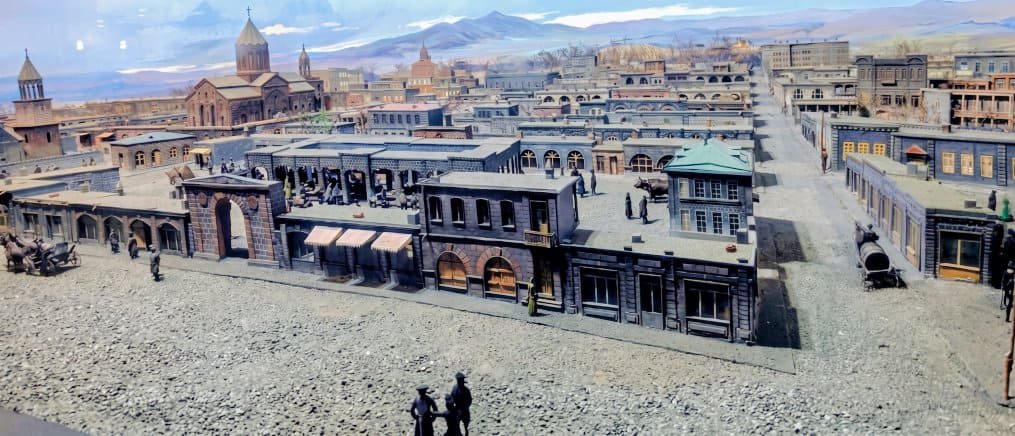
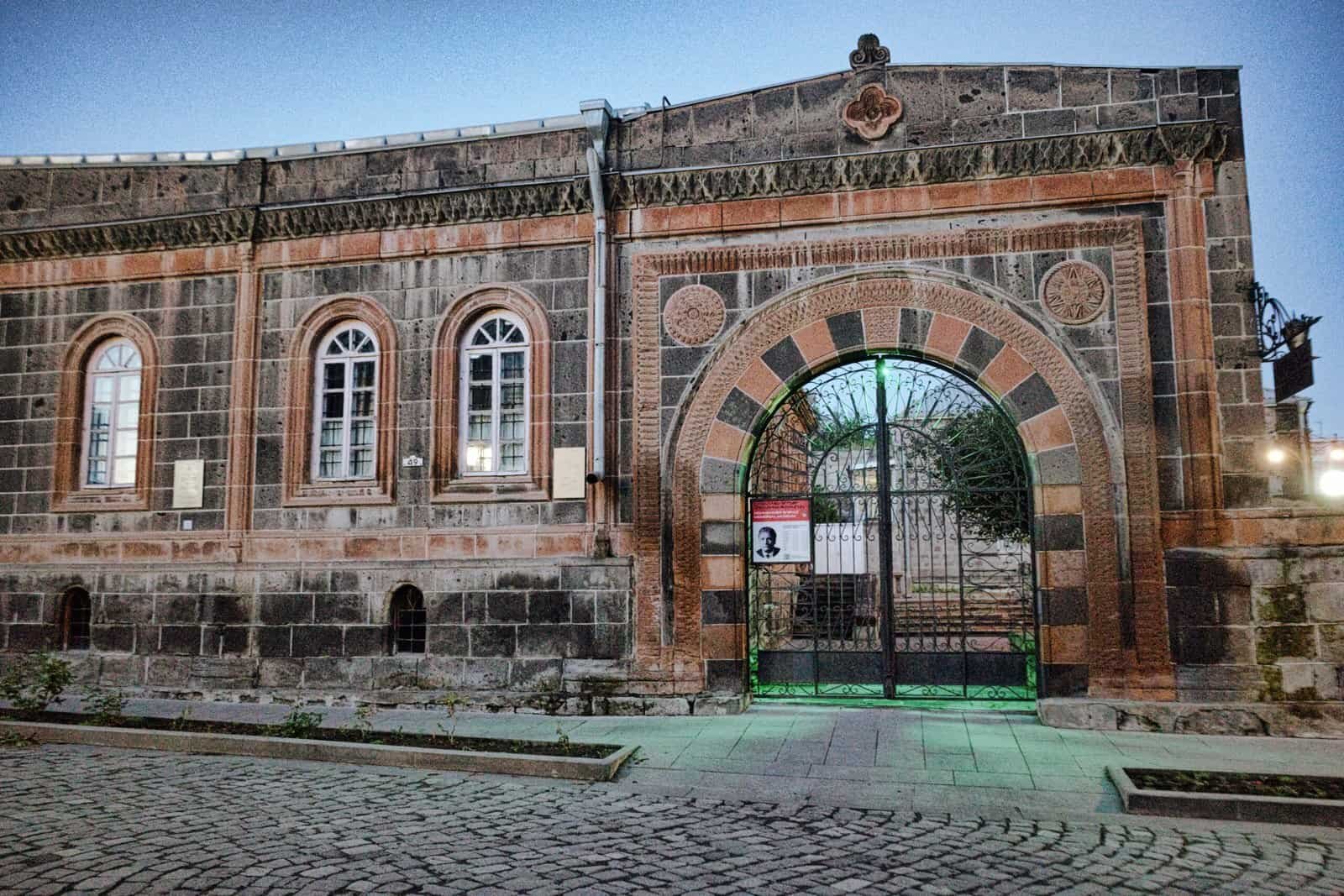
17 Museum of National Architecture & Urban Life
If you only have time for one museum in Gyumri, the Museum of National Architecture and Urban Life is an obvious choice. And not least because it is set in a beautiful traditional tuff building.
For me, the highlight was the city-scale diorama representing Gyumri in the early 20th century, which showed in detail what it looked like a century ago, before the Spitak earthquake.
The recreated bourgeois living quarters were detailed and insightful. There were also rooms displaying different traditional crafts and machinery. The courtyard featured the works of sculptor Sergey Merkurov, and when we visited, it was also being used as a venue for wedding photography.
18 The House Museums of Gyumri
The resilient artistic spirit of Gyumri is expressed in the city’s historic art galleries and unique creative spaces, as well as in preserved homes that have been turned into museums of some of the city’s most well-known figures. Here are a few to choose from.
- Aslamazyan Sisters Gallery: Over 600 works by celebrated Soviet-Armenian sisters Mariam and Yeranuhi Aslamazyan are displayed in a mansion building in the Kumayri district. Mariam is known for bold, sun-drenched canvases, while Yeranuhi focuses on intimate portraits. (232 Abovyan St)
- Cobweb Art Gallery and Museum: Known as the only museum of its kind in the world, this unique venue features intricate, fragile artwork crafted from real spider webs. It was closed when we tried to visit, but it sounds fascinating. (97, 10 26 Komisarner St)
- Mher Mkrtchyan Museum: Celebrates the life and cinematic legacy of the beloved Armenian actor Frunzik (Mher) Mkrtchyan. (30 Rustavelli Street)
- Hovhannes Shiraz House Museum: Dedicated to the famous Armenian poet Hovhannes Shiraz, located in his former residence. (Gorki Street)
- Sergey Merkurov’s House Museum: The family home of the famous Soviet sculptor, known especially for housing a large collection of death masks of prominent historical and Soviet figures. (47 Haghtanaki Avenue).
- Dzitoghtsyan House-Museum: While primarily a museum of social life and national architecture, this grand 1872 merchant mansion in black-and-pink tufa showcases masterworks of local craftsmanship, historic urban interiors, and regional art. (47 Haghtanaki Avenue)
- B612 Art Gallery: A contemporary private gallery and studio that exhibits and sells modern paintings, sculptures, ceramics, and handmade local crafts. (252, 1 Abovyan St)
- Style Art Gallery & Graphics Museum: Founded by local artist Artush Mkrtchyan, this extensive multi-floor space houses thousands of regional and international graphic works, posters, and paintings. (12 Gayi Street).
More things to see beyond the City Centre
I have a few more things for you to add to your list that don’t fit neatly into the city centre attractions, including Gyumri station, a socialist-classicist masterpiece; the Soviet-era iron fountain and the Gyumri Brewery; and what you can see en route if you walk to it.
19 Gyumri Rail Station
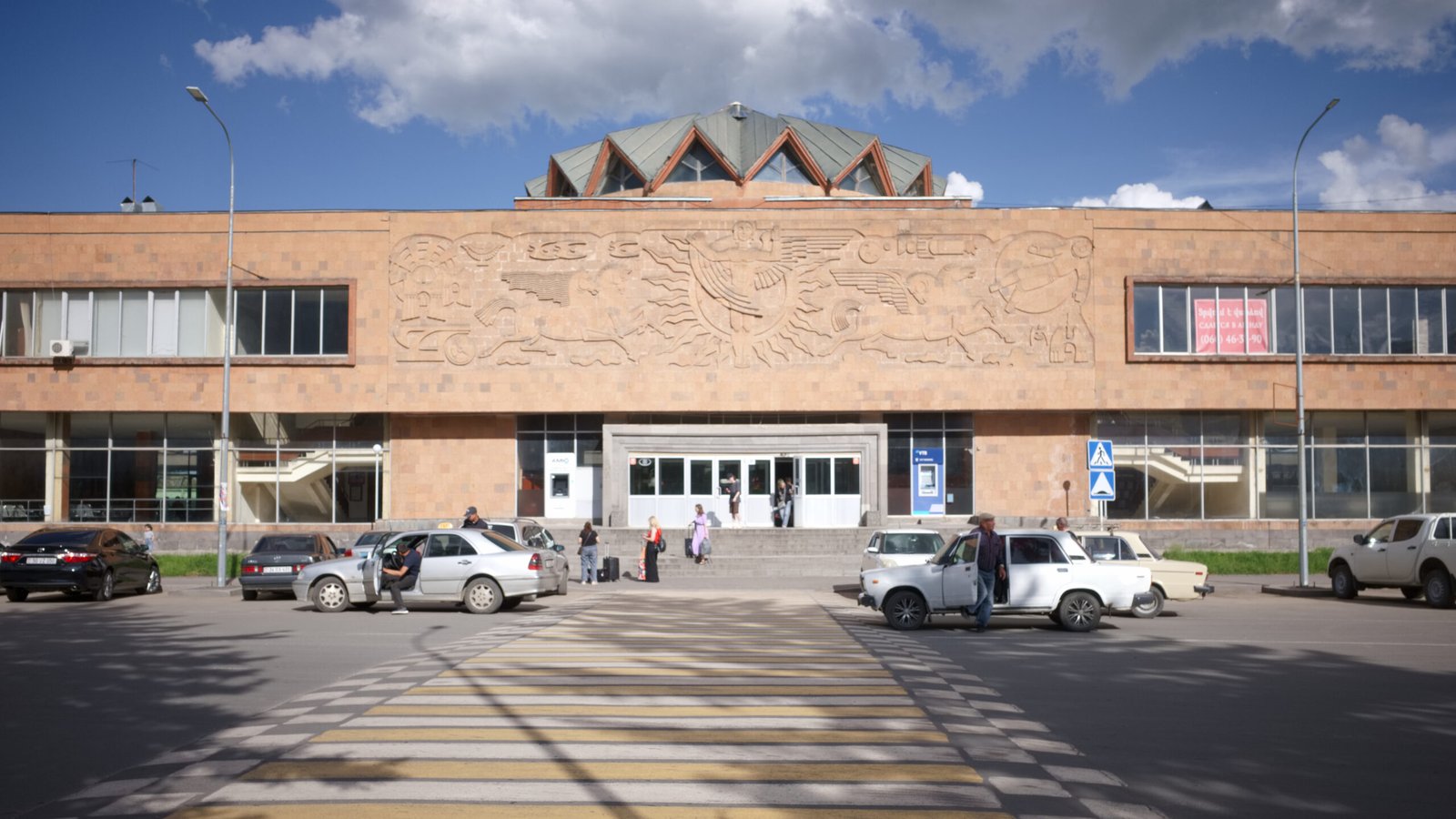
The city’s transport connections are about a 20-minute walk from the centre, to the north-east, where you’ll find both a bus station and the train station, and an area that represents Gyumri’s Soviet-era industrial boom.

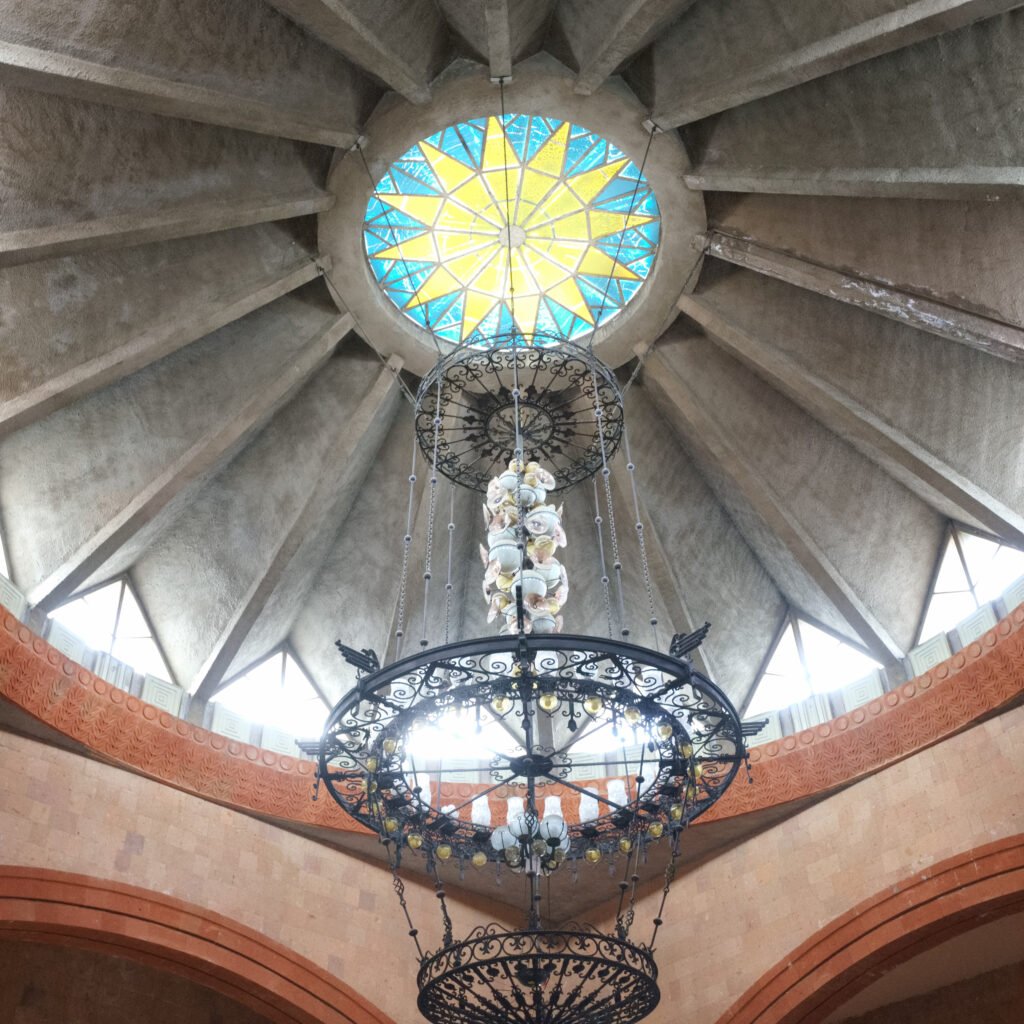
The rail station is the oldest in Armenia. It’s a striking Soviet modernist building in an apricot colour, both inside and out. It features a grand interior with artistic details, including a unique zodiac clock, an elaborate central light fitting and wall murals. There’s an old steam train display outside too.
We arrived in Gyumri on the train from Yerevan. It’s a two-hour scenic trip which operates several times a day.

20 Iron Fountain
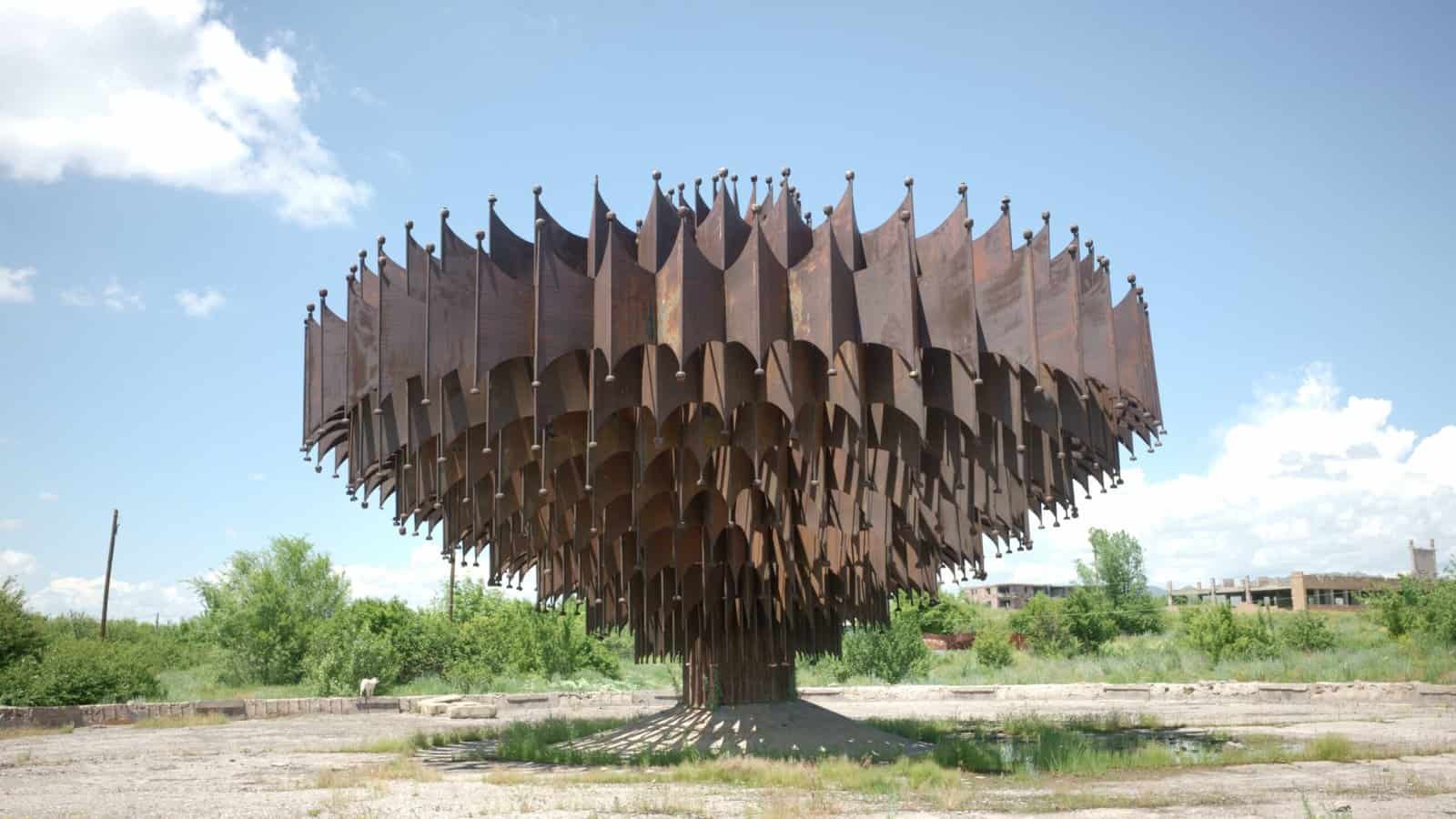
Locals simply call it UFO, and there’s no need to guess why. We took a Yandex to take a look at this quite extraordinary structure on the city’s edge. Once, it was a magnificent working fountain and the centrepiece for the city’s polytechnic. But that was flattened in the 1988 earthquake, and since then it’s been left amongst the rubble. If you want to know more about it and see what it looked like when it was working, I have written about Gyumri’s UFO.
Food and Drink in Gyumri
Armenian Dishes and Specialities from Gyumri
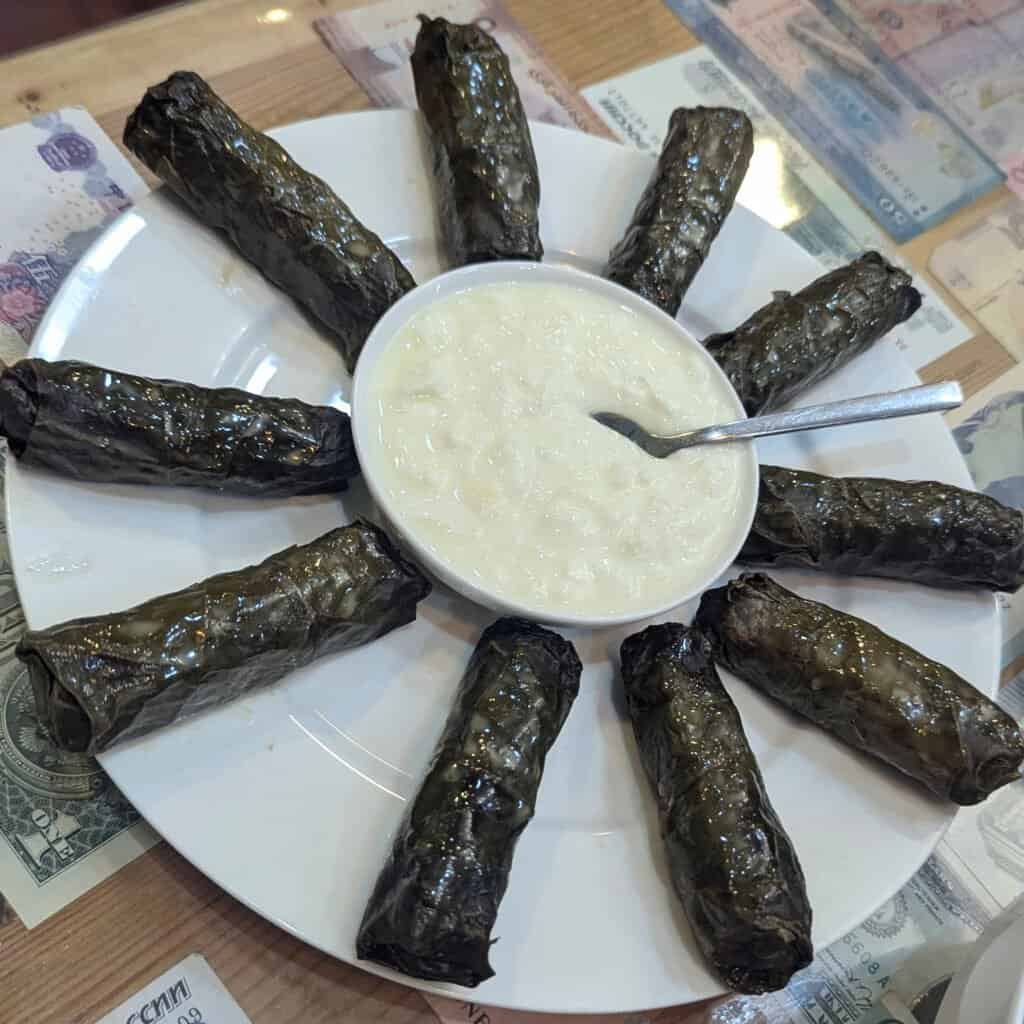
Dolma (stuffed Vine Leaves) at Gwoog Gastrohouse 
Panrhash at Gwoog Gastrohouse 
Ponchik Doughnuts at Ponchik Monchik
Recommended cafes and restaurants
We found the food choices in Gyumri a bit hit-or-miss, unlike in Yerevan, where we were impressed with everything we ate. These are the places we visited and can personally recommend:
- Gwoog Gastrohouse: If you are looking for a traditional Armenian feast, this is the place to come. It’s just out of the centre on the road to the railway station, making it a perfect stop if you are arriving or leaving. They open at 10am, so we stopped for a brunch feast before catching our train back to Yerevan.
- Aregak Bakery and Café: Not just a great place for bread, sandwiches, filled rolls, and coffee. This special place is a support and resource centre for young people and adults with disabilities in Gyumri; some go on to train as Aregak bakers.
- Herbs & Honey Teashop: If you’re not a herbal tea drinker, this place could convert you. If you are, then just head straight there. Their signature coffee has honey stirred in it, which I was less convinced by, but the honey is not compulsory. A good place for breakfast.
- Ponchik Monchik: Even if you haven’t got a sweet tooth, this is more or less compulsory when you visit Gyumri. While savoury dishes are available at this restaurant overlooking Vardanants Square, people come for the doughnuts. Most seemed to be washing down these chocolate-cream- or vanilla-custard-filled fried doughnuts with beer or wine. It’s just as well they are hollow as they are huge. It’s assumed you will be eating more than one of them.
If you are looking for a drink on the go, there are plenty of street coffee vending machines. It took us a few goes to work out how to get coffee without a heap of sugar in it, but if you like strong coffee, give it a go. There are also plenty of drinking water fountains.
If you like eating freshwater fish and want to try sturgeon, a trip to the fish farm in Gyumri should be on your list. Cherkezi Dzor has a reputation all over Armenia and beyond. A little out of town, but use the Yandex Go app and it will get you there. You pick your fish and ask them to cook it, so if you don’t like your fish looking like fish, then maybe skip this one. Many sturgeon varieties are endangered, but the fish served here are farmed Siberian sturgeon, one of the faster-growing varieties. They are bred to meet demand without further depleting wild stocks. We ran out of time for this one.
Gyumri: Practical Information
How long do you need in Gyumri?
We spent two nights in Gyumri, and that felt about right. We didn’t see all the museums, but we did do a lot of walking and could have saved time and seen more if we’d made more use of Yandex or walked a bit quicker! This is how I would suggest you spend your time, depending on the time you have available.
Gyumri in One Day: Suggested Itinerary
If you only have one day and are starting in Yerevan, I would highly recommend taking an organised tour so you can see the main sights with all the logistics taken care of, for the best use of your time.
A tour should allow you time to explore central Gyumri, visit the Black Fortress, see Mother Armenia, and spend time at Gyumri’s top museum (the Museum of National Architecture and Urban Life). Another bonus, Harichavank Monastery, one of the most significant monasteries in Armenia, is on the way, and there may be a stop here too.
Two days in Gyumri: Suggested Itinerary
Day 1
- Explore central Gyumri, including the Central Park area.
- Visit one or more of the small, quirky, and specialist house museums. My two picks would be the Aslamazyan Sisters Gallery and the only cobweb museum in the world
- Eat in one of Gyumri’s most popular or iconic restaurants. Try Ponchik Monchik for Armenian doughnuts, Cherkezi Dzor-Gyumri’s Fish Restaurant for a unique experience (an out-of-town option), or my favourite Gwoog Gastrohouse for chef-cooked local specialities made with fresh, high-quality ingredients and super-friendly service. It’s en route to the train station and is open from 10am to 9pm every day except Monday, if that helps with your timings.
- For the evening, watch the Singing and Dancing Fountain display (if it’s operating)
Day 2
- Enjoy the sights of the Southwestern Hill Area, including Mother Armenia and the Black Fortress
- Visit the Iron Fountain
- Visit the Museum of National Architecture and Urban Life
- Craft your name, and add it to the wall of names at Varem-Marem Art Studio
These places on day 2 are more spread out. You can book a Yandex to move between them if you prefer.
Where to stay in Gyumri
As you would expect, there’s a range of accommodation in Gyumri. We booked fairly late and found the highly recommended ones were sold out, so I would reserve sooner rather than later.
Top Accommodation Picks
- Luxury: Grand Hotel Gyumri (Apricot Hotels) is highly rated for the quality of the service and the rooms. It’s traditional and centrally located.
- Boutique Hotel: Berlin Art Hotel is the best-known boutique option in Gyumri’s old quarter. Set in a converted historic building, with well-maintained rooms with period details. Breakfast is recommended. Popular with both international visitors and Armenians coming for weekend trips.
- Midrange Hotel: Kuma Gyumri Hotel is a popular hotel conveniently located near both the old quarter and the rail station.
- Budget Hotel: Old Town Hostel Gyumri is a central hotel, with small private rooms and dorm rooms and exceptional all-round reviews.
And for a broader search with live bookings, here are some options for hotels, private rooms, and apartments.
How to get to Gyumri
If you are starting from Yerevan and you only have a day, I would suggest taking a tour rather than visiting independently. This will make the best use of your time. There will usually be stops at Mother Armenia, the Black Fortress and the Museum of National Architecture & Urban Life, as well as time to explore the compact city centre.
Gyumri sits approximately 240 km northwest of Yerevan and is well connected by public transport.
From Yerevan
From Tbilisi
While Gyumri is closer to Tbilisi than Yerevan, there are fewer direct services, so for other options, you may need to travel to Yerevan first.
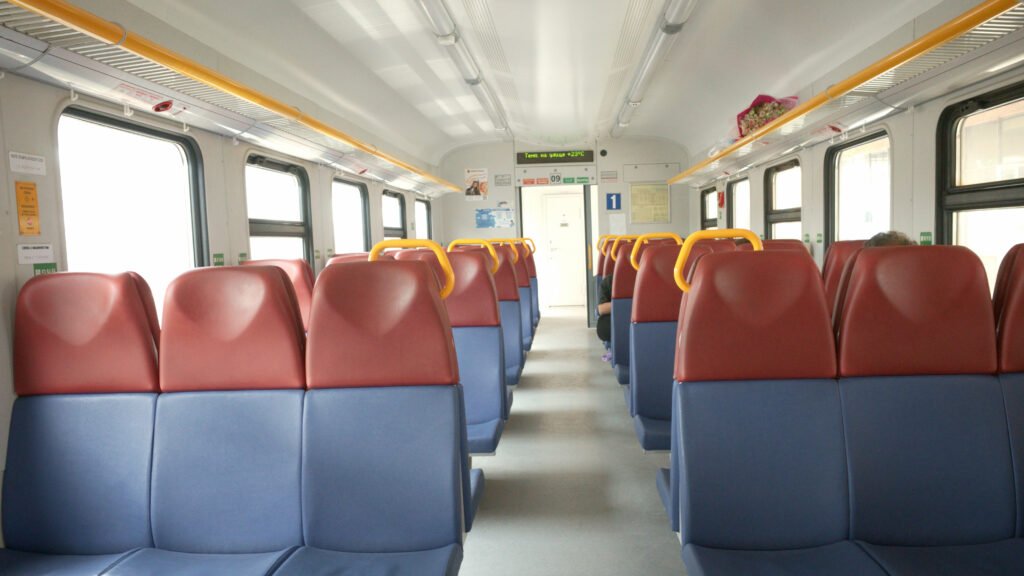
Inside the commuter train between Yerevan and Gyumri 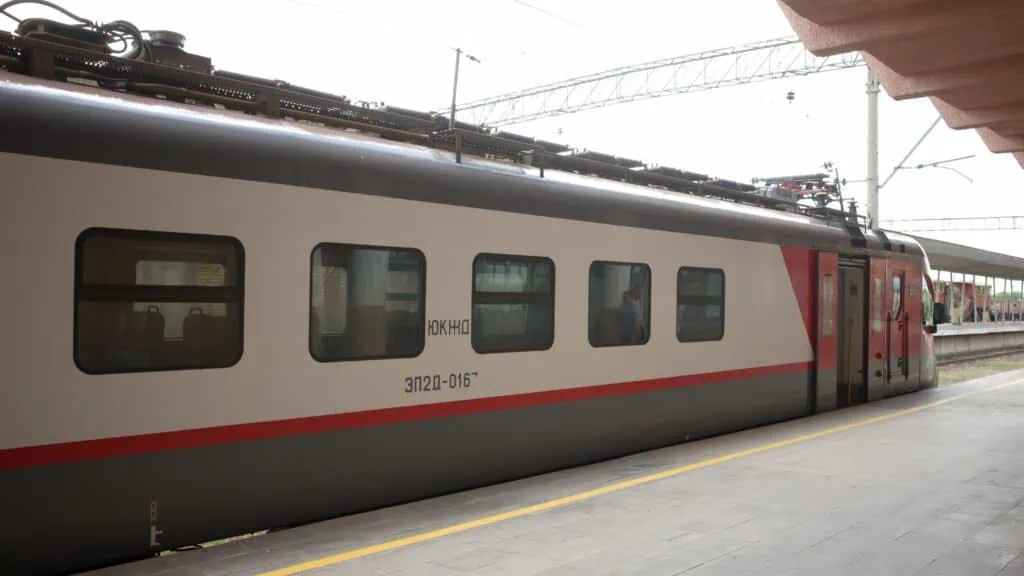
The train between Yerevan and Gyumri
Where to Next
Once you’ve explored Gyumri, why not look further afield into the wider Caucasus? Here are some ideas.
- Things to do in Yerevan: Armenia’s modern capital and pink city
- Things to do in Gyumri: A guide to Armenia’s Black and Apricot City
- Iron Fountain Gyumri: Armenia’s Extraordinary Soviet UFO
- Things to Do in Tbilisi: A Guide to the Capital of Georgia
- Things to Do in Batumi: Georgia’s Unexpected Black Sea Gem
- Things to Do in Kutaisi: A Guide to Georgia’s Ancient City
- …and more…
I hope you enjoyed reading this. If you have any questions or comments, do let me know in the comments. Thank you for reading my blog.
Unsubscribe whenever you like (Privacy Policy)