Best Day Trips from Tbilisi, Georgia: Monasteries, Mountains and More
While Georgia’s capital could keep you happy for days, it would be a shame to miss the chance of a trip or more beyond Tbilisi. and there are plenty of great options to choose from.
I’ve lined up the 9 best choices based on places I’ve visited myself, trips recommended to me, and those still on my list for my return visit. I’ve covered how to get there, either on a tour or independently, where you can. You’ll find mountains, ancient cities, caves and thrill seeking adventures, wine tasting, plus insta-worthy views, and all possible in a day. There’s also an option to ‘tick off’ another country (Armenia) too, if that appeals. So, there’s something here for everybody.
This guide may include a few affiliate links. If you choose to buy something through one of them, I may earn a small commission (at no cost to you). Thank you for supporting One Small Bag.
Map of Day Trips from Tbilisi
Tbilisi day trips: Quick reference
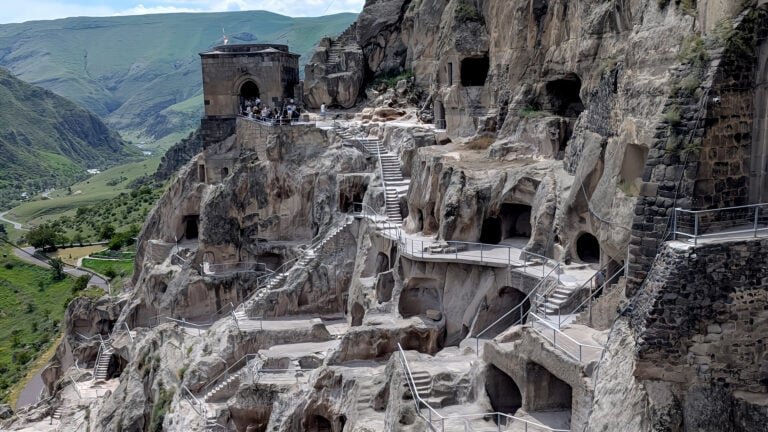
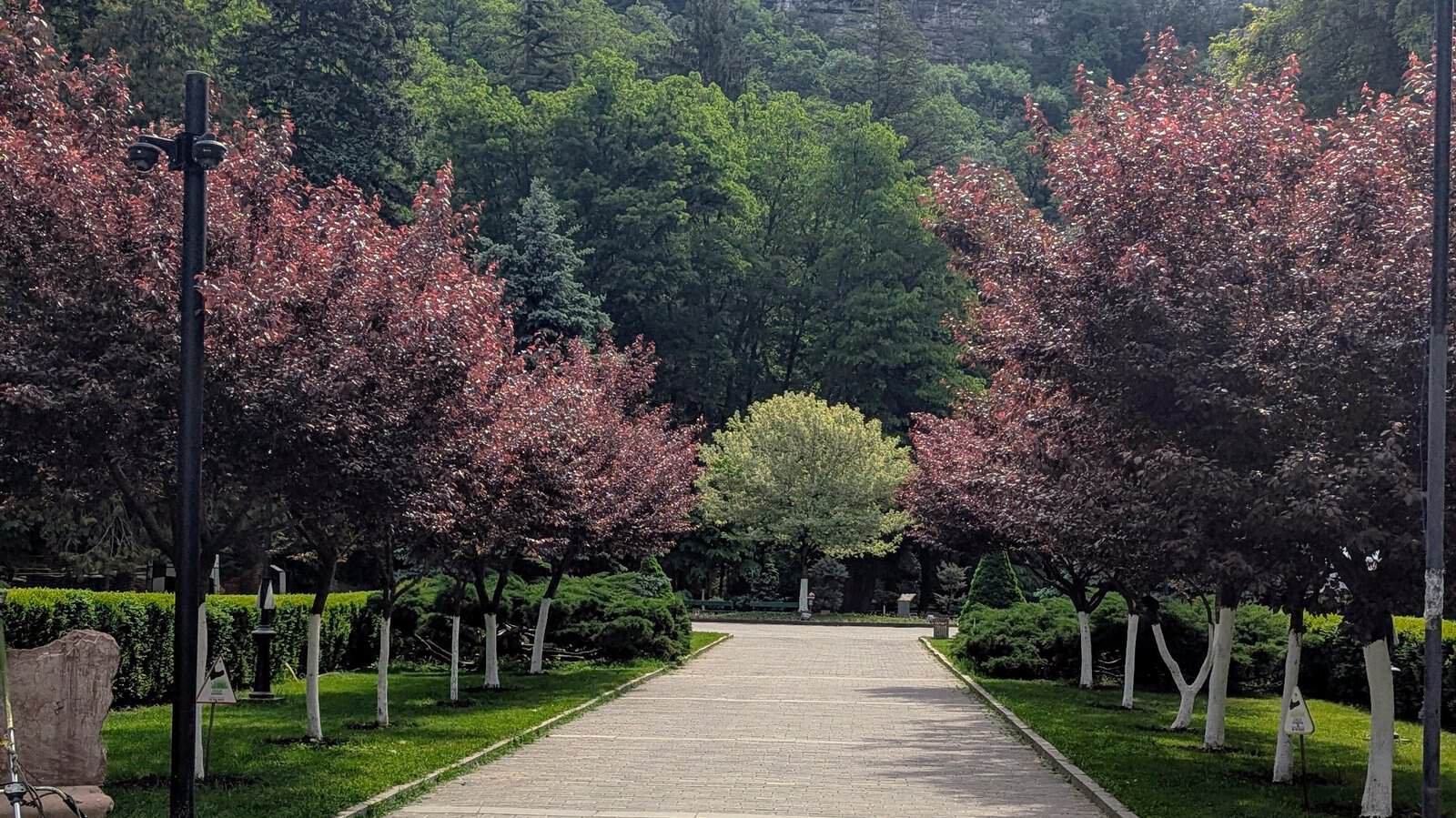
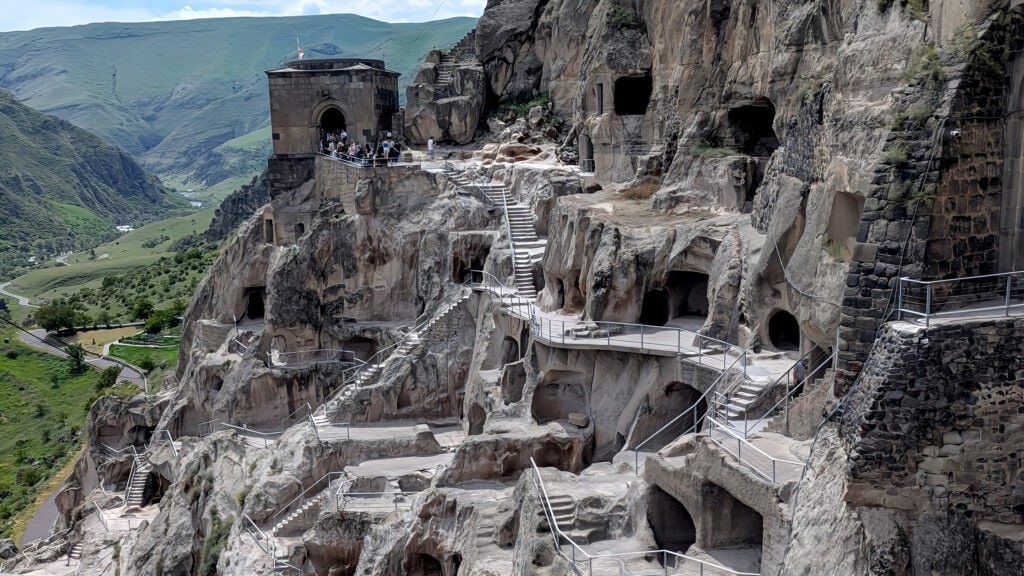
My personal favourite on this list is the trip to the astonishing cave city of Vardzia. It’s one of the longest trips on the list, with stops in the spa town of Borjomi (the picture at the top of this article and Rabati Castle, and it’s totally worth it. I’d also recommend a day trip to Armenia if you don’t have time for a longer trip in the region. And of course, if you like wine, you will definitely want a trip to visit the wineries of Kakheti.
Day Trip | Distance | Best For |
|---|---|---|
~ 20 km | History buffs (UNESCO), culture & food lovers | |
~ 90 km | Political and Soviet History lovers & Archaeology Enthusiasts | |
~ 230 km | History buffs & Instagrammers | |
~ 160 km | Exceptional views for mountain lovers | |
~ 90 km | Wine lovers | |
~ 270 km | Country tickers | |
~ 100 km | Monastery lovers & Instagrammers | |
~ 230 km | For lovers of waterfalls, canyons, show caves and boat rides | |
~ 93 km | For thrill seekers |
Options for Day Trips if you prefer to travel independently
If you’re like me, you will be reviewing your options for independent travel to each destination, before booking an organised tour. Both Georgia and Armenia are two places where it’s often better to book the tour. Independent travel is not necessarily straight forward or possible, unless you hire a car. On the other hand, tours, were, in my experience, high quality, well organised and very good value.
Here are your options if you want to DIY your day trips from Tbilisi:
- Minibuses (Marshrutkas): Didbube bus station is the starting point for most trips; it’s a little chaotic. The destination should be clearly displayed on the bus dashboard. Minibuses don’t follow a strict timetable and can’t be booked in advance. Take cash in small denominations rather than rely on card payments and pay at the ticket office. Arrive well in advance, so you have time to find your bus, buy your ticket and be there before the set departure time, as it may leave early if it’s full. Best for shorter trips and if you’re flexible with time.
- Coaches: The standards of coaches, ticketing, and timetabling tend to be more reliable and less stressful than the local minibuses (marshrutkas) and can be pre-booked.
- Trains: Mtskheta (Georgia’s ancient capital) and Gori (for Stalin’s birthplace and caves) are on the train line from Tbilisi and within range for a day trip, although timings may not be ideal and sites are some way from the stations. Tbilisi train station is in the east of the city near Dezerter Bazaar.
- Taxis / Bolt: Bolt prices can be reasonable, even for longer journeys. So it’s worth checking the price and useful, even one way, if the timings of buses and trains don’t work for you.
- Car hire: Be prepared for assertive driving in Georgia, variable road conditions, and strict enforcement of traffic laws and bring an International Driving Permit. You might want to pick up your car on the outskirts and avoid driving in central Tbilisi.
1. Mtskheta
Just north of the capital, Tbilisi, the ancient city of Mtskheta is definitely worth your time. Packed with UNESCO World Heritage sites and stunning river views, Mtskheta features Jvari, the 6th-century hilltop monastery perched above the confluence of the Mtkvari and Aragvi rivers, and Svetitskhoveli Cathedral, Georgia’s most sacred church.
Enjoy Mtskheta‘s restored centre with cobblestone streets, local crafts, a market and traditional wine tasting. The city is highly rated for traditional dining, so set aside time for a meal and try a local dish, such as authentic Georgian bean stew.
We visited on a tour. Read my Guide: Visit the Chronicles of Georgia in Tbilisi (And Why It Beats Stonehenge), also visited on the same trip.
How to get to Mtskheta
When to visit Mtskheta

Jvari Monastery 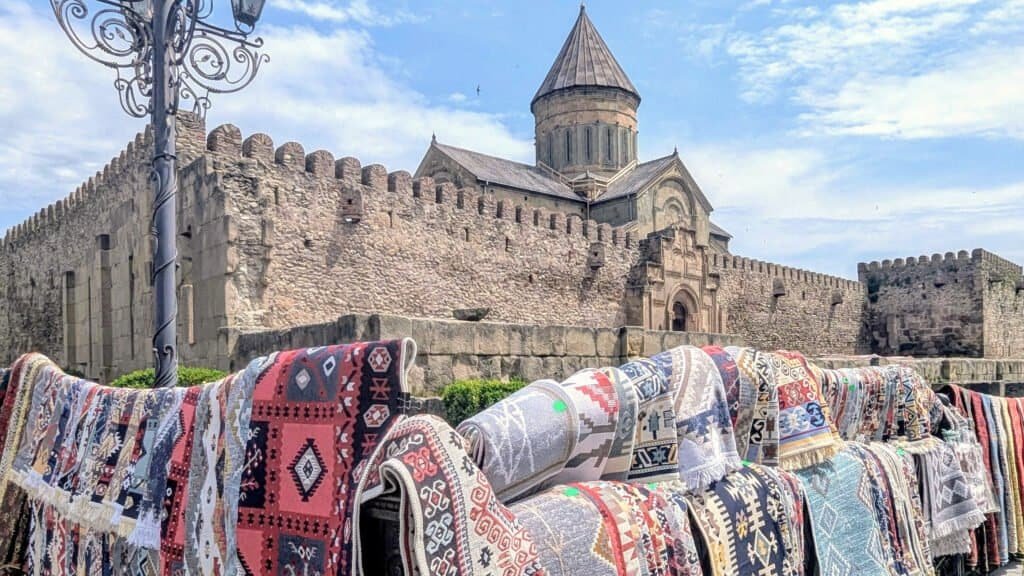
Svetitskhoveli Cathedral
2. Gori & Uplistsikhe
A trip to Stalin’s birthplace in Gori and an ancient cave city. Here’s what you can expect to see:
- Gori: A centuries-old trading post along the Silk Road between Tbilisi and Kutaisi, and a popular stop on the Georgian tourist trail. Possibly best known as the birthplace of Stalin, the city features a museum dedicated to his life, including his humble birthplace, personal rail carriage, and numerous artefacts.
- Uplistsikhe: East of the city, this spectacular ancient rock-hewn town features a sprawling maze of dwellings, pagan temples, and rock-cut wine cellars dating from the Early Iron Age
How to get to Gori & Uplistsikhe
When to visit Gori & Uplistsikhe
3. The Cave City of Vardzia, Borjomi & Rabati
For me, this was always going to be top of my list. I was blown away by the underground cities in Cappadocia when I visited many years ago, long before it became popular. Since then, I’ve made a point of discovering more jaw-dropping places like this across Europe, including Meteora in Greece and Old Orhei in Moldova. I was very happy to add Vardzia to the list, and my high expectations were met.
The tour is a good mixture. There’s a stop in Borjomi spa town, a little brief but worth it. Rabati Castle, with its mix of styles is spectacular, as is Vardzia.
How to Get to Vardzia
While it’s potentially possible to travel in the direction of Vardzia by Marshrutka (minivan), it would not be possible to do the return trip in one day due to the distance involved (around 4-5 hours each way), so you would either need to stay over in Vardzia, take a tour or drive yourself.
Best Time to Go to Vardzia
We visited on a tour. Read my guides:
Vardzi 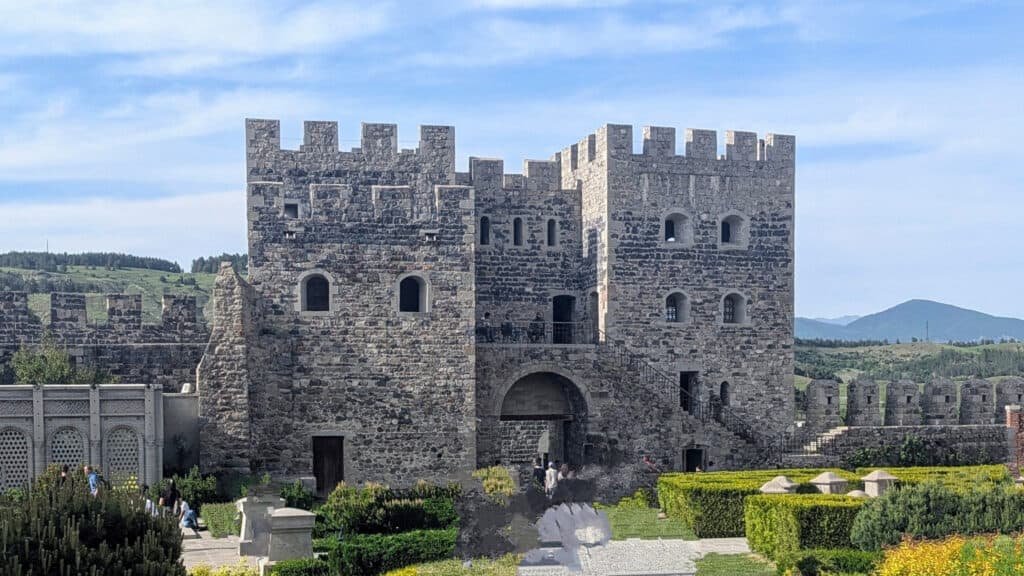
Rabati Castle
4. Kazbegi & the Georgian Highway: Into the Caucasus
A chance to explore along the Georgian military highway, the main road connecting Georgia and Russia, and a spectacular, though at times scary, ride. Begin at Ananuri Fortress, set above the Zhinvali Reservoir. Move on to Gudauri, one of Georgia’s top ski resorts, where the views continue. Seek out the Friendship Monument, which symbolises the unity of Georgia and Russia.
Hiking to Gergeti Trinity Church, one of Georgia’s most iconic and spiritual sites, can be physically demanding, so you can switch to a 4×4 jeep to go farther into the mountains. While you are there, enjoy a traditional Georgian meal in the mountains.
How to get to Kazbegi
While it’s possible to get to Kazbegi by marshrutka, a tour allows you to stop along the way.
Best time to go to Kazbegi
5. Kakheti: Georgia’s Wine Country
Explore Kakheti, Georgia’s wine region, located in the eastern part of the country. A tour will typically take you to three separate wineries to learn about winemaking in Georgia and taste the wines, brandies, and maybe chacha, Georgia’s potent grape vodka. Expect a mixture of larger, more commercial wineries and smaller, more family-run affairs.
A tour may also include a visit to Badiauri village for a bread-making demonstration, Bodbe Monastery and Sighnaghi, known as the “City of Love,” famous for its charming streets, colourful balconies, and panoramic views of the Alazani Valley.
How to get to Kakheti
With multiple stops along the way, a tour or a driver will be essential. Drink driving laws are strict. The legal blood alcohol limit in Georgia is 0.03%.
Best time to go to Kakheti
After our winery visits in Moldova, we decided to give our livers a rest, but we saved this trip for next time in Georgia.
6. Day Trip to Armenia
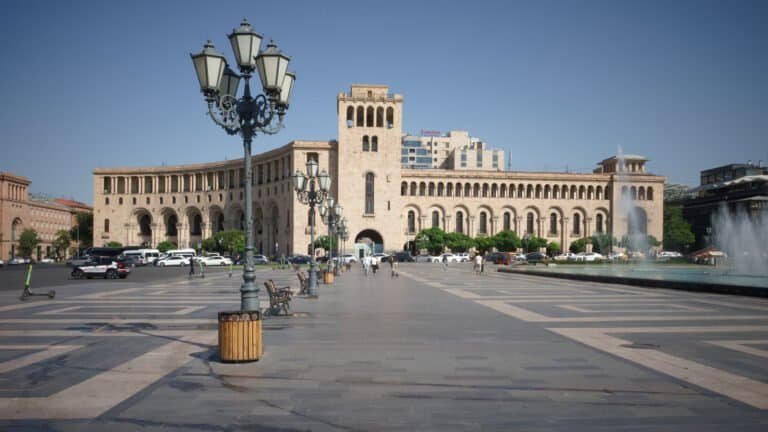
If you have just a day, and you want to get a glimpse of another country, then go for it. If you can devote more than one day, then this trip may not be the best fit. I chose to spend more time in Armenia, so I’ve not been on theis day trip myself, but I met people in Georgia who did go and thoroughly enjoyed their day over the border. I definitely recommend a trip to Yerevan, however you do it, and I have a Guide to the Armenian capital.
The main decision to make is if you want to see sites in the northern part of Armenia, closer to the border, or go ‘all-in’ with an incredibly long day including Yerevan.
How to get to Armenia in a day
- Day Trip to Armenia Including Homemade Lunch
- Armenia Day Trip from Tbilisi: Lake Sevan, Dilijan & Yerevan
Best time to go for an Armenian day trip
7. Rainbow Mountain & David Gareja
An opportunity to visit Georgia’s only semi-desert area. This trip takes you close to the border with Azerbaijan.
- Rainbow Mountain: You’ll hike through a landscape of mineral-rich sedimentary rock that looks as if it’s been painted with brightly colored stripes, hence its nickname ‘Rainbow Mountain’. Georgia’s version is smaller and less vivid than the Rainbow Mountain in Peru, but far less crowded, much easier to hike, and only a day trip from Tbilisi — worth it on its own terms.
- David Gareja: A remarkable 6th-century rock-hewn monastery complex. It features caves, chapels, and living quarters carved directly into colourful clay cliffs. One of the most spiritual places in Georgia, so close to the border with Azerbaijan, you may see a soldier guarding it.
If you’re short on time, this pairing is ideal – you get Georgia’s most colourful landscape and one of its most spiritual sites in a single day.
How to get to Rainbow Mountain & David Gareja
A private or group tour is the most practical way to do this, or you can drive yourself.
Best time to visit Rainbow Mountain & David Gareja
8. Kutaisi Canyons and Caves
A trip to western Georgia to explore waterfalls, caves, and canyons near Kutaisi. The tour includes Martvili waterfalls in the Samegrelo-Zemo Svaneti region, where you’ll take a boat trip through the canyon. Then you’ll visit Prometheus Caves, famous for their stalactites, stalagmites, petrified waterfalls, underground rivers, and cave lakes. Colourful lights illuminate the cave, creating a magical atmosphere.
You can end your tour in Kutaisi, use this day as a transfer day, or return to Tbilisi. I wish I’d known this! We caught the Citibus for the transfer between Tbilisi and Kutaisi, and it was easy and very comfortable. Still, the bus stops are not central, and this tour would have been a way to squeeze even more into our itinerary. I thoroughly recommend spending longer in Kutaisi if you can. I have a Kutaisi Travel Guide.
How to get to the canyons and caves of Zemo Svaneti from Tbilisi
Best time of Year
9. Diamond Bridge & Dashbashi Canyon
This trip gets missed off a number of guides as its a newer trip. If you are looking for alternatives to monasteries, caves, and wine tours, and you don’t mind heights, this trip could be for you.
Diamond Bridge is about 2 hours from Tbilisi and is one of Georgia’s most distinctive architectural landmarks. The cutting-edge design spans the breathtaking Dashbashi Canyon. Opened in 2022, it holds a Guinness World Record for the longest glass cantilever bridge.
There’s a viewing platform and a glass cafe suspended in the middle of the bridge, and there are sky bikes too. If the feeling of being suspended in mid-air, with the ground hundreds of metres below, appeals to you, then this trip is for you. For anyone with vertigo, it’s more like your worst nightmare!
The tour to the canyon includes a stop at the tranquil Algeti Reservoir.
How to get to Diamond Bridge and the Dashbashi Canyon
No obvious public transport routes here.
Best time of Year
Georgia’s Three Cave Settlements: How to Choose
Georgia is one of the best places in the world to see cave cities and settlements. Expect spectacular, multi-tiered historical sites carved directly into mountain cliffs, rivalling destinations like Cappadocia in Turkey. The country features three main historical cave complexes, all accessible as day trips from Tbilisi and offering a glimpse into ancient civilisations, defensive architecture, and monastic life.
Georgia’s Cave Settlements
If you only want to visit one, make it Vardzia, the largest and most impressive of the three. The easiest of the three to get to and the least physically demanding is Uplistsikhe. If seeing the Rainbow Mountains and Georgia’s desert scenery is your priority, David Gareja on the border with Azerbaijan may be the best option.
Practical tips for Taking Organised Day Tours
Here are some of my thoughts, based on many trips worldwide including the Caucasian countries.
Popular Tour Aggregators
These are the platforms I recommend. I use both. If you book through one of them, you should expect clear descriptions, communication, and often flexible terms, including late cancellation. Local tour operators rely on good reviews which help potential customers choose their tours with confidence. Tours can be for large groups or private tours exclusively for your party. They also provide official transfer services.
- Get your Guide: An international platform that aggregates popular tours worldwide, with wide coverage, especially in Europe.
- Viator: A huge international platform. If I’m looking for something more niche or offbeat, I’ll often try Viator first, but I wouldn’t make a clear recommendation for one platform over another.
Tips for surviving organised day trips
- Read communications so you know what to expect and where to be.
- Wear appropriate footwear for the trip.
- Bring water and a layer if things get chilly or a raincoat/umbrella if rain is expected.
- Bring snacks to tide you over and take advantage of the stops you get along the way, especially if you like to eat regularly and at set times. While most organised tours do stop regularly for food and comfort breaks, these may occur at odd times.
- Take a photo of the bus and vehicle registration number, as one bus can look like another in a large car park, and they can move around.
- Pick a smaller tour if you can. It’s more personal and there’s less chance people will go missing, delay things or demand changes.
Using day Tours for onward travel or to fill the last day of your trip
I’ve found tour operators extremely accommodating if you want to use them as a ‘one way ticket’, if you are travelling onwards to a stop on their itinerary. Shorter tours, which don’t get back too late, work well on the last day of your trip if you have a late flight or other onward connections. Then the last day is used productively without going into ‘waiting mode’ and carrying a bag around all day or arranging for it to be left somewhere. Although check first, if you do this, that there is room for your luggage, if you don’t travel like me, with one small bag.
Where to next
While you are in the area, why not look further afield into the wider Caucasus? Here are some ideas.
- Things to Do in Tbilisi: A Guide to the Capital of Georgia
- Things to Do in Batumi: Georgia’s Unexpected Black Sea Gem
- Things to Do in Kutaisi: A Guide to Georgia’s Ancient City
- Things to do in Gyumri: A Guide to Armenia’s Black and Apricot City
- Things to do in Yerevan: Armenia’s modern capital and pink city
- …and more…
I hope you enjoyed reading this. If you have any questions or comments, do let me know in the comments. Thank you for reading my blog.
Unsubscribe whenever you like (Privacy Policy)