Visit the Chronicles of Georgia in Tbilisi (And Why It Beats Stonehenge)
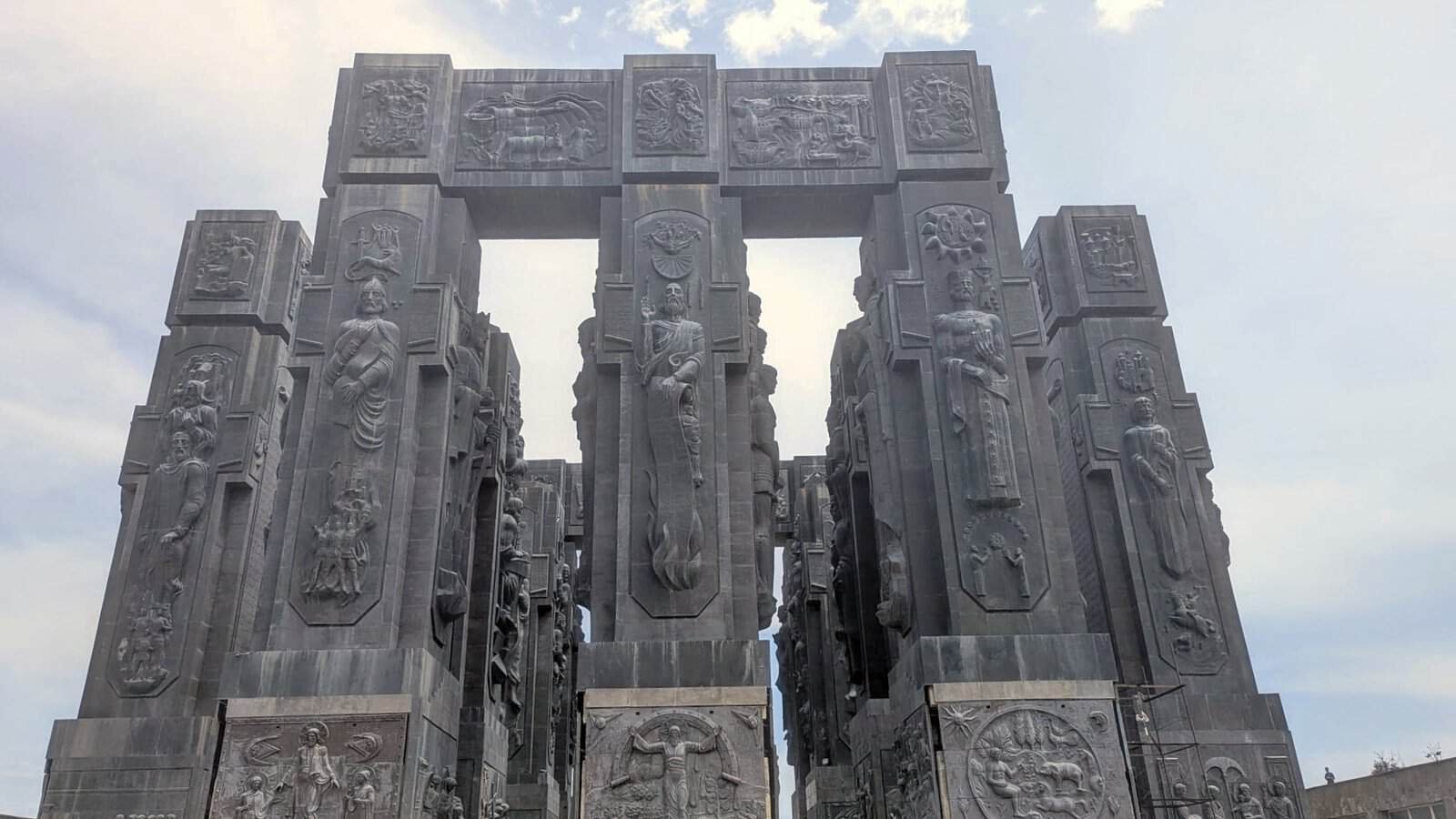
The Chronicles of Georgia is one of the more extraordinary things I have seen in Europe, and almost nobody outside Georgia has heard of it. Sixteen monumental pillars, each taller than a ten-storey building, rise from a hilltop on the edge of Tbilisi. Free to visit, easy to reach, and genuinely jaw-dropping. I’m not sure why it isn’t more famous. What I do know is that arriving there without expectation, almost by accident, made it one of the best days of the trip.
I’ve written up all the details of our visit, including how to get there, whether you travel there independently or as part of a tour, as we did.
This guide may include a few affiliate links. If you choose to buy something through one of them, I may earn a small commission (at no cost to you). Thank you for supporting One Small Bag and helping keep this resource ad-free and independent.
Are the Chronicles of Georgia worth visiting?
Absolutely yes. The Chronicles of Georgia is well worth a visit, especially if you want a break from Old Town’s traditional architecture. This monumental complex offers breathtaking views of the Tbilisi Sea and provides a fascinating, off-the-beaten-path glimpse into the country’s history.
The sheer scale of the structure makes you feel so tiny as you walk around the pillars. The engravings on each of the pillars give you plenty to look at, too. It was one of the highlights of my trip to Georgia.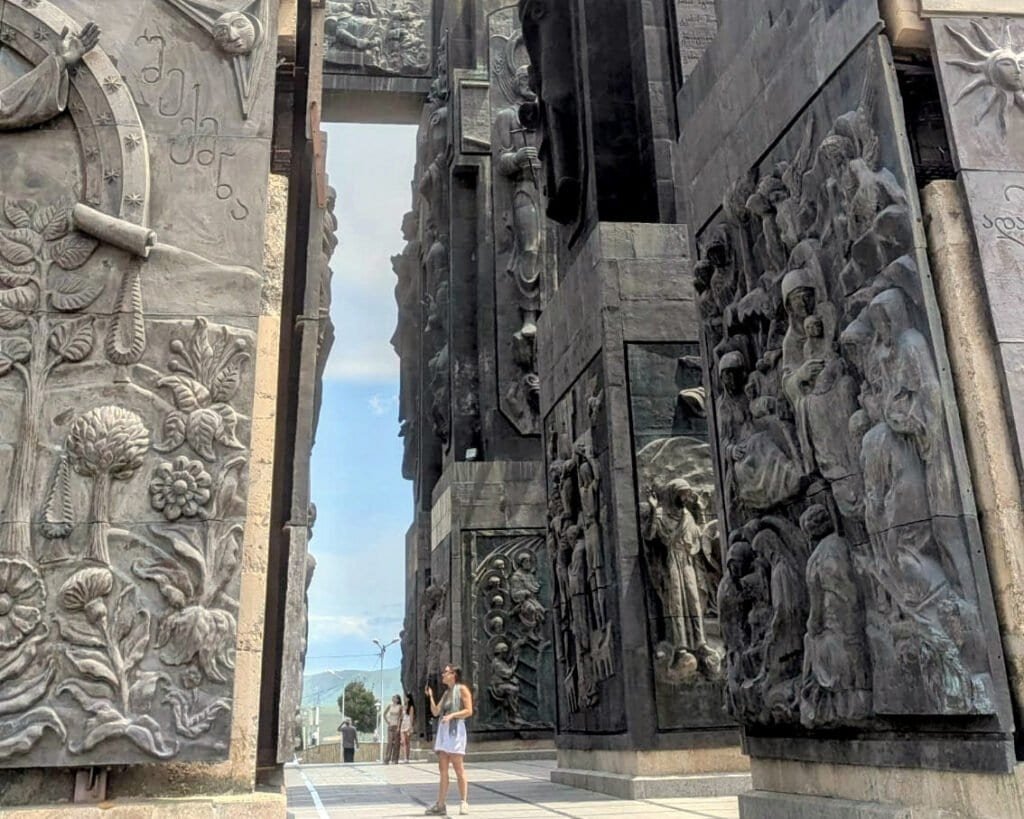
What you’ll see at the chronicles of Georgia
Rising from Keeni Hill on the northern outskirts of Tbilisi, the Chronicle of Georgia consists of 16 massive columns, each reaching a height of 35 metres. The pillars are arranged in a square and covered with monumental bronze bas-reliefs.
The lower sections tell the story of Jesus. scenes like the Last Supper and Palm Sunday, while the upper portions are devoted to the kings, queens, and heroes of Georgian history.
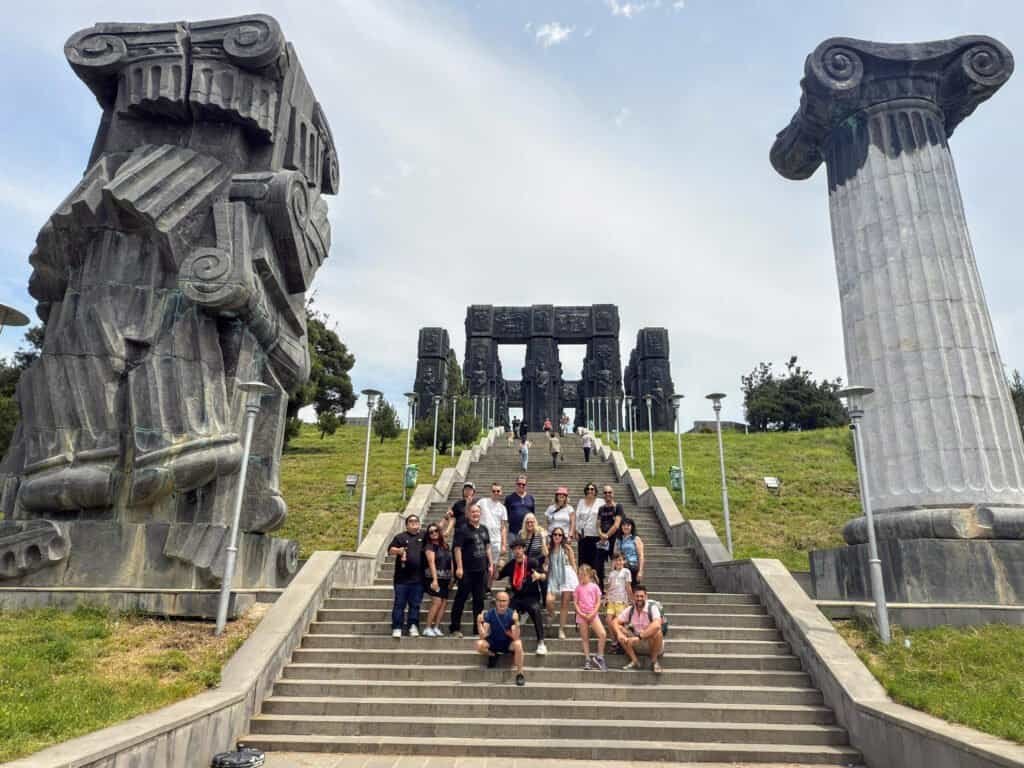
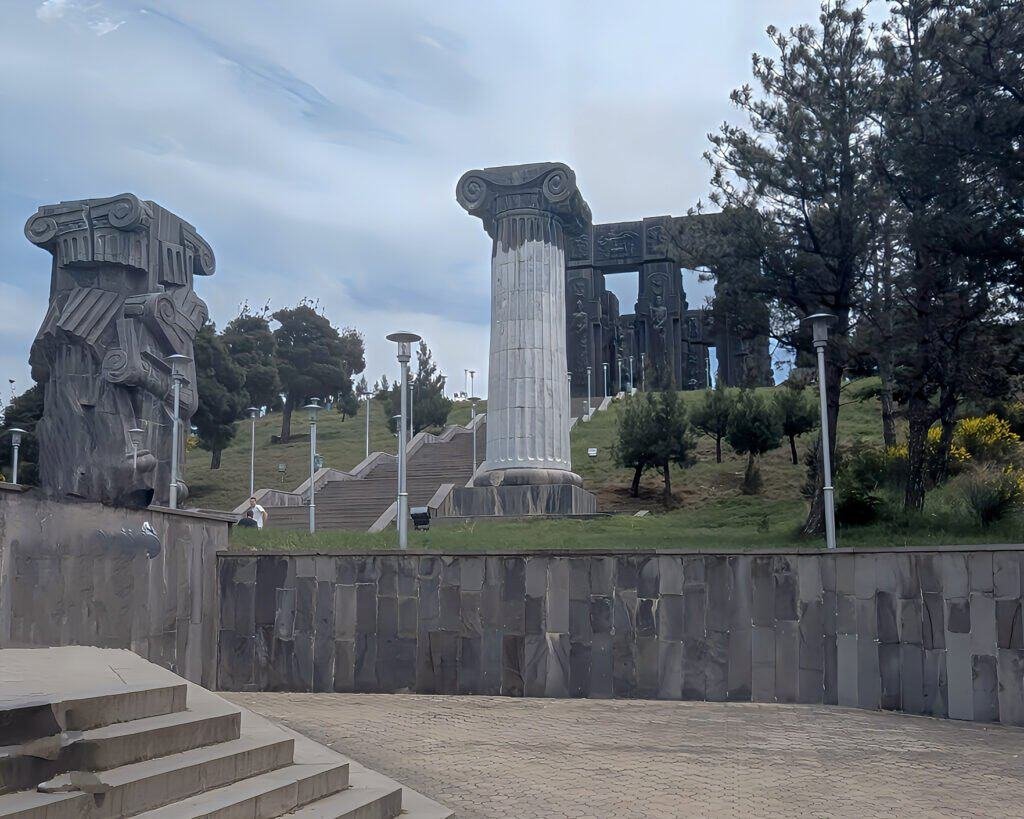
On the floor, an engraved list of Georgian monarchs is carved into one large burial stone. The sheer scale of the place is something else, all the more imposing, as it’s at the top of a hill with a stairway. A great spot for photos.
Is It Georgia’s Stonehenge?
The monument is often referred to as “Georgian Stonehenge.” I guess the towering columns have a similar otherworldly quality, but for me, the comparison ends there.
For a start, Stonehenge was built between 3000 and 1600 BC, it is ancient, and that’s what singles it out for attention. We naturally wonder who built it, why, and just how? Whereas the Chronicles of Georgia are modern. Tsereteli, the sculptor who designed and built it, passed away only recently, in 2025. It is not a mystery!
There are structural differences, too. The Stonehenge standing stones are around 7m and smaller than people expect. Compare that with the monumental pillars of the Chronicles of Georgia, standing 35m tall and set atop a steep hill, making their presence all the more imposing.
But for me, the main difference is in perception. The Chronicles of Georgia are not well known, but if you visit, it would be difficult not to be impressed by them. On the other hand, many visitors report that their experience at the world-famous Stonehenge is underwhelming. Personally, knowing the area well, I’d recommend the nearby standing stones and the village of Avebury instead.
Who Built It, When and Why?
Construction began in 1985, during the final years of the Soviet Union, by Georgian sculptor and artist Zurab Tsereteli. The monument was conceived to commemorate two significant anniversaries: 3,000 years of Georgian statehood and 2,000 years of Christianity in the country.
Tsereteli went on to become one of the most prolific monumental sculptors of his era and a controversial one, too, as not everyone liked his creations. His 98-metre-tall statue of Peter the Great prompted protests in Moscow, but the Chronicles arguably remain his most striking work.
Interestingly, this wasn’t even the original plan for Keeni Hill. Something far more Soviet was intended – a 100-metre-tall statue of Joseph Stalin. That was eventually scrapped, and the Chronicle was commissioned in its place.
Will it ever be finished?
Progress halted at around 90% – you can still see that some columns appear incomplete. Funding issues following the collapse of the Soviet Union and the Russo-Georgian war are understood to be the main reasons it was never fully completed. As for what the finished version would have looked like, no detailed public plans exist. The Chronicle of Georgia feels like a work in progress, which simply adds to the intrigue when visiting.
Is there anything else to see at the Chronicles of Georgia?
Yes, there is a small church dedicated to St Nino, who brought Christianity to Georgia. You’ll also come for the views. To the south, you’ll see the sprawling suburbs of Tbilisi, not the picture-postcard views of the old city, but a sprawling sea of older Soviet-style apartment blocks and industrial units. Turn a more easterly direction, and there’s another sea, also not a real one. It’s the Tbilisi Sea, a man-made reservoir. A huge expanse of water, popular for swimming and recreation, especially in the summer heat, as well as serving the city’s taps.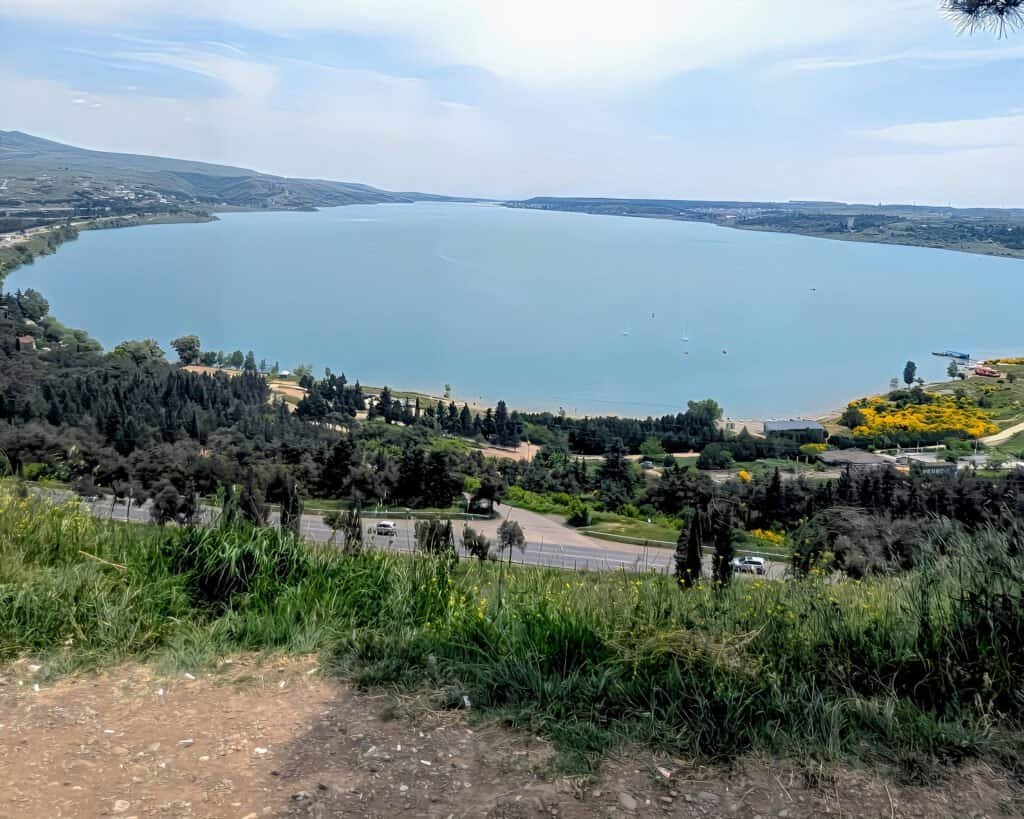
How to get to the Chronicles of Georgia
If you don’t have a car, the easiest way to get to the Chronicles of Georgia from Tbilisi city centre is to take a taxi or use a ride-hailing app like Yandex or Bolt. It will take 20-30 minutes, and the driver can drop you off at the top of the hill to save you walking up yourself.
Alternatively, you can get there by public transport. Take the metro, the Red Line to Ghrmaghele Station. Find the bus stop on the same side of the road and catch the 360 bus to the Cadet Corps stop. There are regular buses (around every 15 minutes), and the journey should take about 20 minutes. Walk the remaining 850 metres (around 10–15 minutes) to the monument. If you have a public transit card, it works for both the metro and the bus; just remember to tap in to validate your trip.
Alternatively, there are tours. I can thoroughly recommend this tour, including a visit to the ancient capital of Georgia, Mtskheta.
➡️ Tbilisi: Mtskheta Jvari Bazaar, Chronicles of Georgia & Wine
Where to next
I’m publishing a guide to Tbilisi and an Itinerary for a week in Georgia, based on my trip. If you’d like news straight to your inbox, I have a newsletter that shares new and upcoming articles.
I have more from Georgia, too:
You may also be interested in:
- Tbilisi: Mtskheta Jvari Bazaar, Chronicles of Georgia & Wine
- Rabati Castle, Akhaltsikhe: A Guide to Georgia’s Most Controversial Fortress
- Visit The Incredible Cave City of Vardzia, Georgia
- Things to do in Kutaisi: A Guide to Georgia’s Ancient City
- Things to Do in Batumi: Georgia’s Unexpected Black Sea Gem
- Georgia Travel Information
Have you been to Georgia, or are you planning a trip? Do let me know in the comments.
I hope you enjoyed this article.

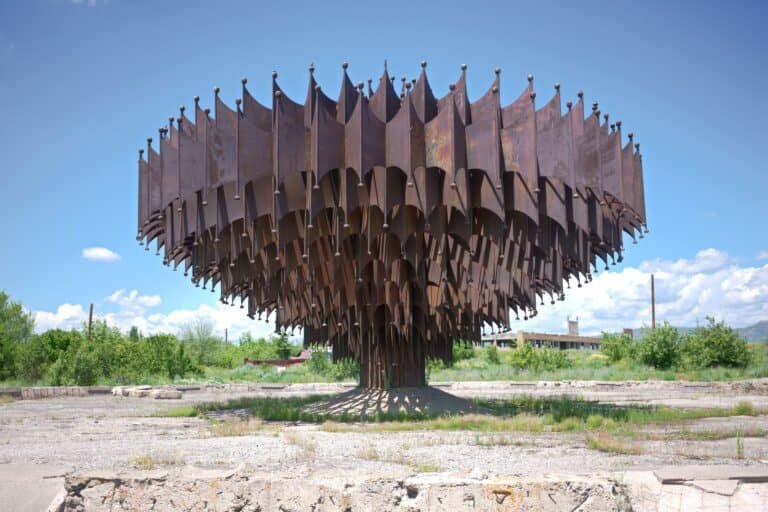


Yes, that was my highlight of Tbilisi. The scale and detail is astonishing.