Best Things to Do in Skopje: Your Comprehensive Travel Guide to Europe’s Most Kitsch Capital

Skopje, the capital of North Macedonia, is one of Europe’s least-visited and best-value capital cities. It’s a city of contrasts: one of Europe’s oldest settlements, yet one that keeps reinventing itself. Aptly called the City of Statues, but don’t be surprised if Macedonian food and hospitality linger longest in your memory.
If you’re ready to explore one of Europe’s most intriguing capitals, then this guide is for you. It covers everything from must-see sights and day trips to transport tips and practical details.
This guide may include a few affiliate links. If you choose to buy something through one of them, I may earn a small commission (at no cost to you). Thank you for supporting One Small Bag.
Skopje City Guide
Perfect for … A budget-friendly European City Break 🕌 Ottoman history and bazaars • 🗿 Quirky cityscapes • 💶 Side Trips in N Macedonia & Kosovo • 🍽️Delicious Macedonian Food & Wine
For centuries, Skopje thrived as a trading crossroads. Its bazaars and caravanserais served merchants on the Balkan routes and those travelling onwards to the Silk Road. By the 1950s, it was firmly on the Yugoslav tourist circuit, alongside Ohrid, the Adriatic coast, and Belgrade. That all changed abruptly in 1963, when a devastating earthquake flattened much of the city. The rebuild brought stark, brutalist concrete, which was later given a 21st-century makeover with the Skopje 2014 project. These fake neoclassical facades and new monuments aim to recreate the image of a traditional European capital. One thing is for sure: there’s a feast for the eyes around every corner.
I’d suggest spending at least two days in the city, then extending your holiday with a wider Balkan trip and a few side trips if you have time. We loved exploring the area, and I hope this guide helps you plan your own visit
How Long Should I Stay In Skopje
I would recommend staying 2 to 3 nights in the city. This will give you time to see the city and do a side trip or two, but if you only have one day, I have options too.
Skopje in one day
- Morning – Explore the Old Bazaar & Ottoman Skopje
- Afternoon – Cross the Stone Bridge and take in the bold architecture of Skopje 2014 Makeover and Vardar Riverfront
- For a traditional evening meal, I suggest Kuka. Alternatively, return to the Old Bazaar
Two days or more in Skopje
Day 1
Day 2
- Mount Vodno & Millennium Cross (including cable car)
- Cathedral of St Clement of Ohrid
- Memorial House of Mother Teresa
- Debar Maalo District
Day 3 or more
- Add a day or half-day trip to Matka Canyon and/or Tetovo or Kosovo
- Spend more time in the city’s museums, parks, and concert halls.
- For a traditional evening meal, I suggest Kuka. Alternatively, return to the Old Bazaar
Map of Things to Do in Skopje
And not far from Skopje:
- Millennium Cross Skopje: Visit Mount Vodno by Bus
- Visit the Painted Mosque in Tetovo From Skopje by Public Bus
You’ll also be added to an occasional newsletter. Unsubscribe as you like (Privacy Policy)
The Old Bazaar & Ottoman Skopje
We’ll start our journey by heading towards the bazaar, where we enter another era. Here, mosques, hammams and caravanserais cluster around cobbled lanes and market stalls.
1 Skopje Old Bazaar
The Old Bazaar has been Skopje’s heart since Ottoman times. Once one of the Balkan Peninsula’s most important trading posts, it’s now a lively tangle of lanes where history and everyday life mingle.
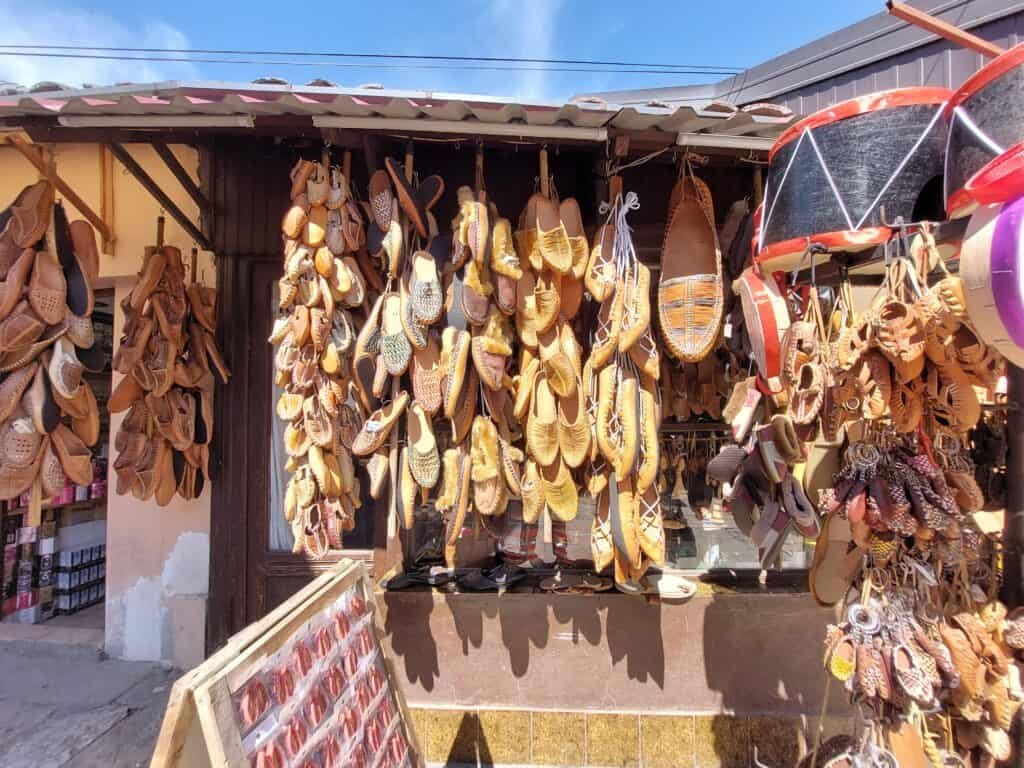
Among the cobbles, you’ll find everything from leather shoes and traditional stalls to shops stacked with sweets and cakes, umbrella-shaded streets, and artists selling their paintings. Take your time here to browse, people-watch, and soak up the atmosphere. Plenty of food and drink options keep you here, too.
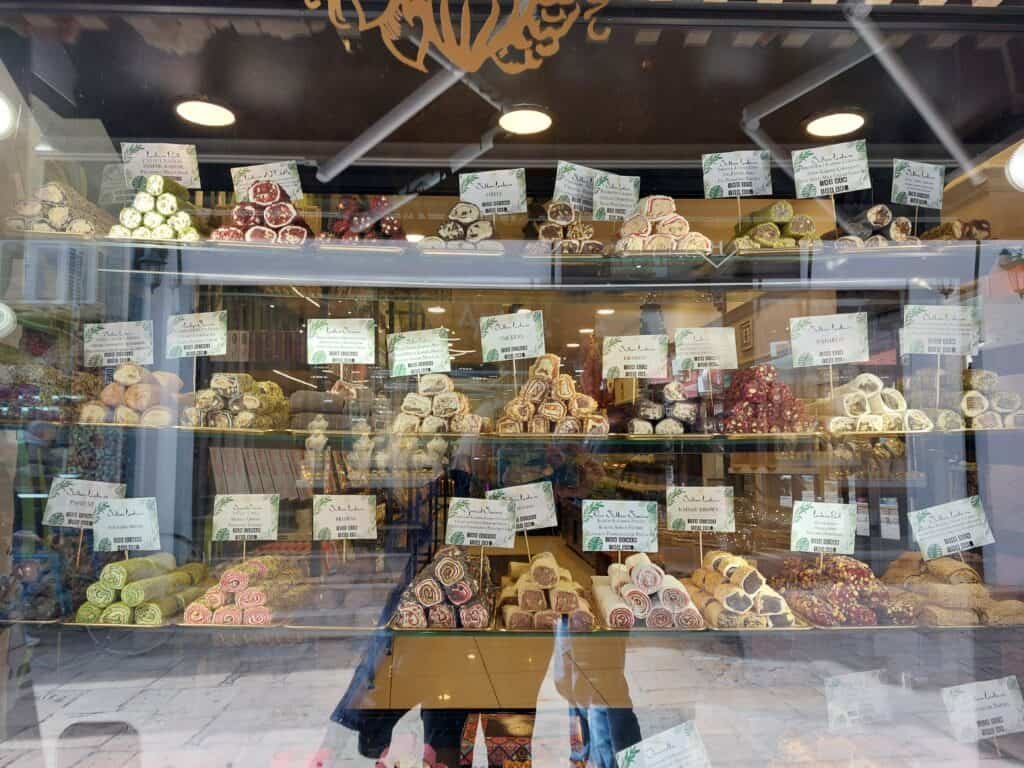

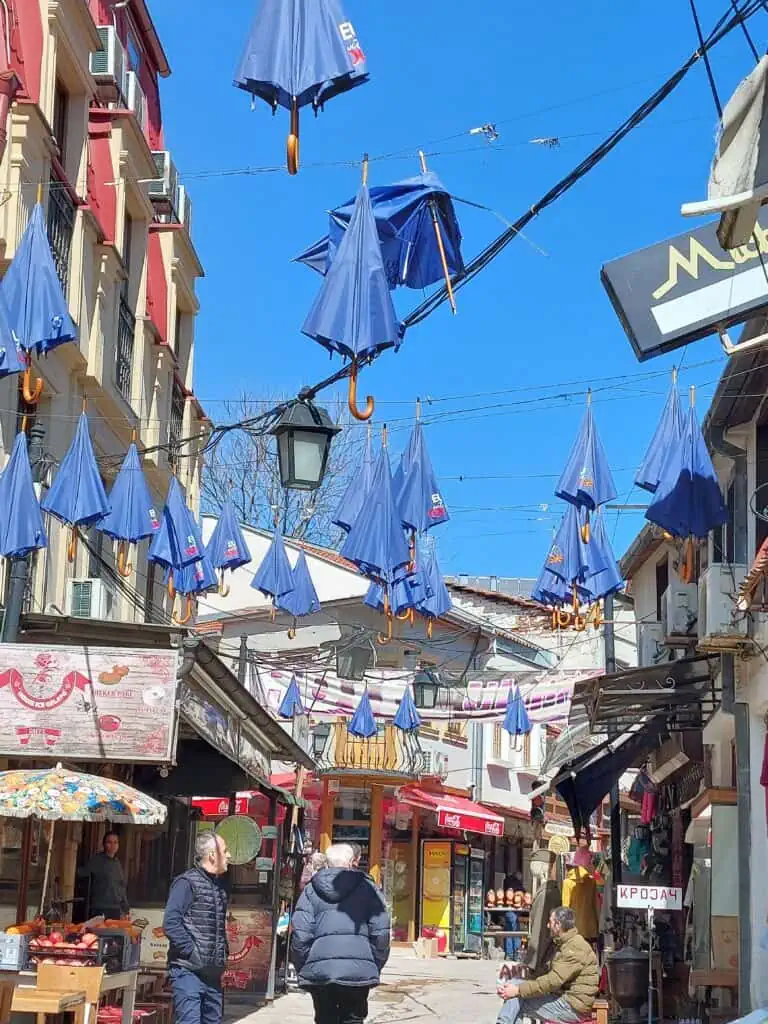
The area around the bazaar stays busy well into the evening, and it’s a great place to grab a drink or something to eat after dark. I’d recommend Old Town Brewery.

2 Skopje’s Ottoman Inns and Hammams
Beyond the shops and cafés, you’ll find some of Skopje’s most striking Ottoman landmarks, including mosques, hammams, and caravanserais that have stood for centuries.

The dome here belongs to the Čifte Hammam, a 15th-century bathhouse that now houses part of the National Gallery of North Macedonia. A short stroll away is the Kuršumli An, once a caravanserai where merchants and their pack animals sheltered overnight. Take a peek inside; its thick walls and domes are still standing. Both sites now form part of the Museum of Macedonia complex.
3 Mustafa Pasha Mosque
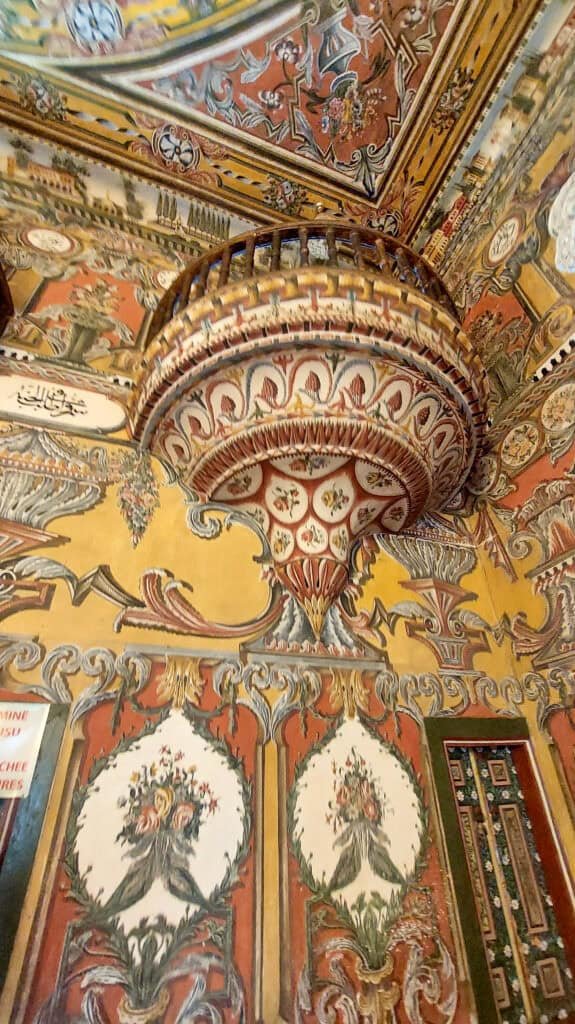
Perched just above Skopje’s Old Bazaar, the Mustafa Pasha Mosque is one of those places that makes you pause. Built in 1492, it’s a calm retreat from the city below. Step inside for restrained floral patterns and Arabic calligraphy that give it a quiet, understated elegance. It’s a complete contrast to the flamboyant kaleidoscope of colours at the Painted Mosque in Tetovo, which I also highly recommend for your trip to North Macedonia.
Mustafa Pasha’s tomb still lies in the courtyard. If you’re wandering the bazaar, it’s worth climbing the short hill for views back over Skopje and a glimpse into the city’s Ottoman past.
4 Bit Pazar (Green Market)
Keep walking north, and the Green Market (Bit Pazar) offers a more modern slice of local life, with fruit, vegetables, and everyday goods piled high in a maze of stalls.

5 Skopje Fortress (Kale Fortress)
Perched on the hill above the Old Bazaar, Skopje Fortress (Kale) has guarded the city since Byzantine times and was later reinforced under Ottoman rule. The thick stone walls and towers you see today have been rebuilt many times after earthquakes and invasions, but they still dominate the skyline.

It’s a short walk up from the bazaar, and if you climb onto the ramparts, you’ll be rewarded with wide views across the river and city. On a clear day, you can spot everything from the new town blocks to Mount Vodno in the distance. Parts of the complex also house the Museum of the Republic of North Macedonia. However, the real highlight is simply wandering the walls and imagining the centuries of history they’ve witnessed.
6 Skopje Stone Bridge
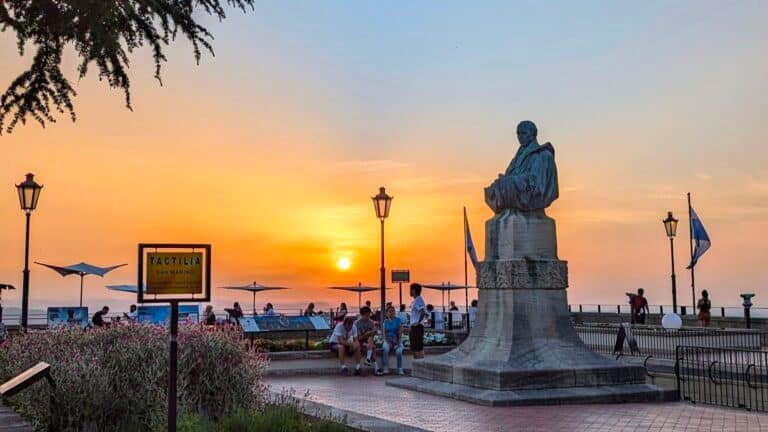
The stone bridge connects the modern and Ottoman parts of the city and spans the Vardar River, Macedonia’s largest. It’s built on Roman foundations and has been reconstructed several times, but it has retained its original architectural style. It’s not dissimilar to Prague’s Charles Bridge, though many less-famous bridges across Europe are similar, including Ponte Di Tiberio in Rimini, which I visited recently. You will almost certainly walk over this bridge as you wander the city centre.

From the bazaar, it’s only a few steps to the Vardar, where Skopje’s boldest modern makeover lines the riverbanks.
Skopje 2014 and Modern Skopje
Before we go further, here’s some context: a brief overview of the controversial Project Skopje 2014.
Skopje 2014: A City Rebuilt in Marble and Bronze
After the 1963 earthquake, Skopje was largely rebuilt in stark concrete blocks and brutalist designs. In 2010, the government launched the “Skopje 2014″ project to give the city a more “European” look. Dozens of neoclassical-style facades, monumental statues and fountains appeared almost overnight, especially along the riverfront.
The results are divisive. Supporters see it as an attempt to give Skopje grandeur and tourist appeal. Many locals, though, see it as kitsch at best and, at worst, an indulgent waste of public money that covers up the city’s modernist heritage with fake marble and oversized warriors. Whether you find it inspired or in bad taste, it’s impossible to miss, and it’s now part of what makes Skopje so distinctive.
Now, time to cross the Stone Bridge and arrive in Macedonia Square, the heart of the modern city.
7 Macedonia Square and Warrior Statue
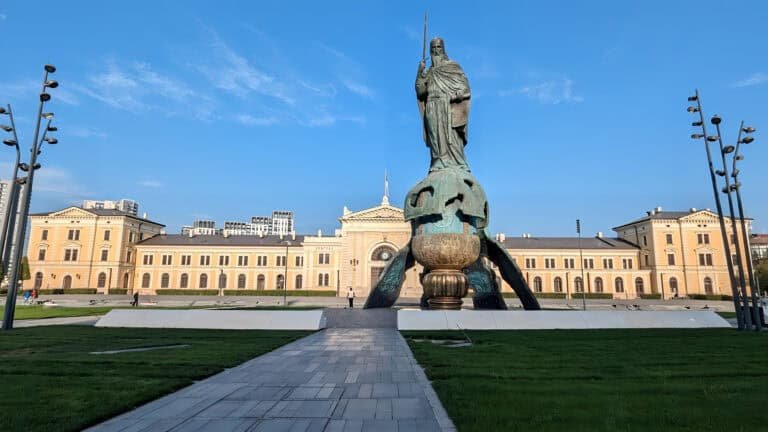
You can’t miss Macedonia Square, with a massive warrior statue atop a large fountain. The square is surrounded by a large shopping centre, bars, and restaurants. The square hosts events and serves as a meeting place for residents and visitors alike. It’s a great place to linger and soak up the atmosphere. If you want to stop for a drink or bite to eat, I recommend Kolektiv in the square for super-friendly service.

This picture shows the approach from Stone Bridge, withMount Vodno and the Millennium Cross in the background. A cable car ride up the mountain is an essential part of your trip to Skopje.
8 Skopje Woman Warrior Park and Statues
Right next to Macedonia Square, you’ll find Woman Warrior Park, though I couldn’t find any women warriors there! Maybe you could count the winged lady on top with Prometheus stuck in front? You’ll typically find statues of Prometheus naked, but the residents of Skopje insisted this one kept his modesty and his pants on! Good call!

Once you’ve had your fill of statues in this park, head back to the riverfront, where plenty more await!


9 Riverside Galleons, Stalls and Cafes
Perhaps the most surreal sight along the riverfront is the two full-sized galleons moored permanently on the Vardar. One has been left to rot, its windows broken and decks sagging, a ghost ship. The other has been spruced up and now operates as a hotel and restaurant, its polished wood and tidy deck looking oddly out of place against the neoclassical facades and fountains. Love them or loathe them, the galleons are impossible to miss and are probably among the most photographed parts of Skopje’s “new look.”

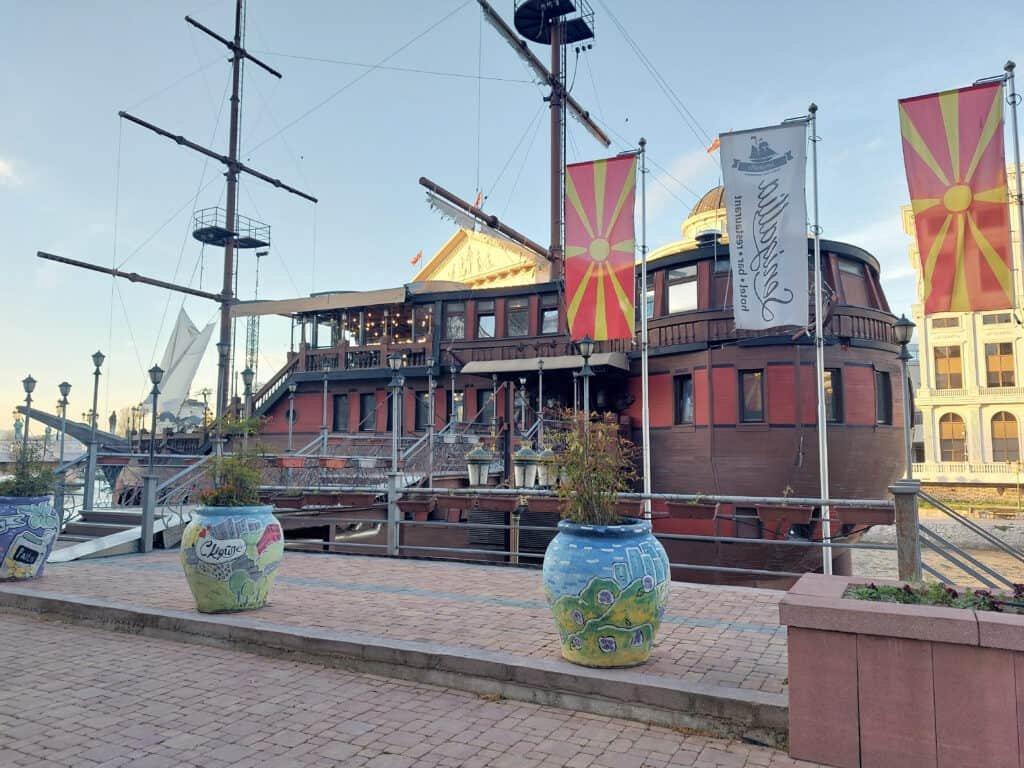
Walk further along the riverfront, and you’ll find colourful stalls selling coffee, snacks, books, and souvenirs, plus plenty of cafés.
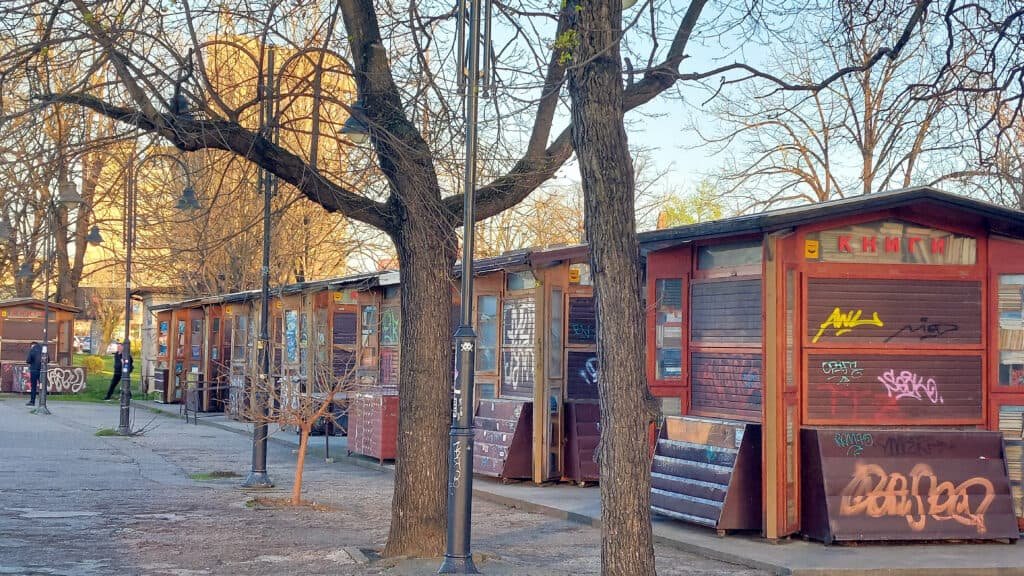
10 Bridge of Civilisation
After wandering along the west bank, head to the Bridge of Civilisation, also called the Art Bridge. You won’t miss it! It’s a most remarkable bridge lined by statues on both sides.
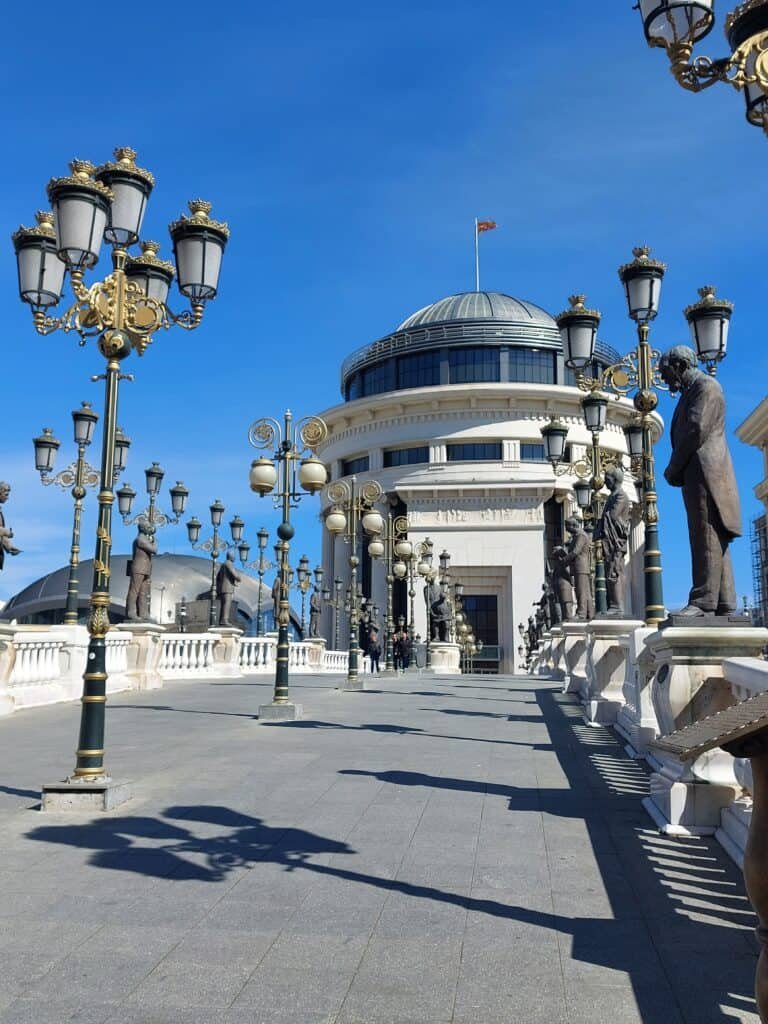

Walk over this bridge to find museums, other neo-classical buildings, fountains, and statues, many of which are part of Skopje 2014. But the grandest building of them all, Skopje’s Archaeological Museum of the Republic of Macedonia, is in front of you as you cross the bridge.
11 Archaeological Museum of the Republic of Macedonia & More
The Archaeological Museum of the Republic of Macedonia is grand on the outside and packed full of artefacts from Macedonian history inside.

Just behind the archaeological museum, you’ll find more museums. The Museum of the Macedonian Struggle is in a more baroque style, and the Macedonian Holocaust Museum is as well.

I love how the different styles, animals, and people come together. There’s so much going on, and honestly, I can’t capture it all here. You’ll need to go and look for yourself. The City of Statues is exactly as described!


12 Music Venues, including Philharmonic Hall
Not in the same neoclassical style, but you’ll also find the city’s classical music venues nearby.
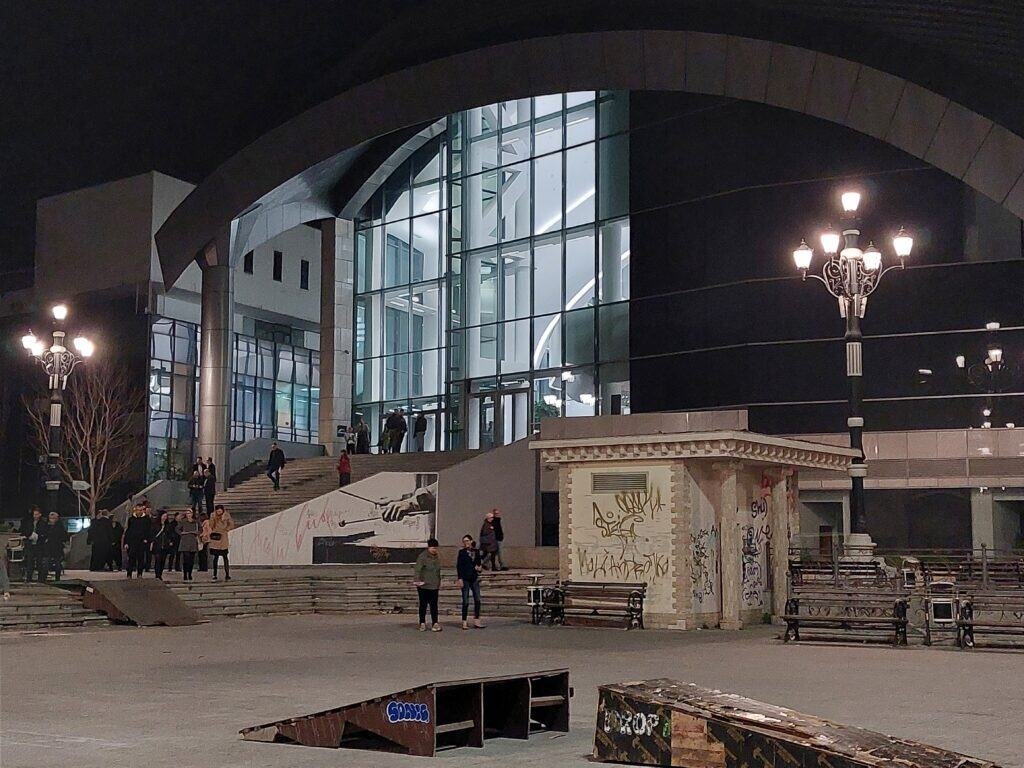

We like to see what music is on whenever we visit somewhere. Seeing a national orchestra play in the capital’s main concert hall was definitely worth it. The hall is impressive inside and out, and so is the performance. We were relieved it wasn’t a ‘dress up’ event, as we weren’t dressed up!
13 Cathedral of St Clement of Ohrid
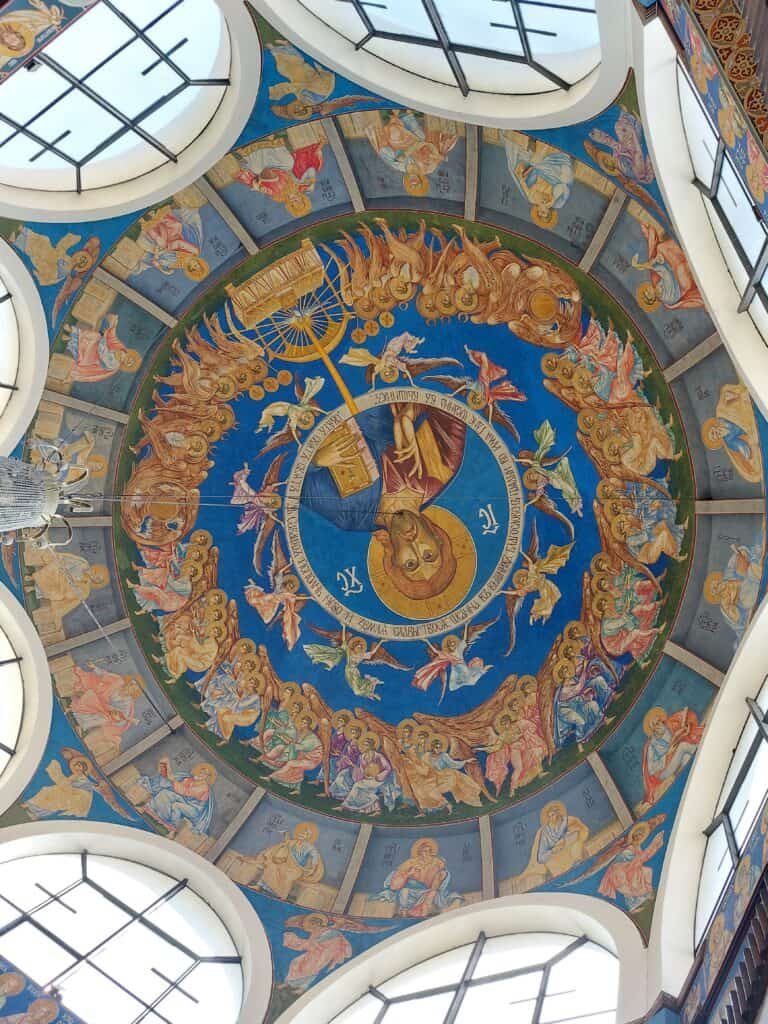
Nearly half of North Macedonia’s population is Eastern Orthodox, and Skopje’s main Orthodox cathedral is one of the city’s most striking landmarks. Dedicated to St Clement of Ohrid, it took almost 20 years to complete before being consecrated in 1990, on the 115th anniversary of the saint’s death.
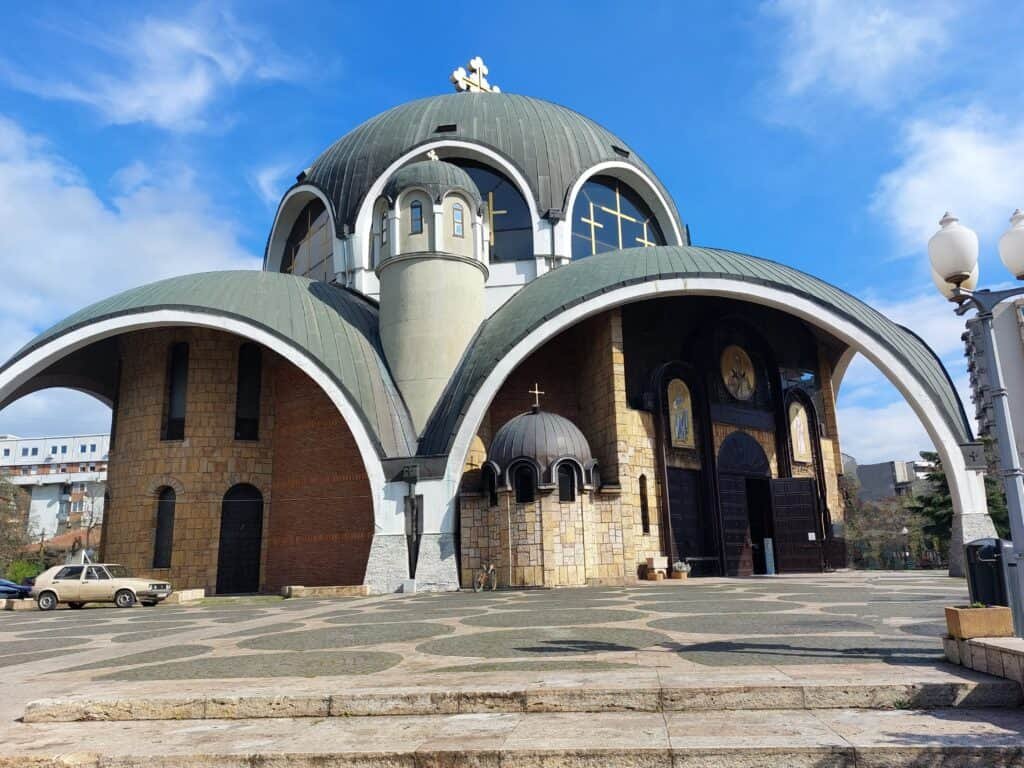
The cathedral itself is a bold modernist design, a vast central dome flanked by four smaller domes at the corners, but step inside, and the contrast is striking. Inside, the interior is richly traditional, with an elaborate iconostasis, vivid frescoes, and a genuinely breathtaking sense of scale. Outside, the soaring white clock tower adds a distinctive vertical counterpoint to the domes, a modern reimagining of the old Balkan saat kula towers that once marked time across the region.


14 Memorial House of Mother Teresa
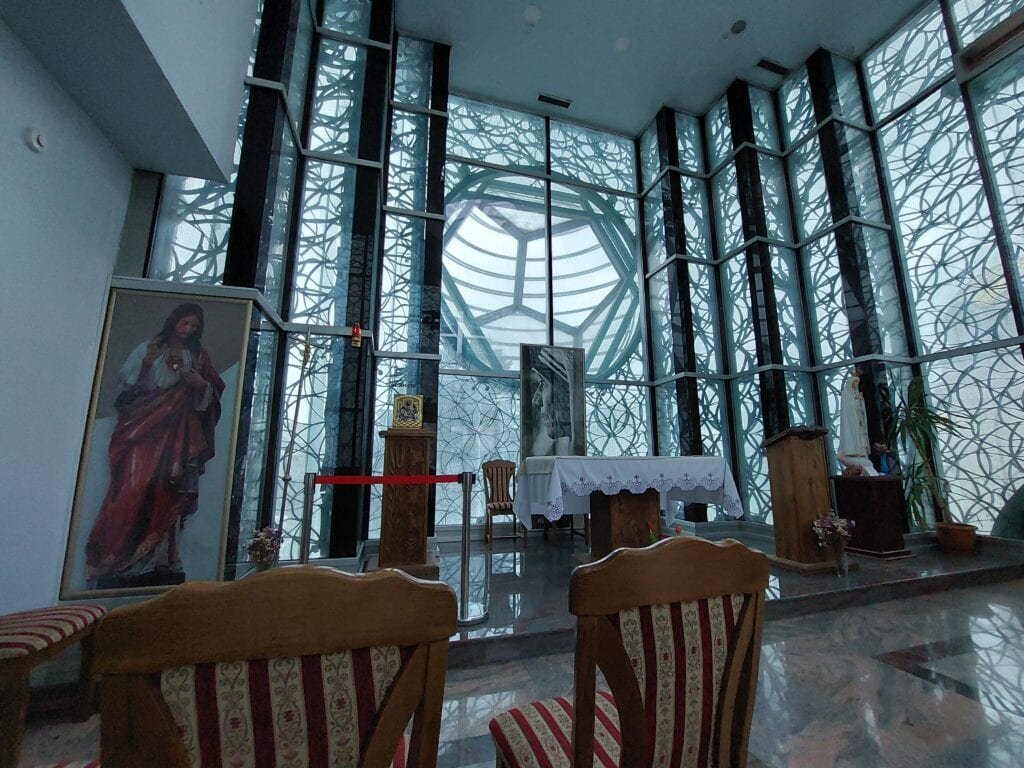
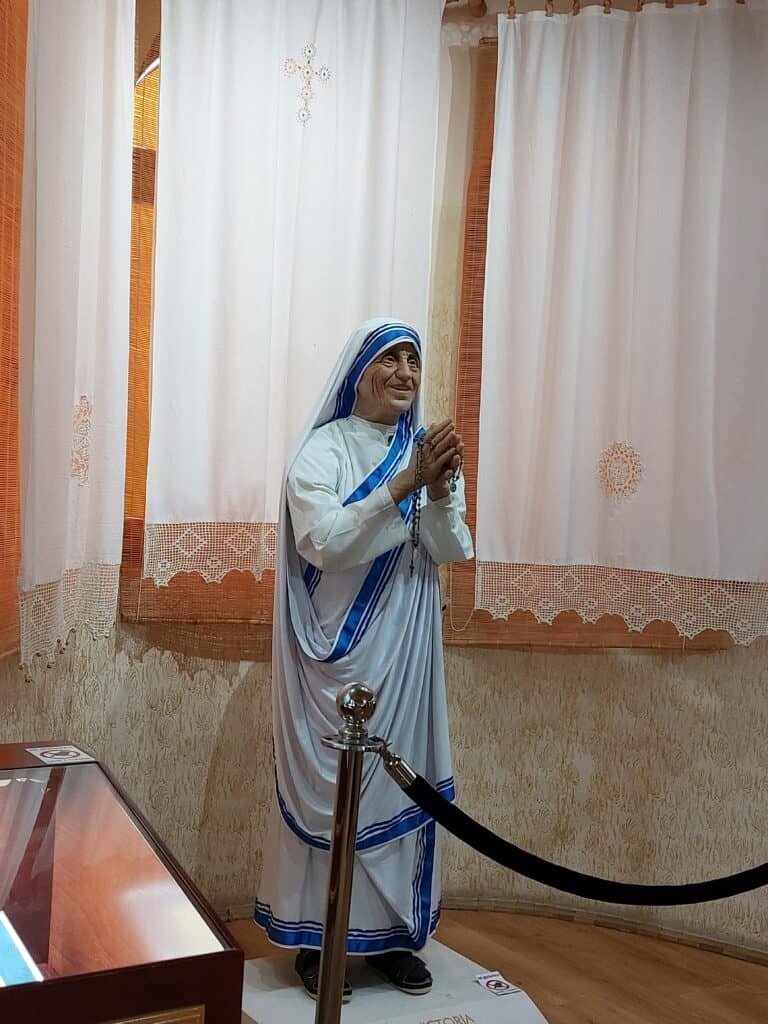
Skopje is Mother Teresa’s birthplace. On the site of the church where she was baptised now stands a memorial house dedicated to her life and work. Opened in 2009, it’s part museum, part shrine, with photographs, personal items, and gifts from world leaders, alongside a reconstruction of her childhood home. A statue of Mother Teresa greets you at the entrance, and upstairs, the striking glass-walled chapel feels both modern and contemplative.
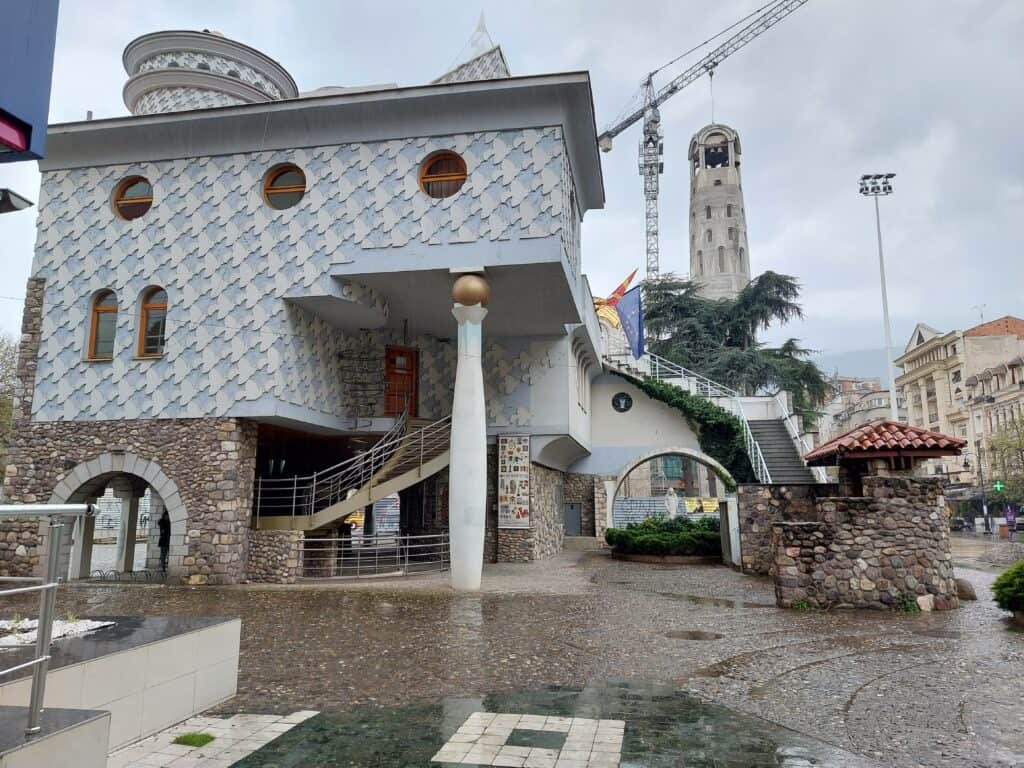
I found it a moving place to visit, perhaps because Mother Teresa was such a well-known figure in my lifetime, but also because her story still resonates with genuine faith and selfless service. Whether you share that background or not, it’s well worth stepping inside. Entry is free, and it’s open daily.
15 City Museum of Skopje
The Museum City of Skopje is free to enter, and I absolutely recommend it. The exhibition halls feature a mix of modern art and historical displays. But the most fascinating part was the illustrated section describing the aftermath and rebuilding after the 1963 earthquake. It also featured plenty of original film footage from the time.

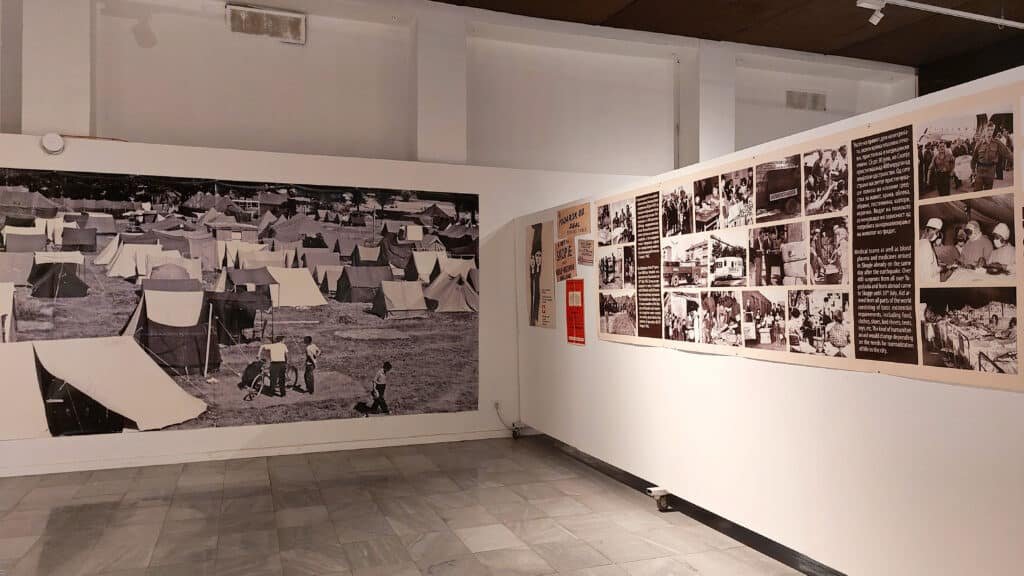
16 Debar Maalo District and Its Cafés
Debar Maalo is the university district, with abundant cafés and nightlife. We visited Kantina, which had a modern, European menu with craft ale, cocktails, juices, plus swing seats (not compulsory!).
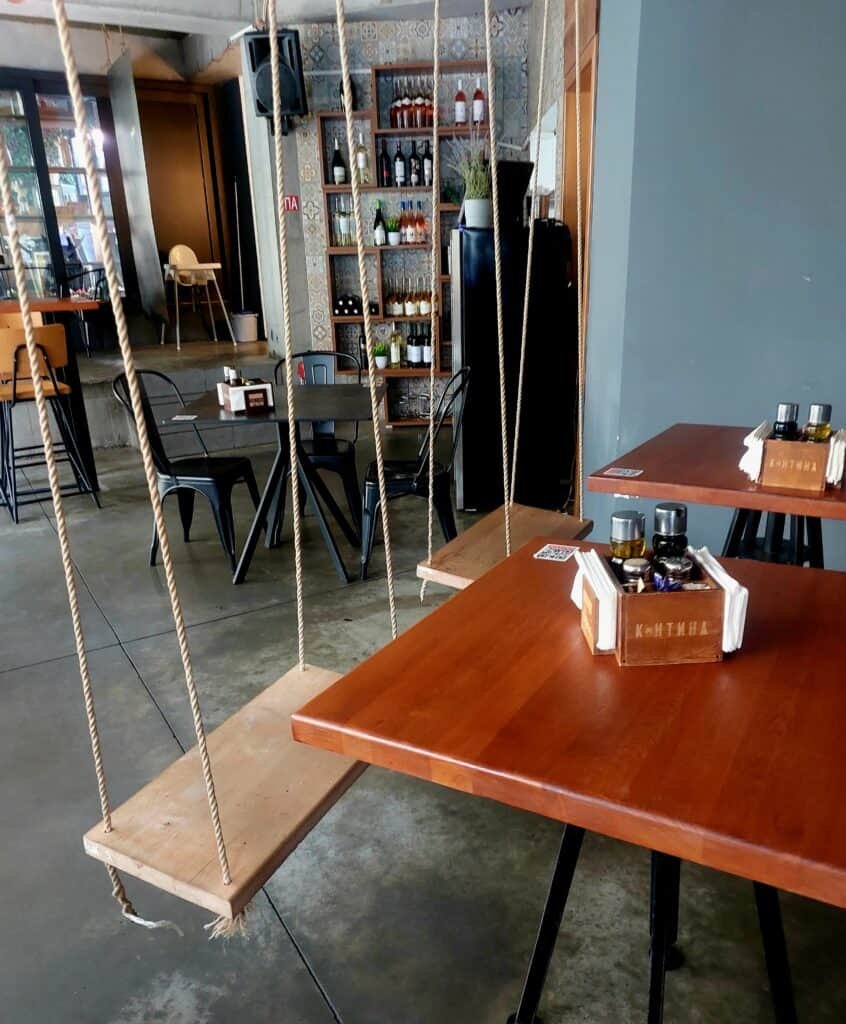
17 Skopje City Park, Stadium, Zoo and Dino Park
City Park is a popular part of Skopje, the largest park in North Macedonia and the city’s lungs. It includes a main park area, the national football stadium, and the zoo.
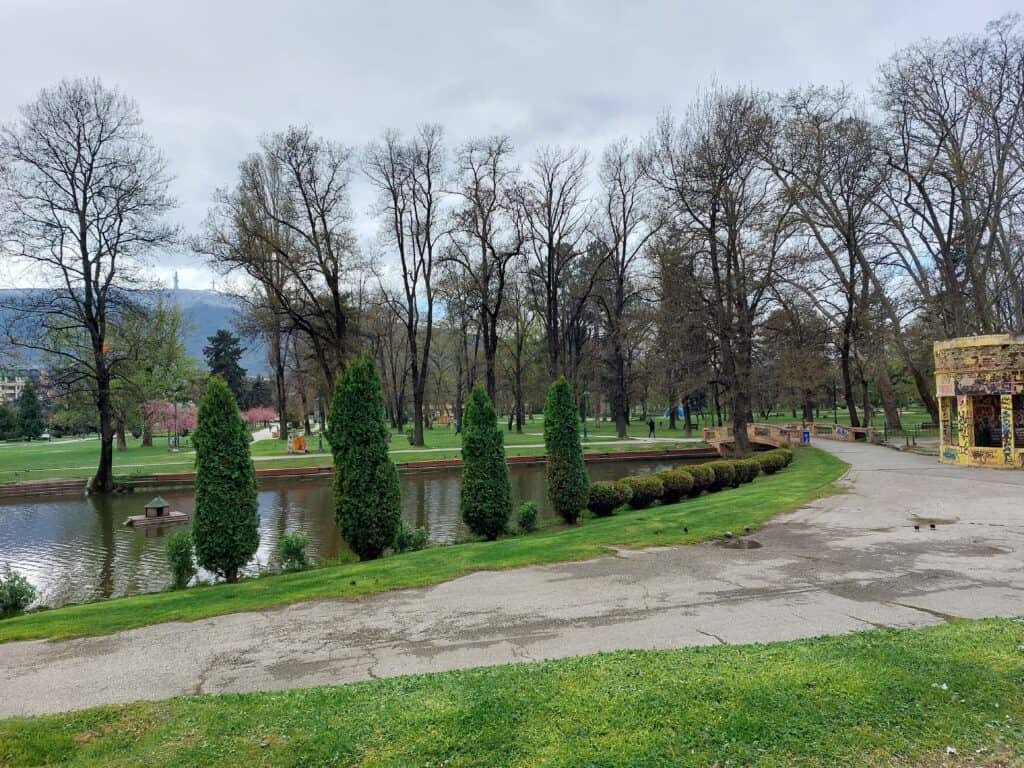
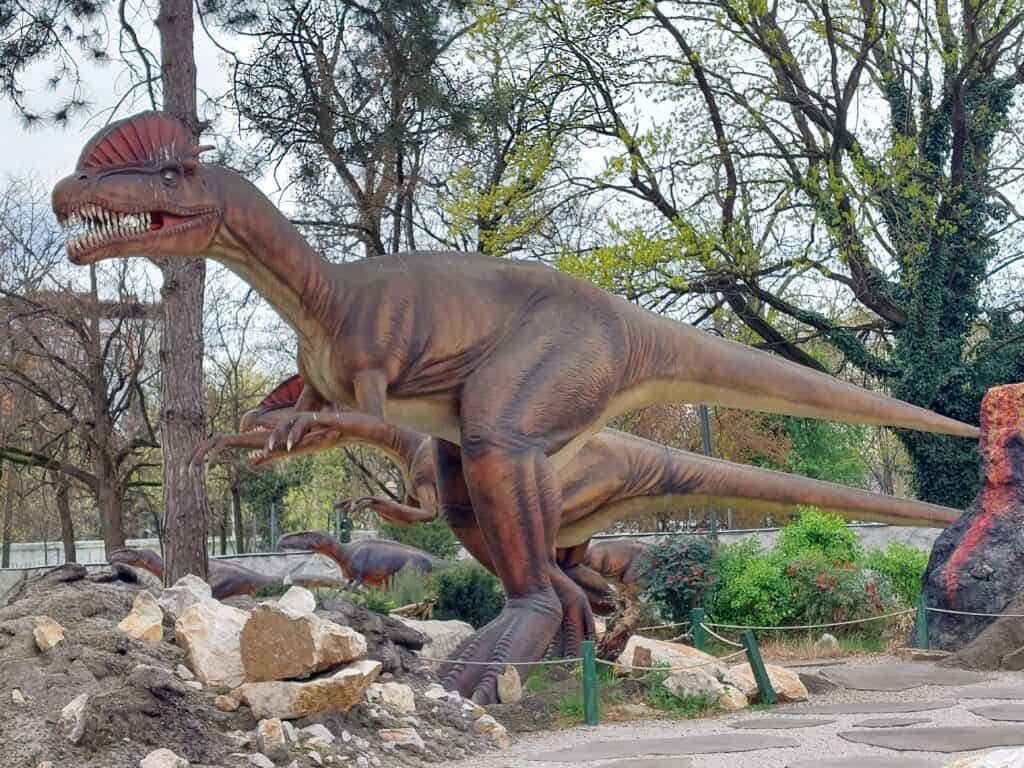
Shops, restaurants, and bars, plus outdoor events, run year-round. We heard roaring and went to investigate. A plastic giraffe marked the entrance to Skopje zoo. It was a little dilapidated, and we didn’t linger long, but we found the source of the roaring: a dinosaur park! The ticket lady pressed buttons to make the dinosaurs roar as we passed them!

Favourite Brands & Offers for One Small Bag Readers
- CABIN ZERO: 15% OFF travel bags & accessories. Use ONESMALLBAG at checkout.
- SAILY (NordVPN): 10% OFF international eSIMs Use ONESMALLBAG at checkout.
- PEBBLEBEE: Exclusive Savings on rechargeable trackers (Android & iOS). Discount automatically applied at checkout.
Food and Drink in Skopje
Of course, no city break is complete without food and drink, and Skopje has plenty worth sampling. We ate very well in Skopje. While pizza, pasta and burgers are ubiquitous, we especially enjoyed the traditional Macedonian dishes and local wine. Check out some popular dishes listed here.
- Tavce gravče – a tomato-bean dish flavoured with paprika. Basically baked beans, but so much better!
- Pastrmalija, a freshly baked flatbread, can be topped with meat or egg and served with peppers.
- Fish soup: North Macedonia is landlocked but has lakes, the largest of which is Lake Ohrid. Expect the soup to contain freshwater fish.
- Makalo – a tangy dip to go with bread or anything else!
- Selsko meso – slow-cooked stew containing pork, white wine and mushrooms
- Baklava – a tasty pastry dessert made with honey and nuts
Our highlight was Kuka. Traditional Macedonian cooking is served in an even more traditional setting. We almost didn’t go because it was down several back streets, hard to find, and looked closed, but it wasn’t!


Here we had a proper Macedonian feast: tavče gravče (the national baked bean dish, served bubbling in a clay pot with cheese on top), plus a schnitzel piled with fries and salad, with fresh bread on the side. Hearty, simple, and exactly the kind of meal you’ll find across Skopje’s traditional restaurants. Also washed down with a carafe of excellent local Macedonian wine.
I also recommend Kolektiv in Macedonia Square and Old Town Brewery in the heart of the old Bazaar area, where I particularly recommend the bar snacks menu, including the freshly baked bread.


Recommended Trips from Skopje
These are the side trips we took while we were in Skopje. We travelled to each independently.
Trip to Mount Vodno & Millennium Cross
Mount Vodno provides the backdrop to Skopje. The Millennium Cross on top is huge. It’s 66 metres high, or about the height of a 20-floor skyscraper, and a ‘must-visit’ if you’re in Skopje. We visited the mountain and the cross independently on a city bus rather than taking a tour.

Here’s the Millennium Cross, the cable car, and the station. Check out my trip report for details of the building in the middle!


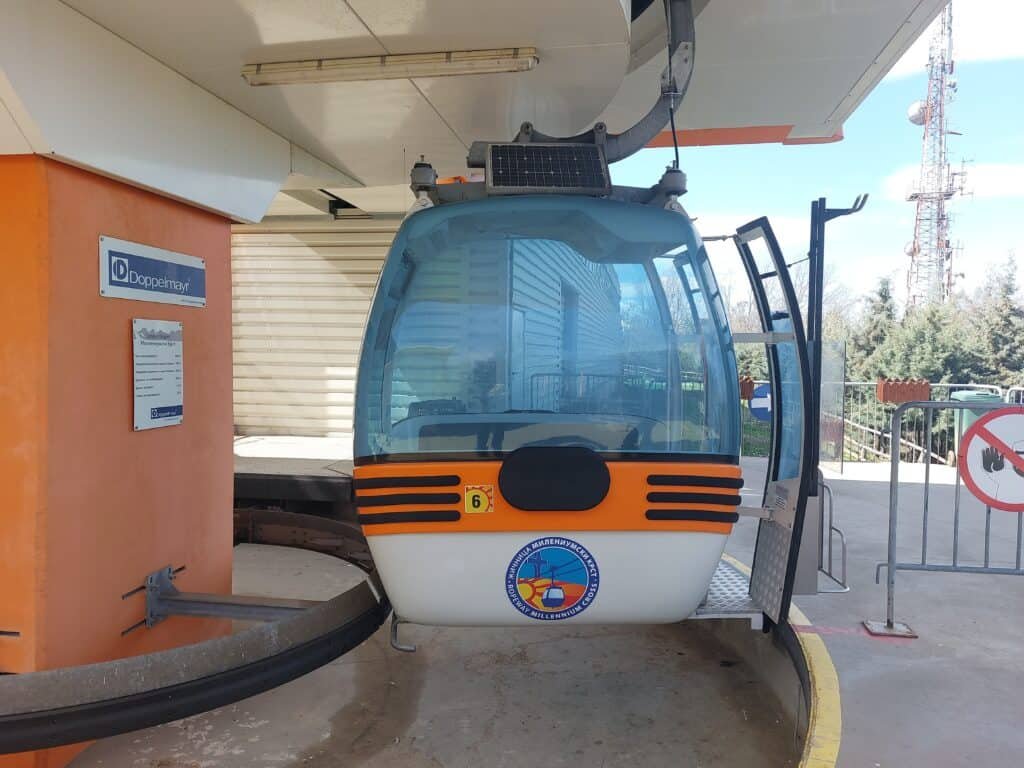
The view at the top is quite something!

Trip to Matka Canyon
Matka Canyon is also a top trip from Skopje; it’s close to Mount Vodno, and you can get there by public bus or take a tour.
Here are some highly rated tours from Skopje to Mount Vodno, the Millennium Cross, and Matka Canyon.
Trip to Tetovo and the Painted Mosque
An easy day trip by public bus (coach) to Tetovo, about 50 minutes from Skopje. The painted mosque is one of the most spectacular mosques in the Balkans, if not Europe. The mountain backdrop and charming riverside setting are ‘picture perfect’. Find out about this day trip to Tetovo we took from Skopje.

Other Destinations in North Macedonia
Lake Ohrid and Bitola are excellent choices for trips beyond Skopje, and I plan to visit both soon.
Visiting Kosovo
We visited Pristina and Prizren in Kosovo by local public bus. We took the opportunity to stay over. I highly recommend visiting if you can. If you don’t want to travel independently or prefer a day trip, here are some highly rated tours from Skopje.
- ➡️ From Skopje: Kosovo in a Day – Prishtina, Monastery & Bears
- ➡️ From Skopje: Kosovo in a Day – Group Tour to Pristina & Prizren
Skopje: Practicalities
Places to Stay in Skopje
Accommodation is excellent value in Skopje. For the full-on Skopje experience, stay at mid-range Hotel Senigallia – the full-sized galleon moored on the Vardar with unbeatable central views. If you’d prefer an equally central hotel on dry land, the Stone Bridge Hotel is also a great option.
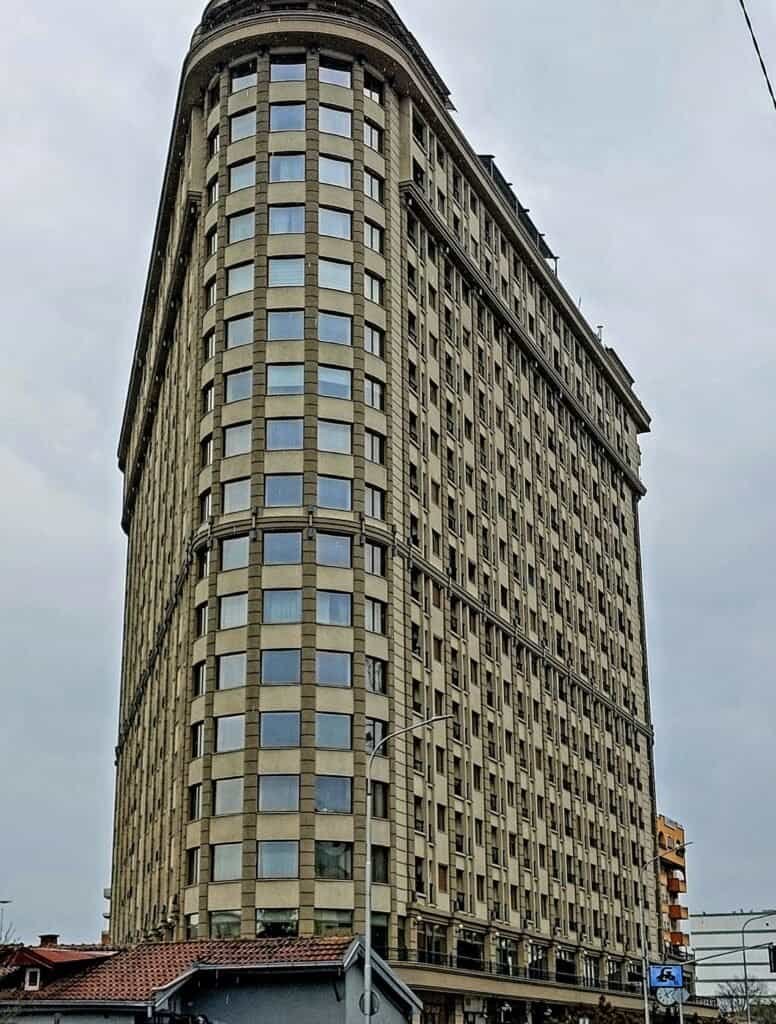
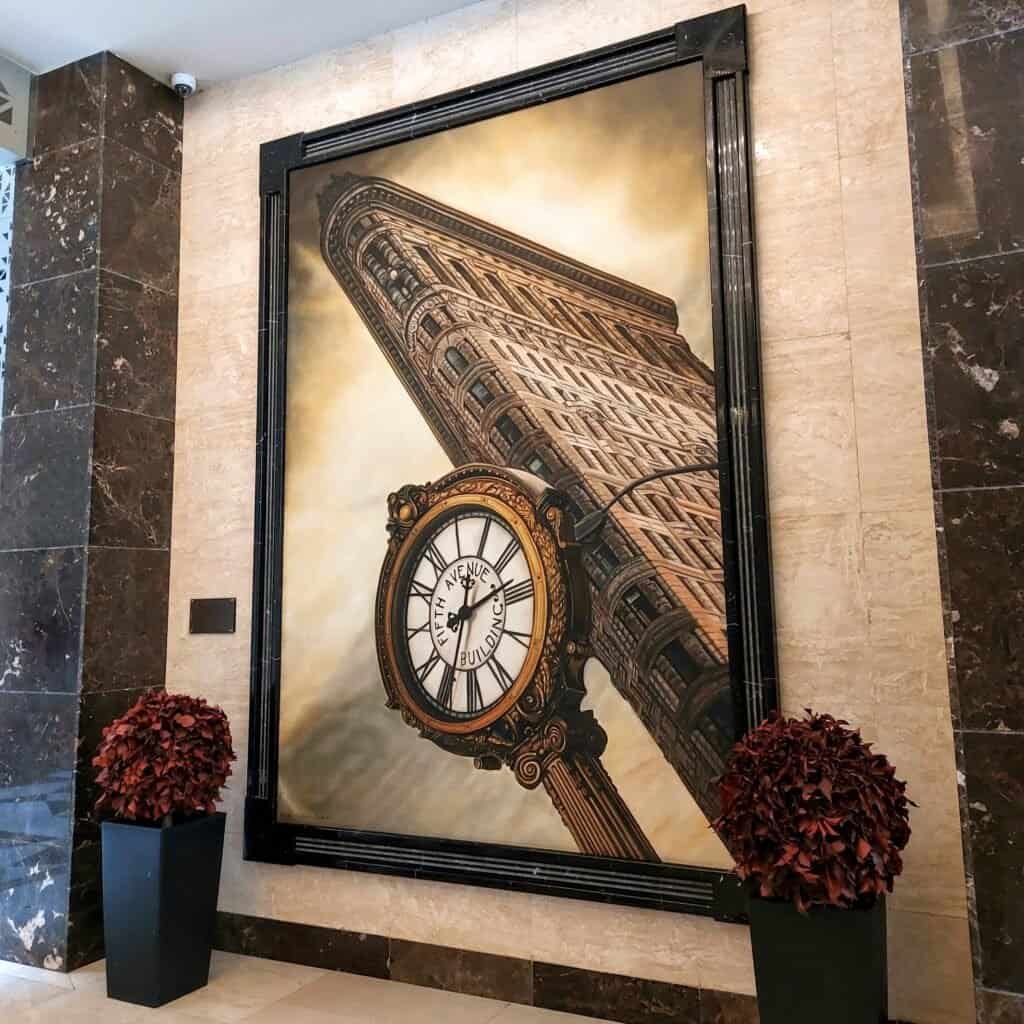
We stayed in ‘Flatiron’ apartments, a budget-friendly option close to the train and bus station, a ‘mock-up’ of the New York Flatiron Building, but considerably cheaper. Do take a look!
Travel to Skopje
Flights from other European cities to Skopje (SKP) include Wizz Air, Pegasus Airlines, and Croatia Airlines. Here are transport options to/from the airport to the centre:
- Shuttle Bus – The easiest way to reach Skopje International Airport from the city centre is the airport shuttle bus, run by WTransporter/Erak Transporter. It departs from the central bus station and a few central stops, costs about 199 MKD (€3.30) one way, and takes about 35–40 minutes, depending on traffic. Timetables are linked to flight schedules, with services running roughly 08:00–20:00, and you can buy tickets from the driver or counter (cash in MKD is easiest).
- Airport Taxi – Official airport taxis in white, numbered (1–65), operate 24/7 from the airport. The fare from the airport to the city centre is €25 (MKD 1,500). The fare is fixed, so it’s the same at night and on weekends. The fixed rate is posted at the taxi rank / inside the taxi. There’s no Uber or Bolt.
There are currently no International train services; services are suspended. A network of buses/coaches connects Skopje with the rest of Europe, including services by FlixBus. We took a minibus over the border into Kosovo. Not all services are recorded or bookable online. Check details at the Central bus station.
- For City Buses: Visit Mount Vodno by Public Bus for tips and advice.
- For buses travelling beyond Skopje: Visit the Painted Mosque in Tetovo from Skopje by Public Bus for tips and advice.
How I travel with just a small bag
Packing light can make travelling much easier and more enjoyable, especially when you are moving from place to place. My bag is small enough to fit under the seat of European budget airlines enforcing strict 40cm x 30cm x 20cm (or roughly 15.75″ × 11.81″ × 7.87″) limits. Here is how I pack for any trip, no matter the duration:
I
Where to Next
Looking beyond Skopje? Here are my guides covering North Macedonia and Kosovo.
- 15 Things to Do in Pristina: Kosovo’s Surprising Coffee-Fuelled Capital
- Best Day Trips and Places to Visit in Kosovo from Pristina
- 10 Things to Do in Prizren, Kosovo – The Balkans’ Best-Kept Secret
- Best Things to Do in Skopje: Your Comprehensive Travel Guide to Europe’s Most Kitsch Capital
- Visit the Painted Mosque in Tetovo From Skopje by Public Bus
Or, if you’d like an itinerary from Tirana to Skopje through Kosovo, consider this:

Start in Tirana 
On to Prizren, the second city of Kosovo 
On to Pristina, the capital of Kosovo, before finishing in Skopje
I hope you enjoyed reading this. If you have any questions or comments, do let me know in the comments. Thank you for reading my blog.
Unsubscribe whenever you like (Privacy Policy)

Blimey,this is a VERY comprehensive blog ! I shall have to leave it until tomorrow -I have a beef bourgignon & a bottle of red to attend to
Brilliant Christine. I hope to be there next month so this is super helpful.
Oh that’s wonderful. Have an amazing time! If you have time, it’s about on hour on the bus to Tetovo which is well worth a visit. Alternatively you can pop over the border on a bus to Pristina and Prizren in Kosovo. The blog posts for those aren’t ready yet, but get in touch if you want to share notes!
Late reply. Hope it was helpful and you enjoyed your trip!
Be very afraid Retired Martin! 🙂
It did! *Joking* 😂
Merci pour toutes ces infos très pratiques, qui vont à l’essentiel en toute simplicité et authenticité !
Bonne continuation !
Hvala
Merci pour vos gentils mots. Je suis ravi que cela vous soit utile. Profitez bien de Skopje et bon voyage !
This is a fantastic guide to Skopje that highlights both its rich history and unique modern character. I enjoyed how it combines practical travel tips with cultural insights, making it a great resource for anyone planning a visit to North Macedonia.