Best Things to Do in Brașov, Romania – Plus my favourite Day Trips
Brasov has a way of making you feel like you’ve wandered into a story. The Carpathian Mountains frame it on every side, the Baroque old town is all bold colours and cobblestones, and even on a grey day, it has a certain theatrical charm.
The good news: the centre is compact and very walkable, so that you can hit the highlights in a day. The better news: there’s enough here, and in the surrounding region, to keep you happily busy for much longer.
Here’s everything worth doing – in the city and beyond.
This guide may include a few affiliate links. If you choose to buy something through one of them, I may earn a small commission (at no cost to you). Thank you for supporting One Small Bag and helping keep this resource ad-free and independent.
Brasov Essentials
- Luxury: Albert Authentic Suites Brașov – Tâmpa Views
- Midrange: Hotel Bella Muzica
- Budget: Casa Krone – Piața Sfatului
- Brasov: Guided City Walking Tour with Wine
- Brasov History & Food Tour: Traditional Kitchens & Cellars
- Brasov: Sighisoara Day Trip with Walking Tour
- Brașov: Bran Castle, Bear Sanctuary, & Râșnov Citadel Tour
- Brasov: Peles Castle, Bran Castle & Rasnov Fortress Day Tour
- Brasov: Transfagarasan Road, Balea Lake & Waterfall Tour
- Discover Cars (Car Hire: Best Regional aggregator deals)
- Welcome Pickups (Hassle-Free Airport Transfers & Personal Drivers)
While it’s possible to see much of Brasov in a day, I’d recommend staying overnight. Brasov is popular with day trippers and even more delightful once many of them have gone home. We stayed 3 nights, which gave us time for some side trips.
Map of Things to Do in Brasov
Here’s a map of the places I’ve covered in the article, for you to keep and share for your personal use.
You may also be interested in:
- Romania: Know before you go
- 15 Best Things to Do in Sighisoara: Dracula’s Birthplace in Transylvania
- Visiting Libearty Bear Sanctuary in Romania: Is It Worth It?
- Visit Sinaia: Home to Peleș, Romania’s Most Spectacular Royal Castle
- Bucharest to Transylvania: A Point-to-Point Trip by Public Transport
- 23 Best Things to Do in Bucharest – and One I’d Avoid Right Now
- Best Day Trips from Bucharest: Castles, Mountains, the Black Sea and Cross-Border Adventures
- Chisinau to Bucharest Sleeper Train: Europe’s most unusual rail journey
- Best Things to Do in Iași: Discover Romania’s Cultural Gem
1 Explore Council Square (Piata Sfatului)
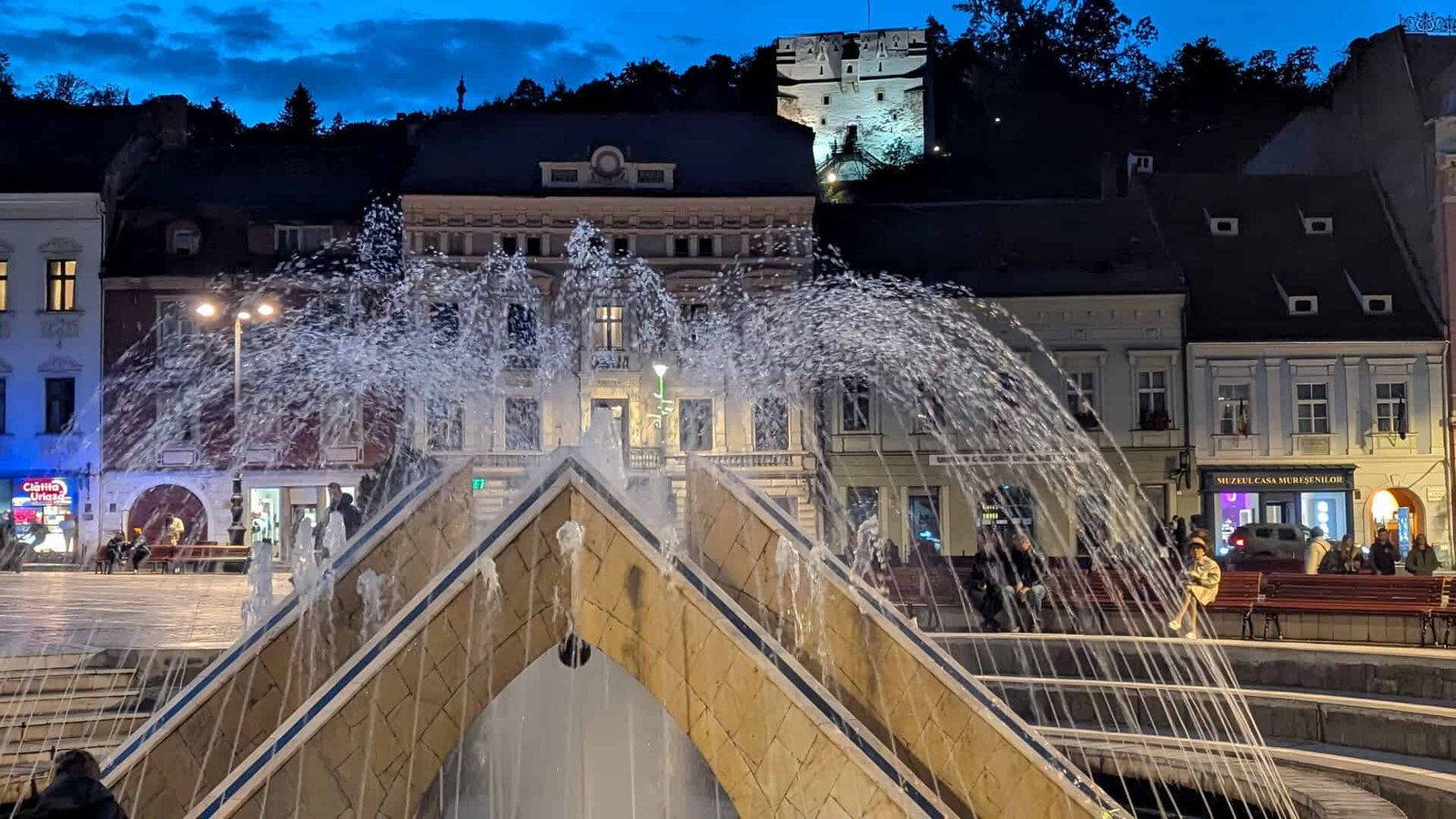
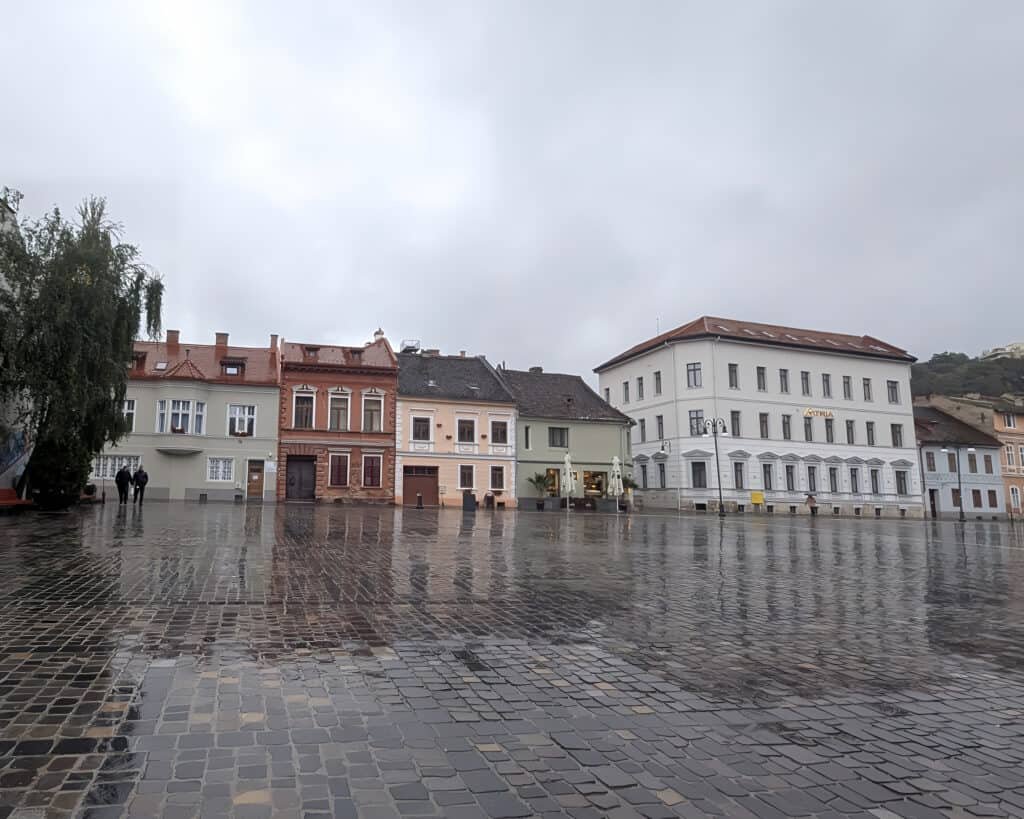
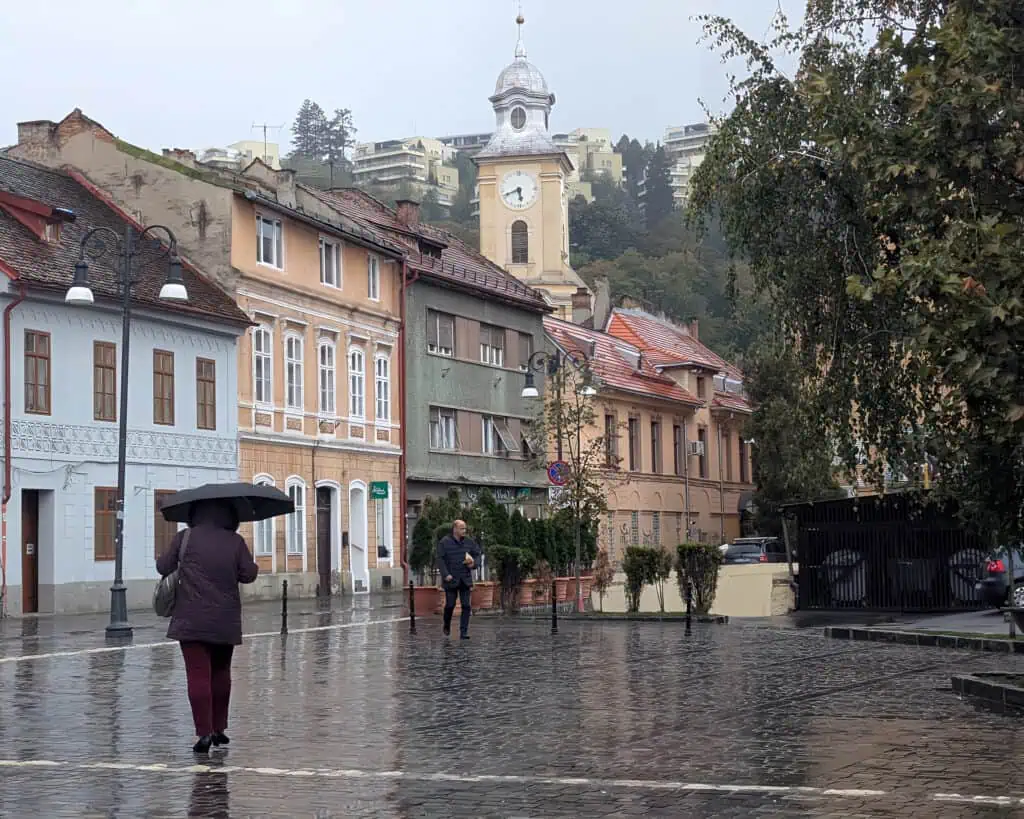
With pastel-coloured, red-roofed merchant houses on all sides and the Carpathian Mountains looming beyond, Council Square (Piața Sfatului) is the bustling heart of Brașov – and one of the most photogenic squares in Eastern Europe. In the centre, you’ll spot a modern fountain, and to one side stands the imposing Black church, which is definitely one to visit.
Council Square is the best place to start your wanderings in one of Romania’s prettiest cities.
We saw Brașov in persistent rain, the cobbles slick and the mountains half-hidden in mist. It felt less like a pastel postcard and more moody, dramatic and unmistakably Transylvanian. There’s much to love here, and it was easy to appreciate even in the driving rain.
Council House and Museums
Council House: At the centre stands the Council House, with its distinctive clock tower. Its slightly asymmetrical shape reflects centuries of rebuilding after fires and invasions. Originally built in the 15th century, it once hosted the city council and merchants’ meetings; today it houses the Brașov County Museum of History. It covers the region’s story from Roman times through to the Saxon guilds. It’s well organised and labelled in multiple languages.
Museum of Urban Civilisation: On the south side of the square, the smaller Museum of Urban Civilisation takes a different angle, focusing on daily life in the 18th and 19th centuries and on Brasov’s trade connections between East and West, and is housed in a preserved merchant’s house. So take your pick, or visit both if you have time.
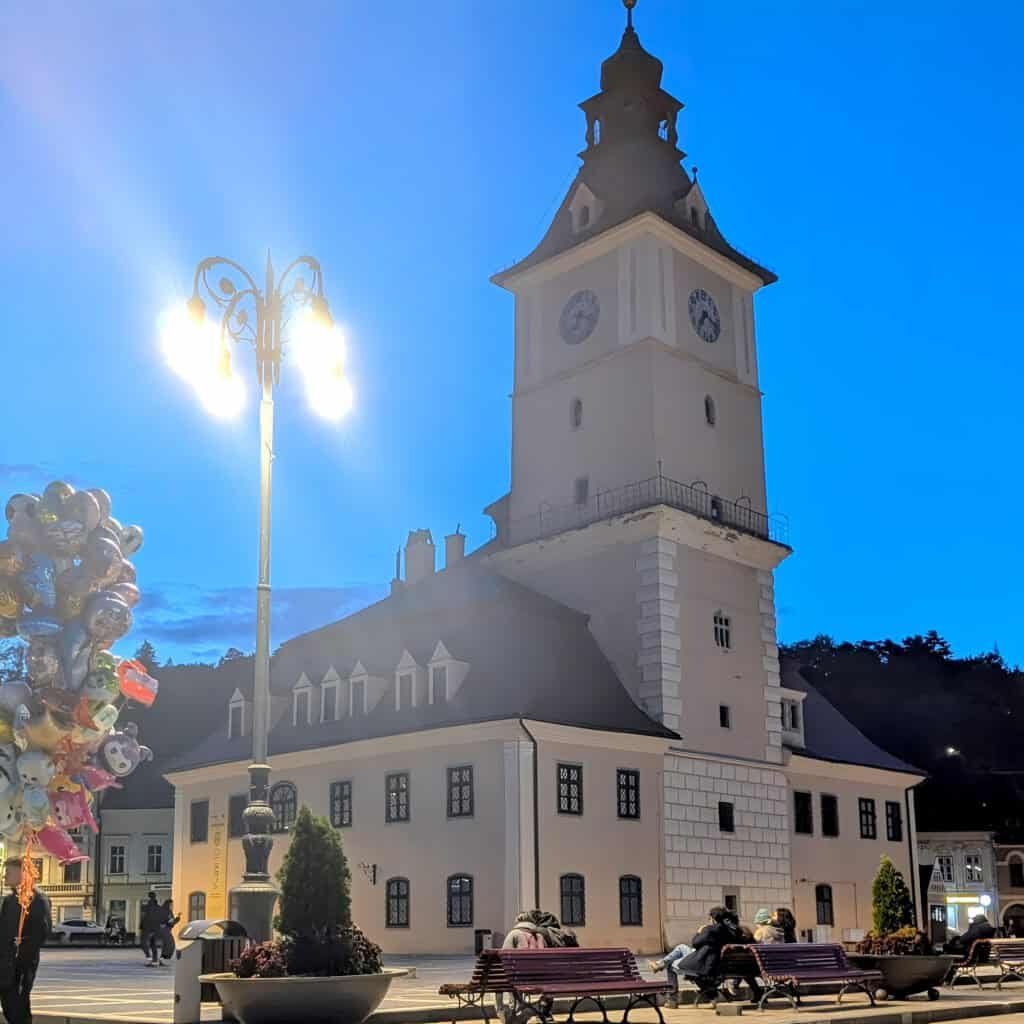
Council House (Brașov County Museum of History) 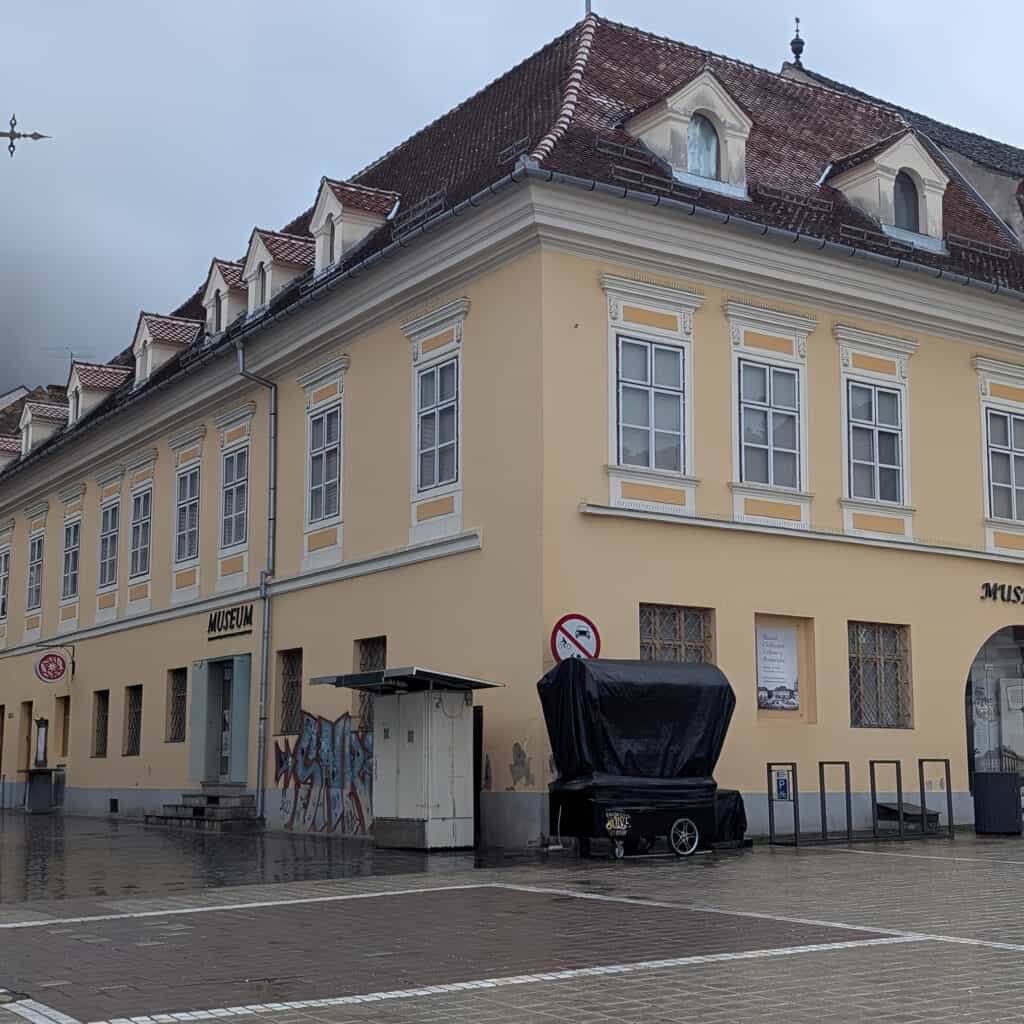
Museum of Urban Civilisation
Cultural Events
Council Square isn’t just decorative. There are seasonal markets, concerts, film nights and festivals regularly filling the space. In winter, there’s a Christmas market and ice rink; in summer, open-air events and food stalls spill across the cobbles. Even on a chilly, rainy day, we found buskers and people outside enjoying tcafésfés.
Eat, Drink and Shop
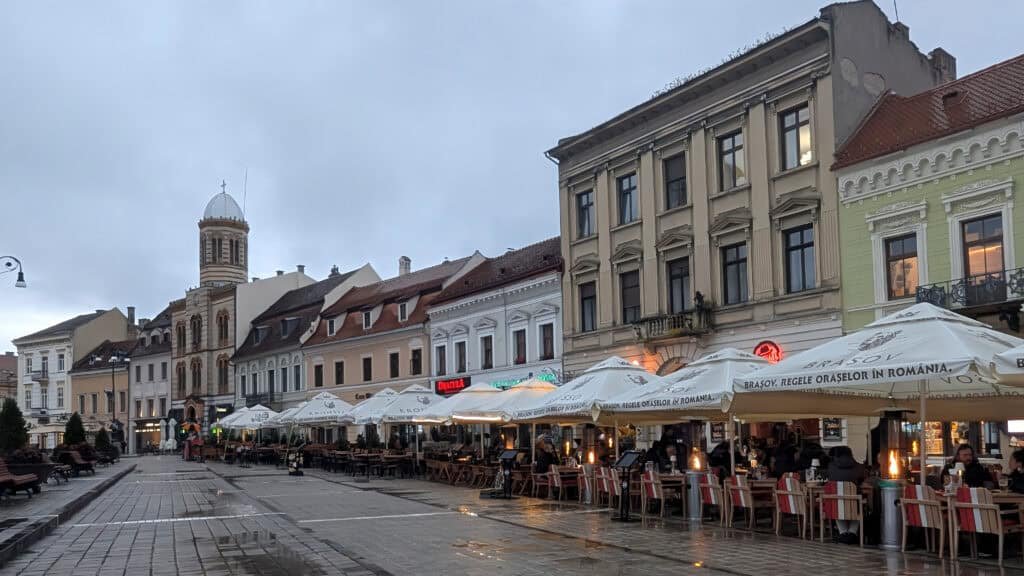
Tcaféafé and restaurant terraces lining the square help give it its character. You won’t struggle for options to sit and take it all in with a coffee or more. Tourist menus exist, of course, but there are also solid local choices. I can personally recommend Le Ceaun for traditional Romanian food and atmosphere.
Views of Tâmpa Mountain
Look up, and you’ll see Tâmpa Mountain rising directly behind the old town. The large “BRASOV” sign is clearly visible from the square on a clear day, along with the wooded slopes and defensive towers scattered along the ridge. Look out for the White Tower perched above the rooftops.
Radiating out from Council Square are narrow lanes such as Strada Republicii, lined with independent shops, bakeries, and souvenir stores. You’ll find everything from local crafts and ceramics to the usual Dracula-themed paraphernalia (Transylvania leans into its branding here).
2 Visit the Black Church (Biserica Neagră)
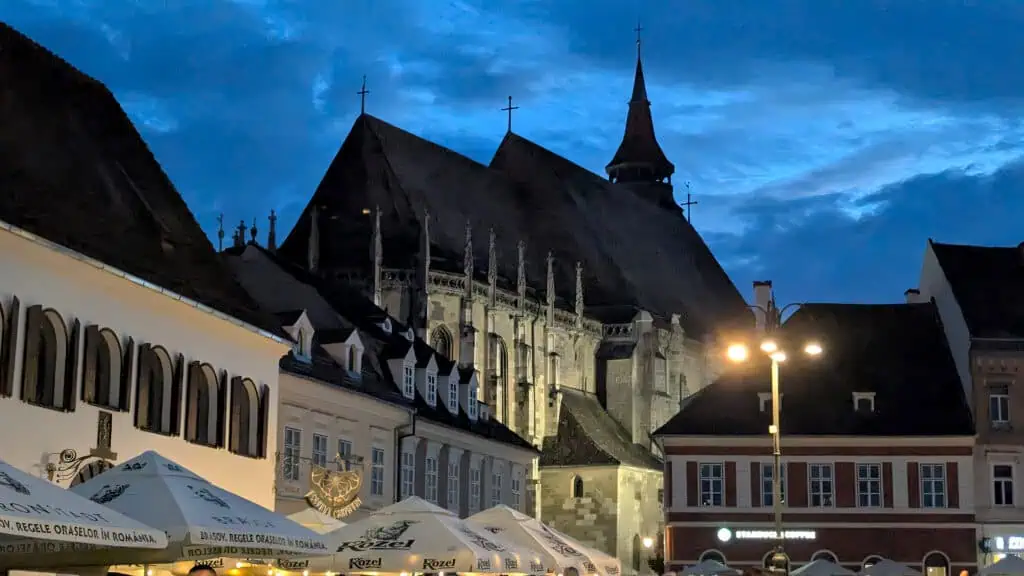
Dominating Brașov’s Council Square, the Black Church is the city’s most recognisable landmark and a reminder of its Saxon, not Romanian, origins. Built in the 14th–15th centuries as a Catholic church by the German-speaking community, it became Lutheran after the Reformation. Its name comes from the darkened walls left by a devastating fire in 1689, though today the Gothic structure is more honey-coloured than black. Inside, the scale is striking – lofty vaulted ceilings and an impressive collection of Anatolian carpets (a sign of Brașov’s old trading links with the Ottoman world).
We wandered in from the driving rain and stumbled upon a free organ recital – a demonstration of the magnificent Buchholz organ. A church full of locals, rain hammering outside, and that extraordinary sound filling every corner. It’s one of my most abiding memories of Brașov, and a genuine privilege to have been there.
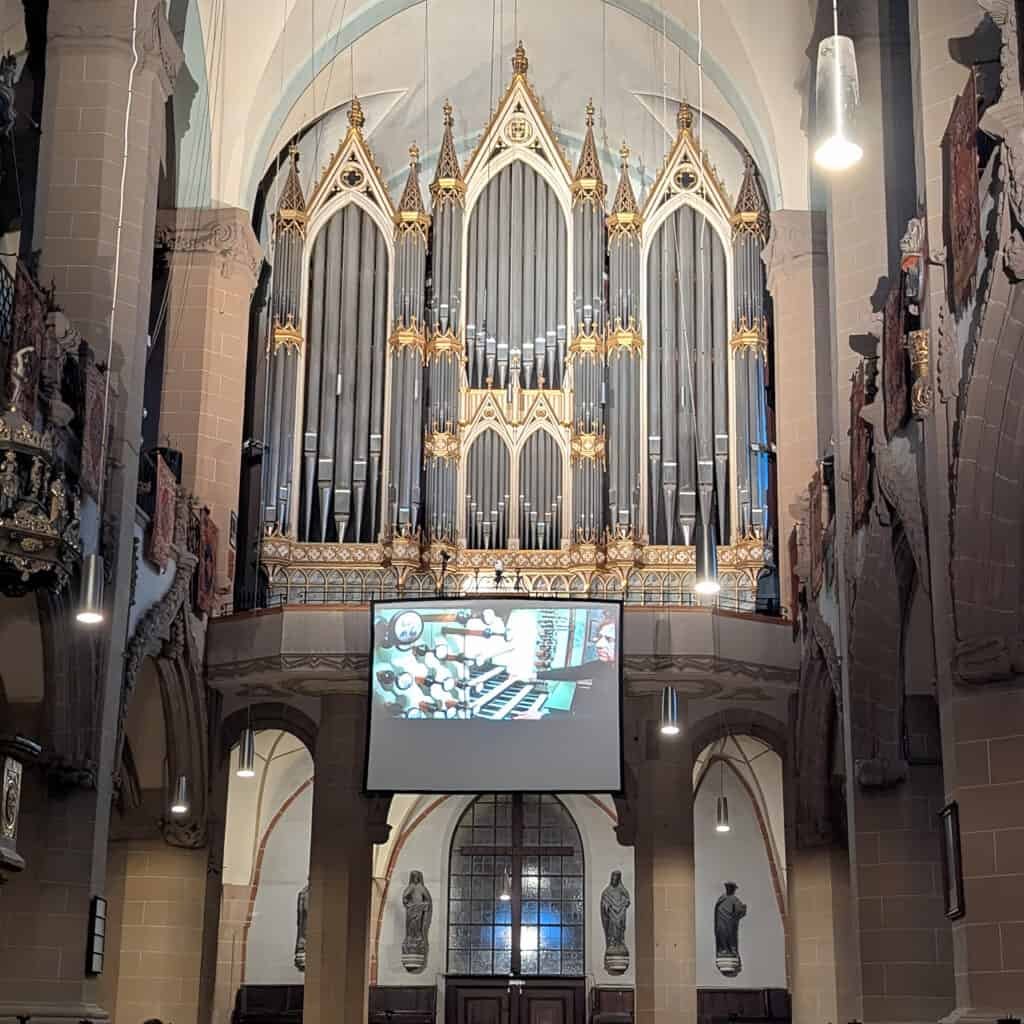
Buchholz organ – organist playing the organ shown on the screen 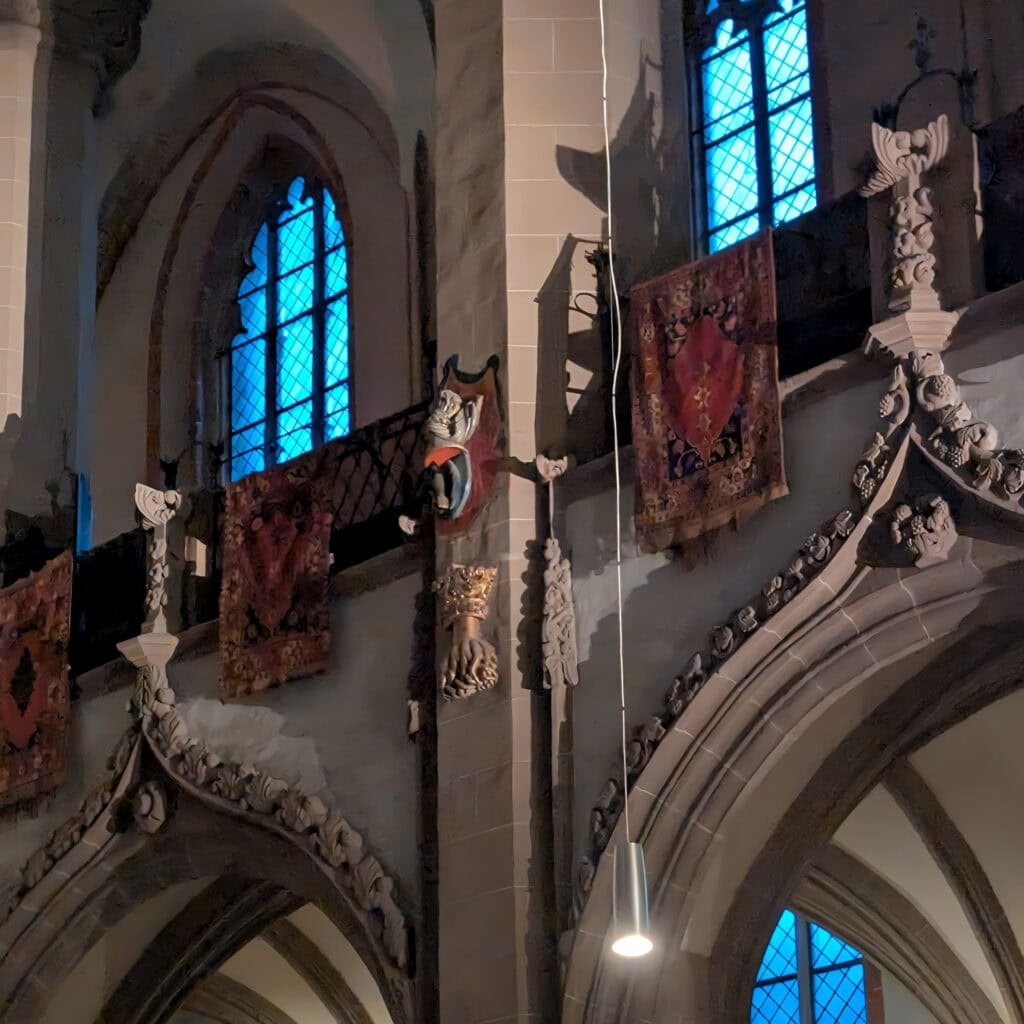
Anatolian carpets are displayed inside the church
3 Wander the Old Town Streets
Brașov’s old town, beyond Council Square, is compact and easy to explore on foot and best enjoyed without a plan.
One of the easiest ways to enjoy Brașov is simply to wander without a fixed plan. Notice the arched gateways, hidden courtyards and the mix of Saxon and later architectural details.
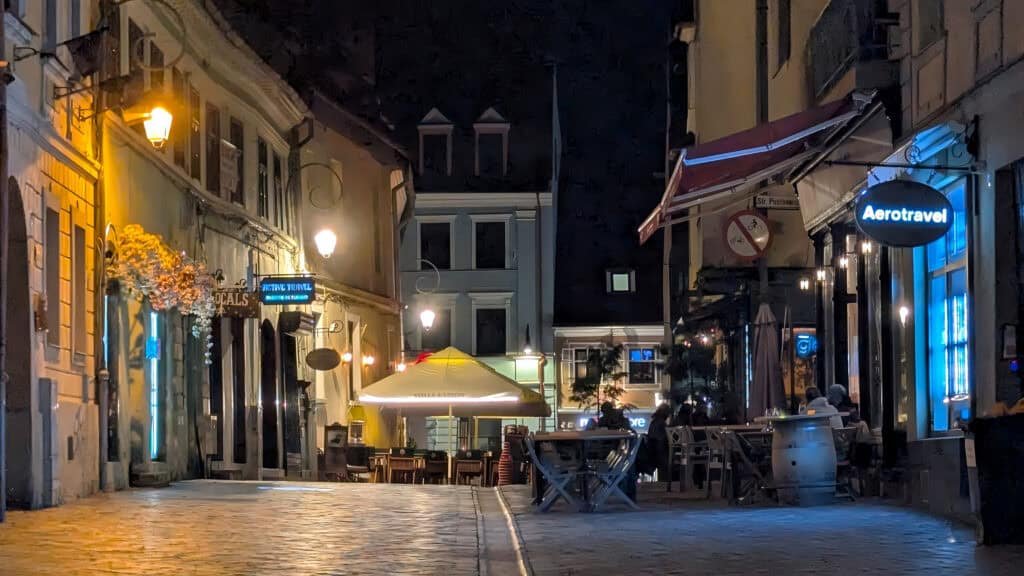
Strada Republicii
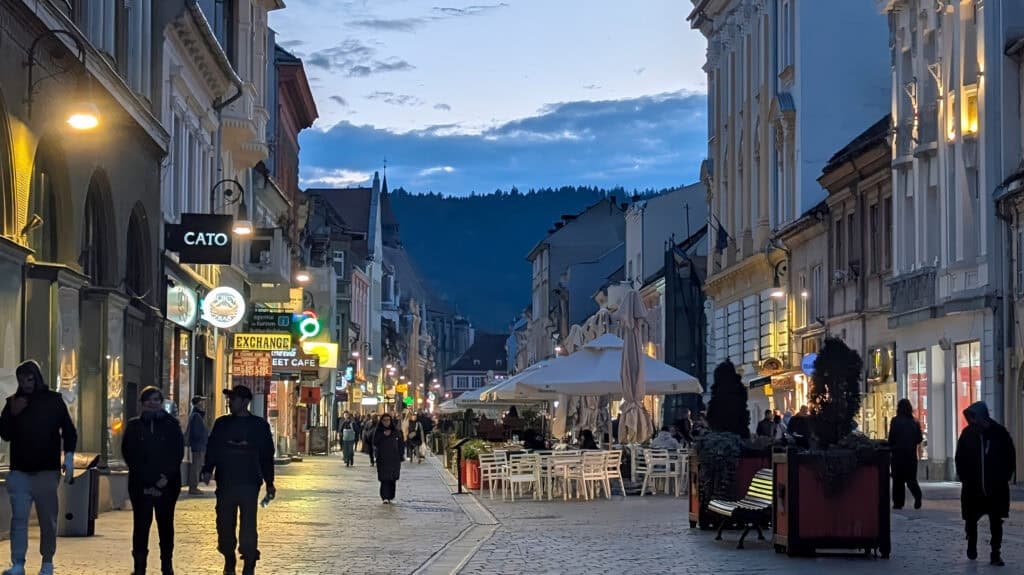
Strada Republicii is the main pedestrian artery running out from Council Square. It’s lined with pastel merchant houses, cafés, bakeries, and small shops, and is one of the liveliest streets in town. But don’t just stay here. The real charm of Brașov lies in the quieter streets branching off to either side, where you’ll find hidden courtyards, arched passageways and the occasional glimpse of tiled rooftops framed by hills.
Narrowest Street in Europe (Strada Sforii)
It won’t take more than a minute to walk through Strada Sforii, but it’s worth seeing – especially early or late in the day when you’re not queuing behind five other people trying to get the same photo.
Strada Sforii (Rope Street) claims to be one of the narrowest streets in Europe, measuring roughly 1.3 metres at its widest point. Originally used by firefighters in the 17th century, it’s now a quirky detour amongst Brasov’s oldest streets.
St John’s Square (Piața Sfântul Ioan)
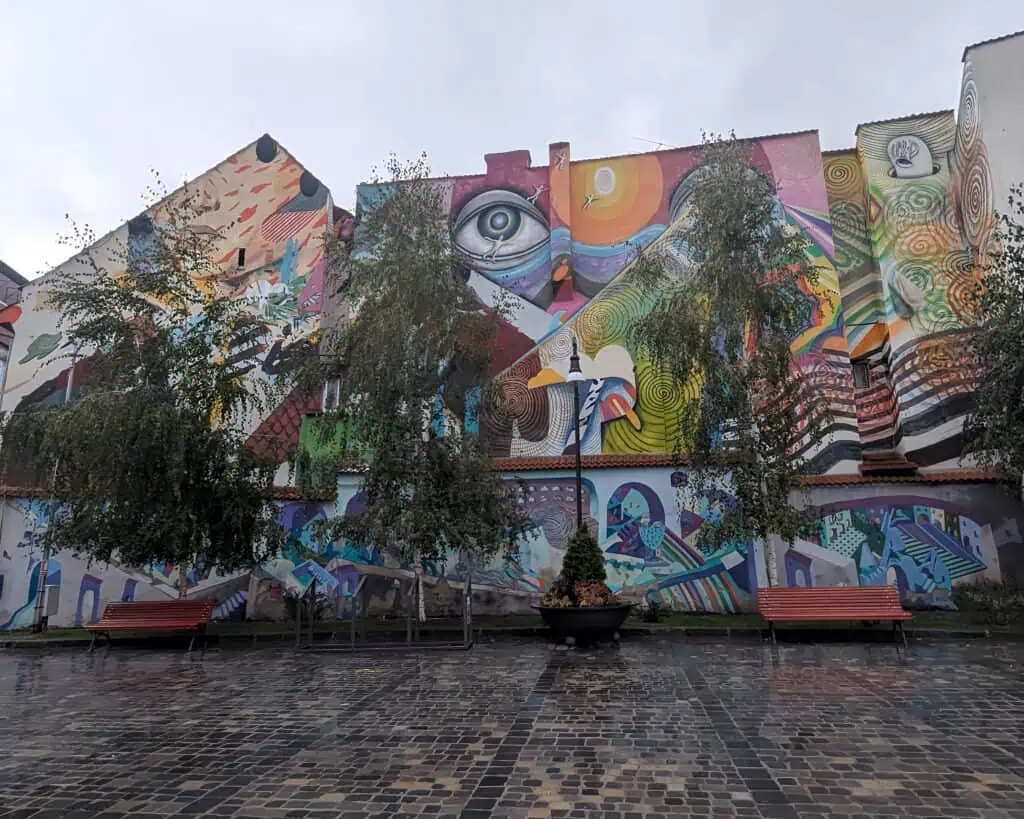
Piața Sfântul Ioan feels more local than Council Square. The open space is often used for events and markets, but it’s also known for its street art, with colourful murals adding a contemporary layer to the medieval surroundings. It’s a nice contrast to the more polished centre.
Beth Israel Synagogue (Sinagoga Beit Israel)
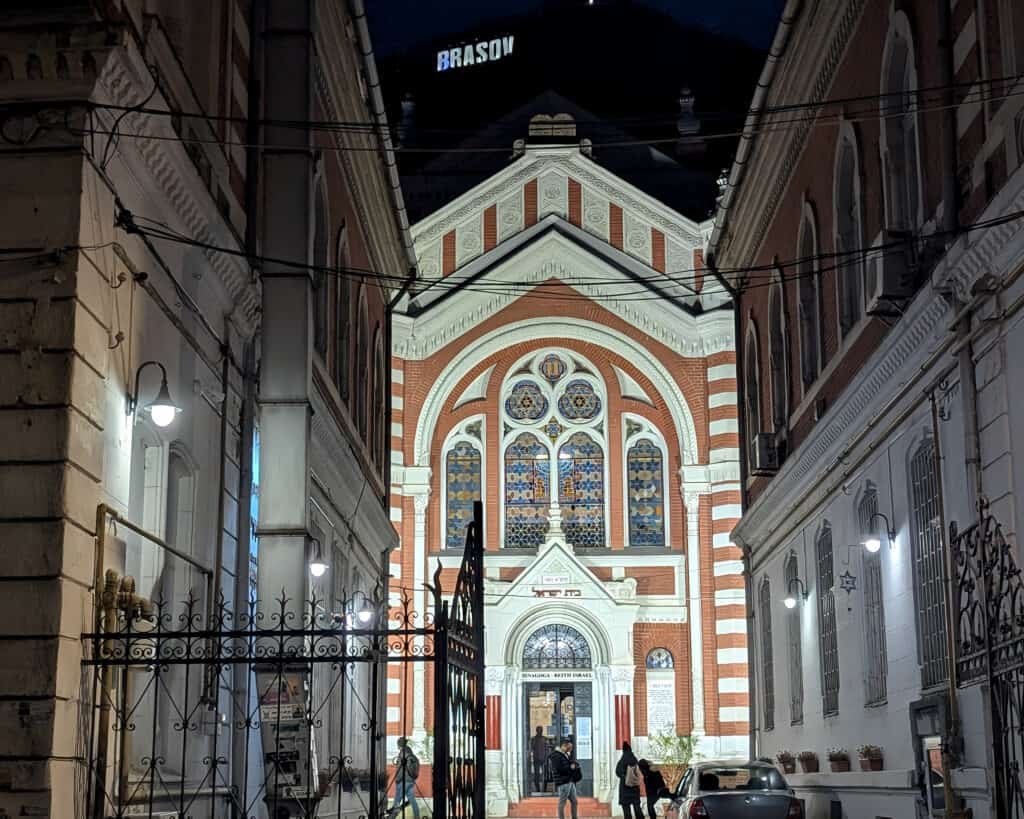
The Beth Israel Synagogue – also known as Sinagoga Beit Israel – is Brașov’s historic Jewish house of worship, built between 1899 and 1901 in a striking blend of neo-gothic and Moorish revival styles. It’s in the Poarta Șchei area of the old town.
Today, the synagogue remains active and often open to visitors during the daytime on most weekdays. There’s a small entry fee to explore the interior. Next to the building, you’ll find a Holocaust memorial and plaques honouring the Jewish community’s history in Transylvania.
Planning a trip to the Balkans and Romania? Questions about apps, eSIMs, and more? I have a free toolkit for you.
FREE Travel Tech Toolkit
The exact apps, eSIMs, and tools I use to travel smarter – covering transport, translation, money, connectivity, and more. Tested over years of actual travel.
4 Explore the Șchei District
Just beyond the walls of Brașov’s Saxon old town lies Șchei, the historic Romanian district that tells a very different story. For centuries, ethnic Romanians were not allowed to live inside the fortified medieval citadel, which the Saxon (German) merchants controlled. Instead, they settled just outside the gates in Șchei, developing their own churches, schools, and traditions.
There are two beautiful gates in the city walls connecting Șchei to the centre of Brașov.
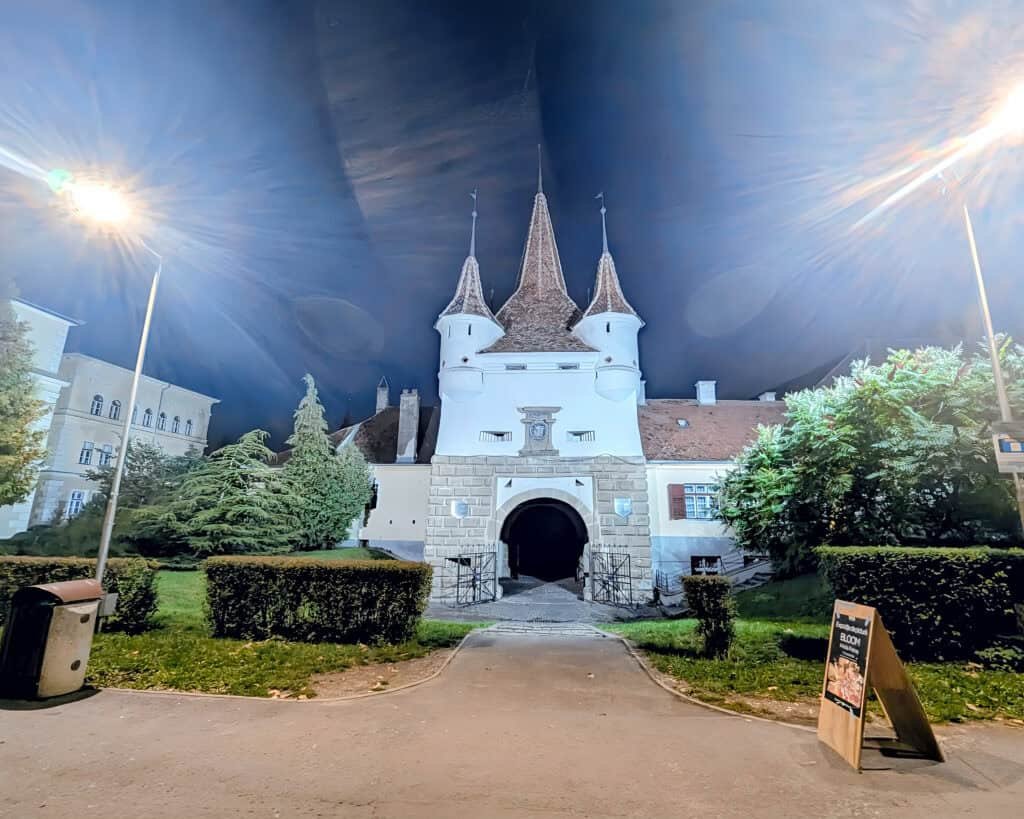
Catherine Gate (Poarta Ecaterinei)
I’ll be honest, I wanted to visit Brasov on the strength of a photo of Catherine Gate. With four small corner turrets surrounding the main tower. Its striking looks are straight out of a storybook. Built in 1559 by the Saxons, those turrets were a medieval signal that the city had the “right of the sword” – meaning Brașov could carry out capital punishment. It’s the only medieval city gate left in Brașov.

Catherine Gate (Poarta Ecaterinei) at night 
Passing through Catherine Gate (Poarta Ecaterinei) at night
As for going inside: no, it’s not open to visitors. You walk through the decorated arched passageway. But there’s no denying it’s such a photogenic landmark.
Schei Gate (Poarta Șchei)
Just beside Catherine Gate stands the Schei Gate. Built in 1828, when Brașov’s medieval fortifications were no longer practical for a growing town. Unlike the compact, turreted Catherine Gate, this one is larger and neoclassical in style, with three arched openings designed to accommodate increasing traffic between the old Citadel and the Romanian district beyond.
It effectively replaced Catherine Gate as the main route into Șchei.
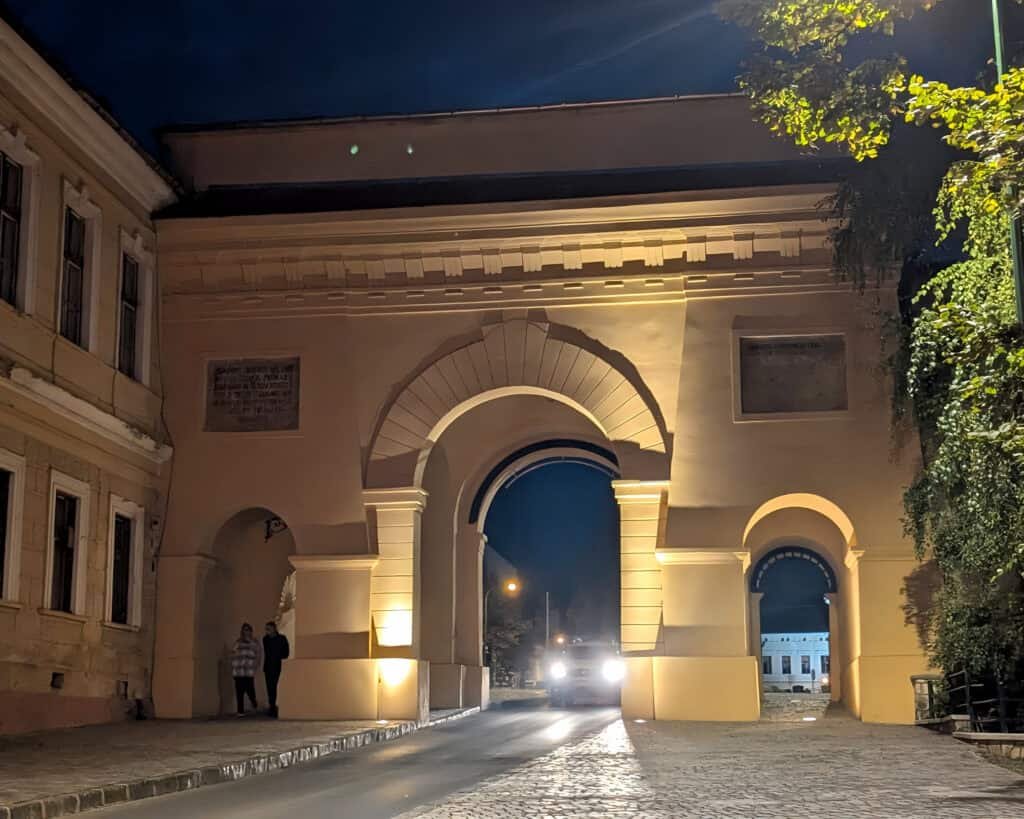
Wandering the lanes
Today, Schei is mainly residential, with sloping lanes leading to Saint Nicholas Church, one of the region’s oldest Orthodox churches. It’s the home of the First Romanian School Museum, where early Romanian-language books were printed. It’s also where you’ll find the start of the Tâmpa Mountain trails. Fewer tour groups venture this far, making it one of the most authentic corners of Brașov.
5 Tâmpa Mountain for the best views
If you’re hoping for postcard views over Brașov, then a visit to Tâmpa Mountain is essential. Follow Strada Constantin Brâncoveanu or Suisul Castelului to the base of the mountain and decide how you want to reach the top.
When we visited, low cloud sat stubbornly over the hills. Add in the driving rain, and there was zero point in going up. The cable car was closed too.
But if you’re luckier with the weather than we were, here are your options:
Telecabina Tâmpa (Cable Car)
The Telecabina Tâmpa reopened late in 2025 after a lengthy closure for upgrades and modernisation. The system was refurbished, safety equipment updated, and facilities at the summit improved, including the reopening of the panoramic restaurant area.
It’s the quickest way up, taking just a few minutes to reach the top near the large “BRASOV” sign. From the viewing platforms, you get wide views over the red rooftops of the old town, the Black Church tower, and the surrounding Carpathian foothills.
Opening hours are seasonal and weather-dependent, and it often closes on Mondays for maintenance.
Hiking to the Brașov Sign
If you prefer to earn the view, there’s a well-marked hiking trail through the forest. The most popular route begins near the cable car station. Many hikers recommend taking the trail anticlockwise if you’re doing a loop. Allow around 1–1.5 hours, depending on pace.
One practical note: Tâmpa is part of a nature reserve, and there have been occasional reports of bears in the surrounding forests of Brașov. Encounters are rare on the main daytime hiking routes, but it’s sensible to stick to marked trails and avoid wandering off alone at dusk.
6 Walk the City Walls
Walking the walls is a great way to get to know the city. We dipped in and out here due to the unrelenting rain. On a clear day, this would definitely be worth doing. Start on Strada După Ziduri (“Street Behind the Walls”), a shaded path that runs along the base of the former fortifications.
From here, you’ll pass Graft Bastion, a restored defensive tower that once connected the outer walls to the White Tower above. Stop at the White Tower for wide views over the red rooftops and surrounding hills. Nearby, the Black Tower sits slightly lower on the slope, smaller but equally well-positioned for photos back towards the old town.
Looping back towards the southern edge of the citadel brings you to Catherine Gate, the last remaining original medieval gate, and then on to Weavers Bastion, one of the best-preserved sections of the fortifications.
You don’t have to walk the entire perimeter to get a sense of it, but even a short section is more atmospheric than just ticking off sights from the main square.
7 Beyond the Walls: Brașov’s Civic Centre
Approximately 230,000 people live in Brasov; it’s Romania’s 7th-largest city. But very few of them live within the city walls. So if you want to appreciate Brasov, step beyond the citadel, in the opposite direction to Șchei and wander into Centrul Civic. It’s the city’s administrative and commercial heart. A place where Austro-Hungarian elegance sits alongside interwar modernism and later communist-era architecture. It’s also where we found the best places to eat.
Here’s a little of what we found:
Austro-Hungarian Elegance
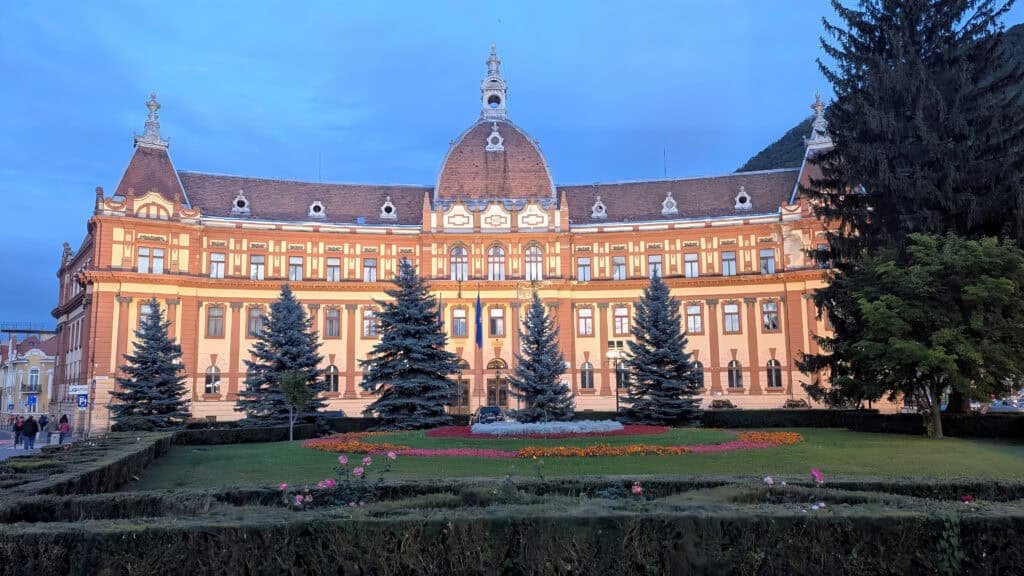
We passed several genuinely beautiful buildings, including the Royal Court of Justice. During the 1987 Brașov uprising against the communist regime, it was associated with the authorities’ crackdown. Today it remains part of the city’s court complex. Look out for the City Hall, found close by,
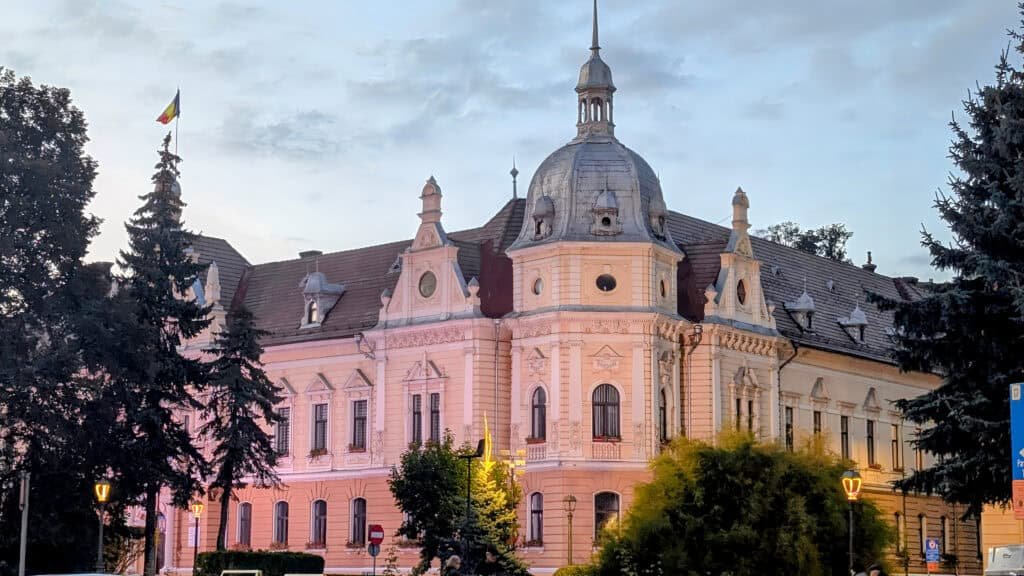
Modernist Architecture
Romania has plenty of brutalist and modernist architecture; the cylindrical Casa de Mode, MODAROM, close to the walls, is one of them. There are more older Soviet-style buildings closer to the station. We passed them on the bus from the train station,
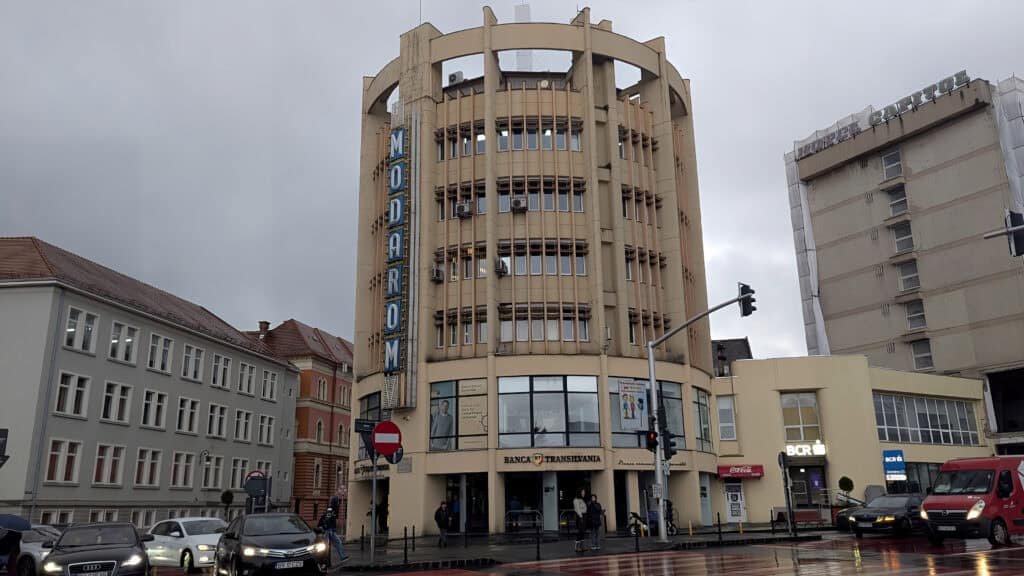
Nicolae Titulescu Park
While the Centrul Civic is very built up, it is broken up by green spaces, including the pretty Nicolae Titulescu Park, with its statue commemorating the heroes of the 1989 Revolution. We’ve seen similar statues elsewhere in Romania.
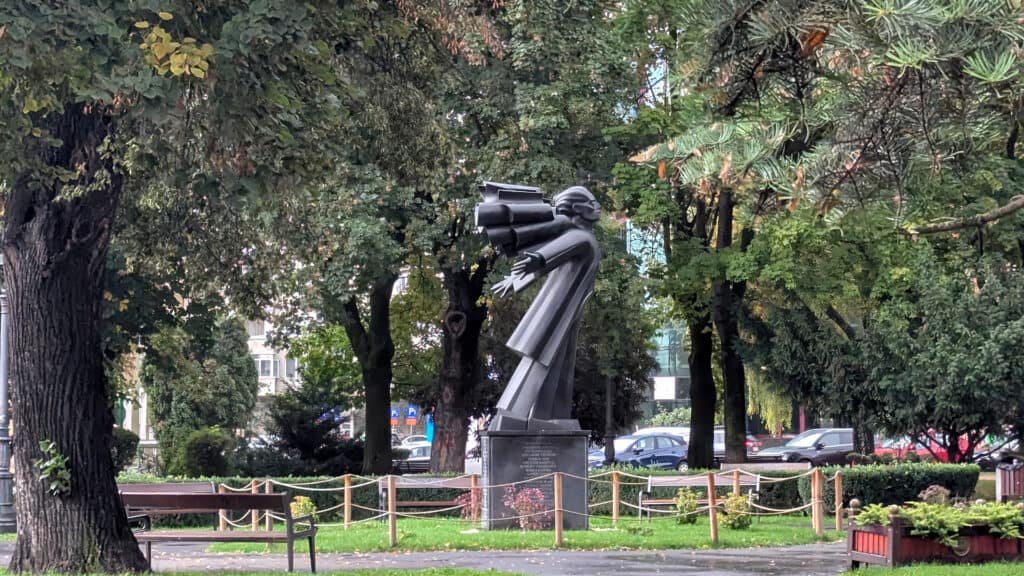
8 Food and Drink in Brasov
There is no end to the choices for food and drink in Brasov, from bascafés to cafés and restaurants. These are the places we enjoyed most. I’ve marked them on the map.
Ceasu’ Rău
We ate the best food in Brasov just outside the city walls. I’d recommend Ceasu’ Rău for traditional Romanian food. This is about as classic Romanian as it gets and pure comfort food. This is what we ate.
- Sarmale, the classic Romanian dish of cabbage rolls stuffed with minced meat and rice, topped with a rasher of grilled bacon and fresh dill. Served with mămăligă (polenta), a green pepper, and a pot of sour cream (smântână) on the side.
- Mici (or mititei), Romania’s famous grilled skinless sausages, are served alongside varză călită – braised/stewed sauerkraut and another green pepper. Mici are a staple of Romanian cuisine, typically made from a mix of beef, pork, and lamb, seasoned with garlic and spices.
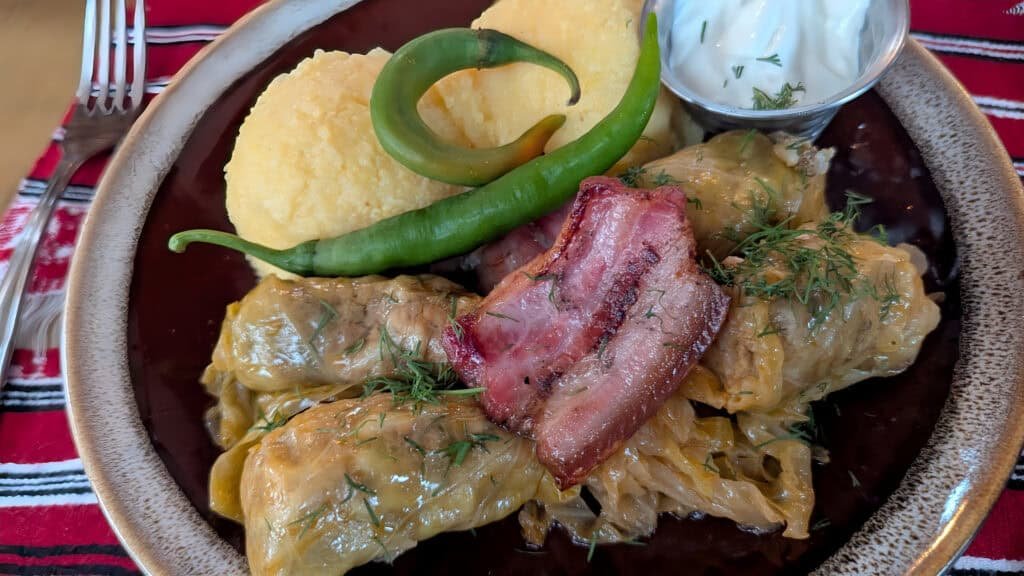
Sarmale with mămăligă (polenta), a green pepper, and a pot of sour cream (smântână) 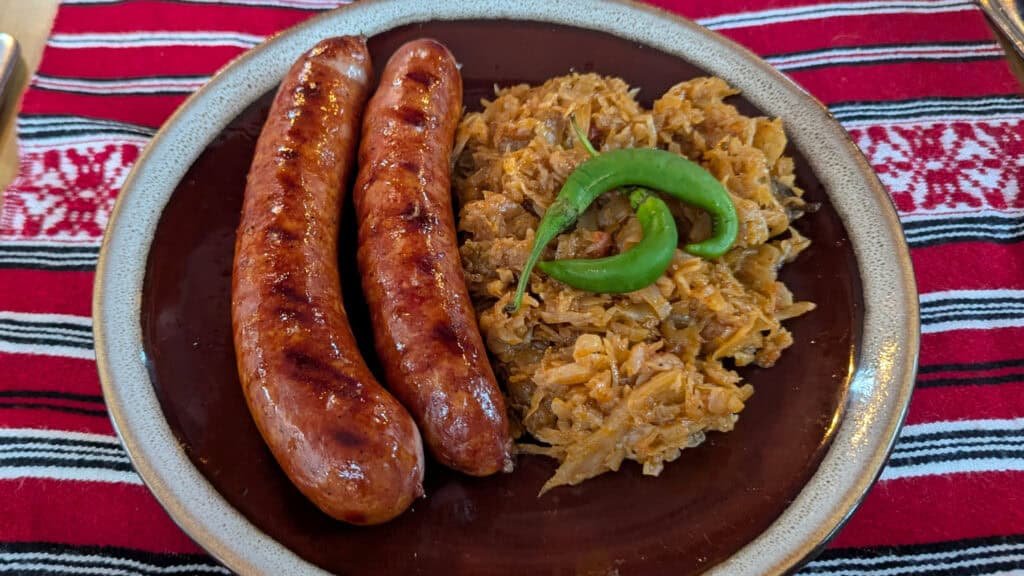
Mici alongside varza călită – braised stewed sauerkraut
Le Ceaun
I’d also recommend Le Ceaun in Council Square. Another traditional Romanian restaurant, although a little more touristy. The service was exceptionally friendly, despite the restaurant being incredibly busy with both tourists and locals. We both opted for the recommended cauldron dishes. Despite being packed, these came almost instantly. If you want to be served quickly, a cauldron dish is your best bet as it’s all pre-prepared in the hot cauldrons.
We can recommend the bean soup with smoked ham in bread as their signature dish: a hearty stew in an edible bread pot, complete with a lid. The Transylvanian soup with smoked meat and potatoes was also good. We also saw pork knuckle served, which looked delicious and similar to the dish we ordered in Caru’ cu bere in Bucharest. We had no room for dessert, but the classic Romanian Papanași was popular too.
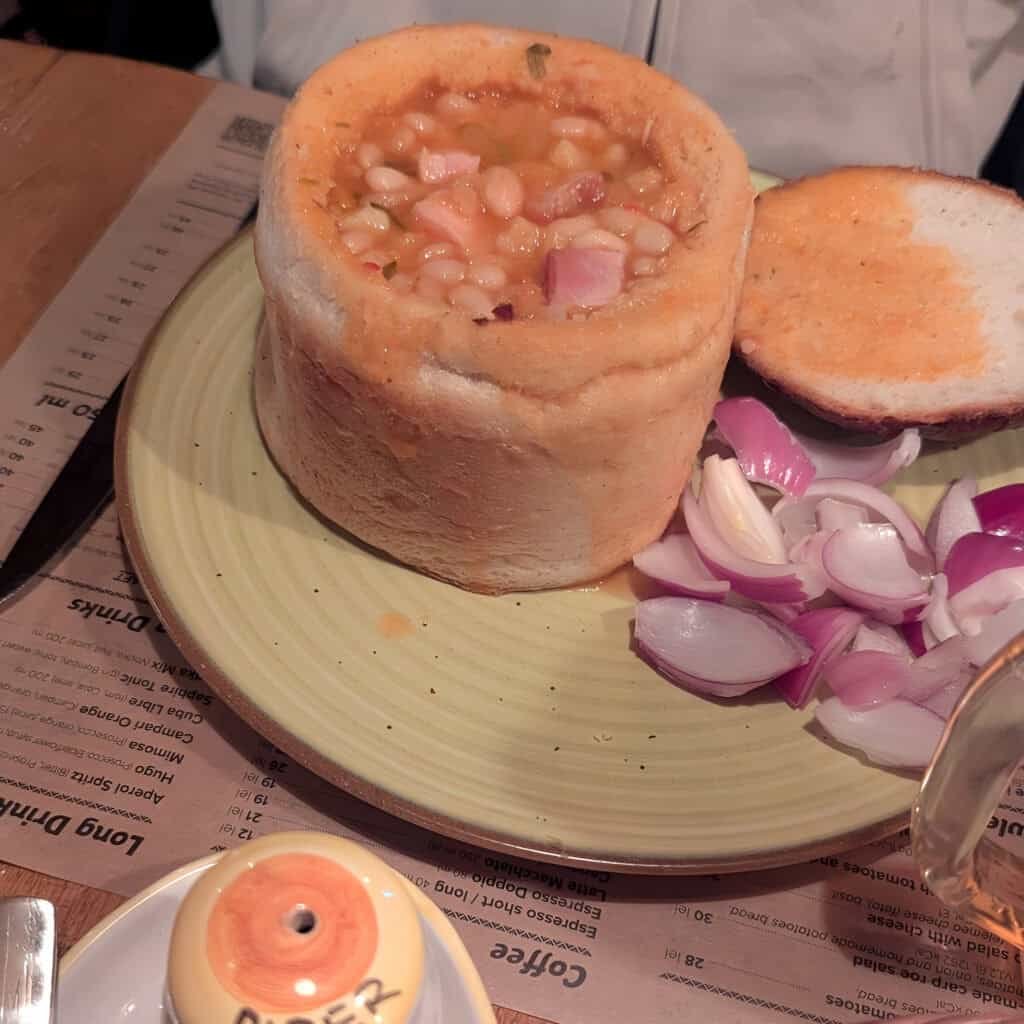
Cauldron Dish – Bean and Smoked Ham soup in a bread pot 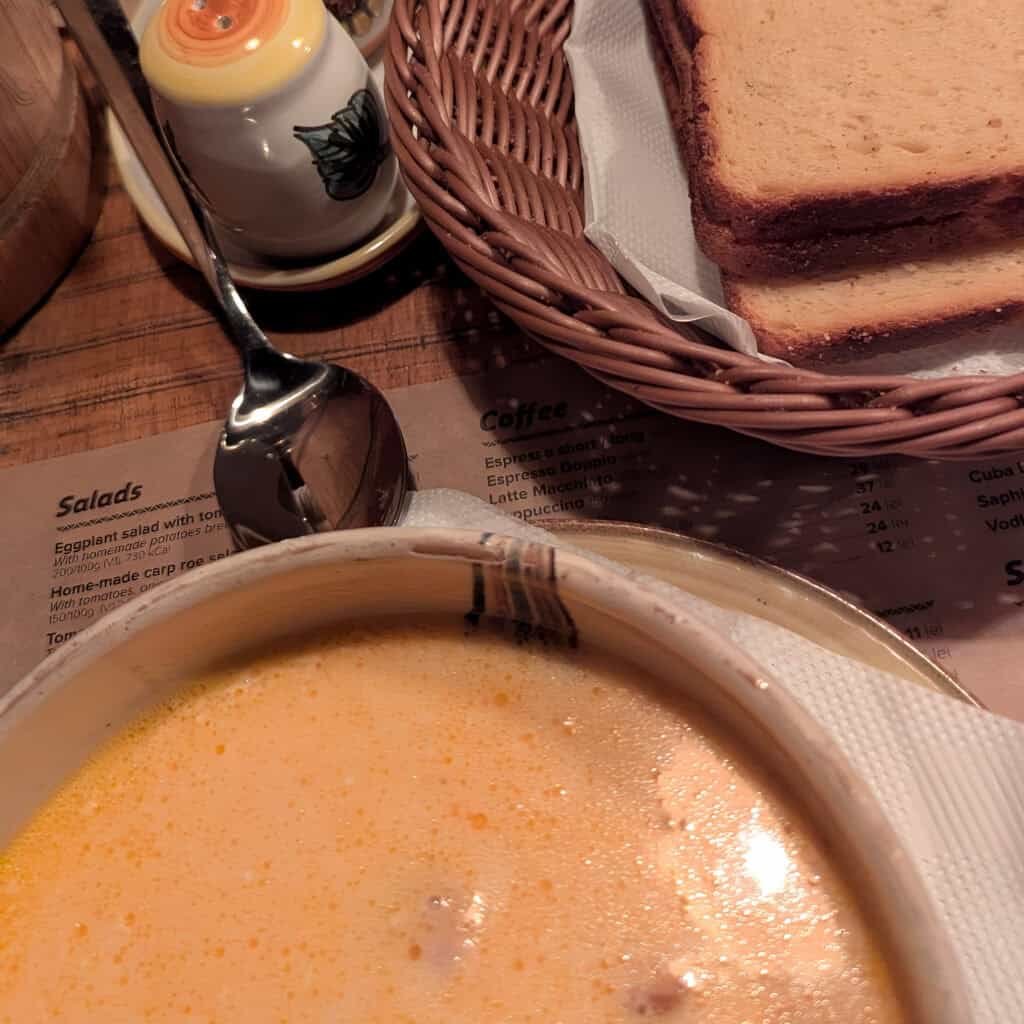
Transylvanian Soup
Aftăr Stube Craft Beer
Always keen to find the beer scene, we visited Aftăr Stube, as Brasov’s entry in the Untappd App. There was a good selection of craft beer in the fridge. I opted for a Hop Hooligans Faded Memories double NEIPA
We found a younger, less touristy, and more studenty crowd here, with international food options. I chose a tasty salad.
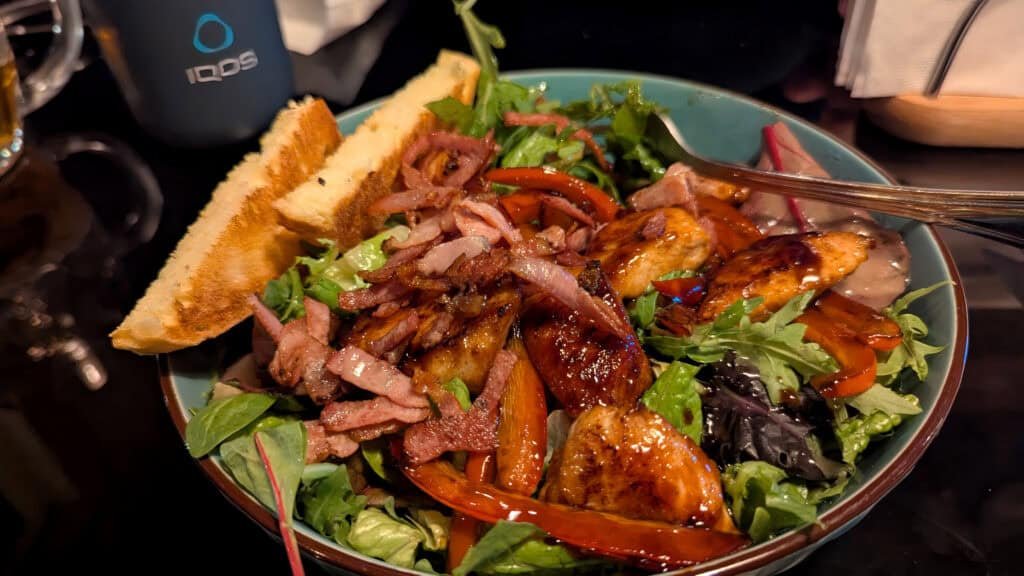
9 Day Trips From Brasov
Brasov is an excellent base for exploring Transylvania. These are some of the best options and the ones we took. I’ve added tips on how easy it is to visit independently versus opting for an organised tour.
Sinaia and Peles Castle
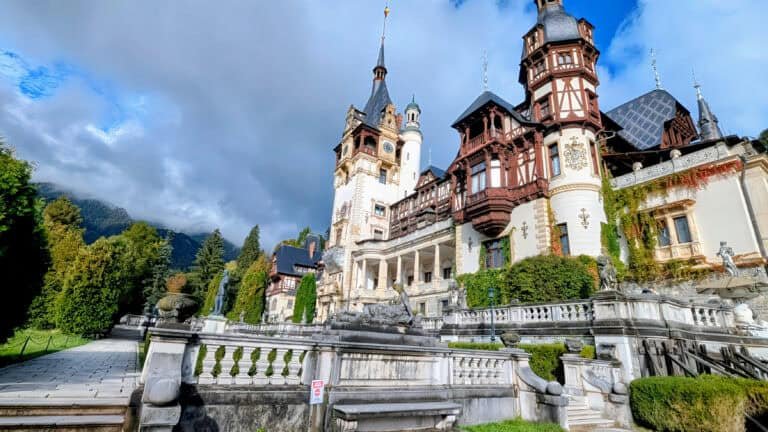
About an hour’s drive from Brașov is the mountain town of Sinaia, home to Peleș Castle. It served as the summer residence of the Romanian royal family from 1883 until 1947, and it is, quite simply, one of the most beautiful castles in Europe. Commissioned by King Carol I and built in a Neo-Renaissance style, its 160-plus rooms are decorated with fine European art, Murano crystal chandeliers, German stained-glass windows and Cordoba leather-covered walls — each room styled differently,
The exterior alone is worth the trip, set dramatically against forested Carpathian peaks. It gets busy, particularly at weekends, so arriving early is wise if you have pre-booked tickets. Just down the hill, the smaller Pelișor Castle is also worth a look if you have time and it’s open. It was closed for renovation when we visited.
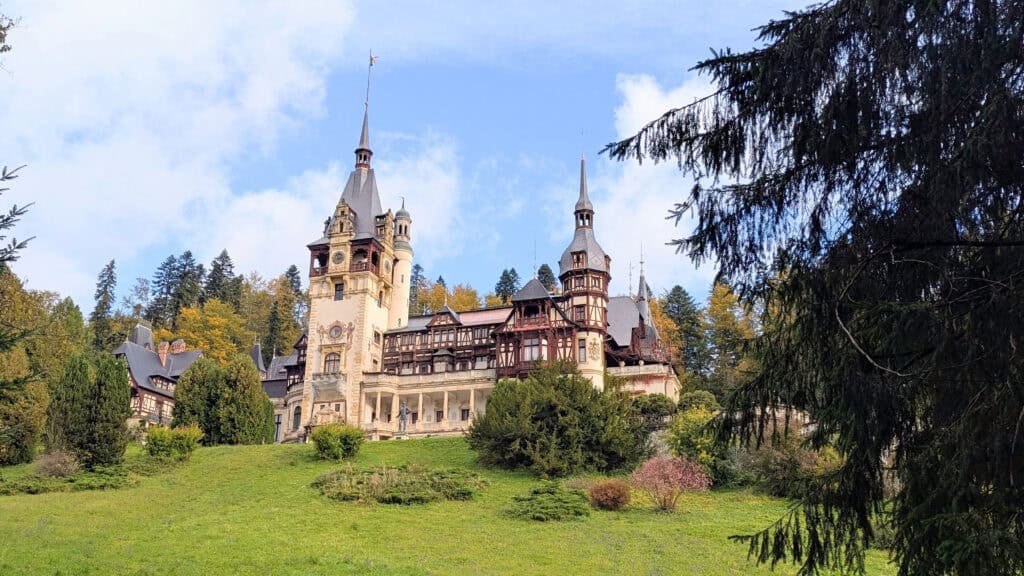
Getting to Sinaia and Peles Castle from Brasov: If you don’t have a car, there are still options. You can take an organised day tour.
It’s also about an hour by regular train from Brașov to Bucharest. If you’re travelling to Brasov by train from Bucharest, it would make sense to leave early, stop in Sinaia along the way, and make a day of it. There’s more to see in Sinaia, including Sinaia Monastery and a cable car that takes you higher to a viewpoint. Here’s a detailed review of my visit to Sinaia and Peles Castle.
➡️ Visit Sinaia: Home to Peleș, Romania’s Most Spectacular Royal Castle
Libearty Bear Sanctuary
About 30km from Brașov in the small town of Zărnești. The Libearty Bear Sanctuary is in the forest above the town and is one of the most rewarding day trips you can do from the city. It’s also one of those rare animal attractions you can feel genuinely good about visiting. Founded by Cristina Lapis after she witnessed three bears kept in a tiny cage outside a restaurant, the Sanctuary exists to rescue bears from exploitation. Many of the rescued bears were kept caged outside hotels, restaurants and even petrol stations to attract customers.
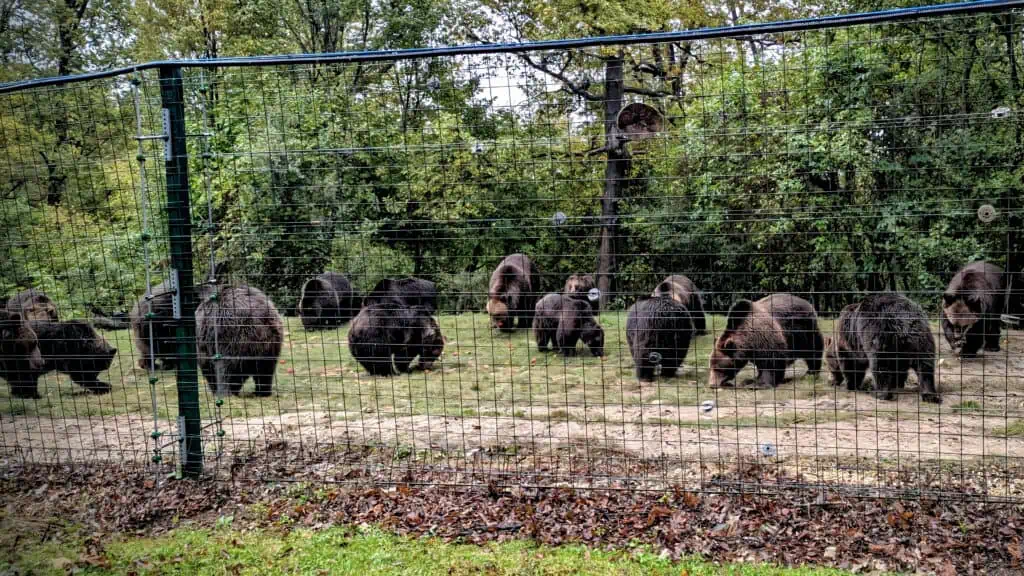
Today it’s home to over 100 rescued bears, roaming 69 hectares of forest with streams, pools and trees to climb. It’s about as far from a concrete zoo enclosure as you can imagine. Visits are guided tours only, lasting around an hour along forest paths, with your guide explaining the individual bears’ stories and how the Sanctuary works. I loved the Bear Sanctuary.
A few practical things worth knowing: the Sanctuary is closed on Mondays, children under five aren’t permitted inside, and tours run at fixed times with limited spaces. Booking online in advance is strongly recommended.
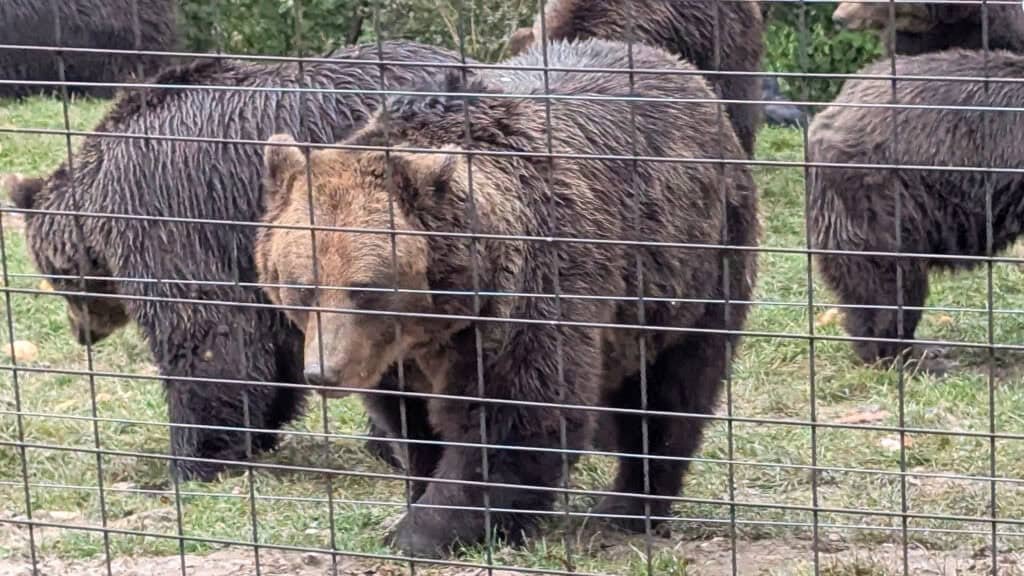
Getting to Libearty Bear Sanctuary from Brasov: It’s not possible to reach Libearty Bear Sanctuary by public transport. The bus goes as far as Zărnești, but it would be a long walk up into the forested mountains if you don’t have a car. We reached it by Uber. There are also day tours (combining with Bran and Rasnov Fortress).
Here’s my personal trip report from the Bear Sanctuary.
➡️Visiting Libearty Bear Sanctuary: Is It Worth It?
Bran Castle
About 30km from Brașov, Bran Castle is Romania’s most famous and most visited attraction. Trading heavily on its reputation as “Dracula’s Castle,” the connection to Vlad the Impaler is tenuous at best. Most historians agree he never lived here, and Bram Stoker never visited Romania, let alone Bran.
The Dracula association is more of a marketing exercise, but it is genuinely striking, perched dramatically on a rocky outcrop with the Carpathians as a backdrop. There’s a strong association with Queen Marie, who turned it into a royal residence. Inside, you’ll find period furniture, royal apartments and a theatrical torture chamber. If you’re choosing between Bran and Peleș, I’d pick Peleș every time – it’s more beautiful, more authentic and less of a theme park. But if you have time for both, go early in the morning to beat the crowds, and brace yourself for the souvenir stalls – there are a lot of them.
Getting to Bran Castle from Brasov: Tours from Brasov to Bran Castle include a stop at the Libearty Bear Sanctuary. There are also Bran Castle tours combined with Peles Castle.
Bolt and Uber are also well-priced for this journey if you’d prefer to travel independently.
Sighisoara
About 90 minutes from Brașov, Sighișoara is one of the best-preserved medieval towns in Europe and has been a UNESCO World Heritage Site since 1999. We absolutely loved Sighisoara.
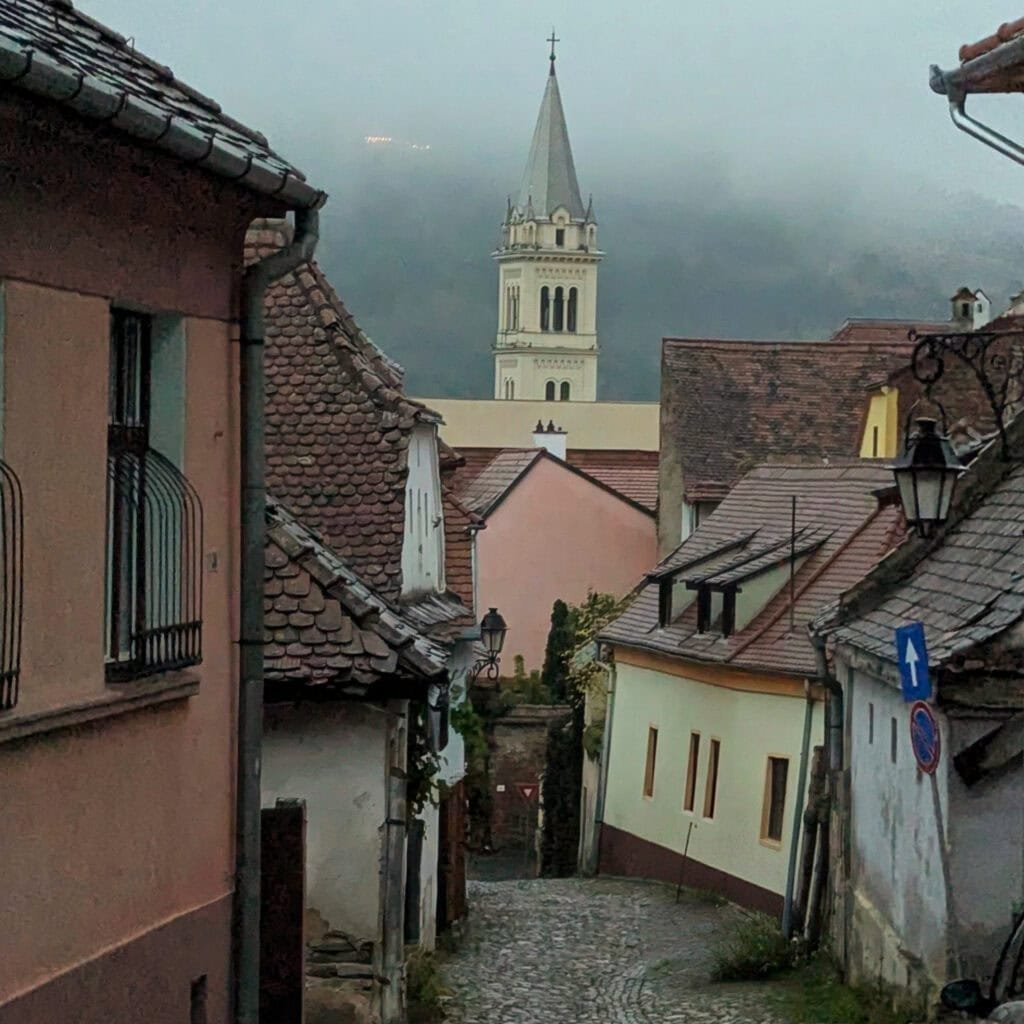
Cobbled Street in Sighisoara 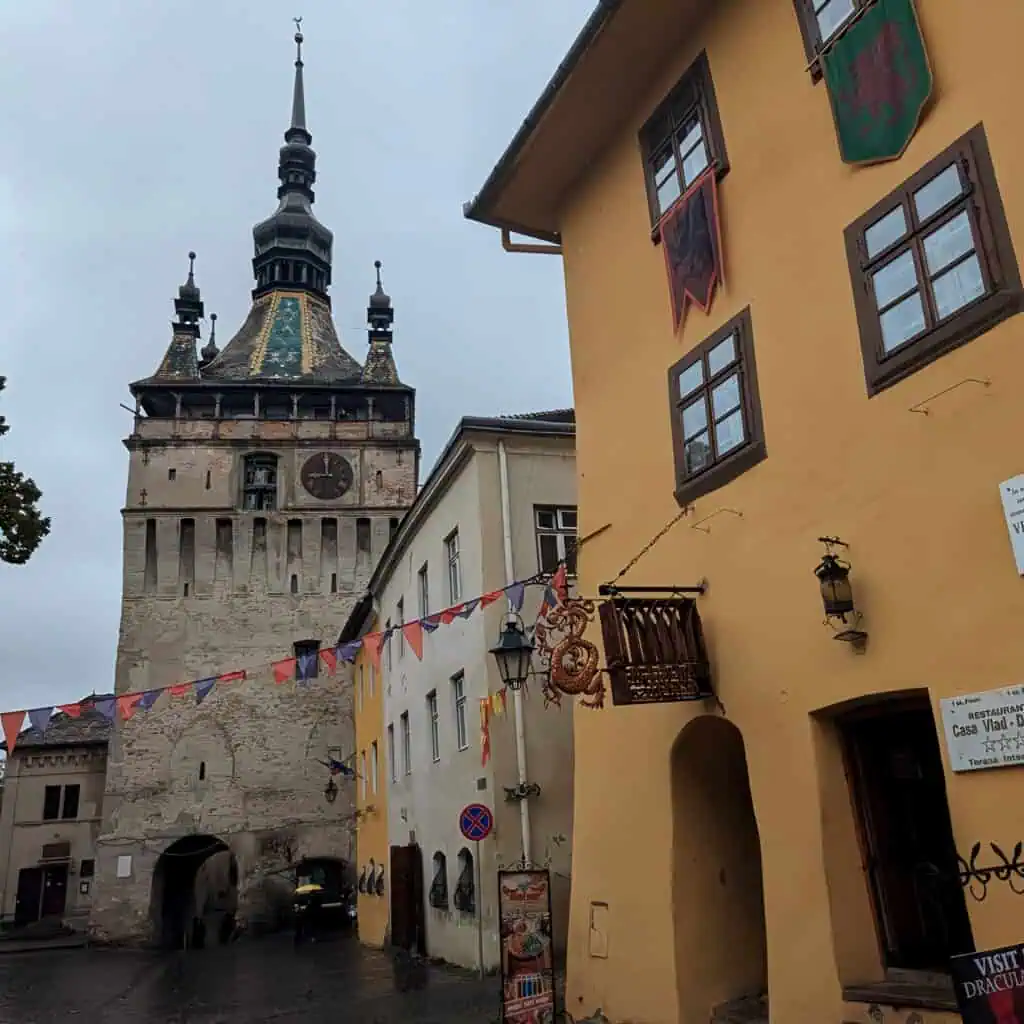
Vlad’s house and Clock Tower Sighisoara
#The historic heart is frozen in time, a maze of winding cobbled alleys, steep stairways and colourful buildings. The centrepiece is the iconic Clock Tower, which you can climb for panoramic views of the old town, with exhibits on the city’s history and craft guilds on display. There’s a Dracula connection here, too. Vlad the Impaler was born in Sighișoara in 1431, and his childhood home still stands in the main square and now operates as a restaurant.
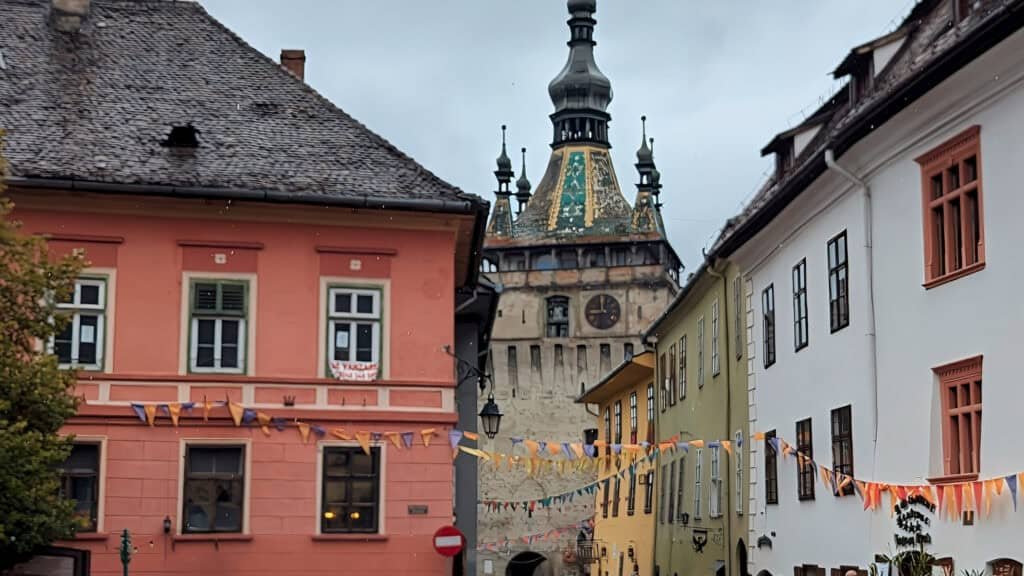
If you can, combine it with a visit to the nearby fortified church at Viscri for a fuller picture of this remarkable corner of Transylvania.
Getting to Sighisoara from Brasov: If you don’t have a car, you can book a day tour. I’d book well in advance to avoid disappointment, as the tours fill up and are infrequent out of season.
Alternatively, you can do as we did and take the bus, which departs from the Brasov Bus Station at Codreanu 2. This is out of town and not the one at the rail station. I’ve marked it on the map. There is a catch. When we travelled outside the main tourist season, there was only one FlixBus a day. We stayed overnight in an absolutely adorable guesthouse in the centre of the old citadel. Hands down the best decision of our trip. I’d thoroughly recommend it.
How to get to Brasov
By Train
The best way to get to Brașov from Bucharest is by train.
There’s a direct and frequent service from Bucharest North Railway Station (Gara de Nord) to Brașov. It typically takes about 2.5 to 3 hours. It’s a scenic journey through the Carpathian Mountains. We arrived in Brașov this way, breaking our journey in Sinaia to explore the town and visit Peles Castle. And I thoroughly recommend you do too.

The train station is 4 Km from the centre of the old city of Brașov, so it is a long way to walk into the centre.
There are buses every 5-10 minutes, including number 4. The bus stop is right outside the station. You can pay for the ticket on the bus ticket machine by card. Alternatively, Uber and Bolt are available and very reasonably priced.
Both the bus and the train station are on my map of Brasov highlights.
By Air
Brașov-Ghimbav International Airport (GHV), Brașov’s new airport, opened in 2023 at Ghimbav just outside the city. It still felt very much like a work in progress when we were there in 2025. The terminal was spotless but almost deserted, and parts of the surrounding area looked unfinished. We weren’t optimistic about the reliability of public transport to the airport, and we were glad we booked a Bolt. Our driver navigated past construction sites and stretches of unmade road (whether that was the best route or not, I couldn’t say).
While the airport didn’t scream “fully established international hub” just yet, it worked brilliantly for us. The setting, with its mountain views, made it an especially nice airport, though it was a little lacking in food and drink options. With so few flights, going through security and boarding was easy.
We flew directly back to London Luton Airport. Routes change as the airport grows, but it now serves more European destinations. If you like the idea of skipping Bucharest and flying straight into Transylvania, it’s an interesting, currently underused option.
By Road
Alternatively, you can drive from Bucharest to Brasov via the DN1/E60 highway, which takes around 2.5 to 3 hours, depending on traffic. There are also public buses running the route.
Where to Stay in Brasov
We booked at the last minute when options were limited and stayed at Pension Casa Timar, a small, friendly guest house, just outside the city walls. Here’s live availability for more accommodation options.
So this completes my guide to Brasov. I hope you found it useful. If you’ve enjoyed this guide, do take a look at the rest of my content on Romania.
Have you been to Brasov, or are you planning to go? Let me know in the comments.