10 Best Things to Do in Thessaloniki: A Walkable Guide to Greece’s Second City

It’s easy to underestimate Thessaloniki. Athens takes most of the limelight, along with the islands, but if you’re looking for an easy, good-value city break in Greece, Thessaloniki should make it onto your list. We left a cold, wet UK in February and were met with blue skies and warm weather, perfect for sightseeing. It’s a compact city and easy to feel relaxed in, with no need to chase your tail or tick off a long list of ‘must-dos’ if you don’t want to.
As for things to do in Thessaloniki, you’ll find a walkable city with a cosmopolitan food scene and rich Ottoman, Byzantine, and Roman history. There’s an extraordinary number of UNESCO-listed early Christian and Byzantine sites, scattered in plain sight around the centre. But it’s the waterfront and promenade that have tied everything together and been the city’s defining features over the past decade.
Whether staying for a day, taking a short break, or passing through as part of a longer trip, this guide will share some of the best things to do in Greece’s second city, a vibrant university hub with plenty going on year-round.
This guide may include a few affiliate links. If you choose to buy something through one of them, I may earn a small commission (at no cost to you). Thank you for supporting One Small Bag and helping keep this resource ad-free and independent.
Thessaloniki Essentials
- Luxury: Electra Palace Thessaloniki
- Midrange: Icon Central SKG
- Budget: Zotos Luxury Studios & Apartments
- Thessaloniki: Walking Tour with City Highlights & Sunset
- Thessaloniki: Full-Day Bus Trip to Meteora
- From Thessaloniki: Halkidiki Blue Lagoon Cruise with Lunch
- Thessaloniki: Kavala, Philippi, and Beach Full Day Trip
- ...and more
- Discover Cars (Car Hire: Best Regional aggregator deals)
- Welcome Pickups (Hassle-Free Airport Transfers & Personal Drivers)
Map of things to do in Thessaloniki
Thessaloniki is in northern Greece, right on the Aegean Sea, not far from the borders with North Macedonia and Bulgaria. It’s the country’s second-largest city and a natural gateway between Greece and the Balkans, which gives it a slightly different vibe from Athens. From here it’s easy to reach Halkidiki’s beaches, Mount Olympus, and the wider northern mainland.
Here’s a map of things to do and see in Thessaloniki to help you orient yourself around this compact city.
You may also be interested in
- Thessaloniki to Athens Via Meteora, 7 Days, 2 Greek Cities and One Unforgettable Landscape
- Visit Meteora: An Unforgettable Trip to Greece’s Cliff-Top Monasteries
- Classic Athens: Top Sights and Ancient Landmarks for your First Trip to The Greek Capital
- Alternative Athens: Neighbourhoods, Street Life & Technopolis
1. Start in Aristotelous Square
Aristotelous Square is Thessaloniki’s showpiece: a long, sweeping plaza framed by grand arcaded buildings and opening straight out to the sea. I love the colouring and detailing on the buildings and the palm trees too.
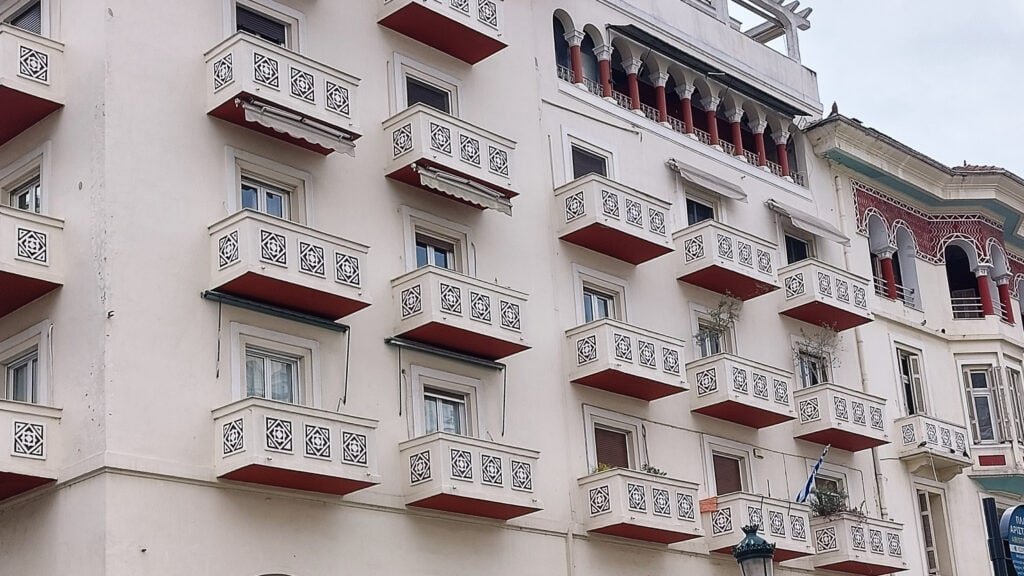
Around the square and the streets leading off it, you’ll find designer boutiques, jewellers and luxury brands alongside cafés and bakeries. You can also say hi to Aristotle, who lived and worked not far from here, and both the main square and the university have taken their name from him. Apparently, it’s a popular local tradition to rub his toe to bring good fortune and wisdom.
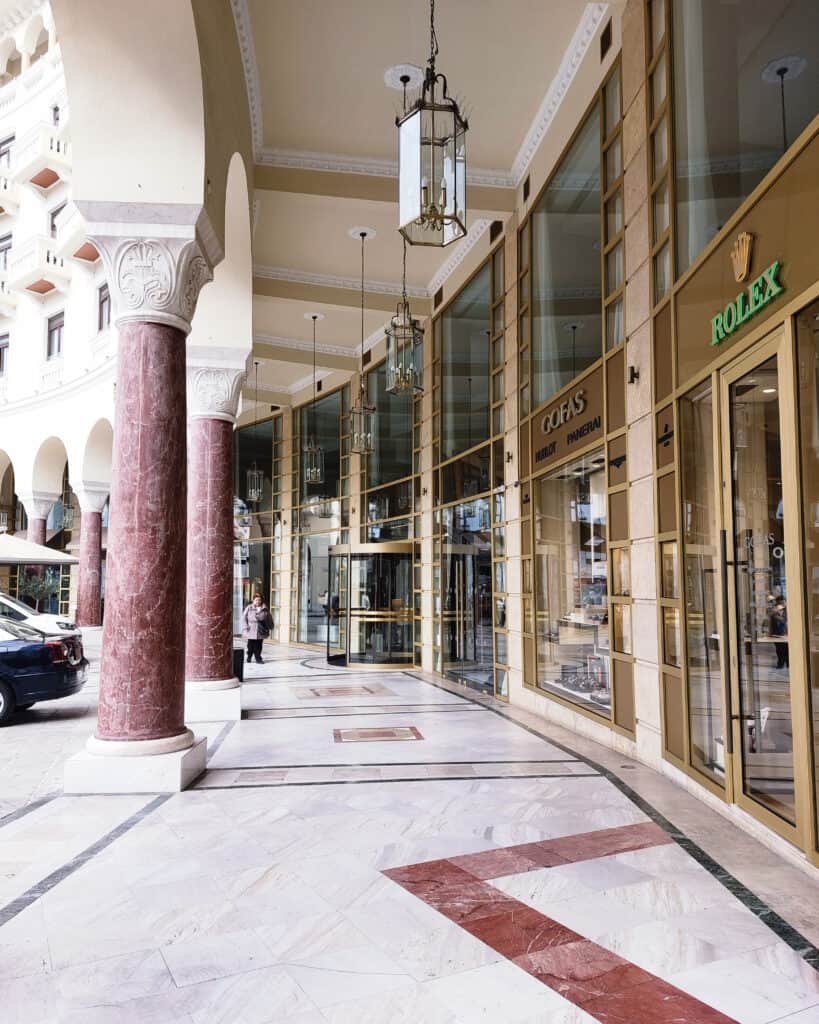
Designer Shops Aristotelous Square Thessaloniki 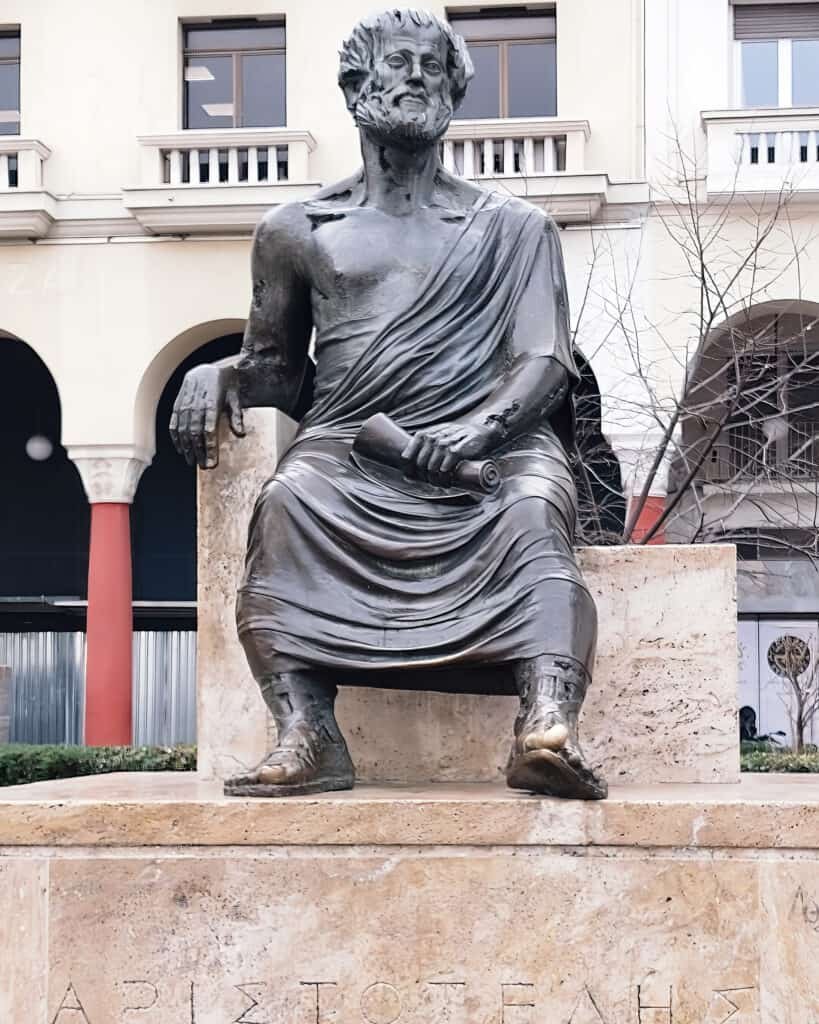
Aristotle Statue in Aristotelous Square Thessaloniki
Walk from Aristotelous Square to Agia Sofia Square to see the Hagia Sophia Cathedral, an iconic Orthodox church with elaborate mosaics and soaring arches. Nearby, you’ll also pass several landmarks, including the Rotunda, the Arch of Galerius, and the remains of the Palace of Galerius, all part of Thessaloniki’s heritage recognised by UNESCO. I’ve marked these places on the map of things to do in Thessaloniki.
As you head towards our next stop, the White Tower, you’ll pass through apartment blocks and cafés with smaller, more modern neighbourhood churches, still full of character, even if they’re not Byzantine., like this one.

2. Visit the White Tower
No matter how briefly you’re in Thessaloniki, you’ll end up at the White Tower. It sits right on the waterfront and is easily the city’s most recognisable landmark. It’s an Ottoman fort and a symbol of modern Thessaloniki. Inside is a small museum about the city’s history, but the real reason to go up is the view from the top.
The area around the tower is lively, so expect street musicians, locals out for a walk or a cycle along the seafront, and you might get some good-natured hustle from the owners of the pirate ship, moored off the front, wanting you to join them on their boat trips.

3. Walk to the Umbrellas
Thessaloniki’s waterfront is flat, breezy, and perfect for a walk even in winter. Start at the White Tower, the city’s most recognisable landmark, and follow the long promenade eastwards along the water. Keep going, and you’ll reach Zongolopoulos’ Umbrellas, an elegant modern art installation. Everyone takes photos here. From the Umbrellas, you also get one of the best views back towards the city, including the White Tower. It’s especially pretty in late afternoon when the colours soften.
You can turn around at the Umbrellas, or carry on to the gardens beyond, or stop at one of the cafés along the way.

Zongolopoulos’ Umbrellas Thessaloniki 
Promenade Thessaloniki with White Tower and Hotels
4, Explore Beyond The Umbrellas


If you continue along the promenade past the umbrellas, you’ll reach a string of themed Waterfront Gardens filled with public art. These run for more than 3km along the waterside. We walked as far as Saints Cyril and Methodius, tucked just behind the promenade.
We found the church of Saints Cyril and Methodius, which is a bright, elegant church, but with an unmistakably Orthodox mix of iconography and gold inside. It’s not famous or old, but it’s certainly striking. You’ll find most of the much older UNESCO-listed Byzantine churches up on the hill in Ano Poli.

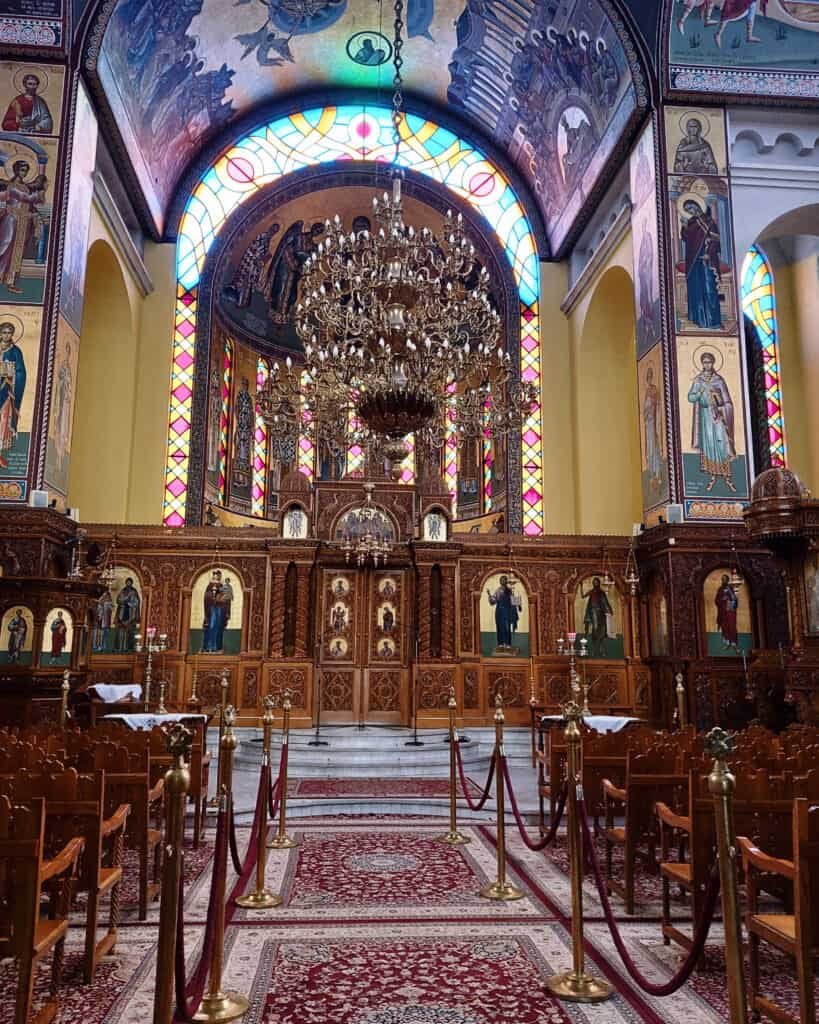
Inside Church of Cyril and Methodius, Thessaloniki 
Inside Church of Cyril and Methodius, Thessaloniki
Planning a trip to Greece? Questions about apps, eSIMs, and more? I have a free toolkit for you.

FREE Travel Tech Toolkit
The exact apps, eSIMs, and tools I use to travel smarter – covering transport, translation, money, connectivity, and more. Tested over years of actual travel.
5. Discover Thessaloniki’s Markets
If you enjoy real, local markets rather than curated “artisan” ones, Thessaloniki has exactly what you’re looking for. The main central markets, Modiano and Kapani, are a short walk from Aristotelous Square and make an easy detour when you’re exploring the city centre. Kapani is the more traditional of the two: narrower lanes, tiny bakeries, spices and nuts. Modiano has recently been renovated with cafés and small eateries tucked among the stalls.

Fish Shellfish and Octopus at Thessaloniki market 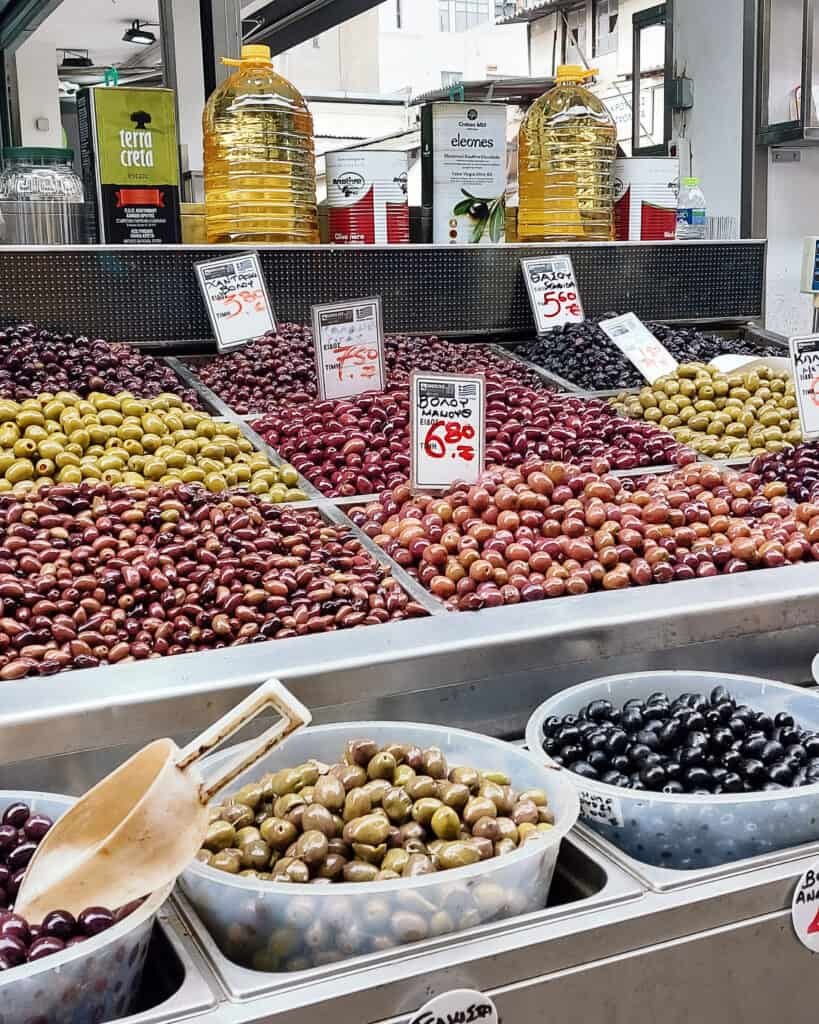
Olive Stall Market Thessaloniki
6. Take a Boat Trip Along the Bay
One of the more unexpected Thessaloniki experiences is the pirate-style wooden galleon bobbing up and down along the waterfront. And if you want tickets, it’s easy as the staff are on the waterfront encouraging you on board. The way it works is simple: the ride is free, but you have to buy a drink. While it won’t be a bargain if you treat it as a booze cruise as the drinks aren’t cheap, it’s a fun way to cruise out into the bay to enjoy the views.

7. Cafés and Nightlife in the Ladadika District
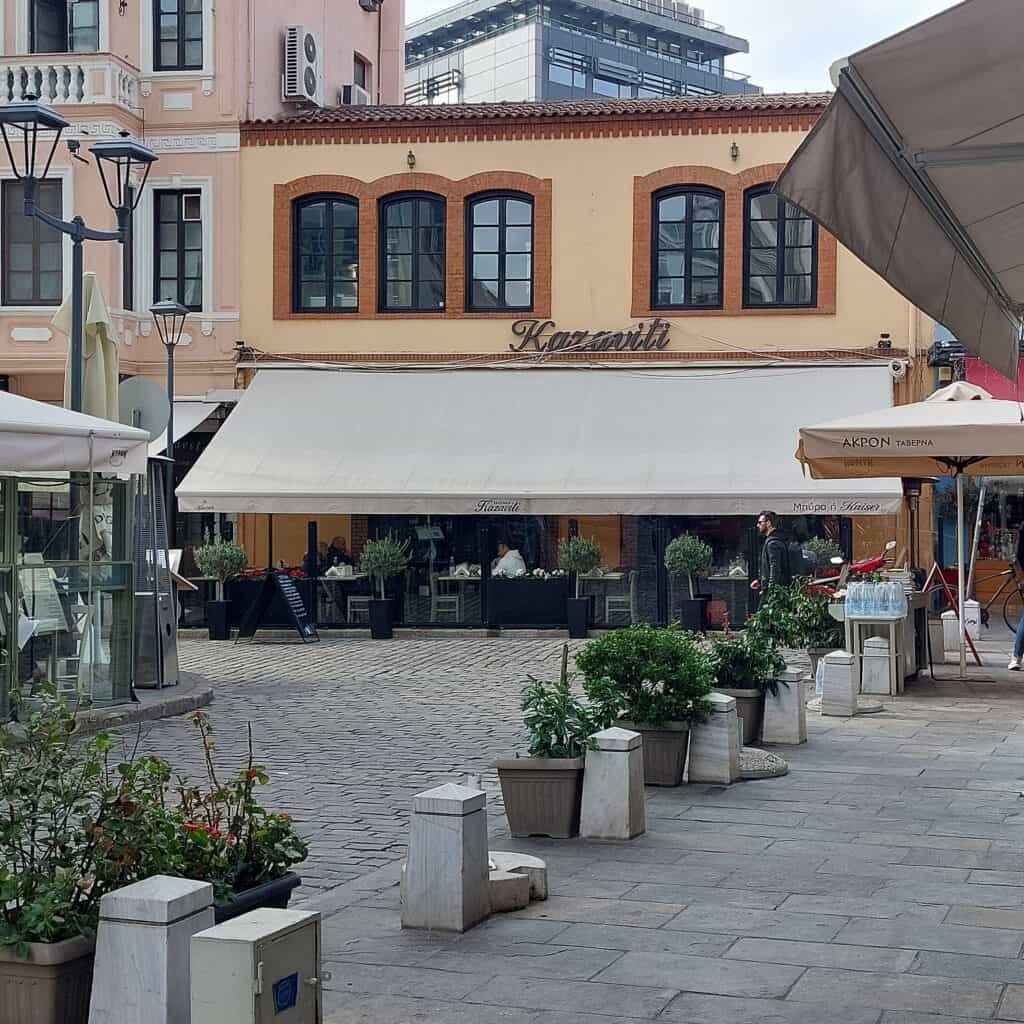
Kazaviti Restaurant – a good place for a traditional Greek Meal 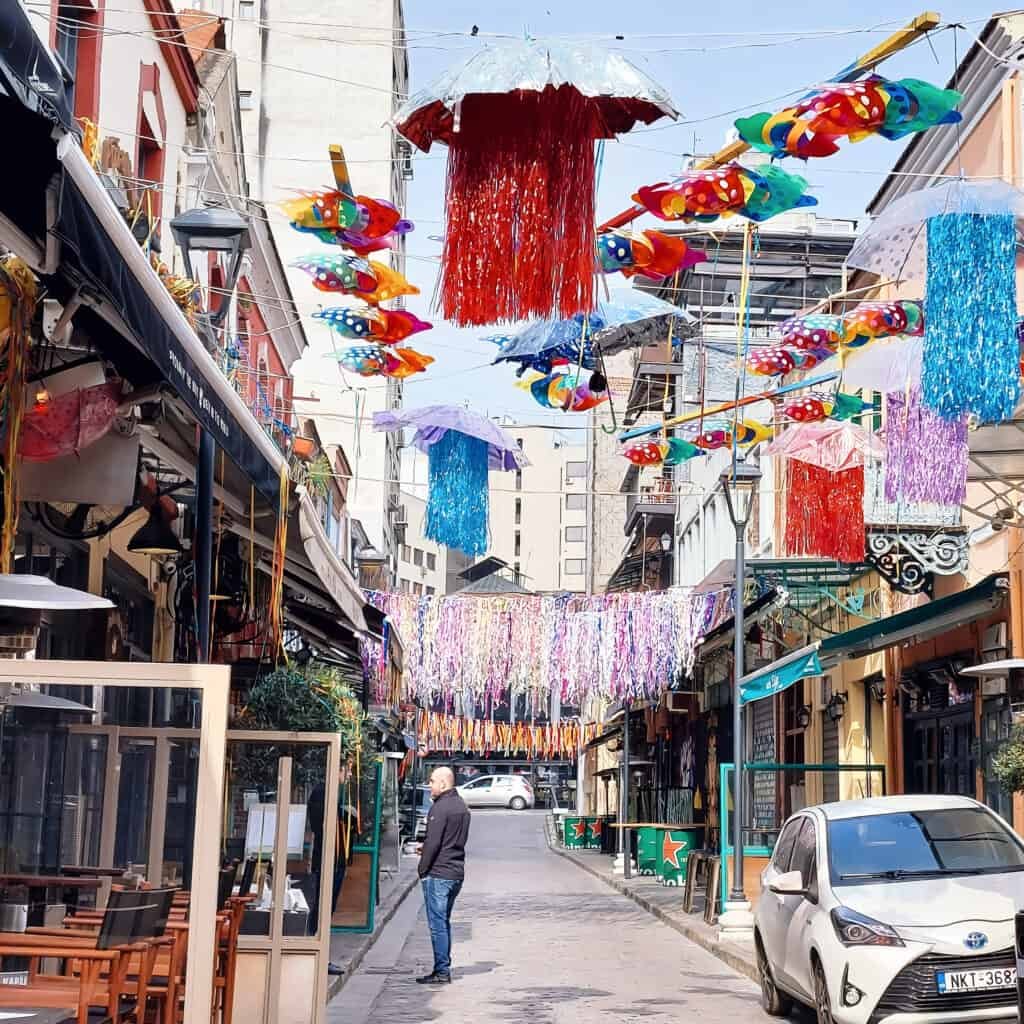
Street in Ladadika
Ladadika is Thessaloniki’s classic bohemian quarter, the place for good food, music, and atmosphere, especially in the evenings. It reminded me of Skadarlija in Belgrade, Serbia. It’s also extremely central, so you’ll soon find it as you walk between Aristotelous Square and the waterfront.
Historically, Ladadika’s taverns were gathering spots for artists, philosophers, and musicians, with the famous Ouzeri Aristotelis at the centre of the scene. During World War II, it became a refuge for resistance fighters, and later a hub for poets and artists. It’s also the birthplace of Thessaloniki’s ouzeri tradition, which are taverns serving ouzo with meze.
As well as traditional Greek restaurants like Kazaviti, you’ll find plenty of bakeries, cafes, and cake shops, plus plenty of street art.

Street Art 
Cake shops
8. Visit Thessaloniki’s Museums
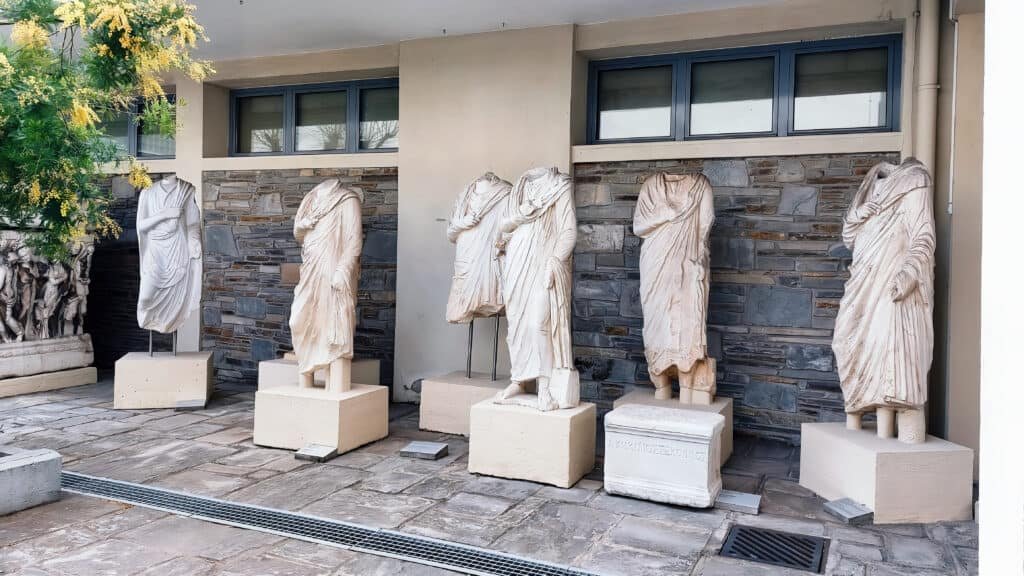
We made the most of the February sunshine and spent the time outside, but we did drop by the Archaeological Museum. There are a few things to see outside in the garden, including these headless exhibits, along with a wealth of Greek history inside. And if you’ve got more curiosity left in the tank, the Museum of Byzantine Culture is right next door too.
9. Walk Up to the Old Town (Ano Poli)
Thessaloniki is mostly flat… until it isn’t. As you climb the hill, you’ll wander through a tangle of quiet neighbourhoods, Ottoman houses, and pockets of greenery. There are stretches of UNESCO-listed city walls, the Heptapyrgion fortress, and several early Byzantine churches, along with sweeping views of the bay. It’s popular at sunset.
10. Take a Day trip beyond Thessaloniki
Thessaloniki makes an excellent base for exploring northern Greece, with plenty of opportunities for trips to beaches, ancient sites, and mountain scenery. Let’s start with my top pick, Meteora.
Visit the Hanging Monasteries of Meteora
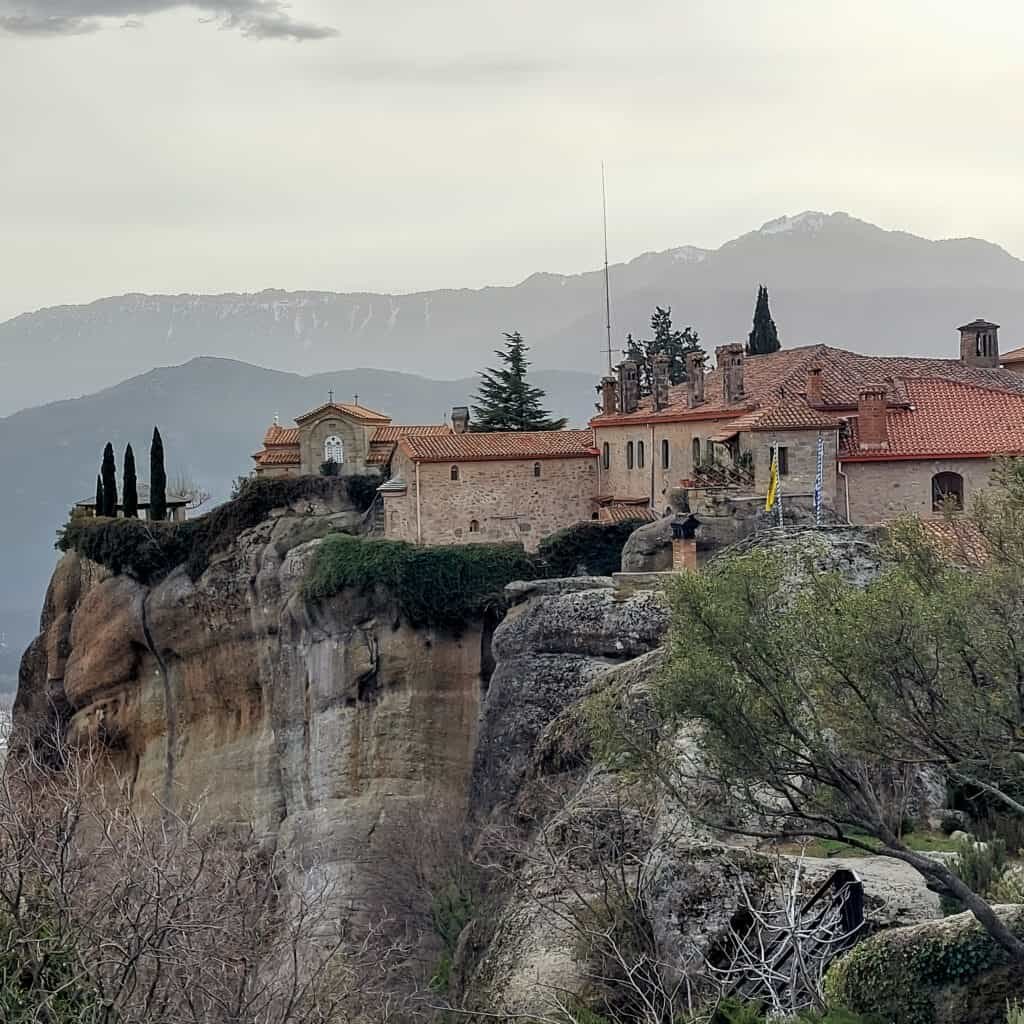
I’ve travelled all over Europe, and Meteora is still one of the places that stopped me in my tracks. Even if the name doesn’t ring a bell, you’ve almost certainly seen photos: monasteries perched on towering pillars of rock, seemingly suspended in mid-air.
Meteora has been attracting more attention recently, but it isn’t the easiest place to reach, as the branch line to Kalambaka has been closed for a while, and trains aren’t running. You can stay overnight for a truly memorable experience. I have all the details covered here, or take a day trip.

If you’re looking for something a little easier to reach, there are plenty of excellent day trips that don’t require navigating train disruptions. These are some of the most popular and well-rated tours, covering beaches, ancient history, national parks and thermal baths.
Enjoy the beaches of Halkidiki
If you’re visiting in warmer weather, Halkidiki is one of the simplest ways to escape the city for clear water and island-style swimming. If you only have a short time, it’s possible to explore the Blue Lagoon and nearby bays, with plenty of time in the water.
Explore ancient historical sites
There’s an abundance of options for history lovers accessible from Thessaloniki, including the ancient sites of Philippi, Dion and Pella, plus the Royal Tombs at Vergina and Mount Olympus.
- ➡️ Thessaloniki: Kavala, Philippi, and Beach Full Day Trip
- ➡️ From Thessaloniki: Day Trip to Dion and Mount Olympus Park
- ➡️ Thessaloniki: Vergina and Pella Day Trip
Take a dip in the Pozar thermal baths
Soak in the naturally warm pools at Pozar, then continue to Edessa to see the waterfalls that cut right through the centre of town.
View Mount Athos from the water
You can’t visit Mount Athos itself without a permit, but you can take a boat trip along the peninsula to see the monasteries from the water. Atmospheric, unusual, and very photogenic.
Where to Stay in Thessaloniki
We stayed just off Aristotle Square, so central and easy to reach the waterfront, Ladadika, and other city sites. The Mandrino hotel worked well for us, but there’s plenty of choice close by.
How to Get to Thessaloniki
Flying to Thessaloniki
Thessaloniki is very easy to reach, with direct flights into Thessaloniki (SKG) from a number of European cities, including the UK. It’s well served by the budget airlines, including Wizz and Ryanair, so prices are competitive. We paid £15 from London, UK (personal item only).
Public buses X1 (or X2 at night) run from the airport to the city centre. Our experience was not great. While the buses were regular, they were very busy, and the uncomfortable journey took about 40 minutes through the traffic. I’d consider a pre-arranged transfer or a taxi to/from the airport until the metro extension is completed.
Travel Itinerary: Visit Athens via Meteora
Thinking of spending longer in mainland Greece and don’t want to hire a car? We travelled to Meteora to see the clifftop monasteries, then continued on to Athens. I’ve covered all the details in this itinerary.

Start in Thessaloniki 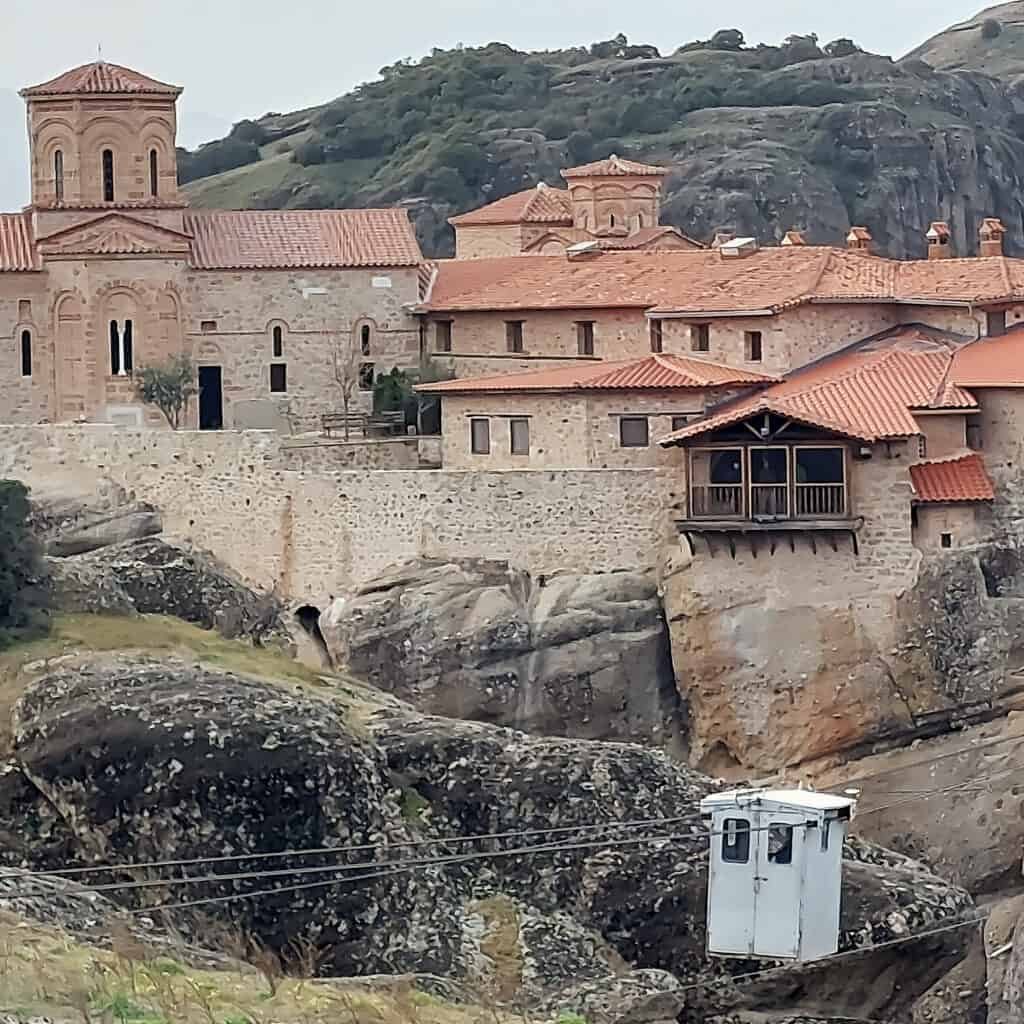
Overnight in Meteora 
Finish in Athens
Frequently Asked Questions about Thessaloniki
Is Thessaloniki worth visiting?
Yes. Thessaloniki is one of the most rewarding city breaks in Greece. It’s walkable, affordable, and packed with history, from Roman landmarks to fifteen UNESCO-listed Byzantine sites. Add in the waterfront promenade, great food, and easy day trips, and it’s well worth a visit.
When is the best time to visit Thessaloniki?
Spring (April–June) and autumn (September–October) offer the best weather, warm, sunny and ideal for walking. Summer can be very hot, while winter is mild but a little quieter. We visited in February and still found plenty to do.
Is Thessaloniki safe?
Yes. Thessaloniki is generally a very safe city for travellers. Normal big-city awareness applies, particularly around busy transport hubs, but overall it feels relaxed and welcoming, even at night.
How long should I spend in Thessaloniki?
Two to three days is ideal to explore the main sights at a comfortable pace. You can see the highlights in one day, but staying longer gives you time for museums, neighbourhoods and side trips like Meteora or Halkidiki.
Where to next
I hope you’ve found this post useful, and I’d love it if you joined my monthly newsletter.
I have an expanding list of posts from the Balkans. Skopje, the capital of North Macedonia, is about 4 hours by bus from Thessaloniki and a natural starting point for trips in the wider Balkans.
Do let me know if you been to Thessaloniki or are planning a trip. I’d love to hear about your experiences or offer help if you have further questions.