Serbia | Travel Information
Serbia was one of the last Balkan countries I visited properly, and in hindsight, I’m not sure why I left it so long. Belgrade is a city full of character and contrasts sharply with Serbia’s second city, Novi Sad, which makes an easy day trip by high-speed train from the capital. I’ve written about travelling from Belgrade to Sarajevo, the capital of Bosnia and Herzegovina, via Tuzla. My time in Serbia was all too brief, but these posts reflect what I’ve explored so far, and there’s no doubt I’ll be back to fill in the gaps.
Serbia is a landlocked country in the Balkans that shares borders with eight countries: Hungary to the north, Romania to the northeast, Bulgaria to the southeast, North Macedonia and Kosovo to the south, Montenegro to the southwest, Bosnia and Herzegovina to the west, and Croatia to the northwest.
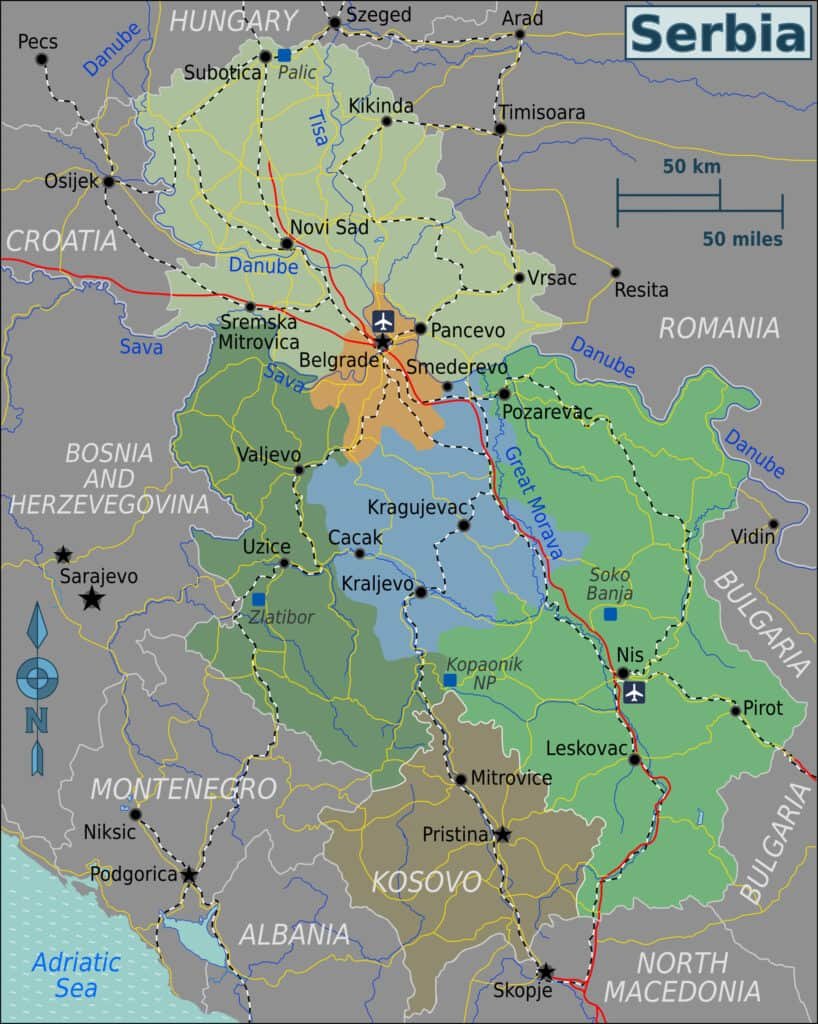
Here are some useful things to know about Serbia, to help you plan your visit.
- Capital: Belgrade
- Language: Serbian is the official language (written in both Cyrillic and Latin); English is widely understood in cities and among younger people.
- Currency: Serbian Dinar (RSD). €1 ≈ 117 RSD; £1 ≈ 135 RSD. Cash is still useful, especially outside major cities. Currency converter
- Visas: UK, EU, US, Canadian, Australian, and New Zealand citizens do not need a visa for stays of up to 90 days.
- Electricity & adapters: European plug types C/F, 230V. No adapter needed for most European devices.
Here are my articles related to Serbia. Here’s more coming soon. If you would like updates, I have a regular newsletter.