Why You Should Visit Pristina: Kosovo’s Surprising Coffee-Fuelled Capital
Europe’s newest capital, Pristina, intrigued me long before I arrived, and after exploring Kosovo’s biggest city, it still does. If you imagined Pristina would be beige or boring because the “things to do” list looked short at first glance, don’t be surprised if you find yourself changing your mind, as I did.
Pristina isn’t polished, it’s raw, creative, and full of murals and modern art. Some buildings will divide opinion, but “ugly” is a matter of taste, and who’s keeping score anyway? What really stands out is the energy: a young, optimistic vibe that fills the cafés and streets. It’s a city looking firmly forward, maybe because so much of its recent past is still too close to look back on.
And yes, there’s coffee, and lots of it. Pristina’s cafés have truly perfected the art, and you’ll find an exceptional one on almost every corner. So, welcome to Pristina and to my guide to Kosovo’s Newborn capital, where I’ll share why a visit to Pristina deserves a firm place on your Balkan itinerary.

This guide may include a few affiliate links. If you choose to buy something through one of them, I may earn a small commission (at no cost to you). Thank you for supporting One Small Bag and helping keep this resource ad-free and independent.
Where Is Pristina?
Kosovo sits in the heart of the Balkans, bordered by Albania, Montenegro, Serbia, and North Macedonia. From Pristina, the capital, it’s around 80 km to Skopje (North Macedonia), 200 km to Tirana (Albania), 250 km to Podgorica (Montenegro) and 300 km to Sofia (Bulgaria). All this makes it easy to include on an overland Balkans trip..
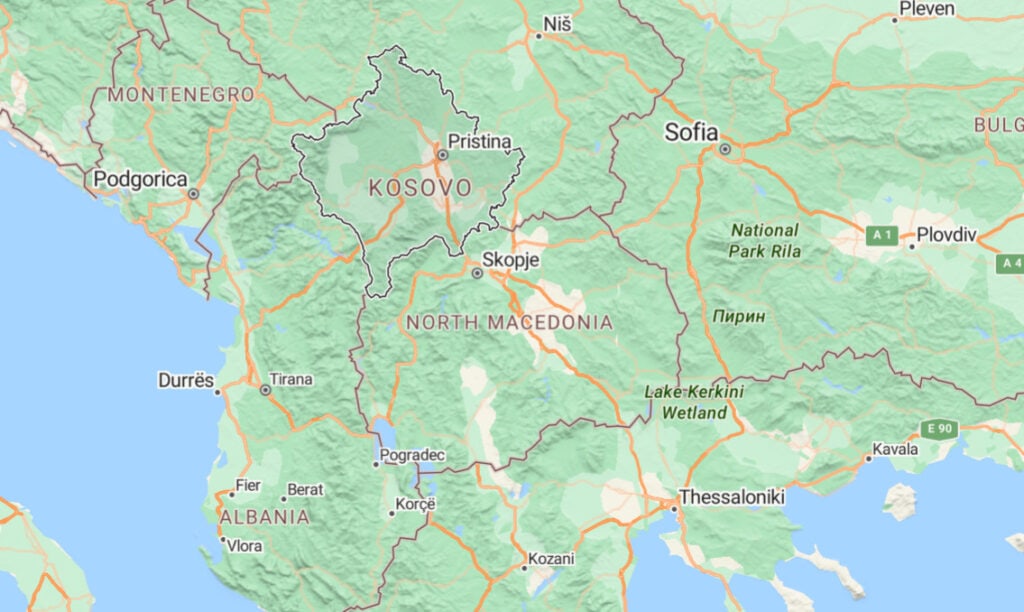
Roughly 10,900 km² in size, Kosovo is a little smaller than Northern Ireland, and home to around 1.8 million people, the majority of them ethnic Albanian. Compact and well connected, it’s one of the most accessible yet least-visited corners of Europe.
Check here for more practicalities, if you are travelling to Pristina and Kosovo.
Reasons To Love Pristina
Here’s my top reasons to love the capital of Kosovo should you visit Pristina. It’s a compact city centre, so easy to wander and take it all in. If you like brutalist or unusual buildings and street art, you’ll be right at home. In terms of things you must not miss, I have one non-negotiable and it’s a coffee shop!
1 Coffee and Cafe Culture
Pristina is a city free of the usual multi-national coffee corporates, and honestly there’s absolutely no need for them. Coffee in Pristina is simply the best and as a lover of good flat wite or macchiato, I was in my element. And with prices ranging from a Euro for a single expresso or americano to 2-3 Euro for a specialty coffee, very reasonably priced too.
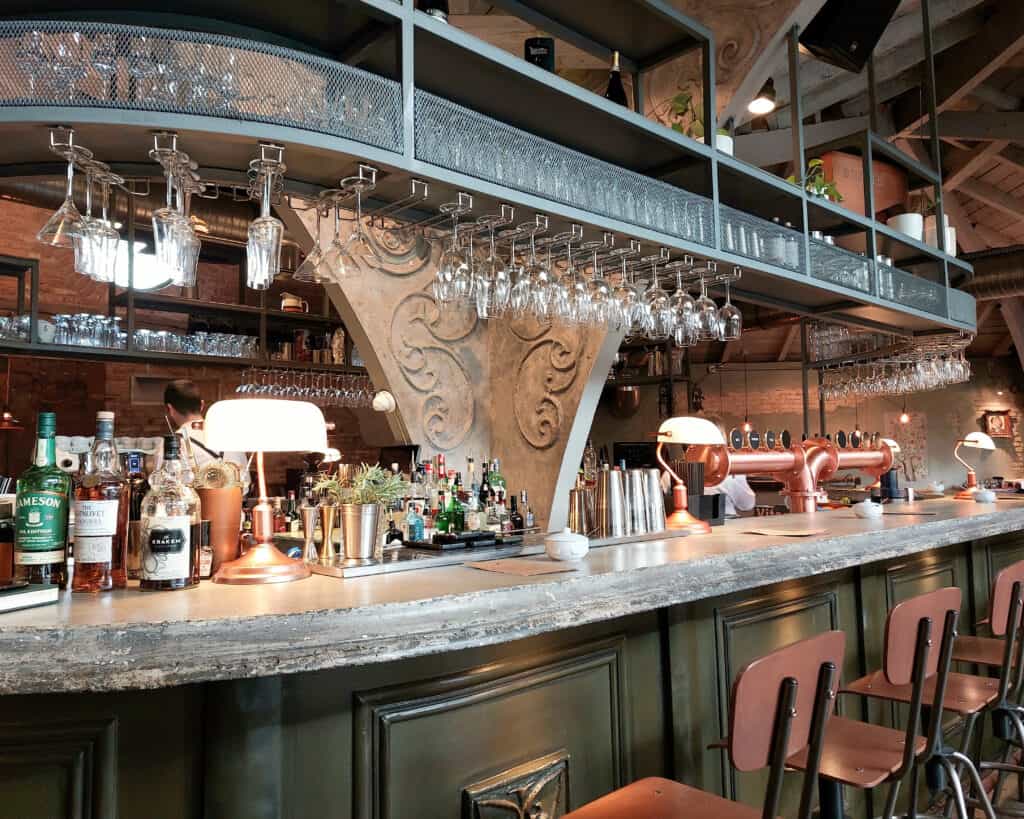
If you only do one thing in Pristina, make it Soma Book Station and that applies even if you’re not mad keen on coffee. Honestly, you could spend the day here, and by the looks of it, some people do. Part café, part bar, part book and record store, part restaurant, it’s easily one of the best coffee spots I’ve found anywhere in Europe. The industrial-chic interior feels effortlessly cool – all polished concrete, copper pipes. Plus shelves of books and records you’ll pretend to browse while you’re eyeing up the brunch menu. Whether you come for a quiet morning espresso or an evening glass of wine or craft beer, Soma captures everything that makes Pristina’s café scene so special: independent, creative, and classy.
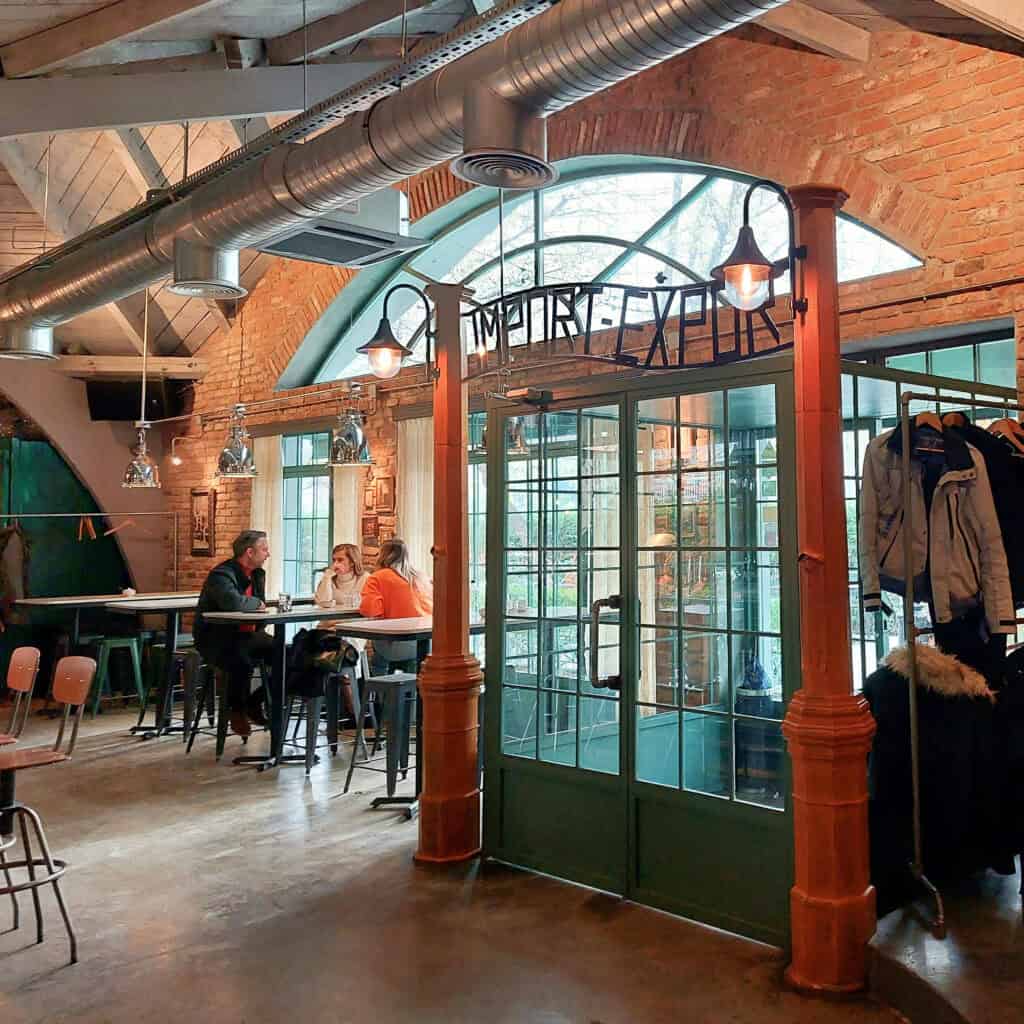
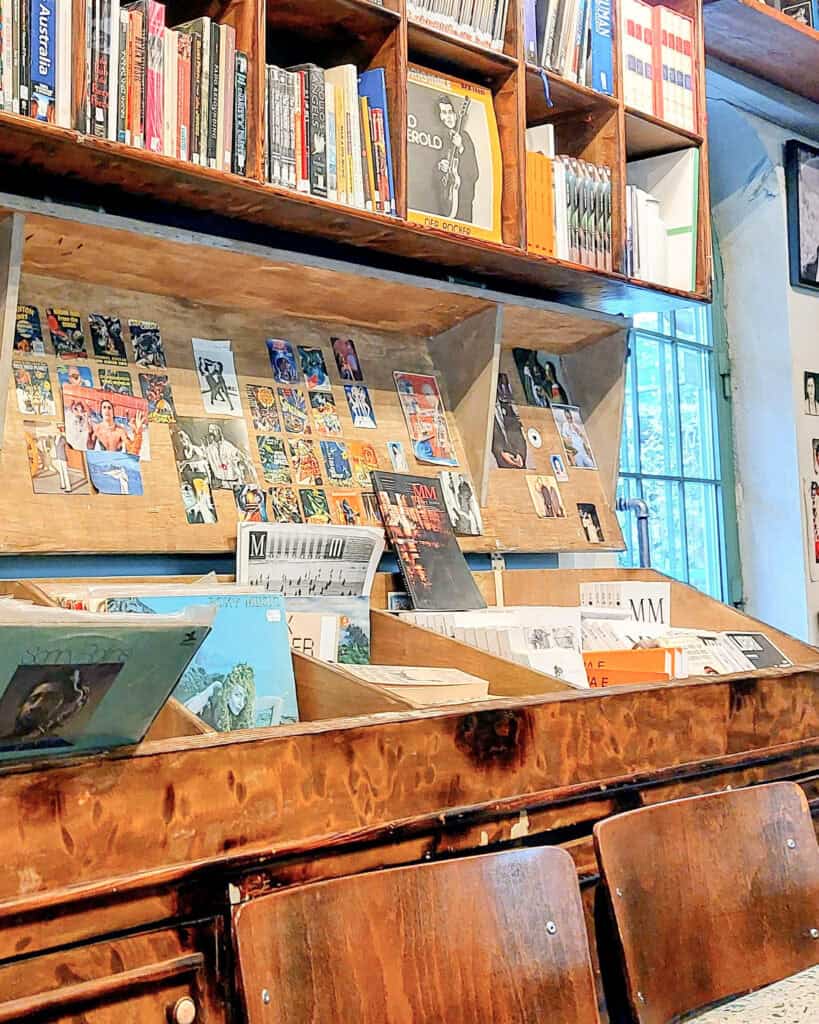
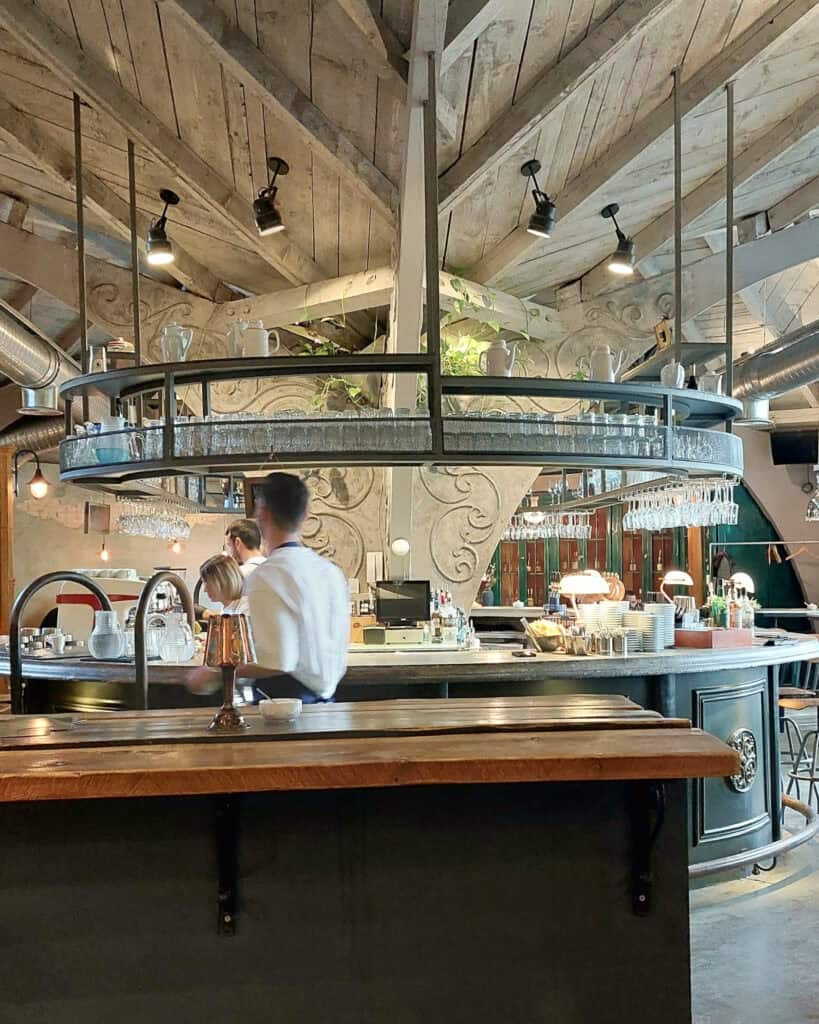
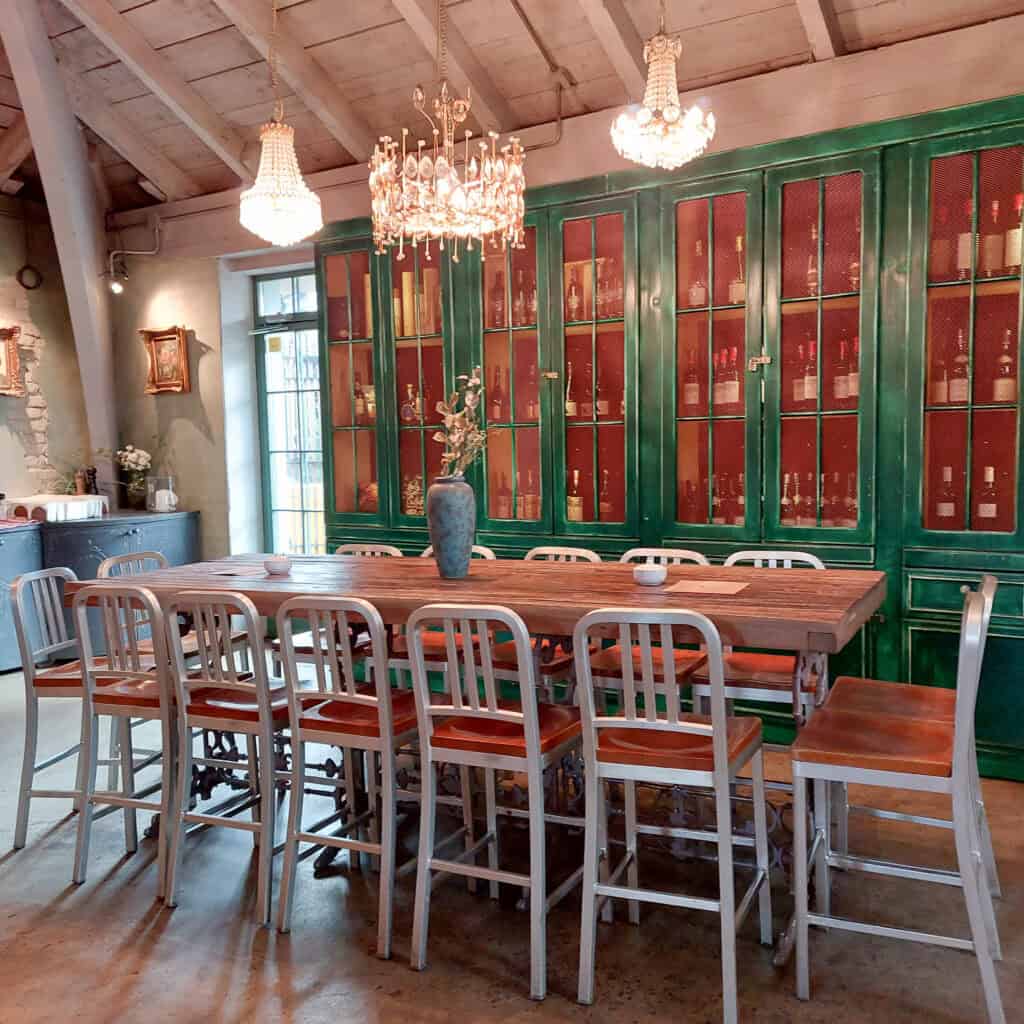
And once you’ve visited Soma, there’s more on eating and drinking in Pristina.
2 Newborn Monument
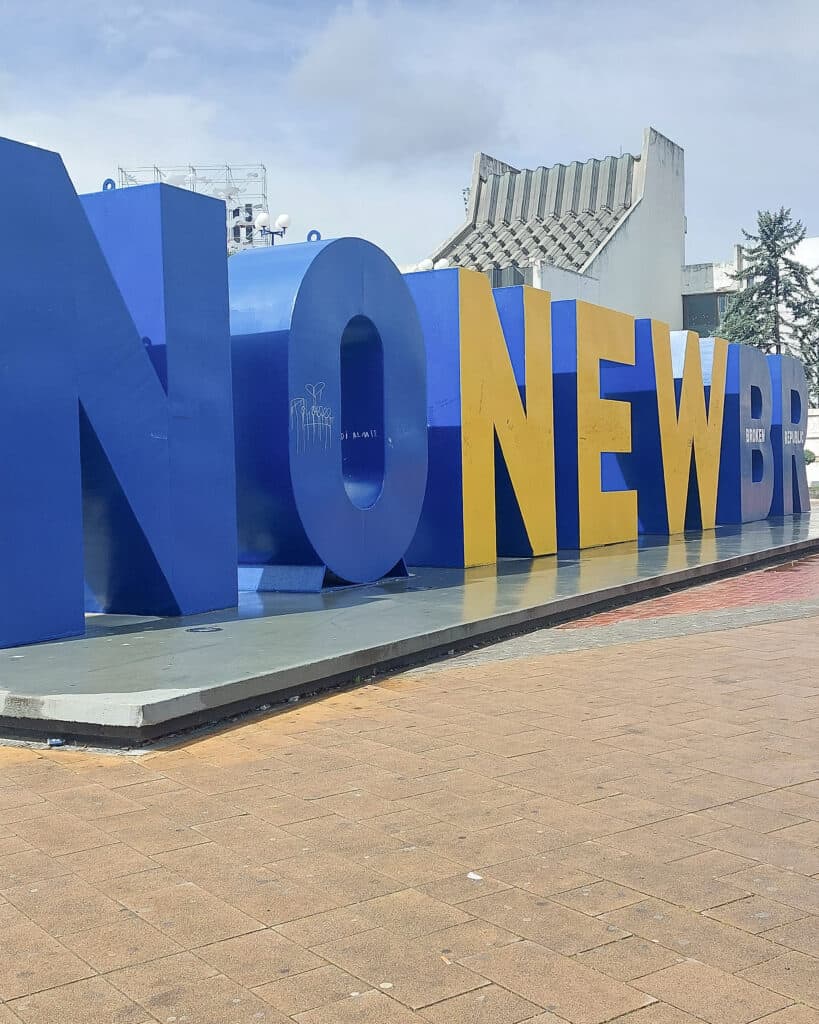
Just a short walk from the National Library, two modern monuments face each other. The Newborn Monument marks Kosovo’s declaration of independence. The huge block letters “NEWBORN” are repainted each year with a new design, reflecting current hopes or struggles. When we visited the letters were blue and yellow (the Ukrainian colours) and had been moved rearranged to read NONEWBR (with the words ‘broken’ and ‘republic’ written on the last two letters.
You can also see the Palace of Youth and Sports in the background. Another prominent and striking brutalist building to add to Pristina’s list of eccentric things to see.

Newborn Monument – Kosovo Pristina Heroinat Monument – Kosovo Pristina

Directly opposite stands the Heroinat Memorial, a quieter tribute to the women who suffered during the Kosovo War. Up close, its image of a woman’s face is formed from 20,000 brass pins, each representing a known case of sexual violence.
3 National Library of Kosovo
In the heart of Pristina, between the unfinished Christ the Saviour Orthodox Cathedral and the University of Pristina, stands one of Europe’s most strikingly odd buildings, the National Library of Kosovo. Designed by Croatian architect Andrija Mutnjaković and opened in 1982, it was meant to blend the region’s Byzantine and Ottoman heritage through a modernist lens. The result: a concrete cube wrapped in a metal lattice façade and topped with nearly a hundred white domes that locals either adore or call “a building in a fishing net.”
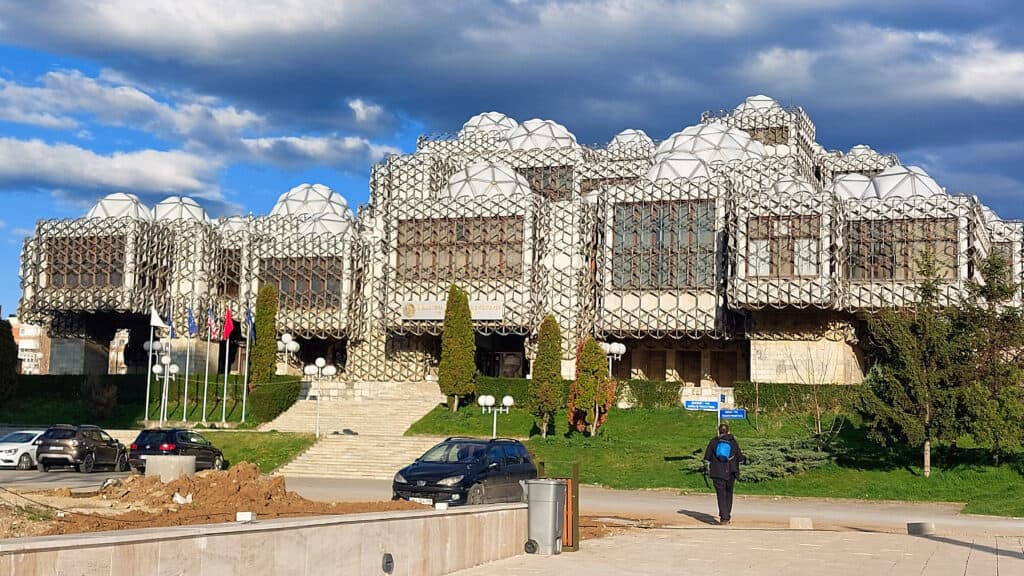
Inside, the structure feels calmer and more purposeful. It’s filled with light from the domes above and divided into smaller reading rooms instead of one grand hall. The library holds Kosovo’s most important archives and symbolises the country’s cultural resilience after the wars of the 1990s. Even if you don’t step inside, it’s well worth a stop for its surreal exterior. The library is open from 7 AM to 8 PM every day except on Sundays and it’s free to enter.
4 The Cool Vibes Of The City Centre
Pristina is a sociable city that seems to live outdoors. The wide, pedestrianised Mother Teresa Boulevard is busy from morning until late at night, with locals meeting friends, strolling, and watching the world go by. The buzz radiates into the surrounding side streets too, where cafés and stalls spill onto the pavements and make it easy to linger.
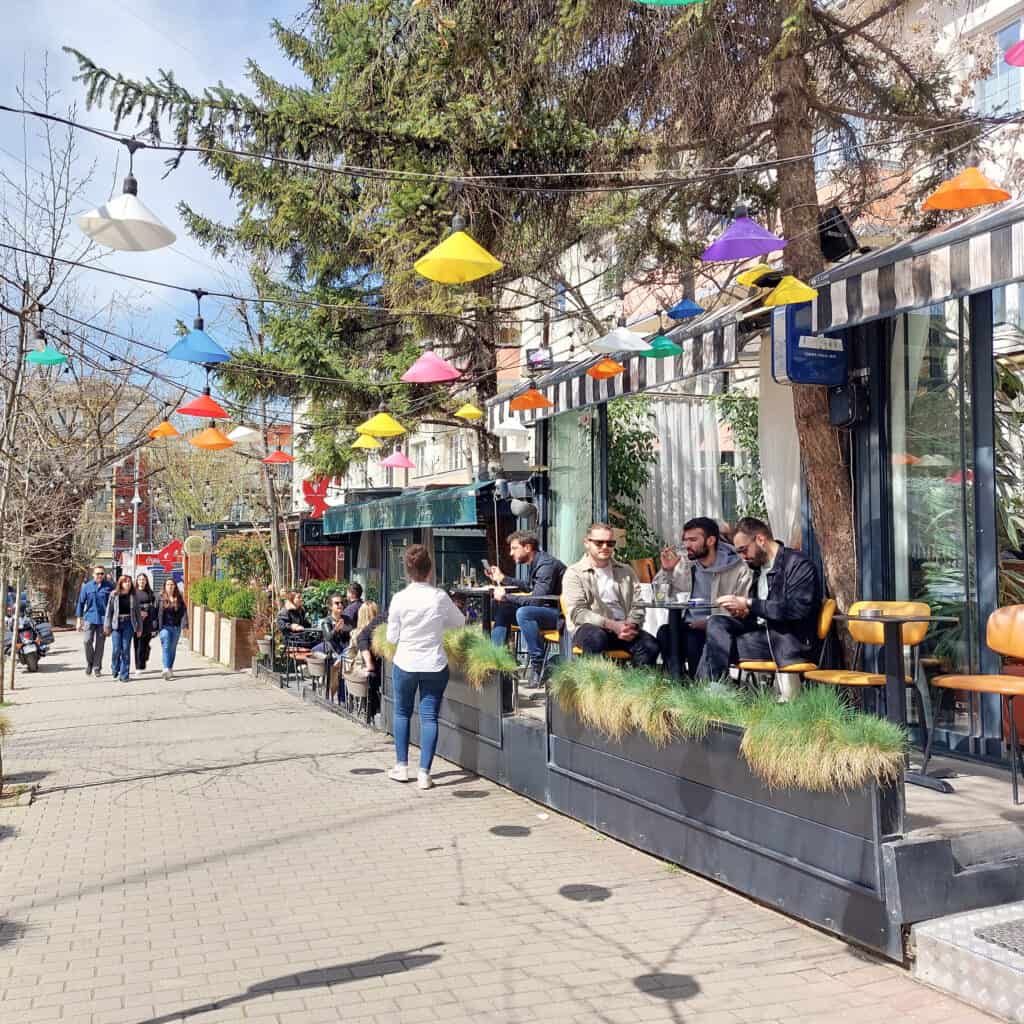
It’s a scene that feels familiar across Albania and Kosovo – there’s even a word for the evening stroll, xhiro, a simple pleasure that’s as much about connection as movement. Maybe we could all use a bit more of that. But there’s another layer here too: unemployment is high, especially among young people, so spending time in the centre over a slow coffee is also an affordable way to pass the day.
5 Day Trips: Bears, Monasteries & Mountain Towns
One of the best things about Pristina is how much lies within easy reach. In under an hour you can visit a bear sanctuary, a UNESCO-listed monastery, or a lakeside café, and still be back in the city for dinner.

Prizren – View from the Fort 
Bear Sanctuary Bears Skopje City of Statues
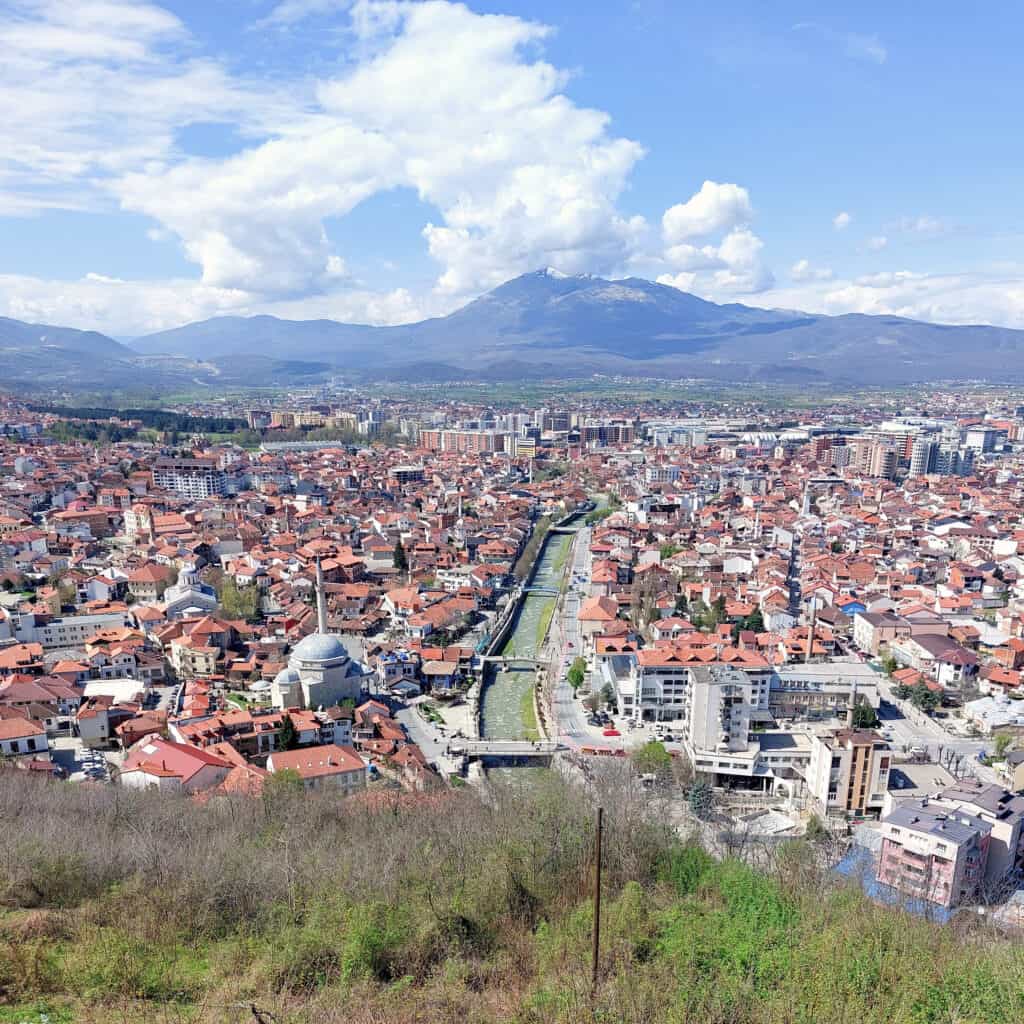

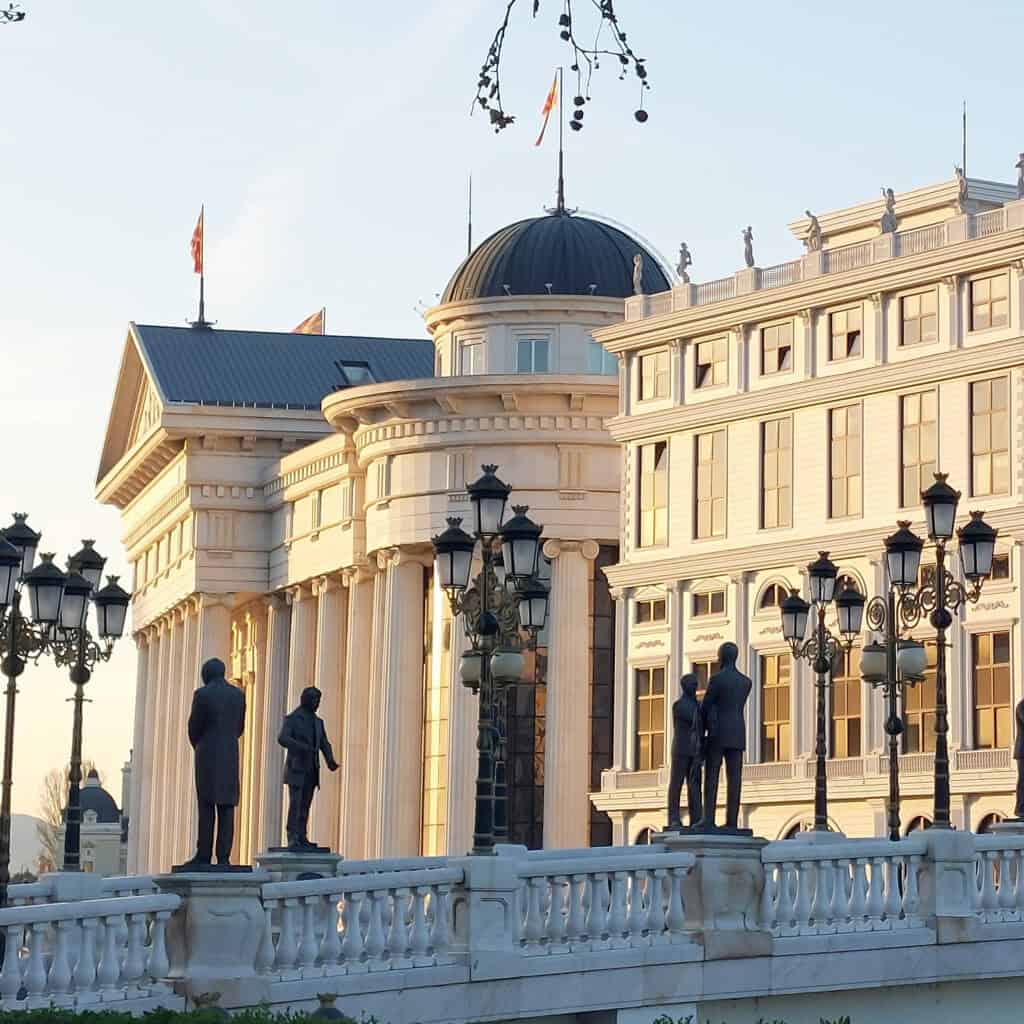
Venture a little further and you’ll find Ottoman-era Prizren, Peja at the foot of the Rugova Mountains, or even Skopje across the border in North Macedonia. My guide: Best Day Trips and Places to Visit in Kosovo from Pristina covers extension trips and day trips from Pristina.
More Things To SEE In Pristina
There’s still more to see too.
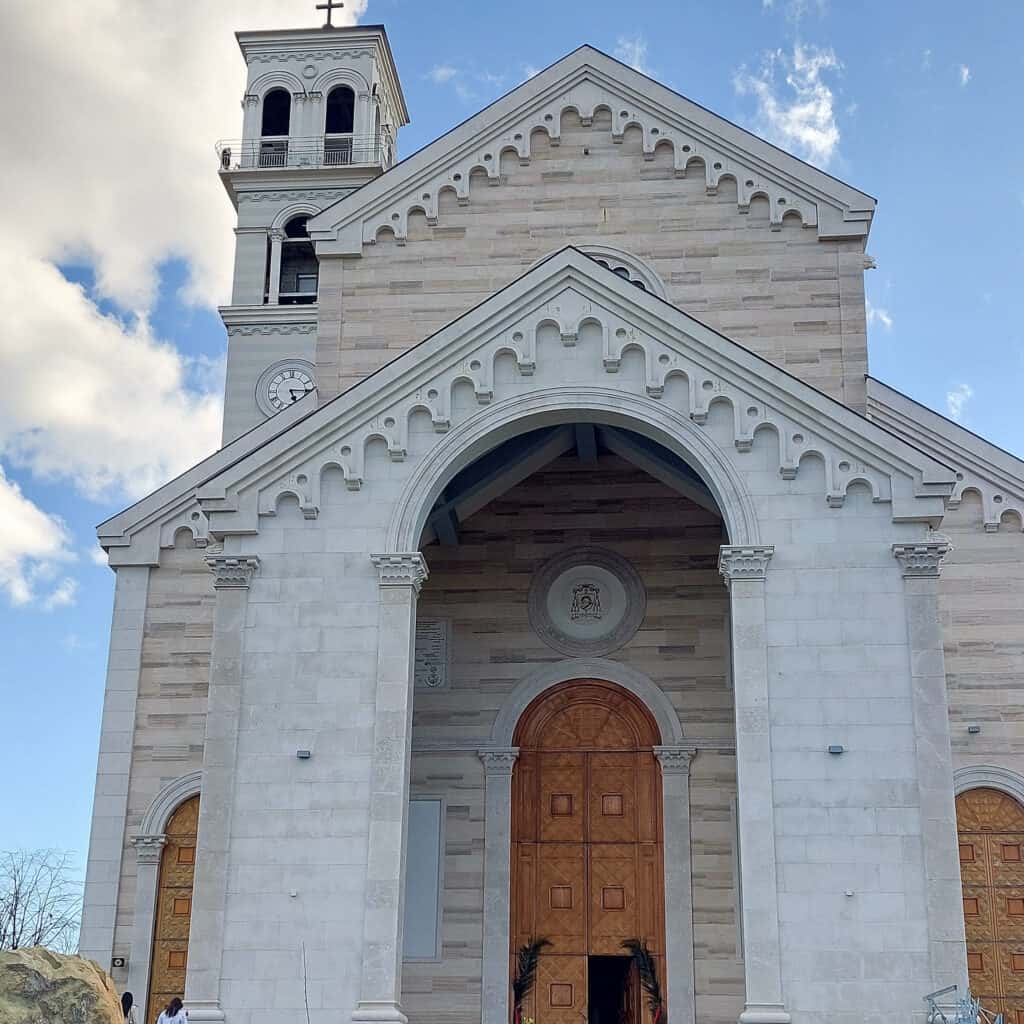
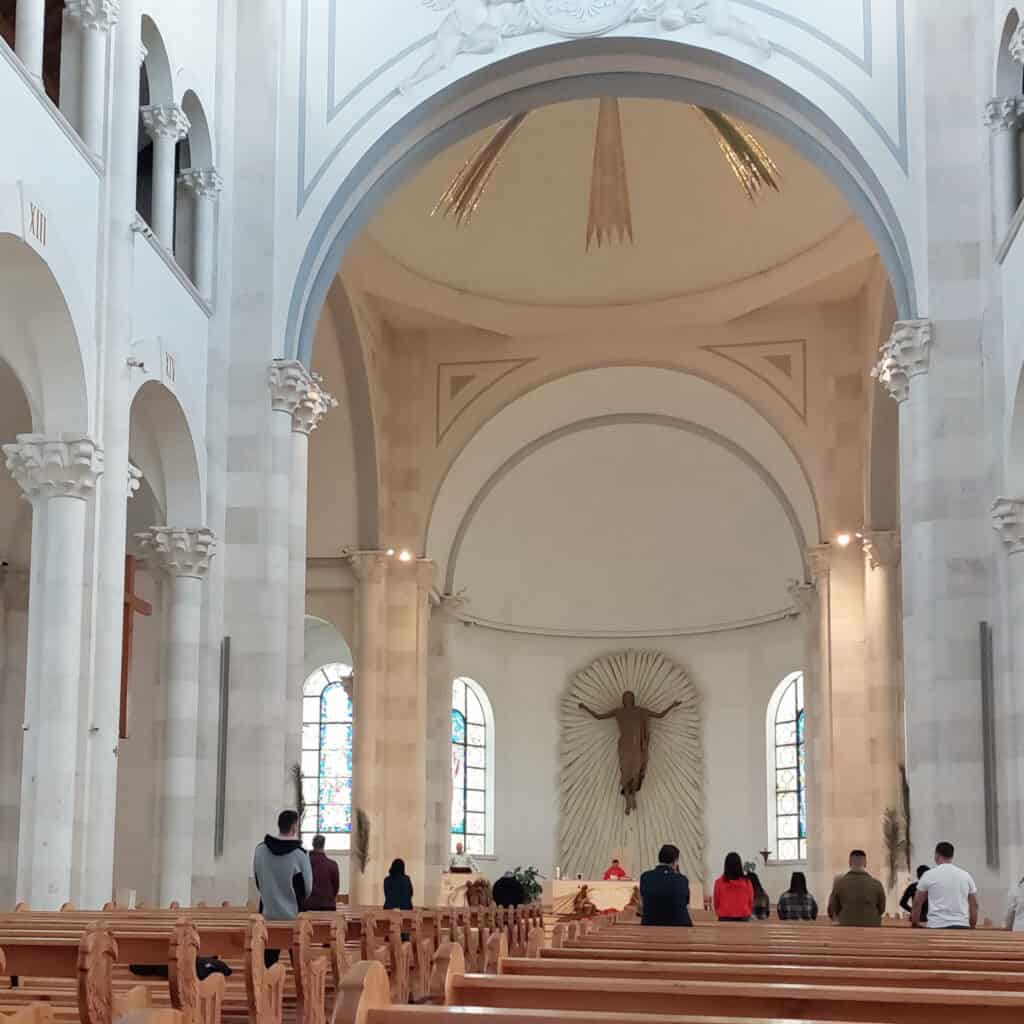
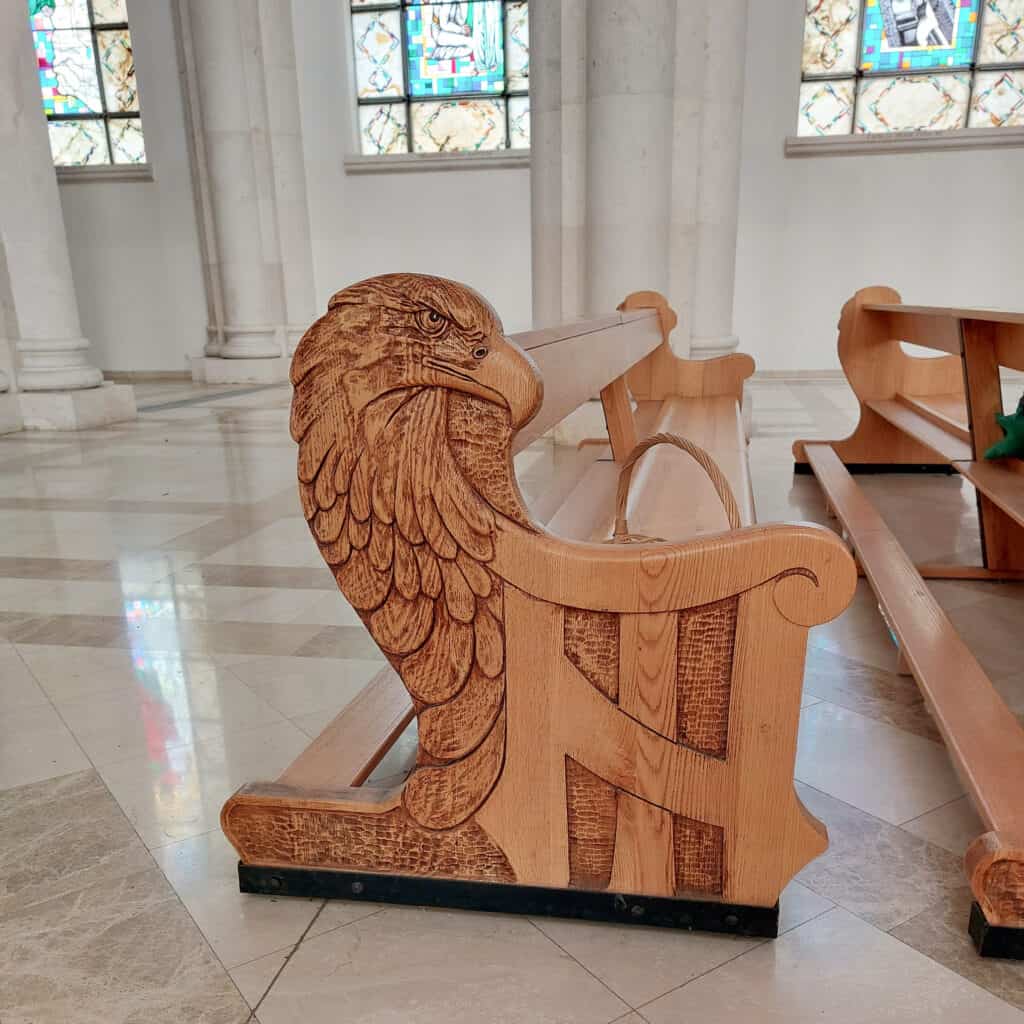
Cathedral of Saint Mother Theresa
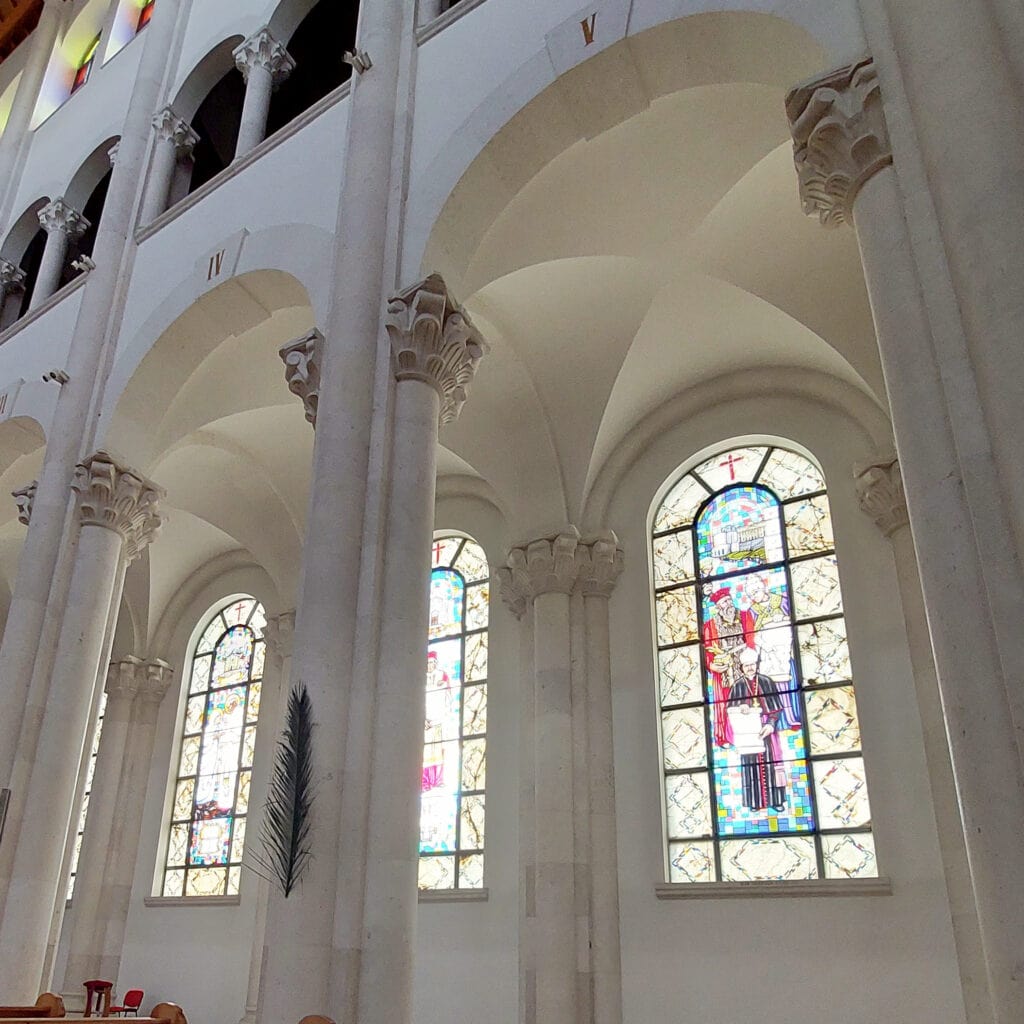
Dedicated to Mother Teresa, who was of Albanian heritage, this modern Roman Catholic cathedral, consecrated in 2017, is one of Pristina’s most recognisable landmarks. This simple, light-filled, interior is a deliberate contrast to the heavier architecture found elsewhere in the city. The white interior, means the interior features such as the carvings on the pews, the stained glass windows, crucifix above the alter and other details stand out.

There’s a tall bell tower, which you can climb for 2 EUR, or go up in a lift. It offers one of the best panoramic views of Pristina, looking down on the National Library’s domes and to the distant hills beyond.
Imperial Mosque and Nearby Clock Tower
In the heart of Pristina’s old town stands the Imperial Mosque (Xhamia e Madhe), built in the 15th century under Sultan Mehmet II the Conqueror. It’s the city’s largest mosque and one of the few surviving Ottoman-era landmarks. The interior, when open outside prayer times, is known for its painted floral motifs, carved wooden balcony, and hand-woven carpets — a calm, cool contrast to the busy streets outside.

Beside it rises the Clock Tower, originally built to call traders to prayer and market. It’s now restored in red brick and cream stone, I’d heard you could climb it, but I didn’t see how you could get in. If you’re looking for a true panorama, the bell tower at the Cathedral of Saint Mother Teresa offers a great vantage point over Pristina and there’s even an elevator too.
Abandoned Church of Christ the Saviour
Just next door to the National Library of Kosovo lies the Church of Christ the Saviour. It stands unfinished. Construction began in the early 1990s during a period of deep political tension, intended as a major Serbian Orthodox cathedral with 1,389 crosses commemorating the Battle of Kosovo in 1389. The conflict of the late 1990s halted work and the building was left incomplete, its future uncertain.

Kurrizi Housing Complex and Bill Clinton Statue
South of the city centre, Bill Clinton Boulevard runs through one of Pristina’s busiest residential areas. It’s home to the Kurrizi Complex, the city’s largest housing estate. Built in the late Yugoslav era, Kurrizi (“the Spine”) was designed as a self-contained neighbourhood of apartments, cafés, and shops stacked along raised walkways.
Kurrizi Housing Estate and Bill Klinton Boulevard Bill Clinton welcomes us to Pristina, Kosovo
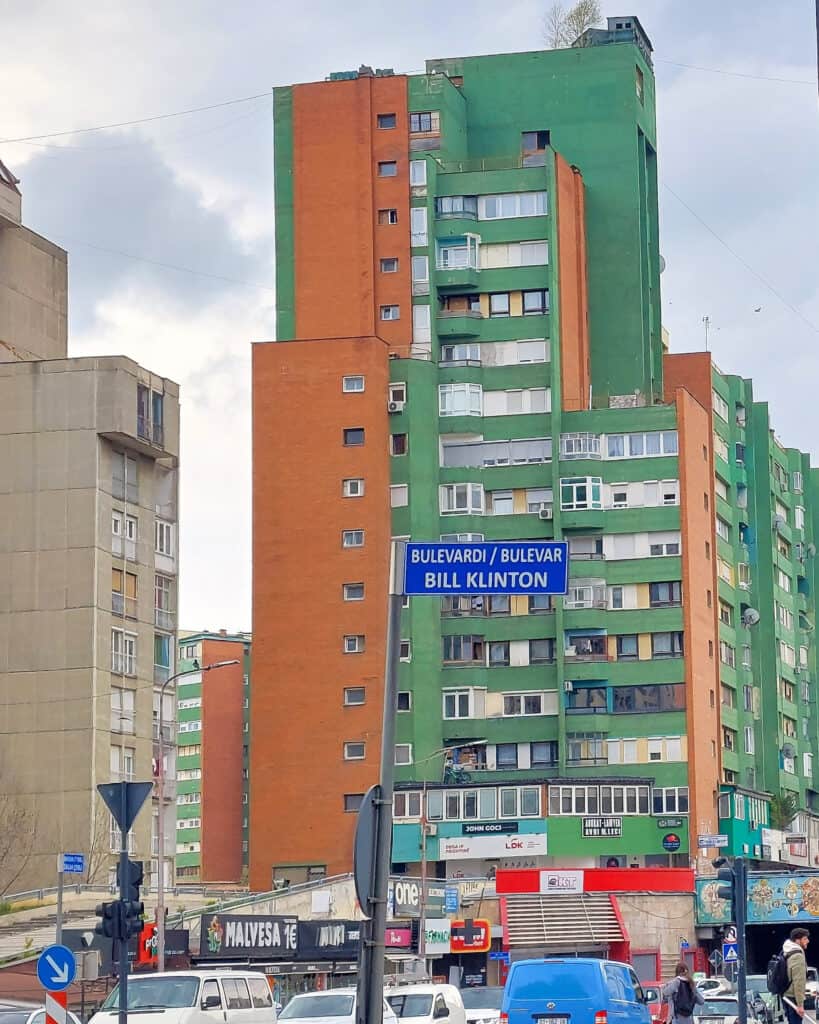

A little further along the same boulevard stands the Bill Clinton Statue, unveiled in 2009 to thank the former U.S. president for his role in supporting Kosovo during the 1990s conflict.
Street Art in Pristina
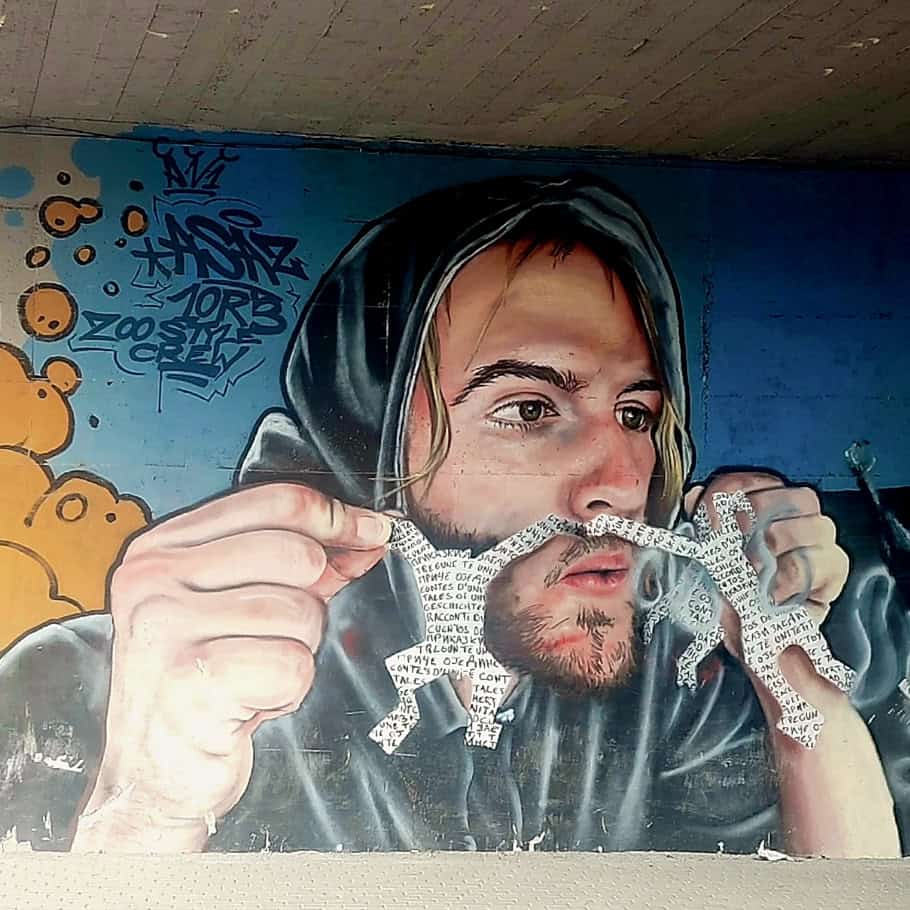
The streets of Pristina are striking and colourful. There are many murals dotted about the city, especially in the underpasses, which you will find as you walk the city..

Brotherhood and Unity Monument
In the centre of Pristina, just a short stroll from Mother Teresa Boulevard, stands the Brotherhood and Unity Monument, one of the city’s most recognisable public sculptures. When we visited it was definitely white, but I’ve seen pictures where it is bright pink. So I guess like the Newborn letters, it may get an update periodically!

Brotherhood and Unity Monument
with the Imperial Mosque in the background
Brotherhood and Unity Monument
People next to the Spire


The white tower is a symbol of the three ethnic groups of Kosovo: Serbs, Turks and Albanians. It was erected in the 1960s when Kosovo was part of the former Yugoslavia. There’s also a group of abstract bronze figures representing the people of Kosovo alongside it. You’ll find it in a small park close to the Imperial Mosque (Xhamia e Madhe), which you can see behind the tower in the photo.
Pristina’s Museum
If you fancy something a little more cultural between coffees, Pristina has two main museum options. The Kosovo Museum, housed in an elegant Austro-Hungarian building, gives a snapshot of the country’s archaeology and history — and there’s even a striking mural of Mother Teresa made of 1.5 million staples (did someone count them?) and entered in the Guinness Book of Records. That sounds reason enough to pop in.
The Ethnographic Museum, tucked into a restored Ottoman house in the old bazaar area, is smaller with traditional furniture and textiles offering a glimpse of everyday life in earlier times. Neither takes long to explore, but both add another layer to understanding Kosovo beyond the headlines.
Palace of Youth and Sports
If you’re wondering what that massive structure with an asymmetric triangular roof is, then I’m here with some answers, because. of course, I had to take a look! It’s the Palace of Youth and Sports, built in the late 1970s and originally named after Tito. It was designed as a multi-purpose sports and cultural centre. Its angular roofline and futuristic towers make it hard to miss, especially with the large portrait of Adem Jashari, a founding figure of the Kosovo Liberation Army and national hero, displayed on the front.
Palace of Culture and Sports Pristina Kosovo 
Adem Jashari on side of Palace of Culture and Sports Pristina Kosovo
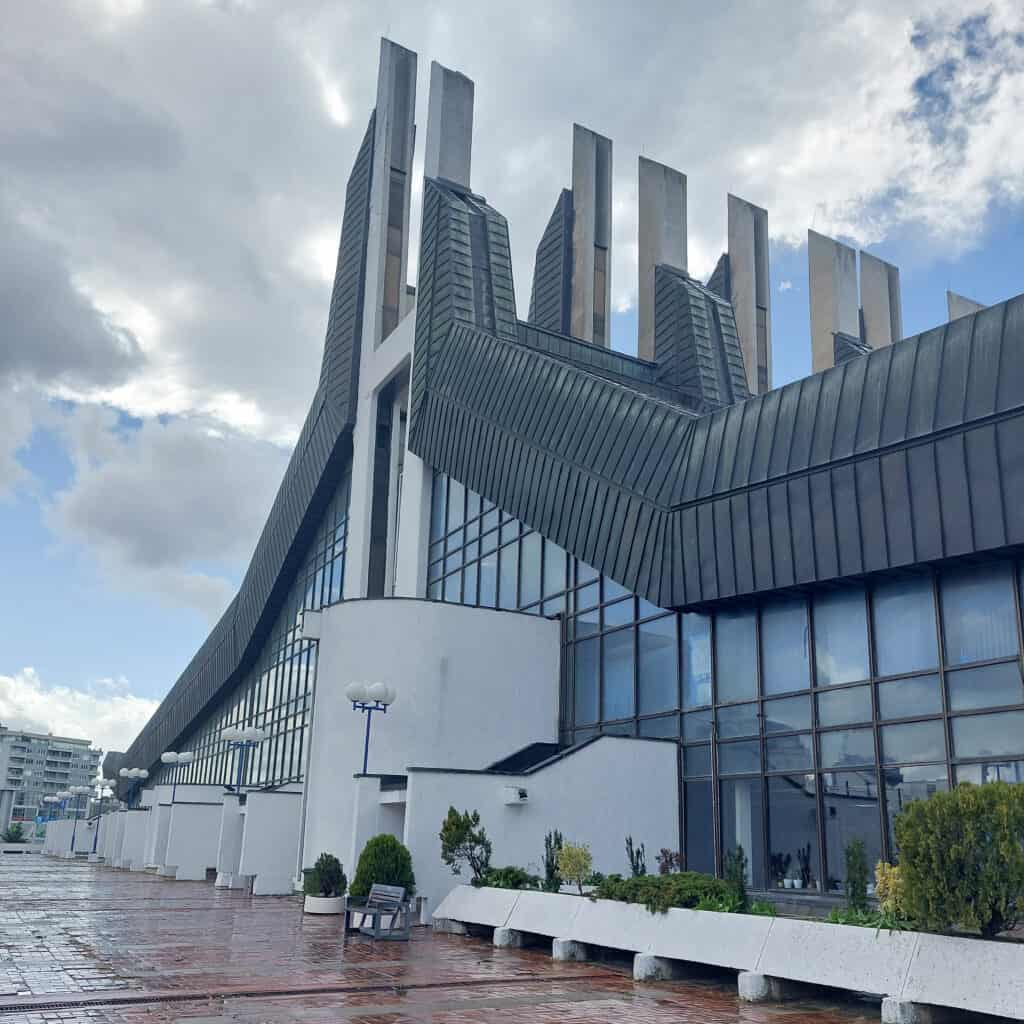
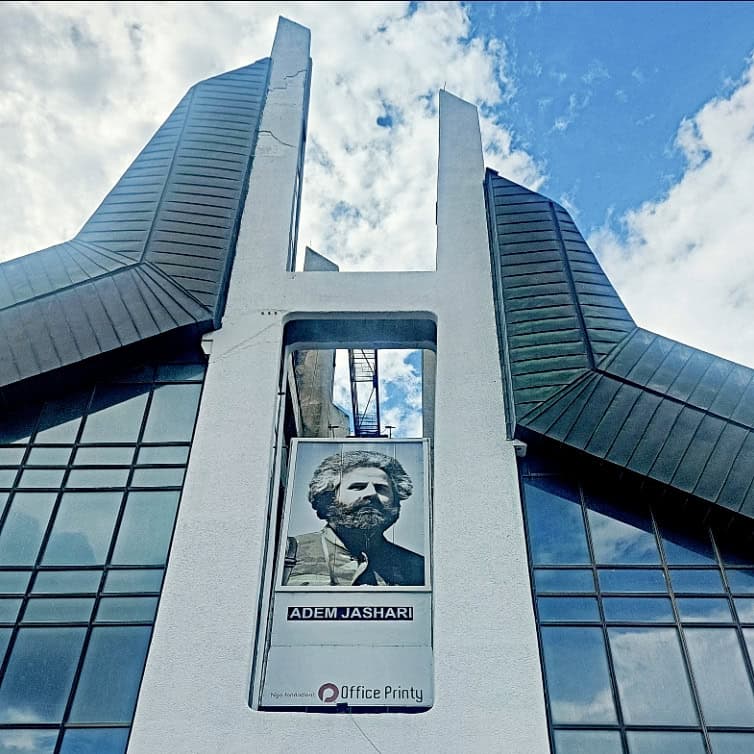
While you’ll not find much to keep you inside – there’s a few shops and some offices. The complex was badly damaged by fire in the 2000s, leaving much of it semi-derelict. There are plans for major EU-funded restoration, which could bring it back to life as a cultural venue, so when I return to Pristina, I’ll provide a status update!
Next door is the Fadil Vokrri National Stadium, home to Kosovo’s national football team. We were there on match day, so of course, we went along to watch. As you can see, not many other people did!

Pristina Market (Tregu i vjeter)
Pristina’s Green Market (or Old Bazaar) is one of the city’s oldest trading areas. You’ll find stalls piled high with fruit, vegetables and homemade produce plus hardware and clothing stalls. It has a very different feel to the Old Bazaar in Skopje, which is one of the top attractions in he city. Pristina Bazaar is a more local affair and is at its best and biggest on a Tuesday. We passed through pretty quickly, dodging the puddles and the rain. On a sunny day, I suspect it would be easier to appreciate its charms.

Map of Things To See in Pristina
I’ve added the main things to see and do in Pristina on a map which you can use for your trip to Pristina
Eating and Drinking in Pristina
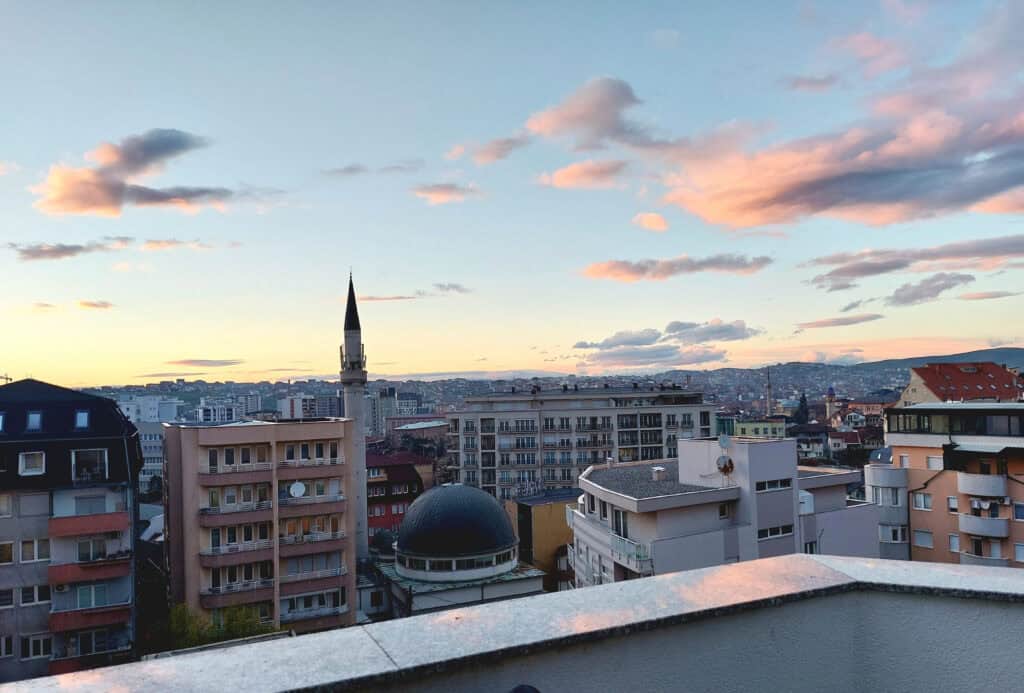
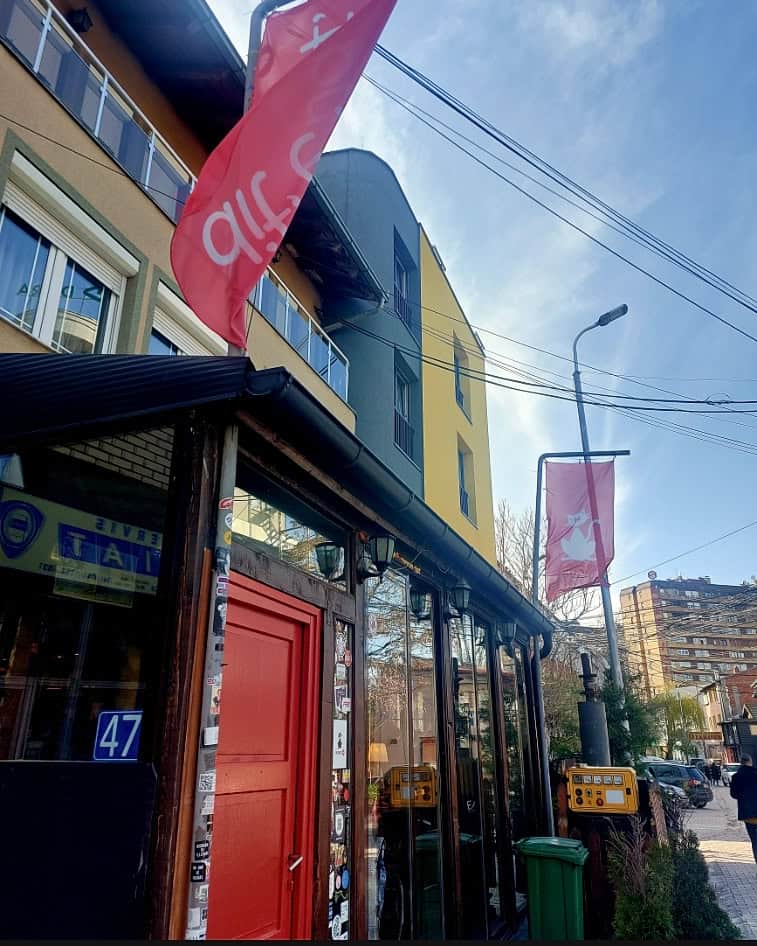
Pristina tends to be known more for its recent history, than anything else, but is increasingly becoming known for its cafe culture and coffee. The highlight for me being Soma Book Station which I’ve already mentioned, but there’s plenty more on every corner. I’ve honestly lost track of which one this was (in the picture), it was close to the Newborn statue and the high standard continued.
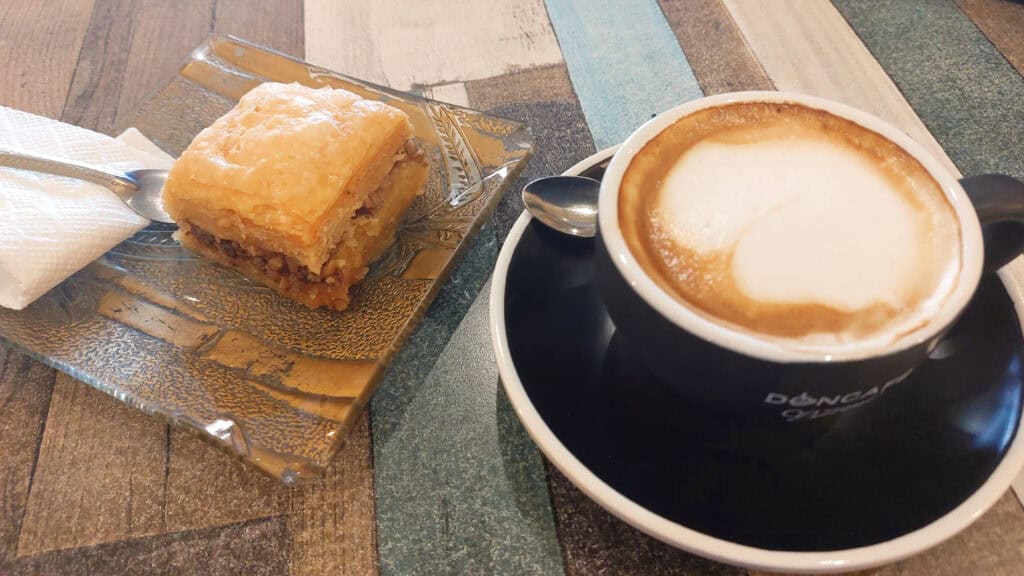
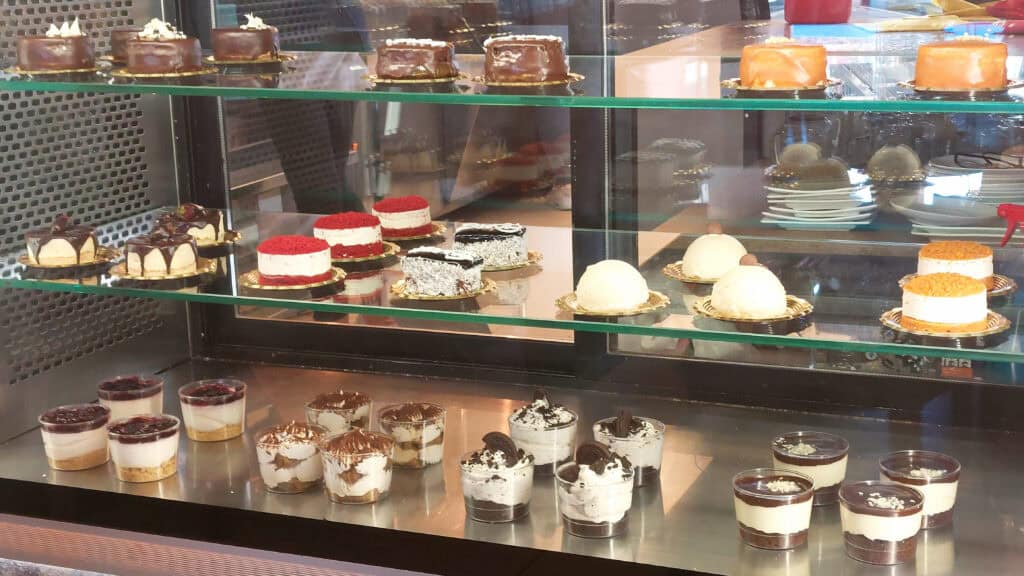
And cake and desert too.
If you’re looking for traditional Kosovan food, expect plenty of familiar Balkan comfort dishes, hearty, filling, and usually involving meat in some form or another. The food scene overlaps a lot with North Macedonia, Albania, and Bosnia & Herzegovina, so you’ll probably spot some repeat appearances.
You’ll find stuffed peppers (usually filled with minced meat and rice), tavë Prizreni, a baked lamb and aubergine casserole, and plenty of grilled meats and kebabs served with flatbread and salad. There’s burek (flaky pastry stuffed with cheese, spinach, or mince), sarma (cabbage leaves wrapped around spiced meat and rice), and the ever-present ćevapi, those little sausage-shaped portions of minced meat that appear across the region. Shopska salad and ajvar – the bright red pepper dip you’ll quickly get addicted to, complete the line-up. It’s not fancy food, but it’s fresh, generous, and impossible to leave hungry.
We were still stuffed from our Balkan food in Skopje, so we passed on the chance of a traditional meal in Pristina, but Liburnia, close to the Brotherhood and Unity statue, was top of my list.
As we both enjoy a beer, we sought out MIQT pub and Dit’ e Nat’ (temporarily closed at the time of writing – November 2025) and we ate in both, but there are more we didn’t have time for.



Pristina – Practical Information
You’ll find some answers to common questions below.
How to Get to Pristina By Air
Pristina International Airport is served by the European budget airline WizzAir with arrivals from multiple European destinations including the UK.
It’s about 10 miles from the centre and there’s a public bus from the airport to the train station, operating every 2 hours to central Pristina.
How to Get To Pristina From Skopje
Local coach / minibus – Companies such as Amalfi Tours, Gazmend Turist, Albus Travel and Motoja run direct services several times a day. Fares are typically around €9–10 (≈ £8) and the journey takes about two hours. Between them there are usually 8–10 departures daily, though times vary slightly by season.
You’ll find these tickets at the bus-stations, not through the big online platforms. Sites like GoOpti list door-to-door transfers at several times the local price. Unless you specifically want a private shuttle or have a lot of luggage, it’s better value (and more authentic) to buy in person and take the regular bus. Just be prepared to pay in cash with the correct currency, for this route that’s EUR or MKD.

Train Service – There is a train service once a day running between Skopje and Pristina, although currently at time of writing (November 2025) this service is suspended. It’s cheaper and takes longer with multiple stops. Buses are typically a better bet in this part of the Balkans.
Where to Stay in Pristina
There aren’t an abundance of hotels in Pristina, but there are plenty of quality central located apartments, which you can book.
If you choose to buy something through my booking link, I may earn a small commission (at no cost to you). Thank you for supporting One Small Bag and helping keep this resource ad-free and independent.
What is the Main Language Spoken in Kosovo?
While the majority first language is Albanian, you’ll find people eager to speak English, especially the younger generation and those working in the tourist industry.
Money Matters
Money matters are straightforward. Unlike Kosovo’s Balkan neighbours, there’s no closed currencies to worry about. It’s simply the Euro. And yes that’s adopted even though Kosovo isn’t currently in the European Union, although membership is pending.
Is Kosovo Safe?
For most visitors, Kosovo is a safe and welcoming place to travel, especially in cities such as Pristina and Prizren, where people are used to foreign travellers and often go out of their way to help. Street crime is low, and the usual European-level precautions apply – keep an eye on your belongings in busy areas, avoid walking alone late at night or if you’ve been drinking, and use common sense around transport hubs.
That said, Kosovo still has a few political flashpoints, mainly in the northern Serb-majority areas near Mitrovica, where tensions can occasionally flare up. These are localised incidents, not usually something you’d stumble into by accident, but it’s still wise to check the latest government travel advice before visiting and keep away from anything looking like a protest. The UK Foreign Office, US State Department, and EU travel portals all update their guidance regularly and will flag any temporary restrictions or demonstrations.
For most travellers sticking to the main routes — Skopje ↔ Pristina ↔ Prizren ↔ Albania — Kosovo feels as straightforward and friendly as anywhere else in the Balkans.
If you’ve considered visiting Kosovo, I also have a detailed guide on Prizren and an article on other places to visit in Kosovo too with day trip suggestions from Pristina.
Balkan Itinerary: Four Cities, Three Capitals in One Week including Pristina
Here’s a detailed itinerary by bus from Tirana to Skopje, via Pristina and Prizren if you want to add Pristina into a longer adventure.
👉 Tirana to Skopje: A Flexible Overland Itinerary via Kosovo (3 Capitals in 1 Week)
Start in Tirana On to Prizren, Second City of Kosovo
and Pristina
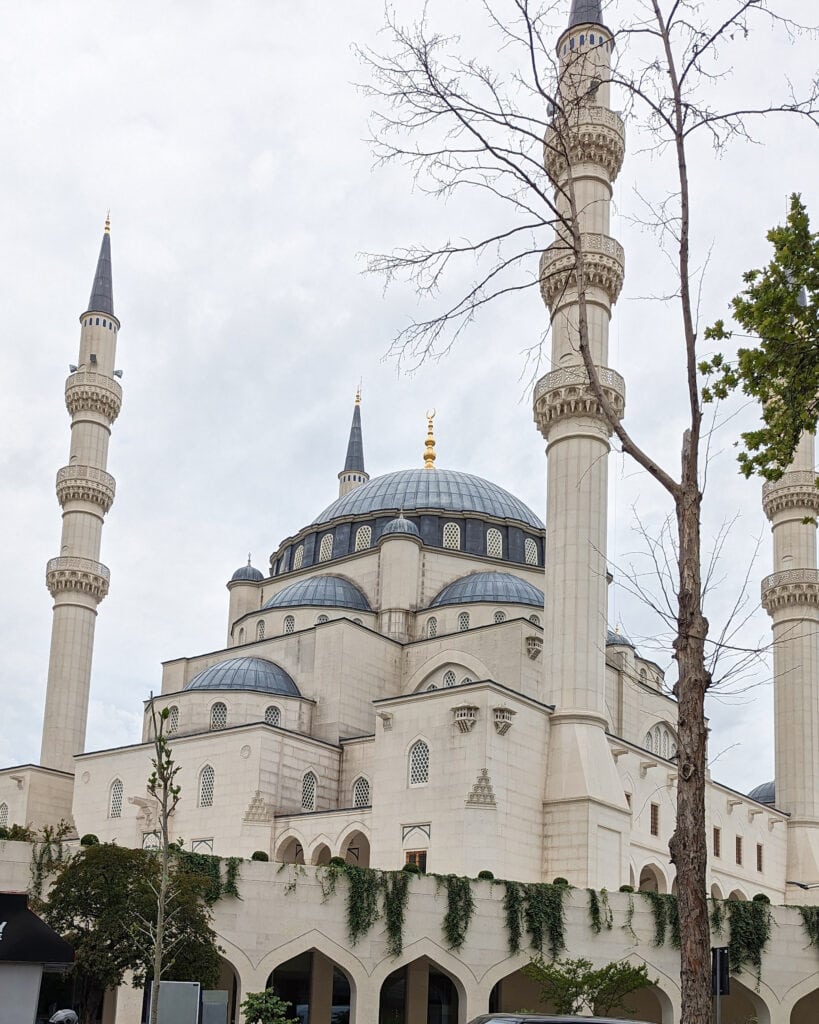
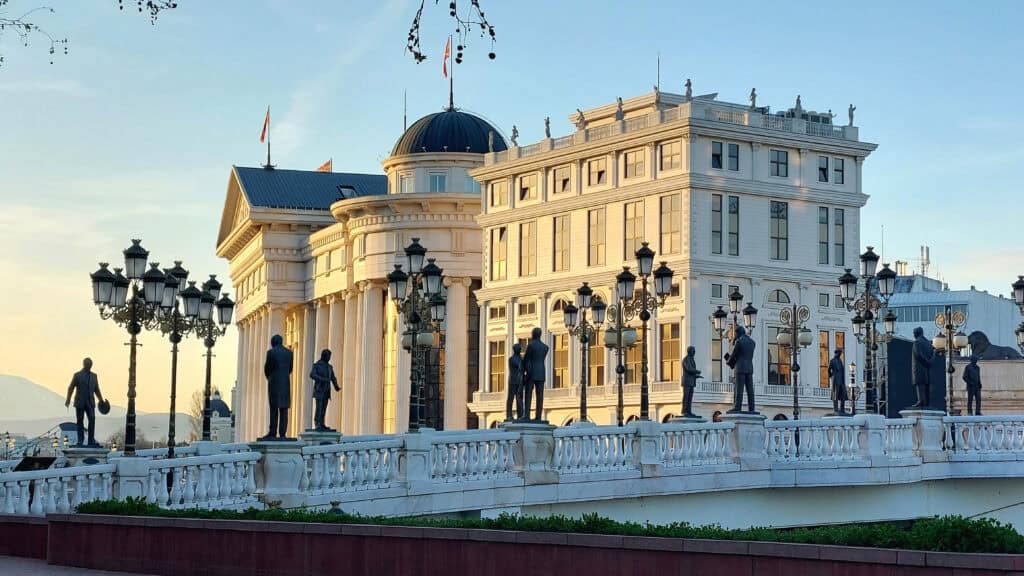
Final Destination Skopje
I also have a monthly newsletter where I share details of recent and upcoming posts. I’d love it if you’d joined the list. You can unsubscribe at any time.
Thank you for reading!