Things to Do in Tuzla, Bosnia: A City Built on Salt
Tuzla is Bosnia’s third-largest city, and I wouldn’t be surprised if you’ve never heard of it. I certainly hadn’t, until I started looking at options for travelling between Belgrade and Sarajevo, when its name kept cropping up as a potential place to break a potentially long and gruelling bus journey.
Tuzla has international connections too. The budget flight carrier, Wizz Air, reopened its Tuzla base in December 2025. And there’s now a growing list of international flights, linking the city with several European destinations.
We arrived on a bus from Belgrade and stayed overnight. I’ll outline the key things to do in Tuzla, based on our time in the city, starting with the Pannonian salt lakes. They’re especially popular among Bosnians seeking a beach in a country with one of the world’s shortest coastlines.
This guide may include a few affiliate links. If you choose to buy something through one of them, I may earn a small commission (at no cost to you). Thank you for supporting One Small Bag and helping keep this resource ad-free and independent.
Map of things to do in Tuzla
Visit the Pannonian Salt Lakes in Tuzla
1 Pannonian Salt Lakes (Panonsko Jezero)
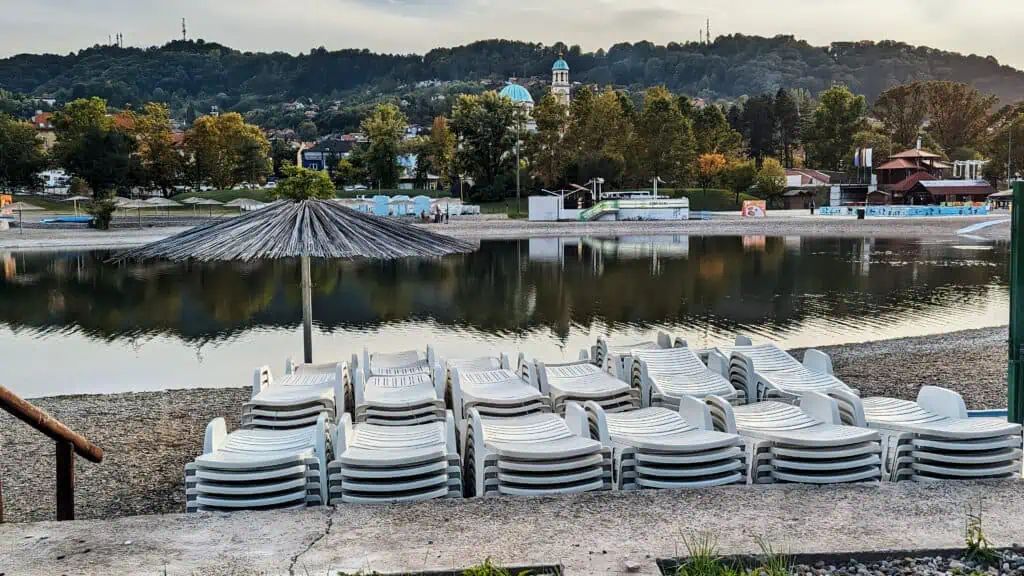
Tuzla’s story is closely tied to salt. Extraction has been carried out here since Neolithic times, and the city takes its name from the Turkish word tuz, meaning salt. By the late 19th century, extraction was on an industrial scale, to the point where parts of the city began to sink as the ground subsided. The Pannonian salt lakes were constructed to address this and completed in 2012. Mineral-rich brine is drawn from underground wells, creating a full-scale outdoor swimming and leisure space. This makes Tuzla the only city in Europe with salt lakes in the city centre.
There are 3 lakes, pebble beaches, sunbeds, amusements and cafés, and it’s just a few minutes from the centre. The area also doubles as an events space, with occasional concerts and music carrying on into the evening.
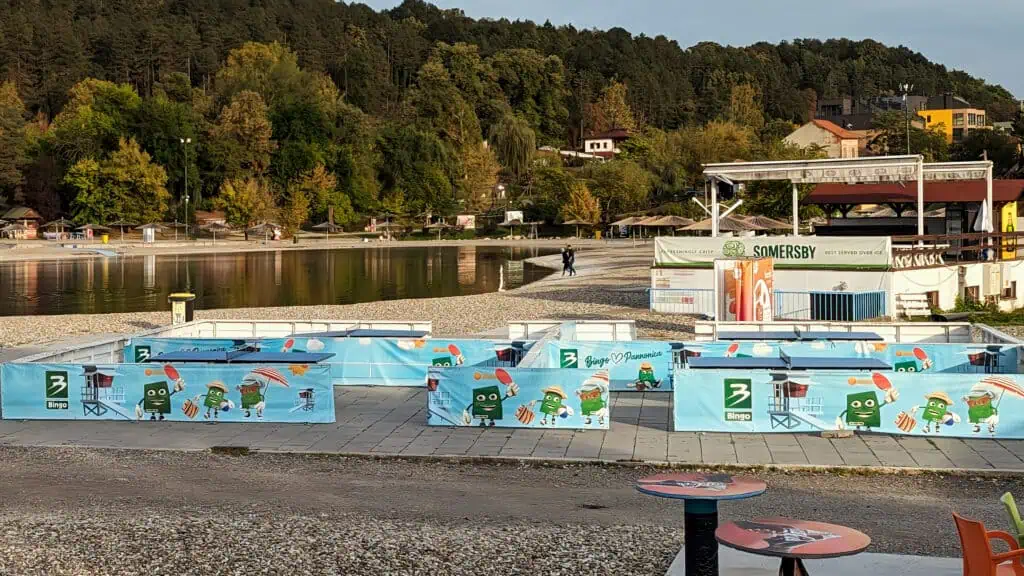
2 Pannonian Salt Waterfall
Above Lake Number 1, there’s a saltwater waterfall. It’s a series of cascading fountains and shallow thermal pools rated by visitors for their massaging effects and respiratory benefits. I can’t guarantee the saltwater will improve your health, but it looks like a fun place to be in the summer.
But before you get too excited and pack your swimming gear, check the calendar. While the lake area is open year-round, temperatures in Tuzla drop sharply outside the summer season, with regular snowfall in winter. When we arrived at the end of October, the sunbeds were neatly stacked, and there wasn’t a soul in sight. If you’re planning a trip and want to go swimming, summer would be the best season to visit.

3 Archaeological Park and Neolithic Settlement
Near the lakes is a small archaeological park featuring a reconstructed Neolithic settlement with nine huts, bringing the region’s 6,500-year history to life. There wasn’t much sign of life when we visited, but it appears to be popular in summer.
4 Slana Banja Memorial Park
Slana Banja Park rises above the salt lakes. It’s both a sports area with walks and running routes, and a place of remembrance. Memorials to World War II partisans and the 25 May 1995 massacre are here. You may spot St George’s (Hram Svetog velikomučenika Georgija) hidden among the trees in Slana Banja Park. It’s a small white Serbian Orthodox church with a neighbouring cemetery.
I’ve marked all of these on my map of things to see and do in Tuzla.
Explore Central Tuzla on foot
For a city of just over 100,000 residents, the centre feels remarkably small. If you’re looking for big attractions and a long tick list, Tuzla might feel underwhelming. But if you like to see how people live in different corners of the world, you’ll find Tuzla a delightful place to wander. Expect a warm welcome, mixed with mild curiosity, from local people who seem genuinely pleased to see visitors in their city.

5 Trg Slobode (Freedom Square)
As you wander the streets, it won’t be long before you find Trg Slobode (Freedom Square) right in the centre. It’s the largest city square in Bosnia and Herzegovina. Two spots in the square will immediately catch your eye. The large building from the Austro-Hungarian era, housing several small cafés spilling out onto the square and a huge central fountain. The base of the fountain represents a salt dish.

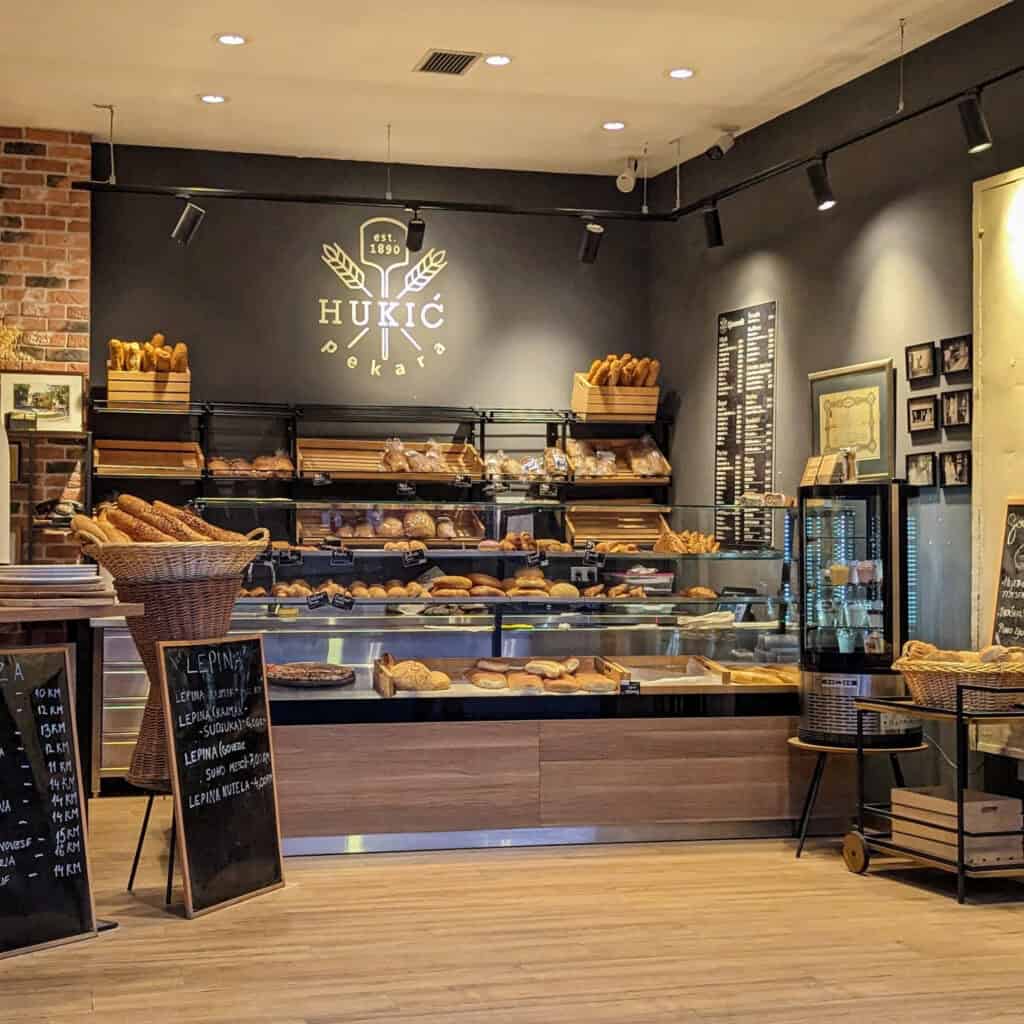
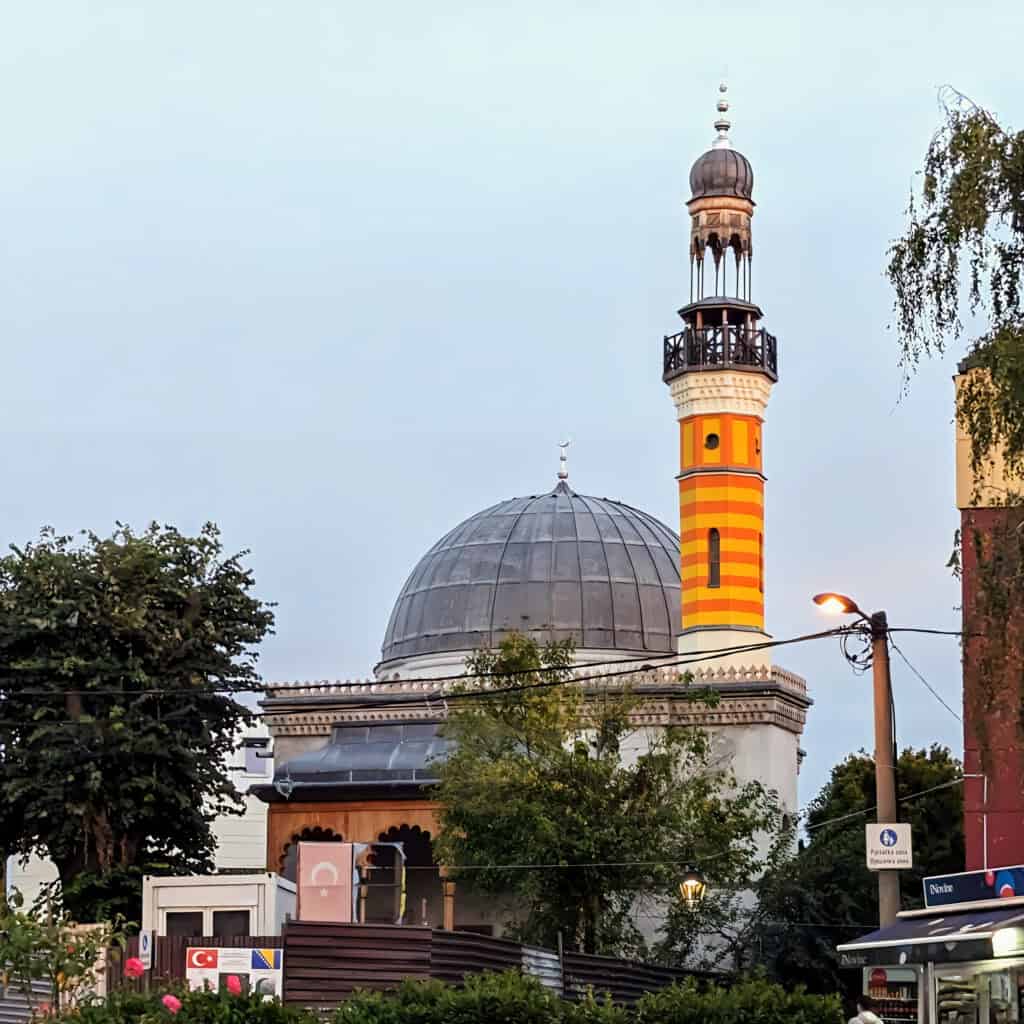
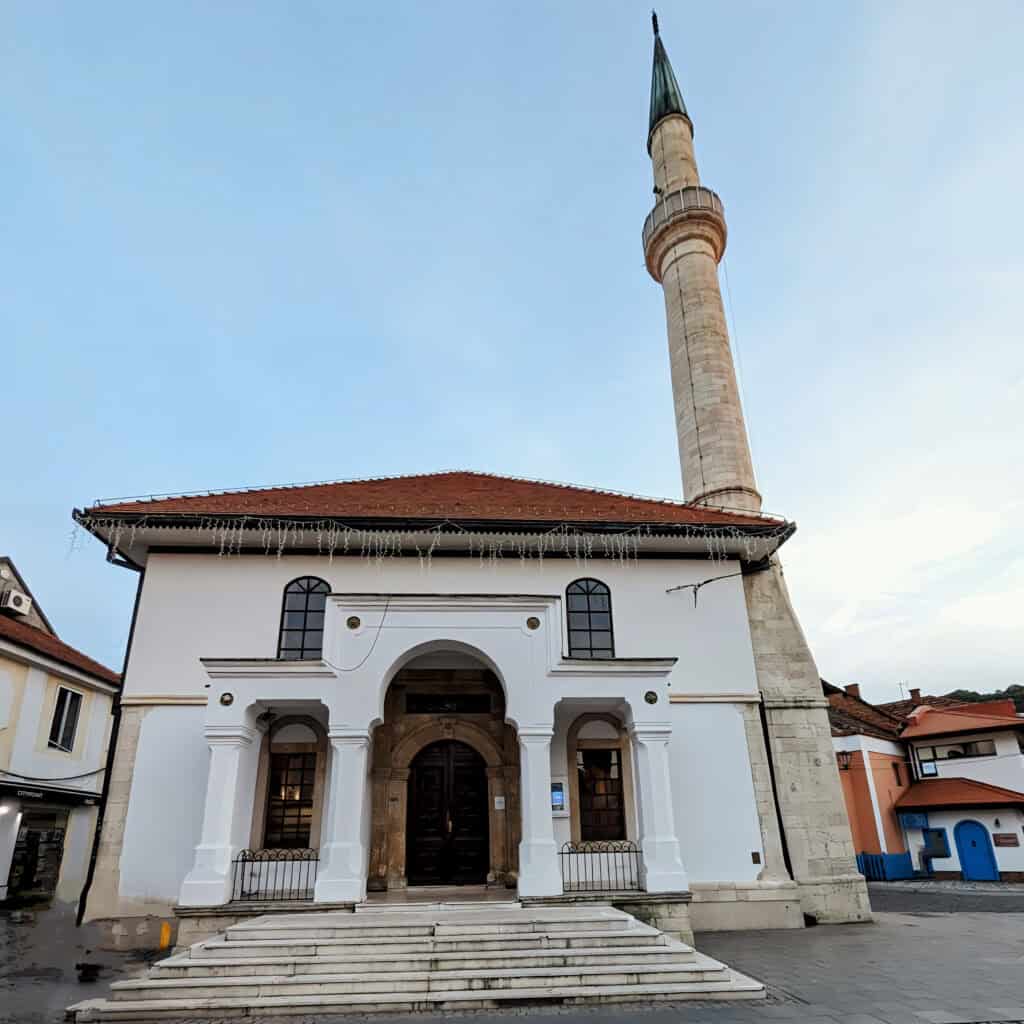
Freedom Square feels very central European, but spin around and look beyond the square, and things feel distinctly Bosnian. Take a few steps north-west to see the beautiful Mosque of Atik Behrem Bey with its distinct striped minaret. And if you’re hungry, there’s a great bakery (Hukic) close by, too.
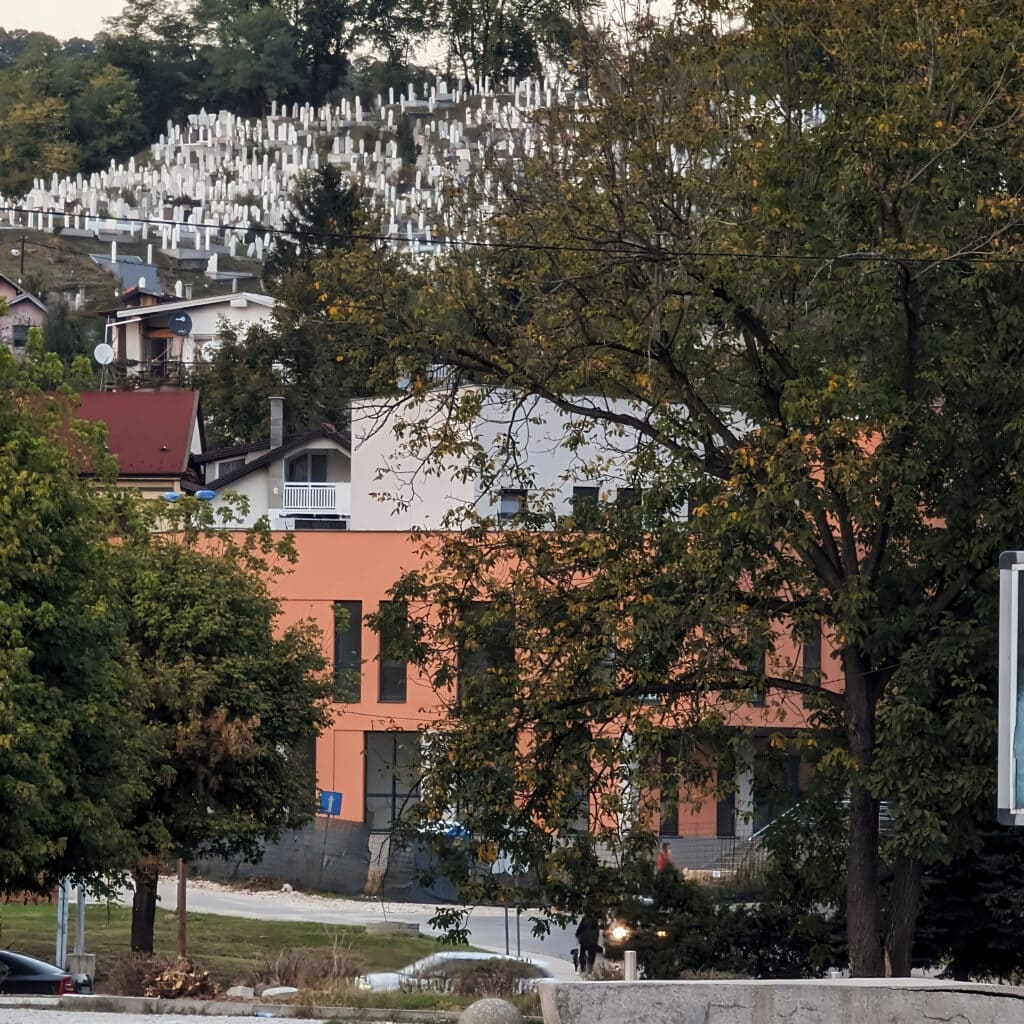
Take a few steps to the south-east to spot the 16th-century Hadži Hasanova Mosque and the white headstones of Trnovac cemetery beyond it.

Hadži Hasanova Mosque Trnovac cemetery
6 Korzo (Pedestrian Street, Historic Centre)

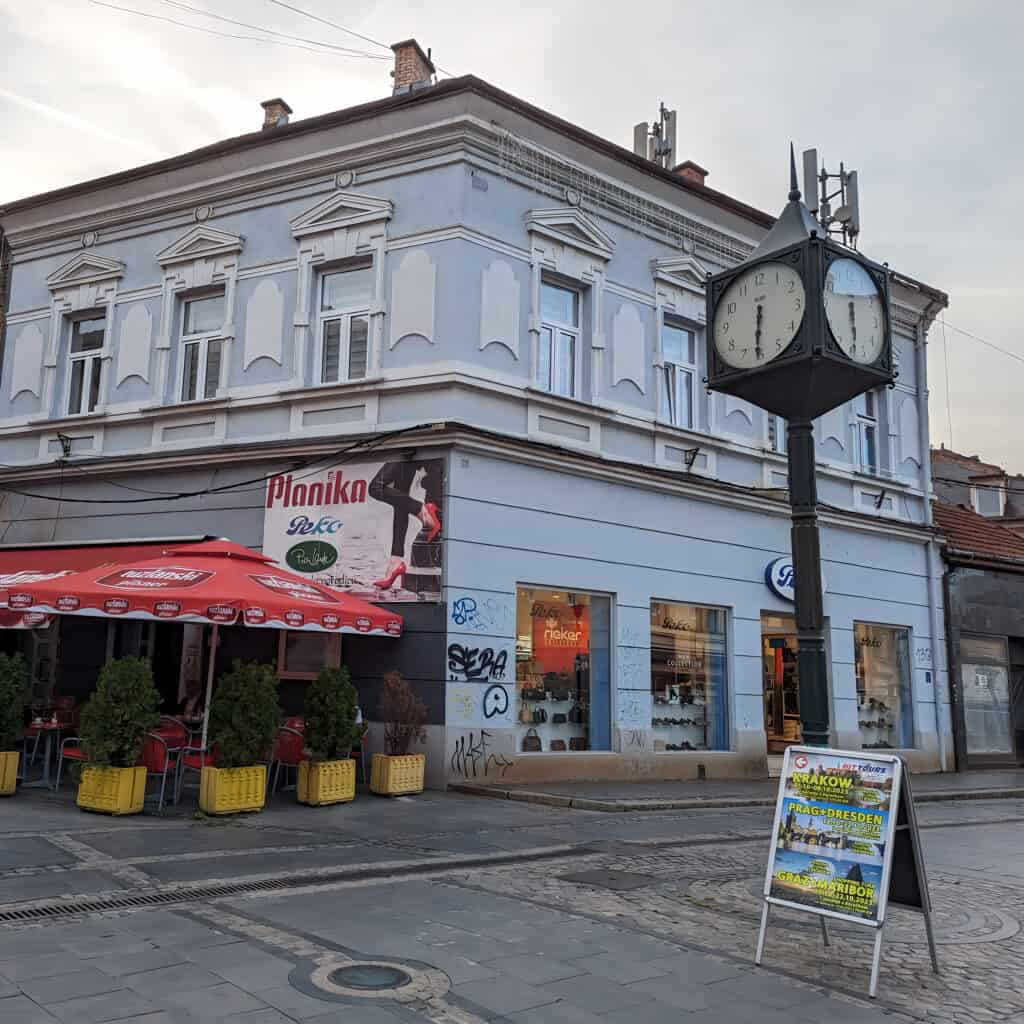
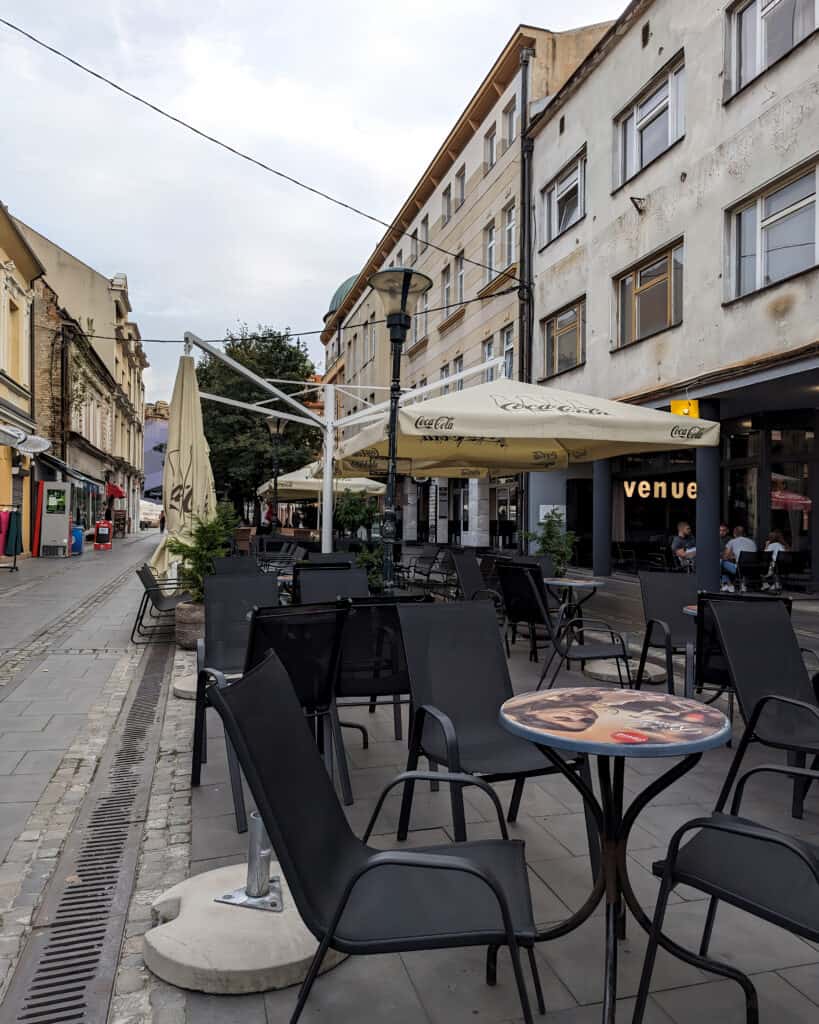
Korzo isn’t a single street name in Tuzla, but the local term for the city’s main pedestrian spine and social heart. Korzo largely follows Turalibegova Street, a cobbled stretch running through the historic centre, lined with cafés, small bars and shops. I liked the cute four-faced clock. It links Freedom Square with the Kapija Memorial, the city park and several of Tuzla’s best-known statues, making it an easy and intuitive route through the centre.
Characterful clock with 4 faces on Turalibegova Inside Just Caffe Pub – a popular city centre bar

7 Kapija Memorial (City Centre)
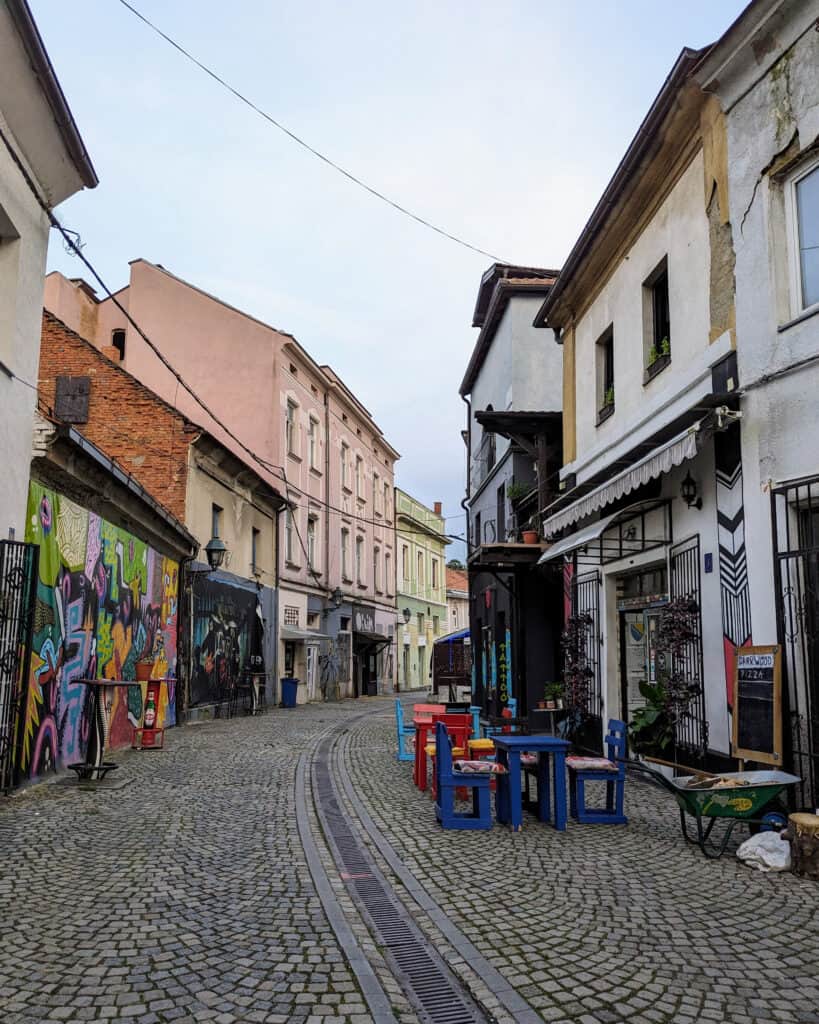
The Kapija Memorial marks the site of one of the most tragic events in Tuzla’s recent history. On 25 May 1995, a shell fired into the Kapija area killed 71 people, most of them young, who had gathered there on a public holiday evening. Today, there’s a memorial in the pedestrian streets of Tuzla. A list of names as a record of the lives lost on that fateful day.

Kapija Memorial in Tuzla Colourful pedestrian streets in the centre of Tuzla

8 Meša Selimović & Ismet Mujezinović Statues
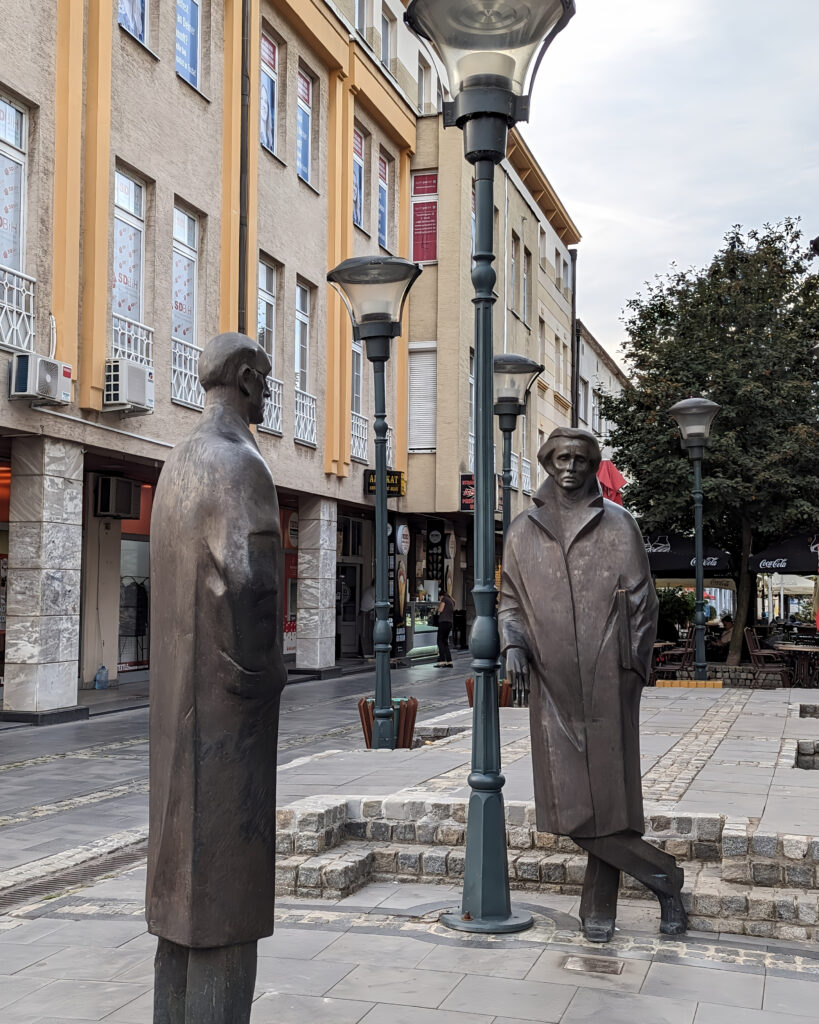
The statues of Meša Selimović and Ismet Mujezinović stand along the Korzo and mark one of Tuzla’s most recognisable meeting points. Selimović was a major Bosnian writer, while Mujezinović was a leading painter closely associated with the city. Locals use the statues as a reference point and often say they’re meeting at “Meša and Ismet”.
9 Tuzla Gradski (City Park)
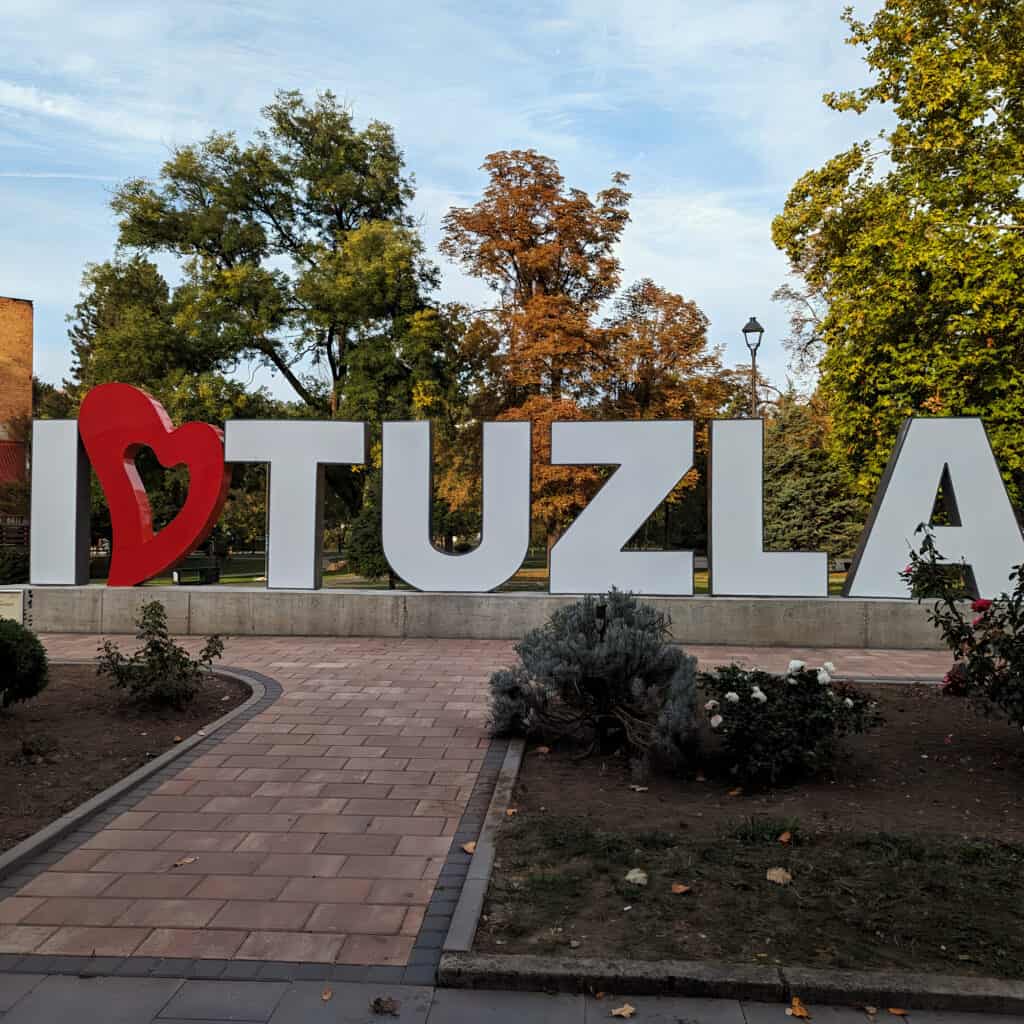
As we walked along Turalibegova, we passed an “I love Tuzla” sign at the edge of Tuzla Gradski (City Park). We found the first King of Bosnia (Tvrtko I Kotromanić) in the park, overseeing the comings and goings from his throne.

10 Cathedral of Dormition of the Mother of God
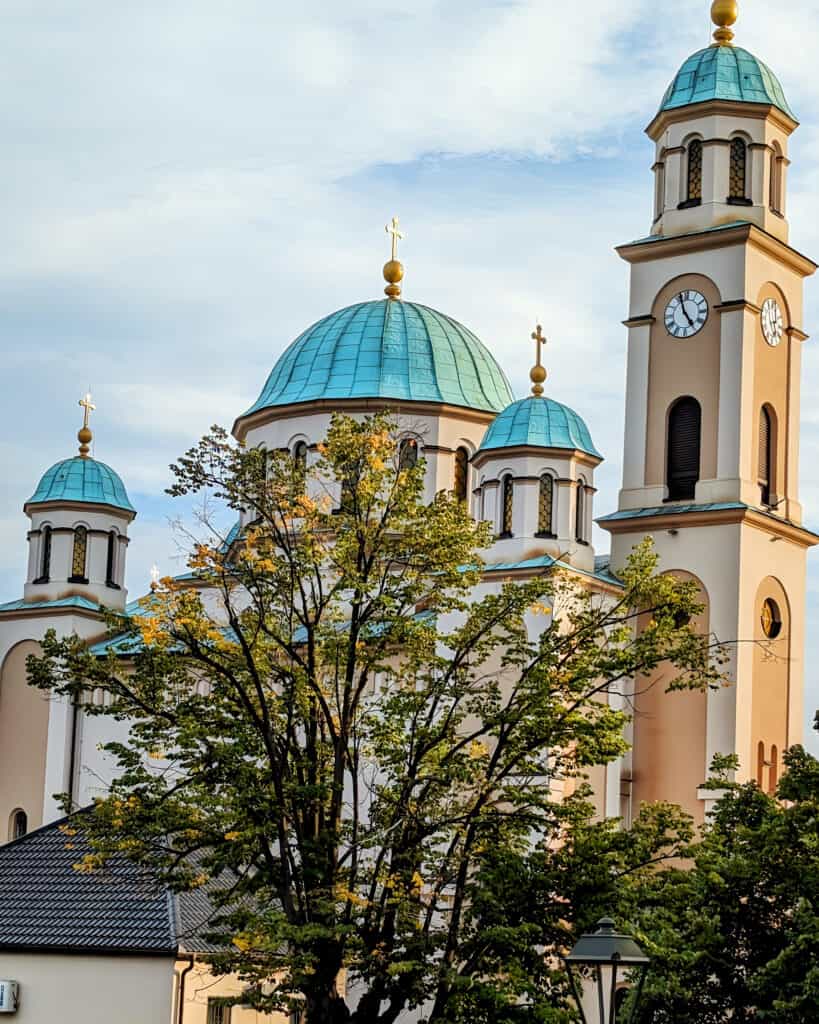
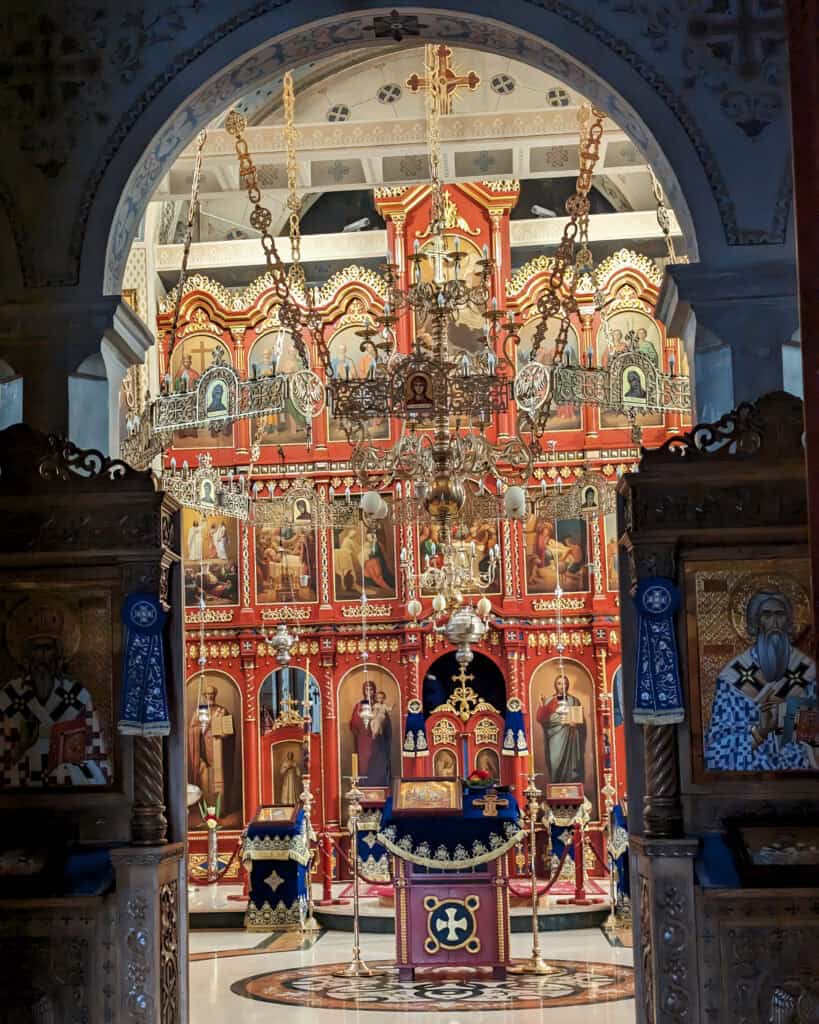
We walked past the Cathedral of the Dormition of the Mother of God. We didn’t want to disrupt the events inside, but we did get a photo through the doorway. How beautiful is that? It’s Tuzla’s main Serbian Orthodox church, dating from the late 19th century.
Cathedral of the Dormition of the Mother of God, Tuzla Cathedral of the Dormition of the Mother of God, Tuzla
11 By the River Jala: Statues and Lights
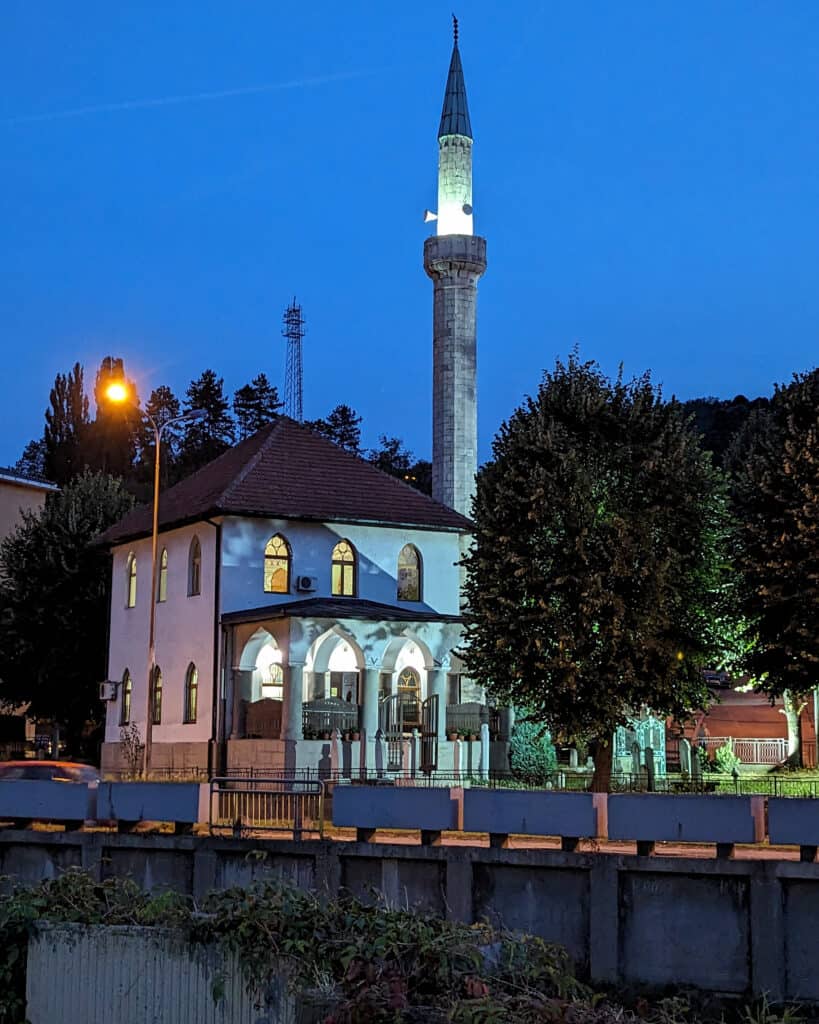
Our final stop before reaching our hotel at the end of our day was the bridge over the Jala River. The river itself is small and confined to a concrete ditch, so no comparisons here with the mighty Danube and Sava in Belgrade, or the picturesque river bridges in Sarajevo. But it’s not without landmarks. Facing each other on opposite sides of the bridge stand the Statues of the Miner and the Salt Worker. Two strong lads holding glowing geometric lamps above their heads as a nod to the two main industries in the Tuzla area. Just beyond them, the Jalska (Mehmedagina) Mosque with its tall minaret, also lit up. A wonderful sight to end a long day, which had considerably improved once we had left the Belgrade bus.

Just Beyond the Centre of Tuzla
That completes everything we saw in the heart of Tuzla. Here are a few more places just beyond the centre if you have time.
12 Brutalist Architecture in Tuzla: NLB Bank
One of Tuzla’s more unexpected buildings is the NLB Bank. We stopped by to exchange some Bosnian currency and were impressed by the large, modern central atrium with tall vaulted ceilings. It’s only later that we discovered it’s a late-Yugoslav structure, popular with tickers of Eastern European brutalist buildings. If we had looked at it side-on, we would have seen that those vaults were actually giant pipes protruding from the roof line like concrete aliens! If you go to Tuzla, please pay more attention than we did.

13 Trip to the Tuzla Brewery Tap
So we could have stayed on the bus from Belgrade to the bitter end, landing ourselves on the west side of the city and retracing the journey back into the centre on foot. But Pivnica, the brewery tap for Tuzla, was on the eastern side of the city, so we jumped off the bus early. The traditional Bosnian meal and beer were much needed. I don’t think tourists come here that often, but I’d definitely recommend it.


14 Museums in Tuzla (if you have more time)
We didn’t visit any museums in Tuzla, but there are options. The Museum of Eastern Bosnia focuses on archaeology, history and ethnography from Tuzla and the wider region. There’s also a Salt Museum (Muzej Soli) on the western edge of the city, but opening hours appear irregular, or it may be closed altogether. I’ve already mentioned the archaeological park with its reconstructed Neolithic settlement near the Pannonian Lakes, which looks like a good family-friendly option, again, if it’s open.

River Jala Bosnian Coffee in our hotel


Where to stay in Tuzla
We chose to stay in a small family-run hotel near the River Jala. I highly recommend So/ boutique Hotel for its spotless rooms, friendly welcome, great breakfast, and Bosnian coffee. It’s centrally located. If you’re driving, there’s free parking too. If So&sol is full, which it may be, here’s a map with other live booking options.
Have you visited Bosnia and Herzegovina? If you liked this content, I’m adding more articles from Bosnia, along with my guide to Sarajevo. If you liked this content, I’d love it if you joined my monthly newsletter.
In the meantime, here are some articles you might be interested in:
- Top Things to do in Belgrade: Beyond the Nightlife
- Things to Do in Novi Sad: An Easy Day Trip from Belgrade
- Belgrade to Sarajevo by bus, and why breaking the journey in Tuzla makes sense
Thankyou for reading my blog!