Things to do in Carcassonne – Here’s what I did, what I skipped, and what I wish I’d known
A Tourist Guide to Carcassonne
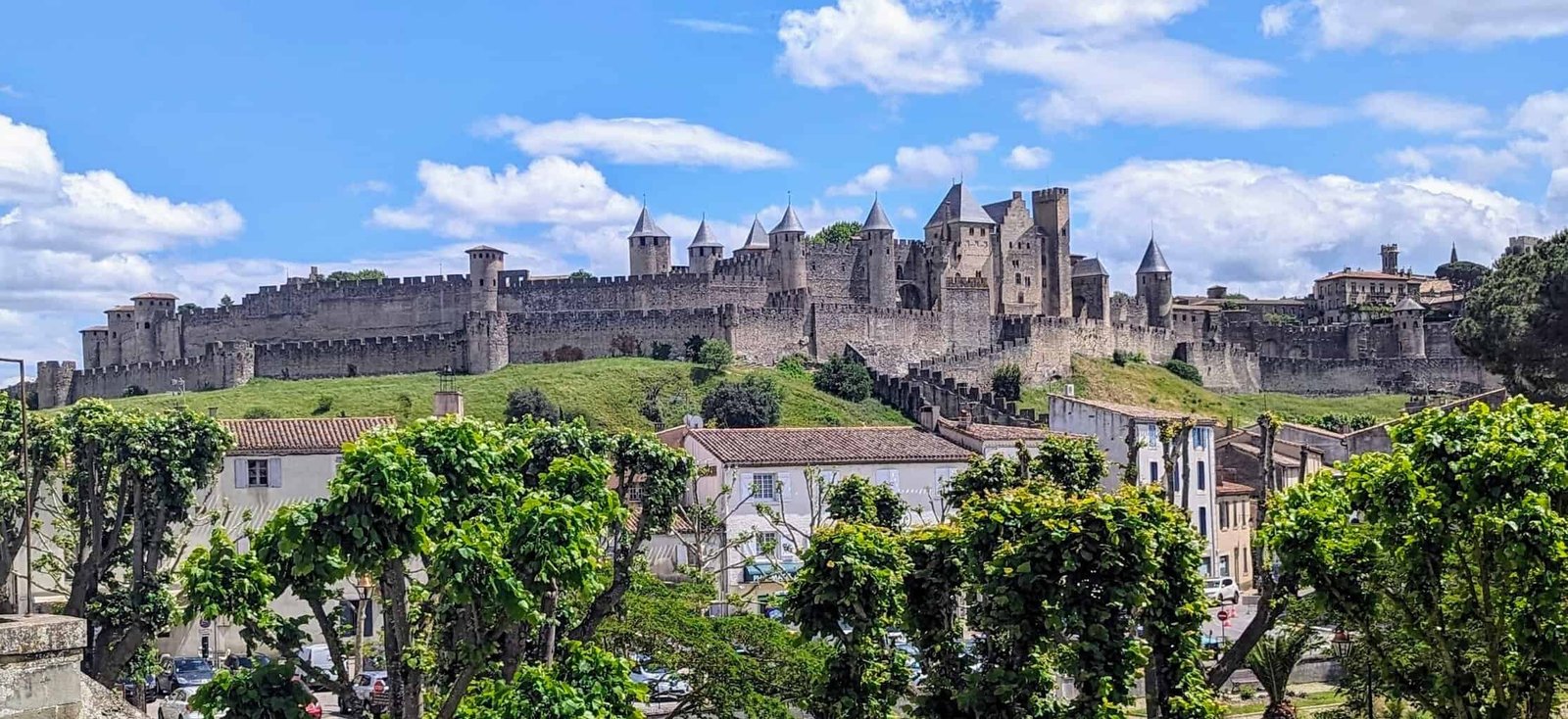
The old Cité of Carcassonne in the south of France looks like it’s been lifted straight from a medieval movie set – and to be fair, it has. Most famously, it stood in for Nottingham Castle in Robin Hood: Prince of Thieves (1991). UNESCO-listed and hugely popular, the city draws around 3 million visitors a year, with 600,000 of them touring the castle and ramparts. That places it firmly among France’s top cultural attractions. With 52 towers, four city gates, and nearly three kilometres of fortified walls, the Cité covers a surprisingly large area.
The castle’s storybook look owes much to the architect Viollet-le-Duc’s dramatic 19th-century restoration. Some purists criticise the ‘prettified’ result, but there’s no denying it photographs well. Just be warned, if you’re crowd-averse, Carcassonne in summer might test your patience.
The Cité Médiévale, with its turrets, towers and tourist shops, is the main draw, but Carcassonne is actually a city of two halves. Many visitors, especially independent travellers, arrive in Bastide Saint-Louis (Ville Basse). This is the “new” town, which was laid out in the 13th century. With its leafy squares, churches, arches and quiet streets, it has a more lived-in feel. I’d recommend exploring both sides, if you can, to make the most of your visit.
I visited independently in May and, despite the crowds, it lived up to the hype. That said, I was happy with the one (long) day and didn’t feel I’d missed out without staying overnight. Here’s what I saw, what I loved, what I wish I’d known, and what I’d quietly skip next time.
This guide may include a few affiliate links. If you choose to buy something through one of them, I may earn a small commission (at no cost to you). Thank you for supporting One Small Bag.
Making Your Way to the Cité Médiévale
Many day trippers arrive on organised group day tours – a good option if you’re short on time, prefer less walking, or want the ease of a guide and hassle-free transport. Here are the options if you wish to travel independently, as I did.
Arrival at Carcassonne Station
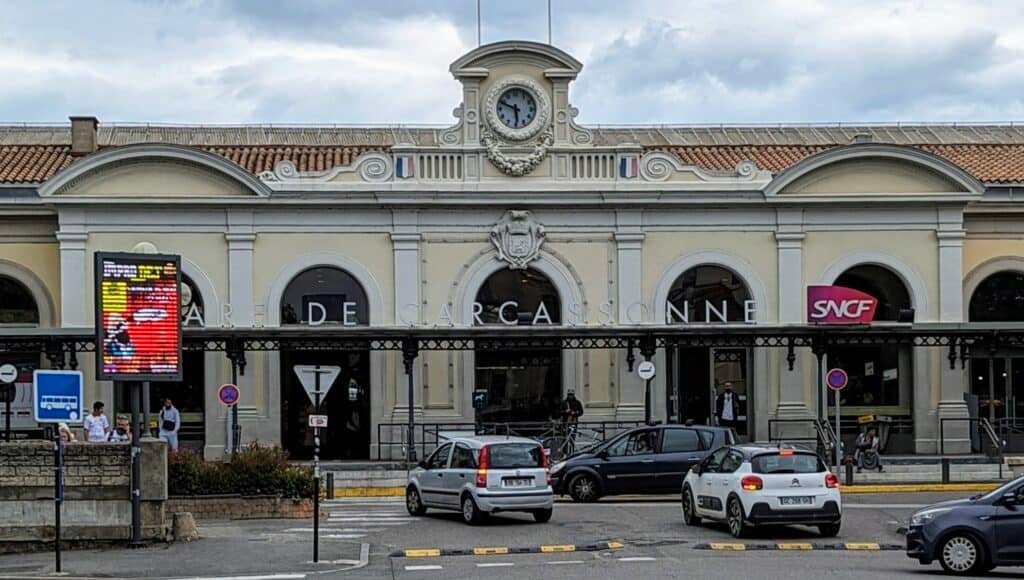
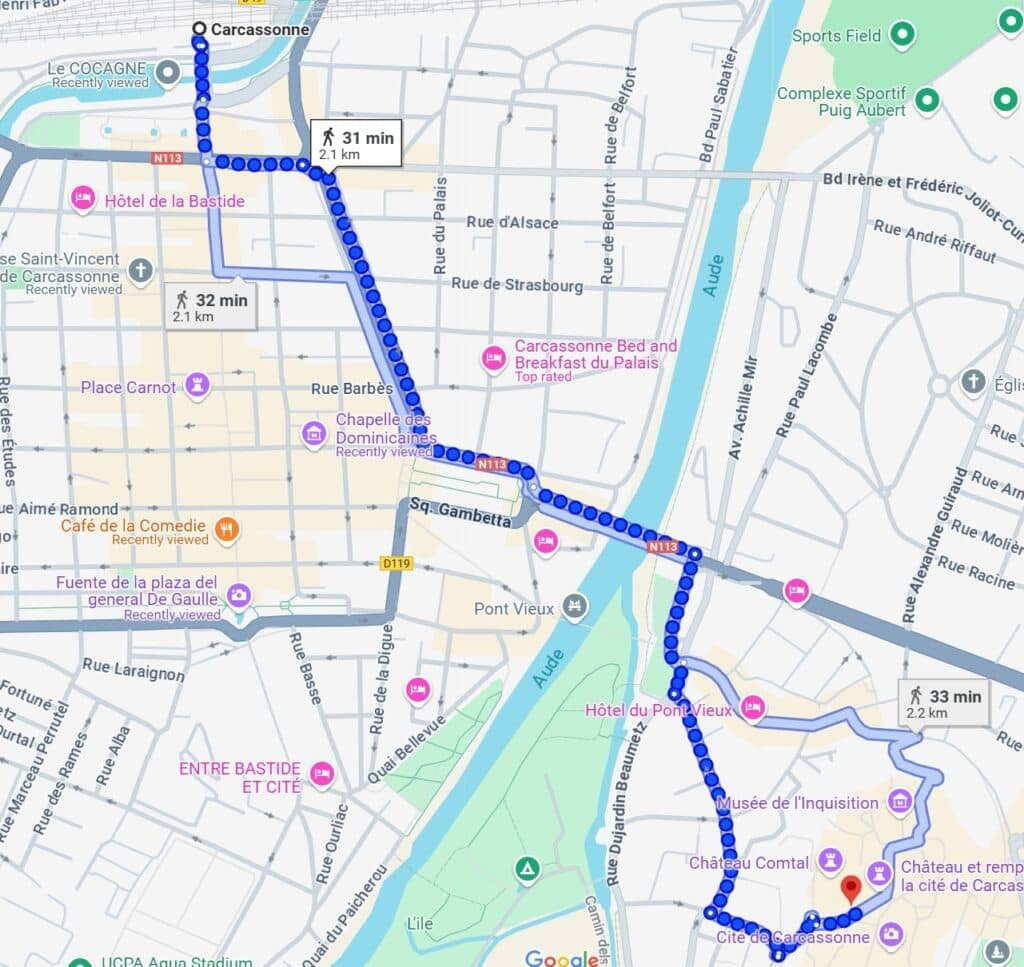
From the train station or the bus station, it’s a short walk (around 15 minutes) through the lower town (Ville Basse) to the Pont Vieux (Old Bridge).
From here, you start the steady climb to the medieval cité. (Allow another 15 minutes).
If you’re arriving by train, don’t just march straight toward the medieval cité; take a moment to look around.
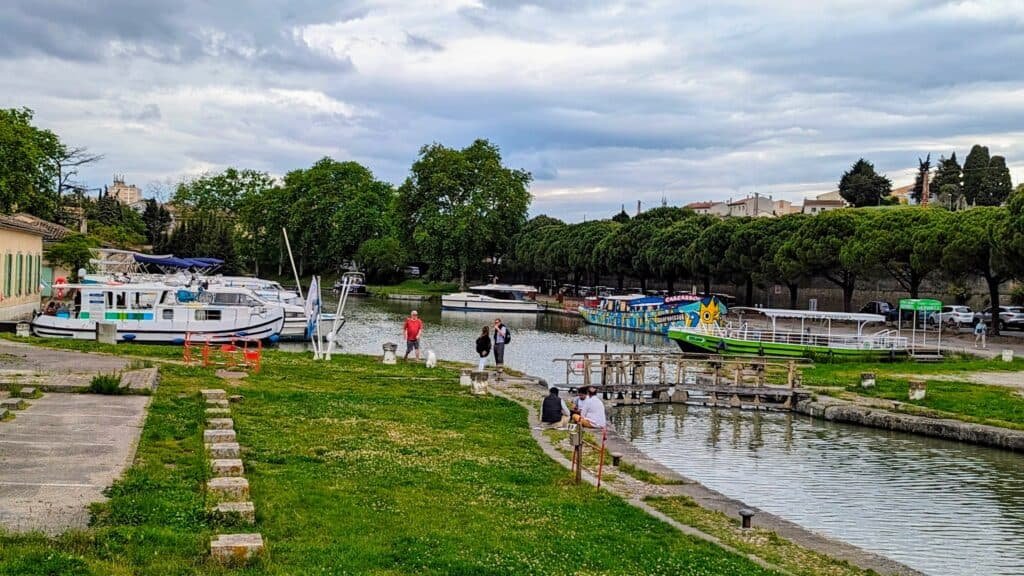
Cross the Canal Du Midi at Pont Marengo
My first view upon leaving the station was of the Canal Du Midi. It’s at its most scenic in and around Carcassonne, and it’s also the starting point for boat tours around the city. Bateau le Cocagne offers a few sailings every day, with the 6 pm tour particularly popular for its view of the ancient city from the water at dusk.
Linger in the Square André Chénier
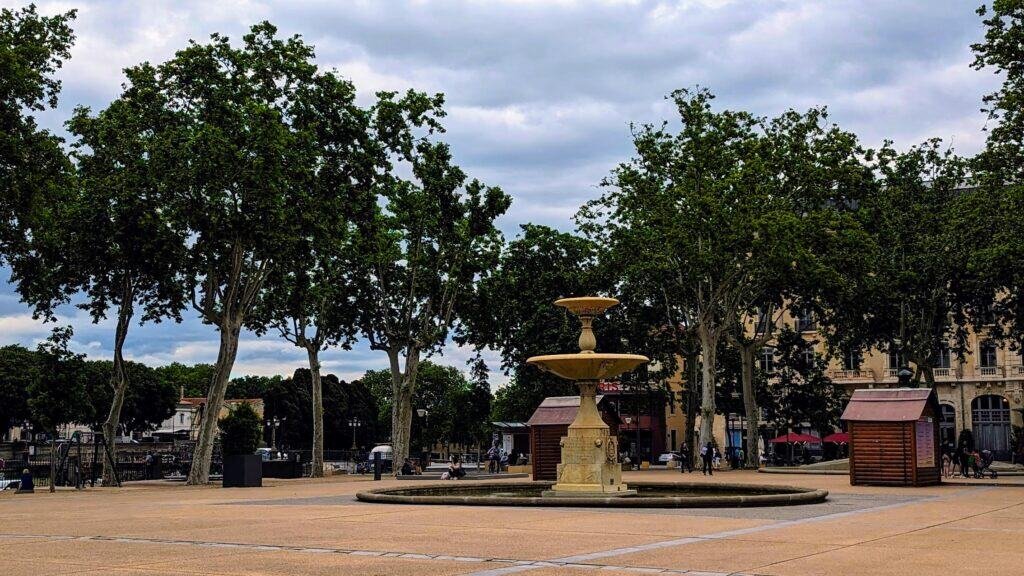
Just across the bridge is Square André Chénier, a large, elegant square with green spaces, fountains and statues. It’s a great place to pause, especially if you’ve arrived early and the city’s still waking up. For me, it made a well-timed breakfast stop, as I prepared for the day ahead.
Pont Vieux – First View of the Cité
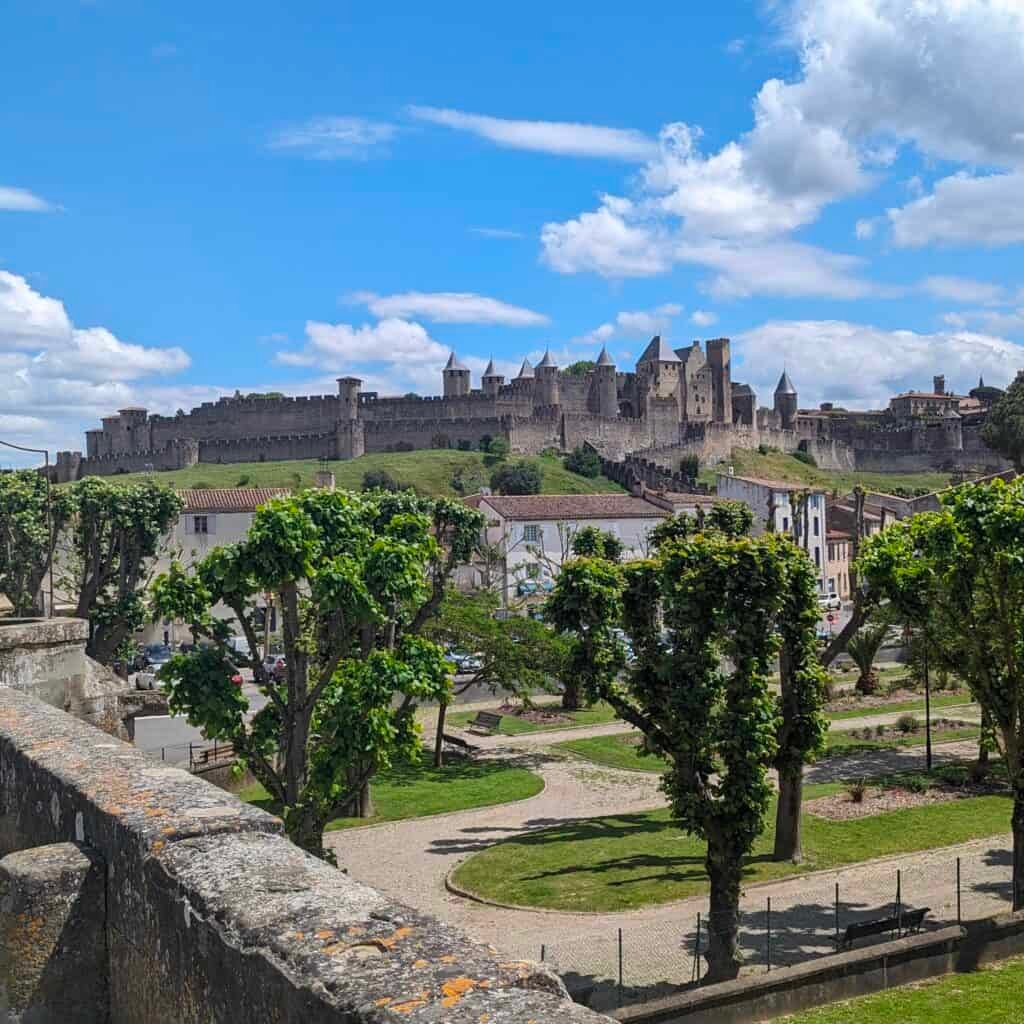
I headed for Pont Vieux, and as I crossed, I was treated to a postcard-perfect view of the old city rising above the river, bathed in sunshine.
Follow the Medieval Streets to the Gates
The walk up through Rue Trivalle is lined with medieval houses, small cafés, and the general sense that you’re about to time-travel. It was quiet on the way up, but the time I left, later in the day, the cafés and shops were filling up, and there were a lot more pedestrians.
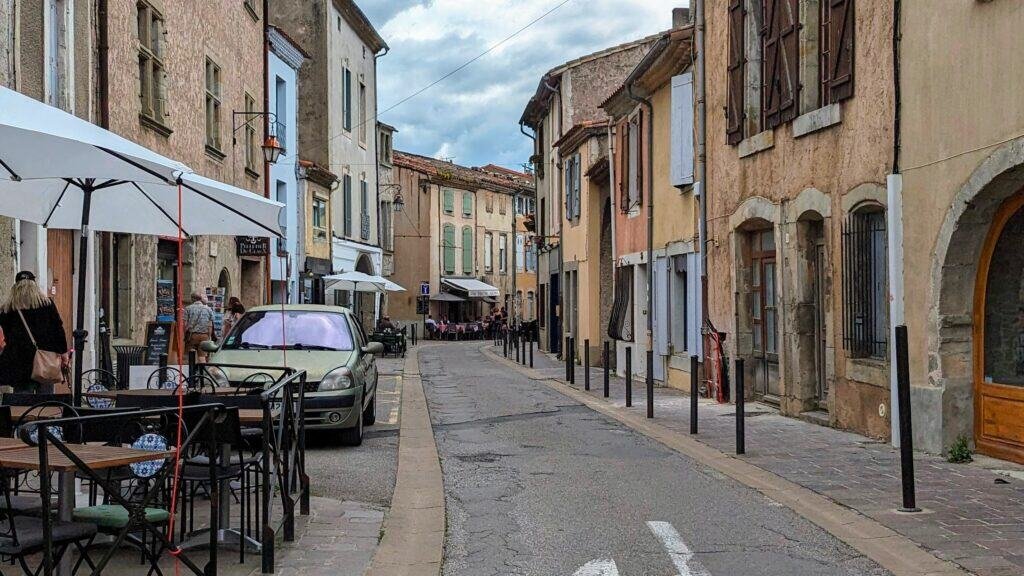
The route gradually gets steeper as you get closer to the city walls, but it’s not particularly strenuous.
Arrival in the Cité Médiévale

The Cité Médiévale is free to enter through the Narbonnaise Gate or the Aude Gate. Once inside, you are free to walk around the Cité. Admission to CChâteauComtal to walk the ramparts is €13 in the off-season (October to March) and €19 in the high season (April to September). I’d definitely recommend paying the entrance fee and booking a Carcassonne entry ticket in advance to avoid the crowds.
Exploring the Cité Médiévale
Here’s what to expect inside the Cité Médiévale
Map of the Cité Médiévale
I’m sharing my map of the Cité Médiévale so you can easily locate the places I mention.
💡 Tip: To save this map to your own Google account, open it in a new tab and choose “Copy map” from the menu
Walk the Ramparts
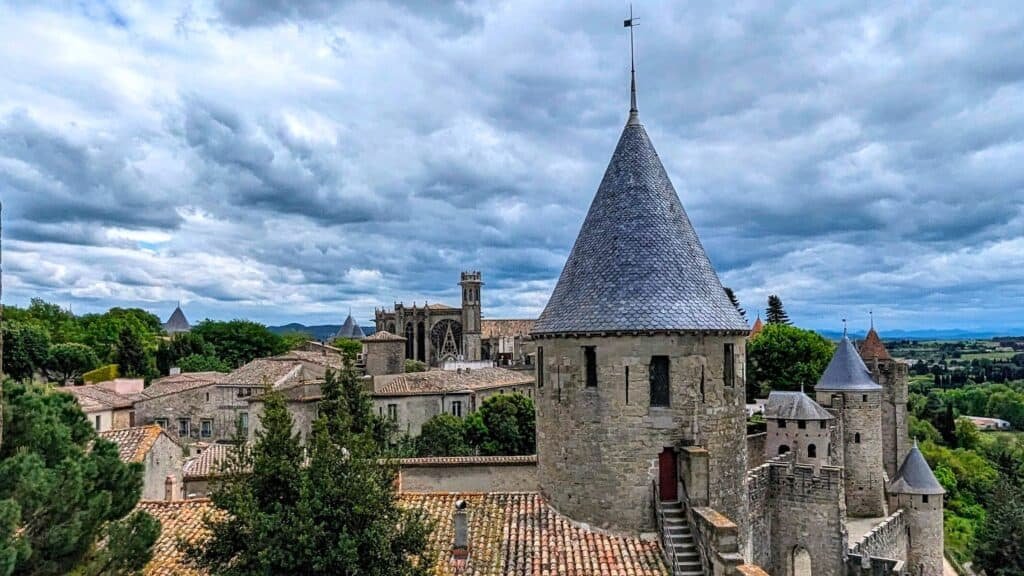
Paying the admission fee gives access to the inner ramparts. These offer panoramic views over the city, the Aude River, and the rooftops of the lower town.
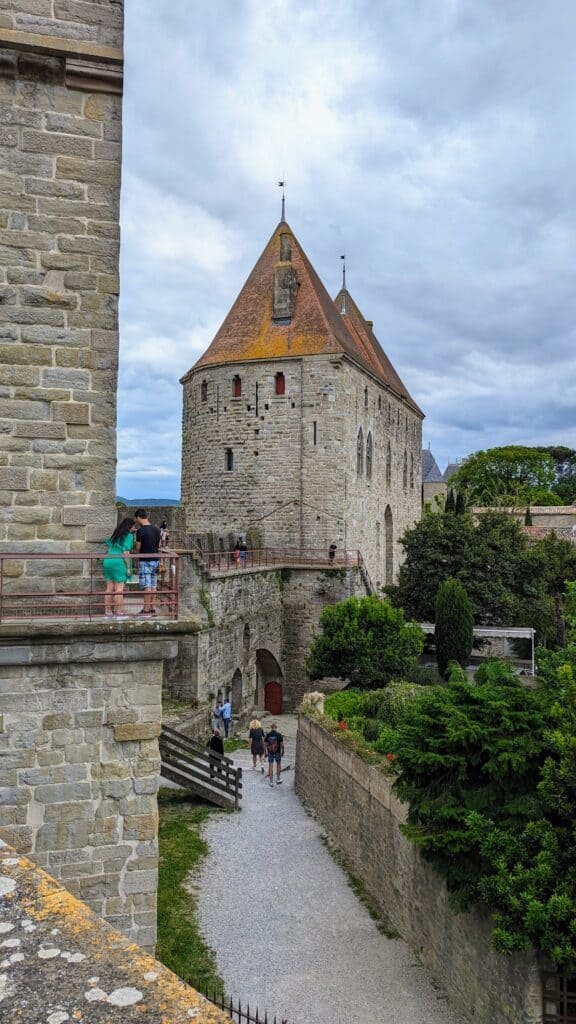
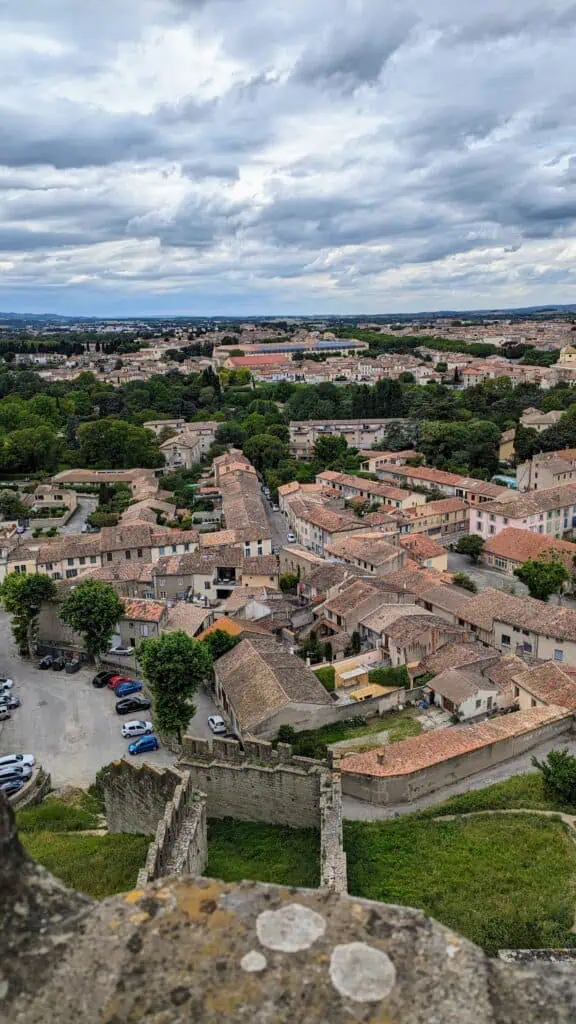
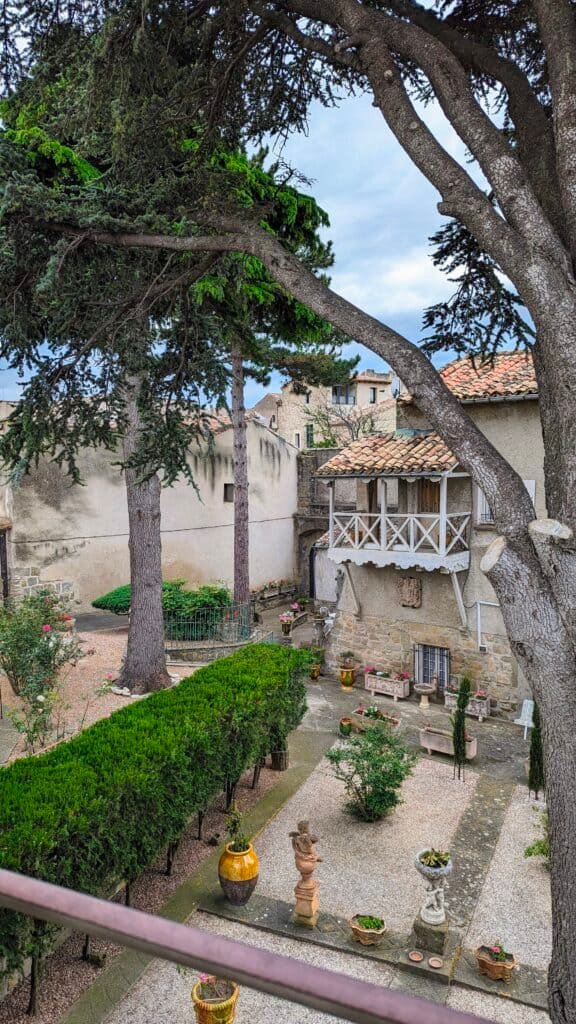
Explore the inside of Château Comtal
The central courtyard reveals the layered history of the castle’s construction, beginning with the remnants of the Roman walls, which were rebuilt and extended in medieval times. It’s easy to spot the late 19th-century restoration by the architect Viollet-le-Duc, as it gives the building afairy-tale look.
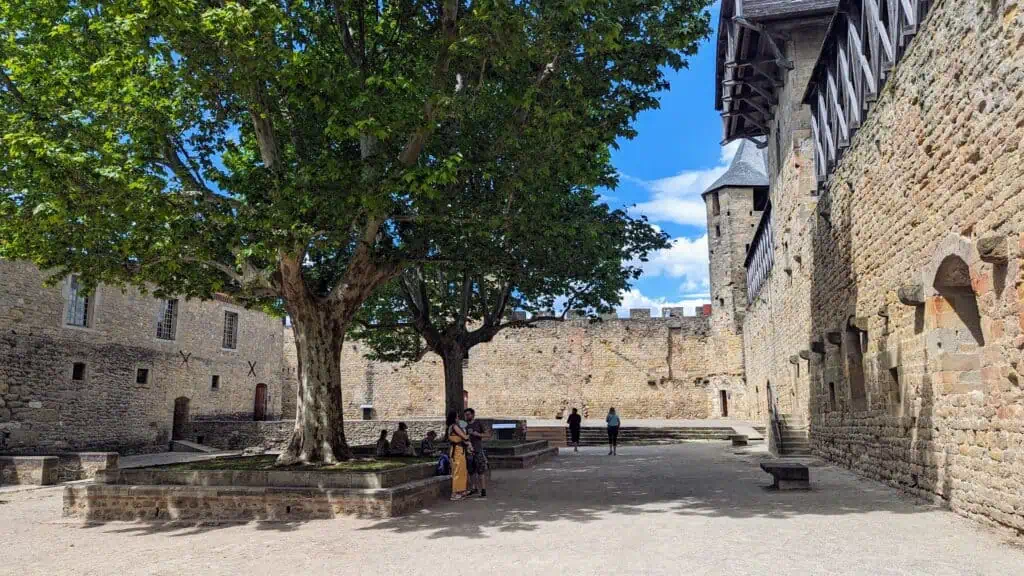
Inside, there’s a small chapel and a very modest museum showing carvings, sculptures and some religious art. While it’s interesting, the main draw for me was the walk around the walls.

Inside, there’s a film room with a film explaining the strategic importance of Carcassonne. There’s some very impressive 3d imagery, modelling the castle from its earliest beginnings through to the site transformation by Viollet-le-Duc in the 1800s

Dine in Cité Médiévale
Place Marcou is the central square, full of cafés with outdoor seating and people. There are further cafés leading off the streets around the square. Many offer tourist menus for the crowds arriving every day.
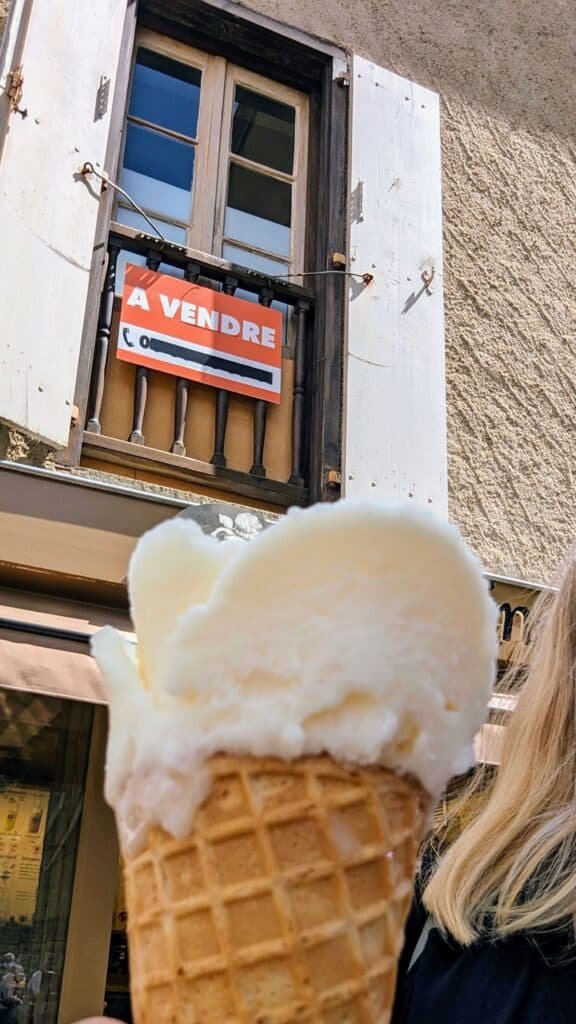
The only thing I ate in Cité Médiévale was a flower-shaped ice cream. Amorino Carcassonne is the place for this. The servers shape petal-like pieces of ice cream and arrange them in the cone until you have a rose-inspired ice cream.

Carcassonne has some ‘high-end’ restaurants, including Michelin-starred ones. There’s La Barbacane inside the Hôtel de la Cité, as well as the Comte Roger, offering excellent regional fare like cassoulet. Just outside the walls, there’s La Table de Franck Putelat. It’s a two‑star restaurant praised for creative regional dishes and a seasonal menu crafted from its own garden.
That said, I’m not really the Michelin‑type. When it comes to dining options, I felt Toulouse offered more variety and value.
Shop in Cité Médiévale
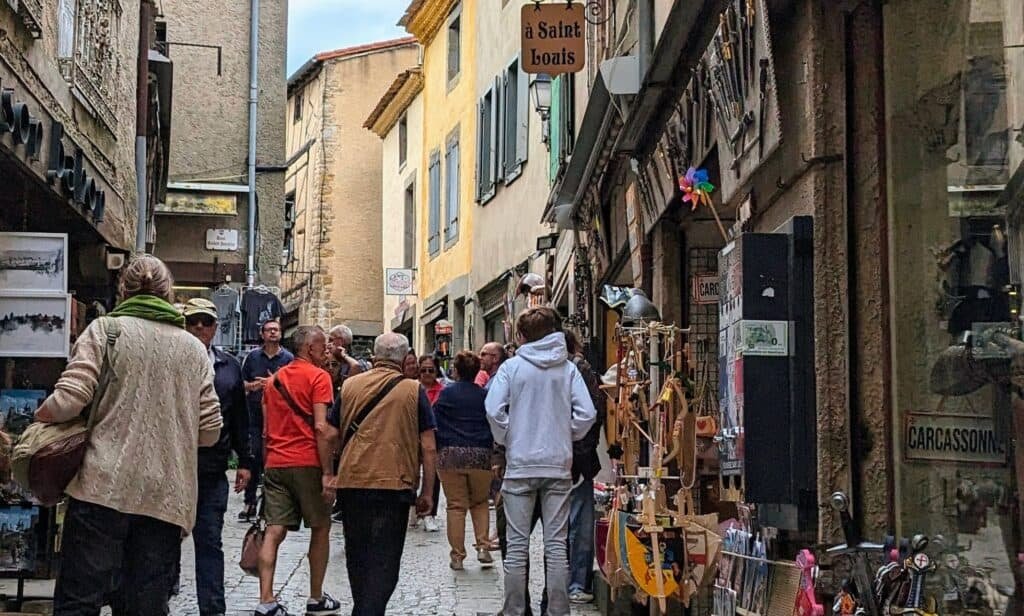
The lanes within the walls are bustling with visitors. If you are looking for a fridge magnet or a knight’s costume complete with a sword, you will not be disappointed with the shopping! Carcassonne is quite unashamedly touristy, but with a setting this striking, it’s hard to mind.
Planning a trip to France? Questions about apps, eSIMs, and more? I have a free toolkit for you.
FREE Travel Tech Toolkit
The exact apps, eSIMs, and tools I use to travel smarter – covering transport, translation, money, connectivity, and more. Tested over years of actual travel.
Visit Basilique Saint-Nazaire
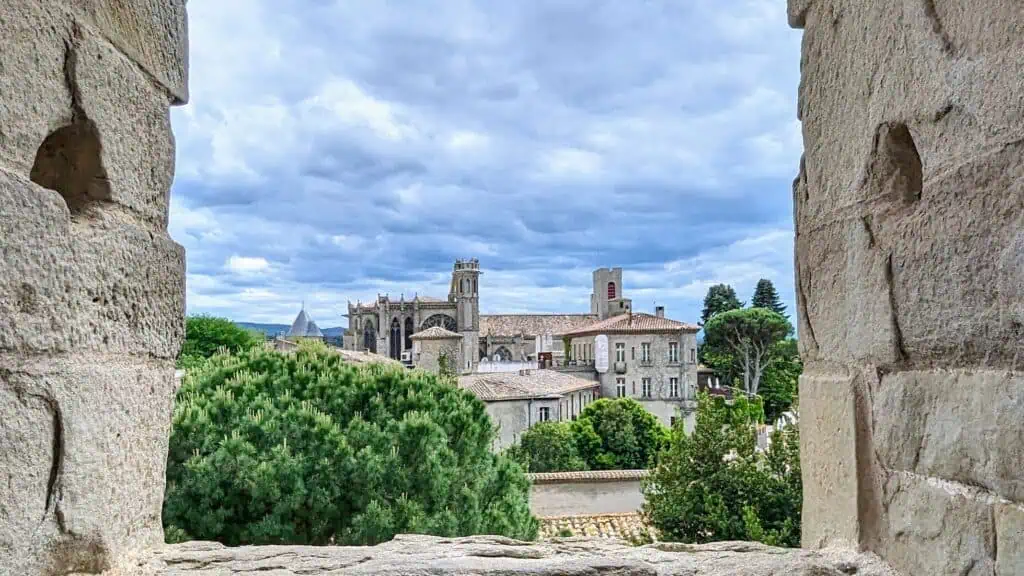
A beautiful church with impressive stained glass, especially the large round rose window – a peaceful contrast to the busy lanes. There’s a Gothic side (reconstructed by restoration architect Viollet-le-Duc) and a Romanesque side with a restored turreted tower.
Tour Around the Outside of the Walls
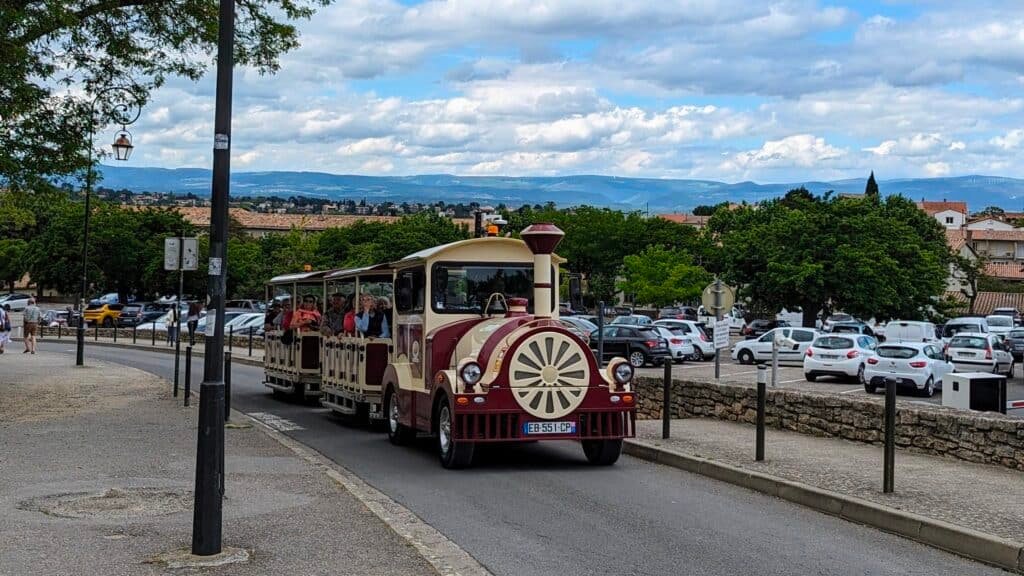
There’s also a tourist train. This goes around the OUTSIDE of the city walls. It can be picked up just outside the Porte Narbonnaise, which is not far from the city car park. For those with limited mobility or young children, this could be a good option. I didn’t take the tourist train myself. I did notice it had mixed reviews and doesn’t always run. So if this is important to you, I would check its operating before planning your trip around it.
Alternatively, you could follow the same route on foot to get some different views of the medieval city.
Things to Do in Bastide Saint-Louis
The Lower Town (Ville Basse) is built on the left bank of the River Aude at the base of the hill crowned by the ancient Cité de Carcassonne. Many visitors miss Bastide Saint-Louis altogether, heading straight for the ramparts. That’s a shame. It’s full of history, character, and charm, with winding streets lined with old buildings, cafés, restaurants, and markets. Here are a few highlights to look out for.
Map of Bastide Saint-Louis (Ville Basse)
I’m sharing a map of the Bastide Saint-Louis, so you can easily locate the places I mention.
💡 Tip: To save this map to your own Google account, open it in a new tab and choose “Copy map” from the menu. Enjoy
Enjoy the Squares and Boulevards
The Ville Basse is a grid of perpendicular streets that were once enclosed within 14th-century walls. The Languedoc region is famously windy. The streets act as channels for the four local winds, the Tramontane, the Vent d’Autun, the Marine, and the Mediterranean. This makes it considerably cooler than the Cité Médiévale. I visited on a warm spring day, and the cool breeze was very welcome.
Place Carnot
This is the charming heart of the Bastide. At its centre is the elegant Neptune Fountain, complete with a rose‑coloured marble basin and dolphin sculptures. It was built for King Louis XIV and used to supply water from the Aude. Some of the pavement areas have pink flagstones, too.
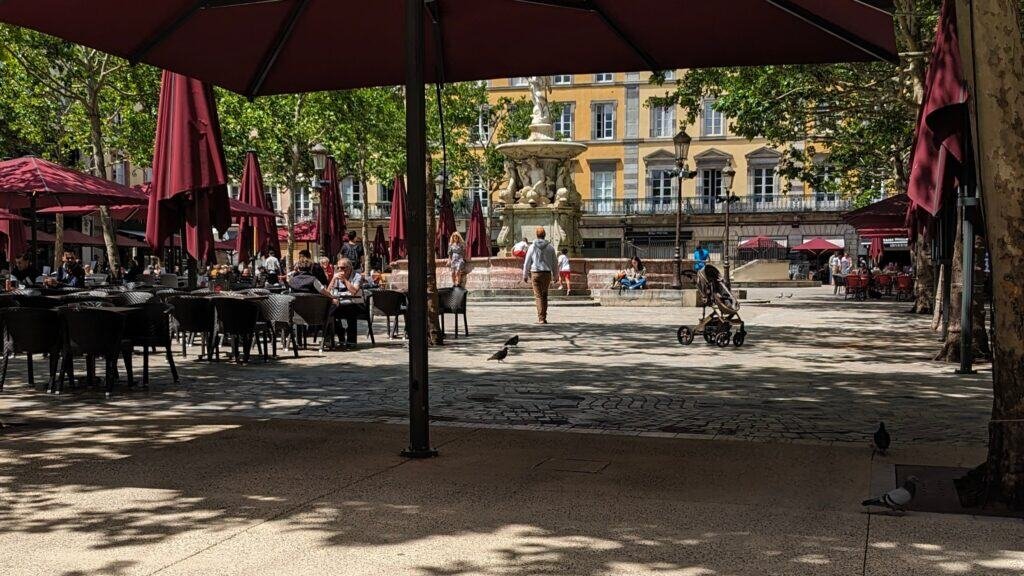
On market days (Tues, Thurs, Sat), the square fills with stalls set up under the plane trees. Unfortunately, I missed it!
Place du Général de Gaulle
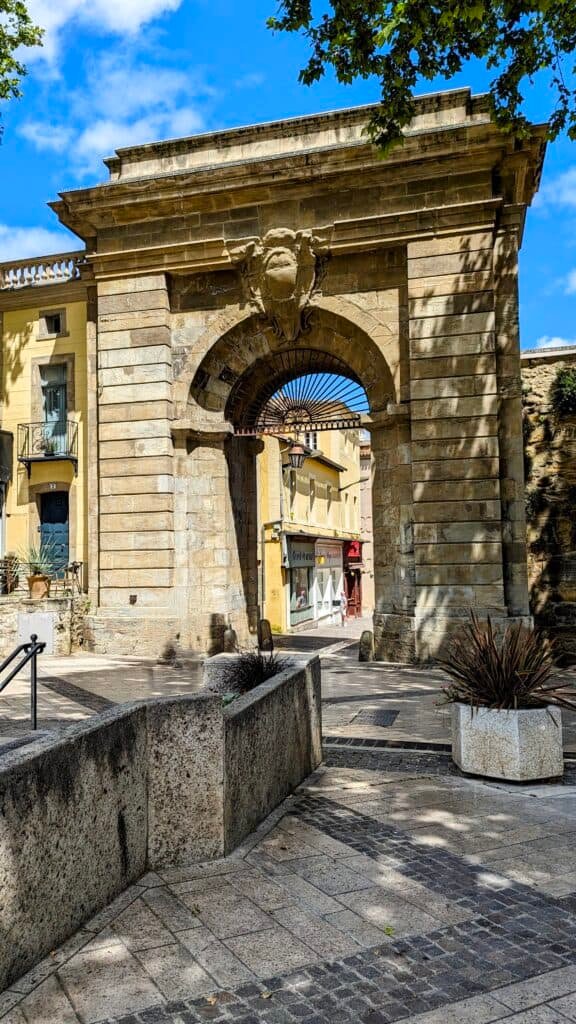
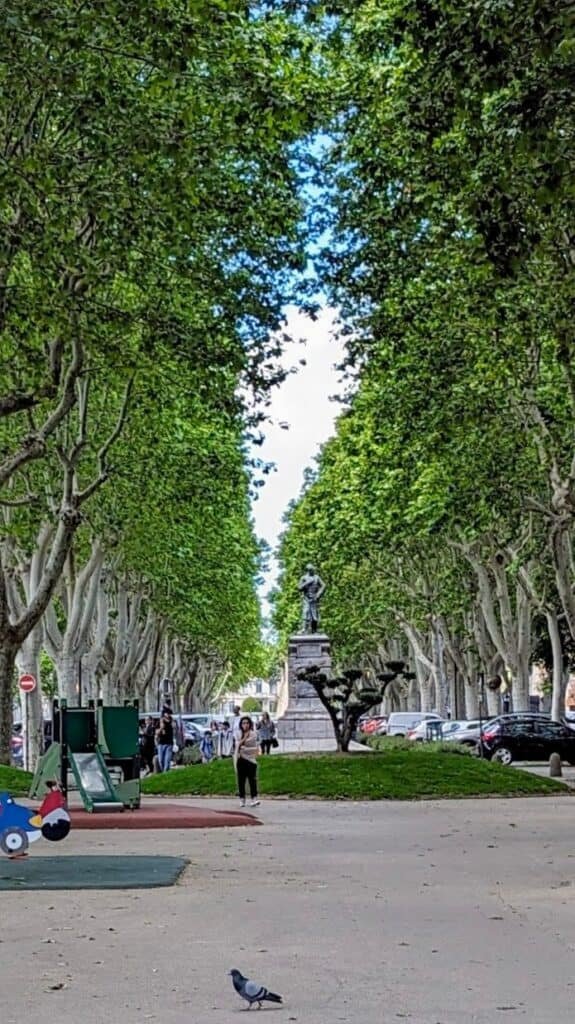
Place du Général de Gaulle has the picturesque and much-photographed Portail de Jacobins at one end. It’s also close to Boulevard Barbes, which has a tree-lined walkway complete with statues and a children’s play area. In winter, it hosts a pop-up skating rink and Christmas market.
Square Gambetta
Square Gambetta is a more modern space: more tree-lined, with shady paths, but this time with several modern statues. I photographed a statue of a girl leaning toward a tiny pool and a World War II Resistance memorial, but there were many others.
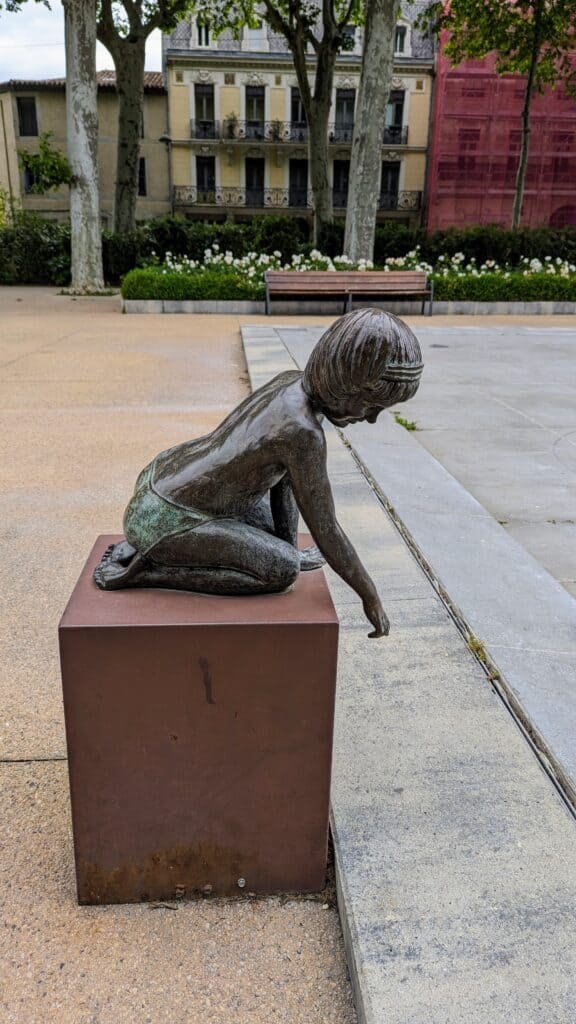

Explore the Churches of Bastide Saint-Louis
Cathédrale Saint-Michel
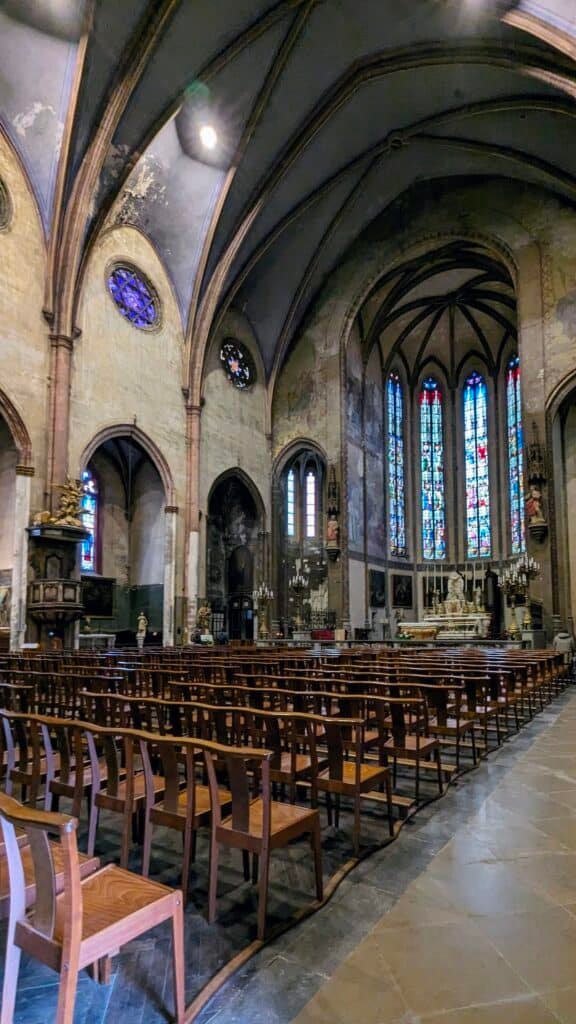
Originally built in the 13th century as a fortified church, Saint-Michel has a solid, austere presence from the outside. Inside, it’s atmospheric with high ceilings, stained glass, and a cool, peaceful interior that’s still very much in active use.
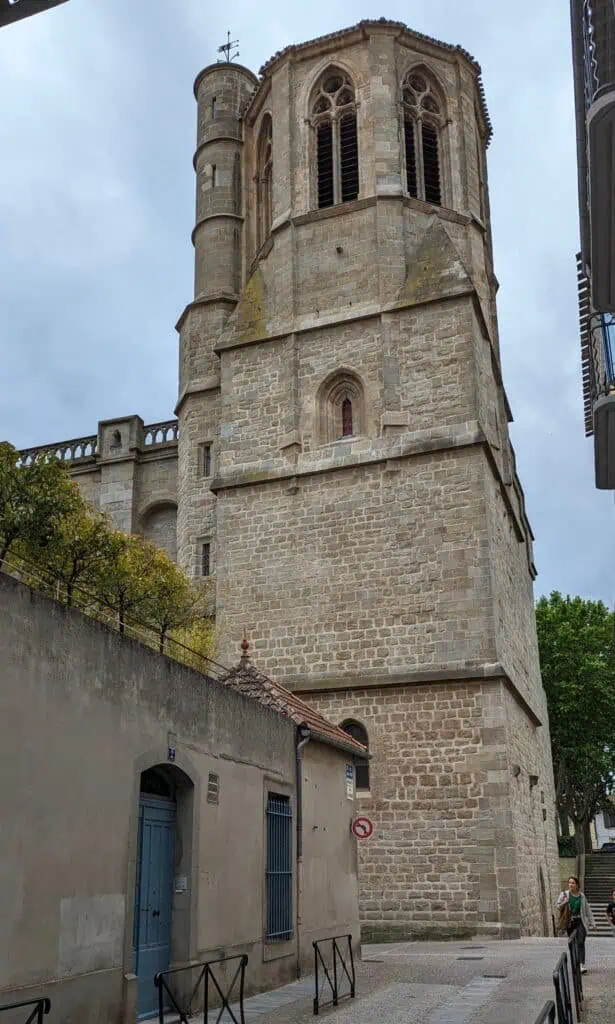

Église Saint-Vincent
Tucked away on a quieter street, Saint-Vincent has one of the biggest bell towers in the Bastide. The interior is calm and uncluttered, and a good spot to pause, reflect and cool off on a hot day.
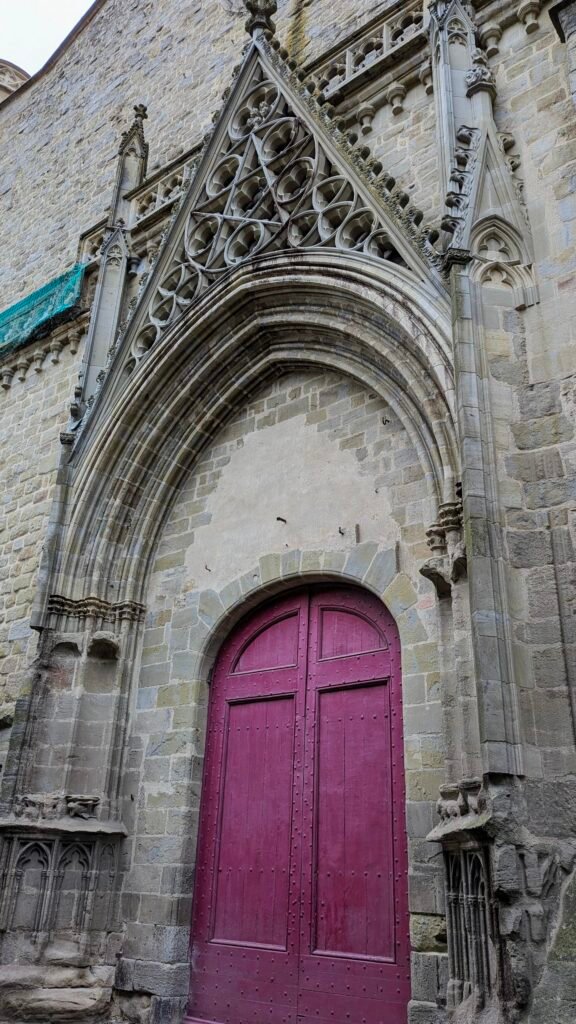
Chapelle des Dominicains
Once a convent church, this small Gothic chapel has been repurposed into a gallery and local exhibition space. It’s usually closed outside of events, but even from the outside it’s worth a look – arched windows, stone buttresses, and a slightly time-worn elegance.
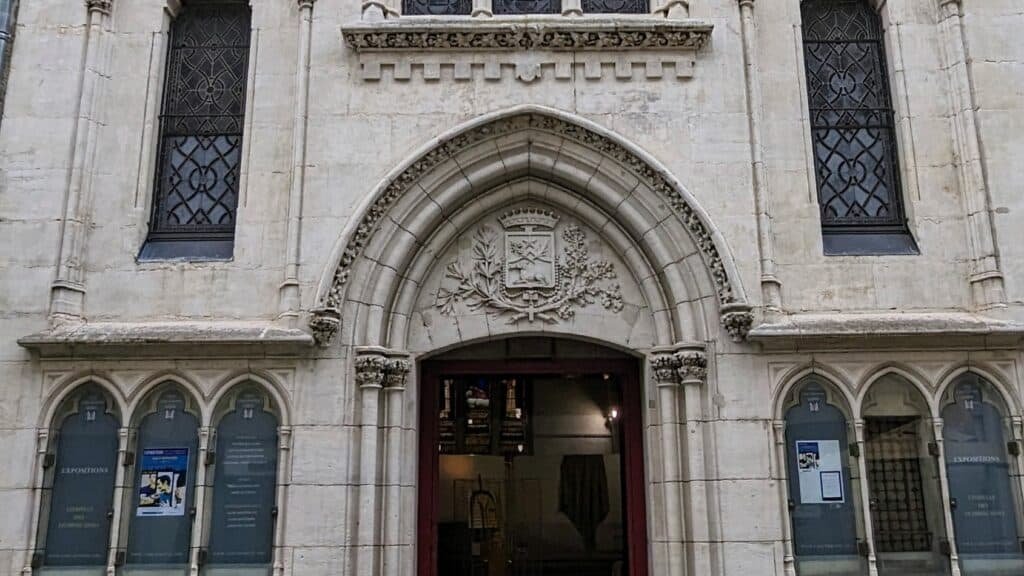
I stopped for a quick photo before moving on, but if it’s open, it’s worth a peek inside, and it’s also worth checking for any specific exhibitions.
Eating in Bastide Saint-Louis
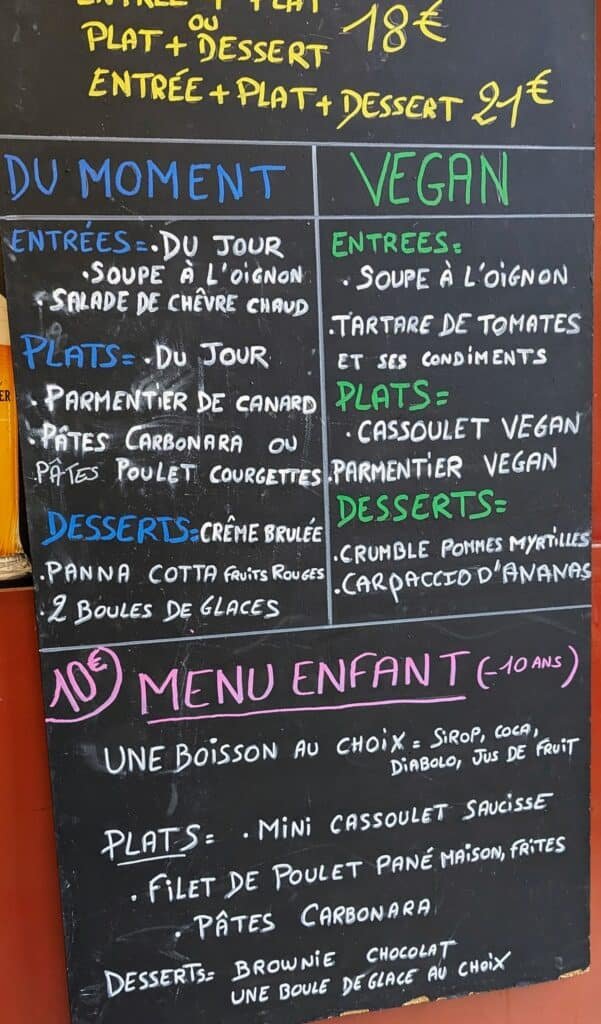
I ate at Café de la Comédie, located on the pretty street, Rue Courtejaire, close to Portail des Jacobins in the Bastide Saint-Louis. It turned out to be one of the few places in Carcassonne with a proper vegetarian menu, something that’s surprisingly hard to find in a city famous for cassoulet.
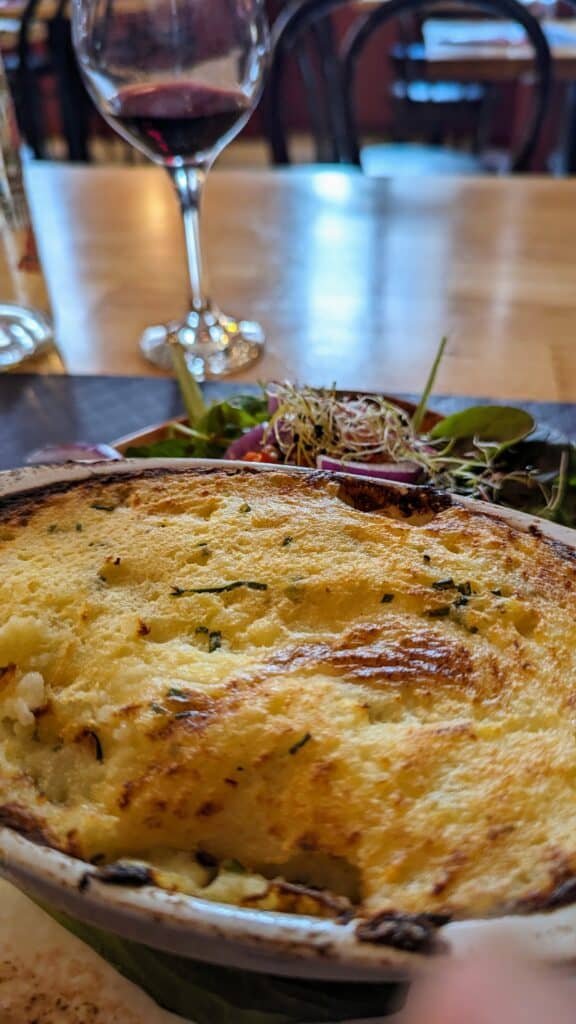
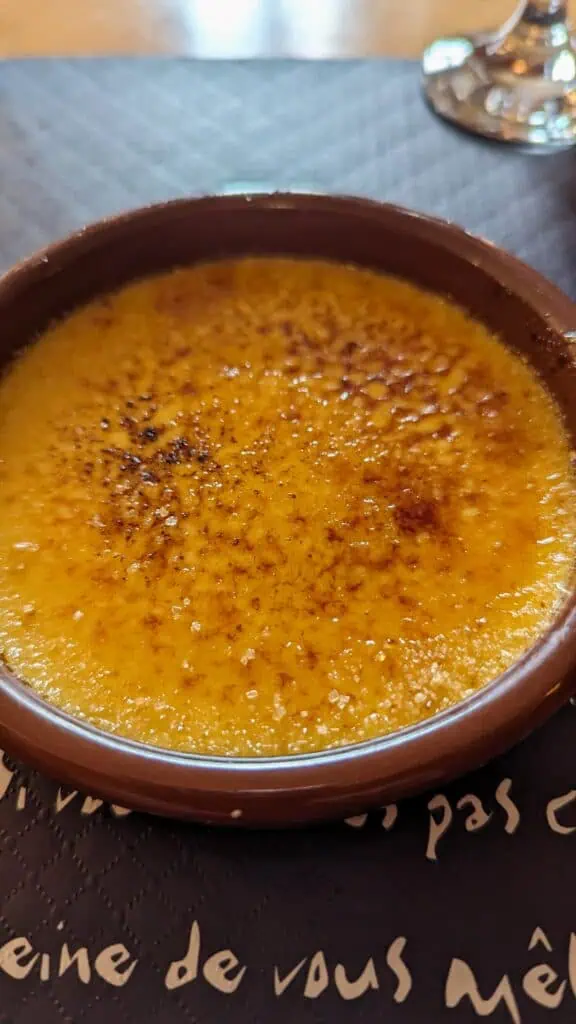
I went for the two-course plat du jour – Parmentier de Canard followed by Crème Brûlée – but the vegan Parmentier and cassoulet were front and centre on the chalkboard. Whether that’s culinary heresy is up to you, but it’s good to know well-reviewed meat-free options exist. Service was brisk, the price fair, and I wasn’t the only solo diner.
Other Things I Didn’t Do (But You Might)
Here are a few extras I didn’t squeeze in – partly because I hadn’t done enough advance research, and also because I was happy to wander. So do try these if you’re planning a longer stay or have more stamina than me:’
- Boat Tour: Bateau le Cocagne has boat tours along the Canal du Midi, including one promising panoramic views of the medieval city at dusk at 6 pm, leaving near the bridge at the train station. If I’d known about this in advance, I’d have taken the boat trip.
- Various Museums: Include Joë Bousquet’s House (Maison des Mémoires), Les Musées des Beaux-Arts, the Museum of the Inquisition, the Torture Museum, and the School Museum. I had plenty to do without visiting these. It was a sunny day, and I didn’t want to spend too much time inside.
- Wine tours: Carcassonne is in the heart of the Languedoc wine region. If you have more time, nearby vineyards offer tastings and tours.
Festivals and Events at Carcassonne
Here are some of the annual highlights from the Carcassonne calendar.
Calendar of Events
- Carcassonne Festival: This international festival takes place throughout July and features a diverse range of arts, including music, opera, dance, and theatre. It attracts hundreds of thousands of visitors annually.
- Feria de Carcassonne: This Spanish-themed festival is held in late August/early September. It features free concerts, family-friendly events, and traditional dishes and drinks such as tapas and paella.
- Carcassonne Cité Fireworks (Grand Fireworks): A must-see event every July 14th, this display is known for its stunning effects and has been taking place since 1898.
- The Magic of Christmas: During December, Carcassonne hosts this festive event, which includes a torch-lit procession in honour of Saint Nicolas (around December 6th), an ice rink, Christmas markets, and other activities.
Should You Stay Overnight?
I was happy I stayed in Toulouse. Carcassonne is stunning, but by early evening I was ready to leave the set menus and souvenir shops behind. That said, if you stay overnight, you might get the ramparts to yourself at sunrise, see the light show at night, or enjoy one of the festivals.
If you do stay overnight, there are several options across a range of budgets on the map to check out.
My Takeaways from Carcassonne
While the Cité Médiévale sometimes gets flak for feeling a bit “theme park,” I found it charming and thoroughly enjoyed my day. That said, one day was enough, and visiting outside peak season was definitely a bonus. I was glad to return to Toulouse for its wider range of activities, dining options, and better overall value.
A walking tour of the Cité might have helped me get more from the visit – I didn’t spend long enough at the Basilique Saint Nazaire, for one. Still, I was happy to leave Toulouse. Independently, it gave me the freedom to explore at my own pace, especially in the Ville Basse. Seeing both halves of the city and the walk up from Pont Vieux were real highlights.
With the sun shining, I gave the museums a miss, but I do regret skipping the Canal du Midi boat ride. Next time, I’d aim for a market day (Tuesday, Thursday, or Saturday) – and I’d love to see Carcassonne at Christmas.
Travelling to Carcassonne
Here are some of the main routes into Carcassonne, by plane and public transport.
Transport Options
- 🚍By Group Tour: There are group tours from Toulouse and even from Barcelona!
- 🚄 By Train from Toulouse: An easy day trip from Toulouse by train, starting in Toulouse Matabiau. For the best deals, book ahead. Three services operate on the line: IC, INOUI, and high-speed services. These typically take 45 minutes. Tickets have variable pricing (from around 8 EUR each way to around 22EUR). These tend to sell out in advance. TER Occitanie/liO regional train service: These typically take 65 minutes and are fixed-price tickets. 18.10EUR. These can be purchased in advance or on the day at the station.
- 🚄 By Train from Elsewhere. There are also regular services to Montpellier, Sète, Narbonne, and Béziers that take less than 90 minutes.
- 🚌 By Bus from Toulouse: FlixBus operates services between Toulouse Bus Station (next to the train station) and Carcassonne. The service takes a little longer, at 1 hour 15 minutes, with a drop-off in Ville Basse. There’s also a limited service with pickup from Toulouse airport. Prices start from around €5-€6, depending on which service and how early you book.
- ✈️ By Plane: Carcassonne airport serves several European destinations, including the UK and Ireland. Shuttle buses are timed to align with plane arrivals and departures and take around 14 minutes, with stops at the Cité Médiévale and the train station in Carcassonne. There is also an airport at Toulouse Blagnac
🛅 Baggage Storage – If you have large bags with you, you will appreciate being able to drop them off. Don’t underestimate how much walking you may do on a day spent in Carcassonne. I didn’t spot any services at the train station, but there are storage options in the city with Bounce. Do note the opening and closing times for each location so you can drop off and pick up your luggage successfully.
Carcassonne Tours
If you don’t want to travel to Carcassonne independently, or if you want a guide when you get there, there are highly rated tours or additional ‘add-ons’ to your journey. Or trips to nearby popular places like Albi.
Where to next
While you are in France, here are some more guides I’ve written, plus one to the beautiful mountain principality of Andorra.
- Things to Do in Nantes: A Complete Guide with Map and Itineraries
- Les Machines de l’Île Nantes: Elephant, Carousel and the Steampunk Gallery
- Is the Nantes City Pass Worth It? An Honest Review
- Things to do in Toulouse: A Guide to the Pink City
- Toulouse Machine Museum: Your Guide to the Giant Mechanical Minotaur and Halle de la Machine
- Things to do in Carcassonne – Here’s what I did, what I skipped, and what I wish I’d known
- Beyond Duty-Free Shopping – 21 Best Things to Do in Andorra
I hope you enjoyed reading this. If you have any questions or comments, do let me know in the comments. Thank you for reading my blog.
Unsubscribe whenever you like (Privacy Policy)


Hey Christine, I love your very informative and easy to read posts. My wife, also Christine, and I are in Toulouse and really enjoyed our visit to Carcassonne as well as to Albi and Lourdes. Would you believe I am also Chris(topher).
Wish I could get down to 7kg baggage. It is a work in progress but I envy you.
Cheers
Chris
oh thats so good to hear. Thanks for writing back. I hope you had a wonderful time. And good luck with the packing. It’s practice and determination!
Hi Chris loves your travel guide which is very refreshing. You might be interested to know that we run wines tours and tastings in Carcassonne which may appeal to your readers. please check us out!
All the best
Alex