Things to Do in Novi Sad: An Easy Day Trip from Belgrade
Visit Serbia’s second city by high-speed train.
If you’re spending time in Belgrade and want to explore somewhere new for the day, Novi Sad should be at the top of your list. It’s Serbia’s second-largest city, located on the banks of the Danube in the northern province of Vojvodina, near the borders with Croatia and Hungary. With a very different feel from Belgrade, it reminded me of Debrecen, Hungary’s second city. Both have Austro-Hungarian influences in their centres, wide-open spaces, and a more relaxed atmosphere than their respective capitals.
We took a high-speed train from Belgrade with little in the way of an itinerary, only a vague idea that Novi Sad, like Belgrade, had an impressive fortress. By the end of the day, we’d explored cobbled streets, sat in leafy squares, and found more things to do in Novi Sad than we’d expected.
This guide may include a few affiliate links. If you choose to buy something through one of them, I may earn a small commission (at no cost to you). Thank you for supporting One Small Bag and helping keep this resource ad-free and independent.
Map of things to do in Novi Sad
Here’s a map of the sights we found in Novi Sad, which you can save for your visit.
Things to do in central Novi Sad
If you are arriving by train, the station is a 20-minute walk from the centre along Bulevar oslobođenja. Turn left at the junction with Jevrejska to reach the city centre. From there, you can continue across the Danube to Petrovaradin Fortress.
I’ve included a simple map below with everything I mentioned in the article for you to keep and save for your trip.
1 Visit Liberty Square
At the heart of Novi Sad is Liberty Square (Trg slobode), a grand space that feels more Central European than Balkan. Take your time to take in the architecture from different angles, and sit down at one of the cafés that spill out onto the square.
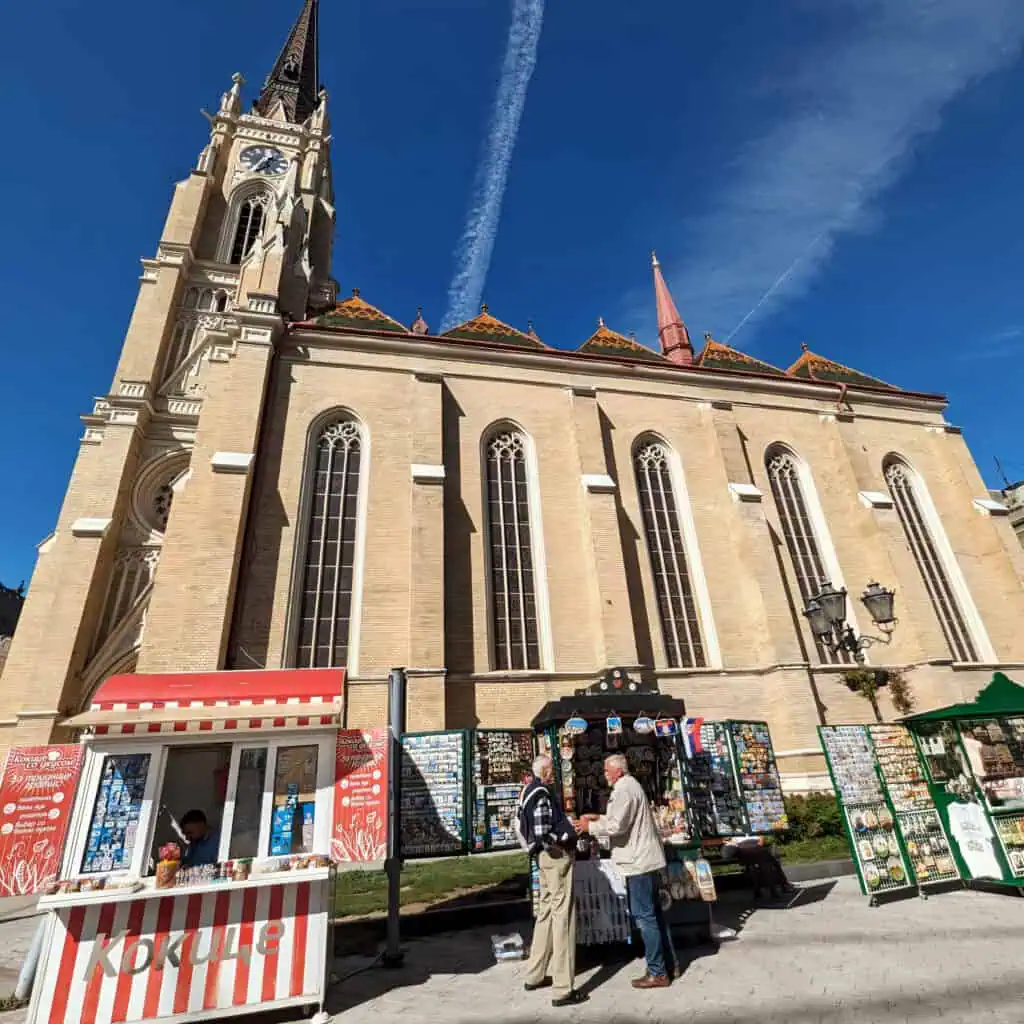
Name of Mary Church: Dominating the square, this striking neo-Gothic Catholic church, whose tall spire is visible from all over the centre.
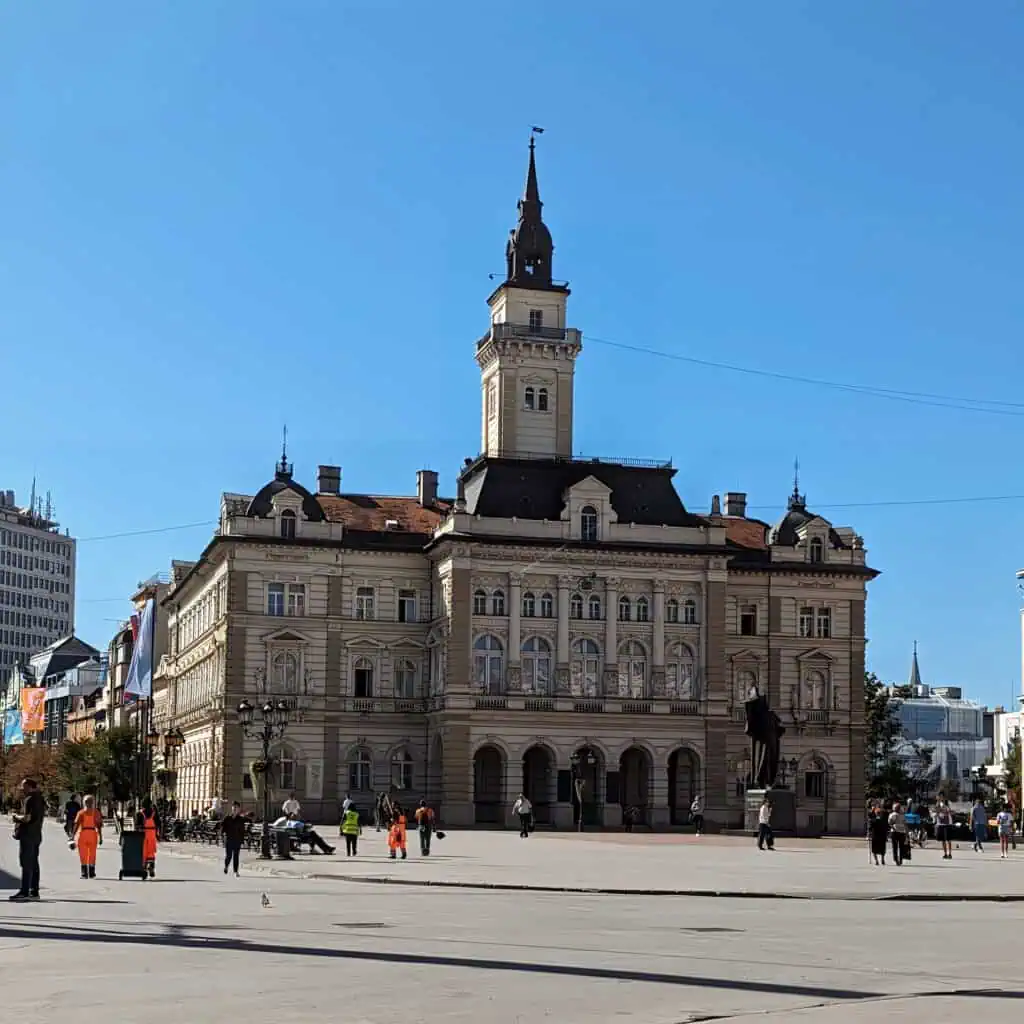
City Hall: Across the square from the Name of Mary church. is the eye-catching City Hall, built in a neo-Renaissance style and designed to impress.

Name of Mary Church in Trg Slobode (Liberty Square) City Hall in Trg Slobode (Liberty Square)
Statue of Svetozar Miletić: At the centre of Liberty Square stands a statue of the 19th-century politician and former mayor who played a key role in fighting for Serbian rights within the Austro-Hungarian Empire. He looks like he’s addressing a crowd, which is apt given Novi Sad’s long reputation as a centre of Serbian political and cultural life.
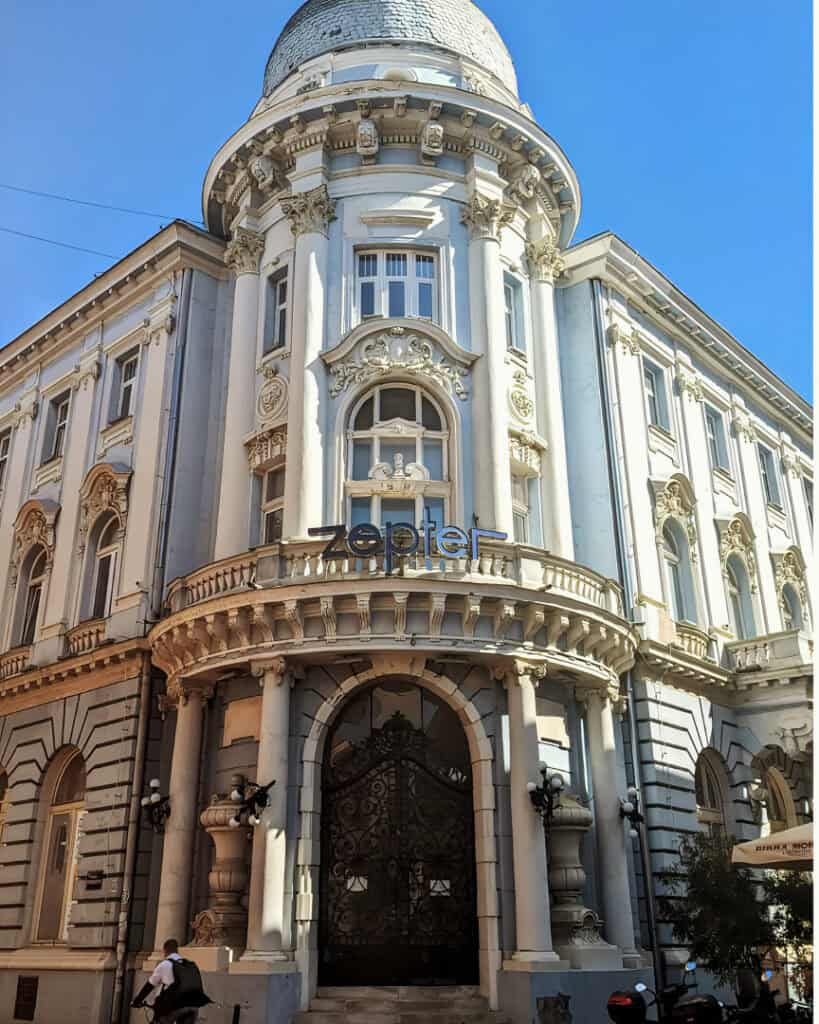
Tanurdžić Palace: And now for something completely different. Look around the edges, and you’ll spot some newer, but still elegant, buildings. Tanurdžić Palace: sounds grand and aristocratic, but is much less fancy and more modern. Built in the early 20th century as an apartment and commercial building, it reflects the Secessionist style, popular in cities across the Austro-Hungarian Empire. It’s a very different style, with clean lines, geometric shapes, curved corners, decorative details, and a more modernist than traditional aesthetic.
2 Explore the old town
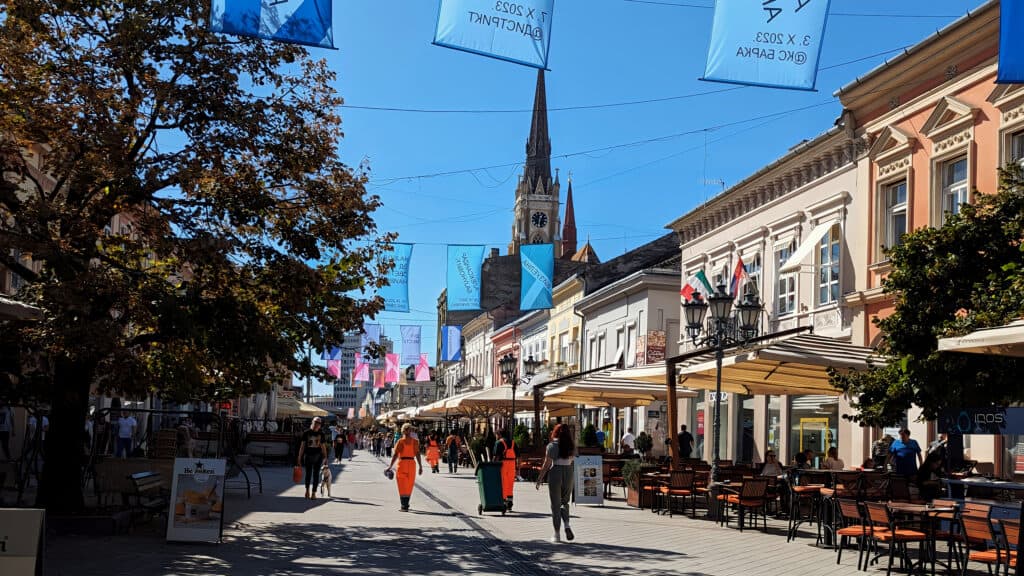
The old town is pedestrian-friendly with plenty to attract your attention as you wander through.
Zmaj Jovina is the central street. It’s a place where locals relax at the cafés and people-watch, so it’s a perfect opportunity to take your time and do the same, which is exactly what we did.
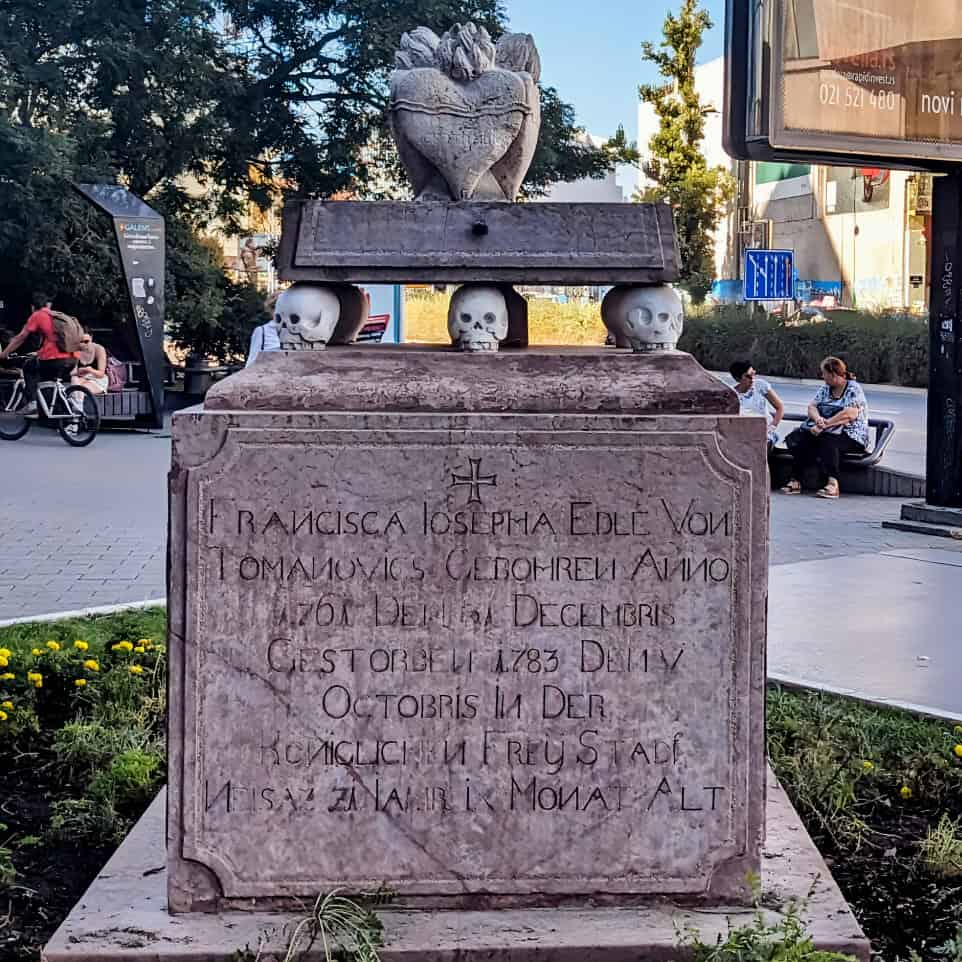
Palata Srpske banke: an ornate blue-and-white bank and a Memorial for Franciska Jozefa Plemenita Tomalović were two of the more striking things I spotted and photographed (see below). Also look out for the Bishop’s palace with its striking pink-and-gold facade and St. George’s Orthodox Cathedral in the central area near Zmaj Jovina.
I’ve included the locations on a map of city landmarks:

Palata Srpske banke in Novi Sad 
Skulls and hearts – typical late-18th-century memento mori symbolism
3 Uncover Novi Sad’s Jewish past
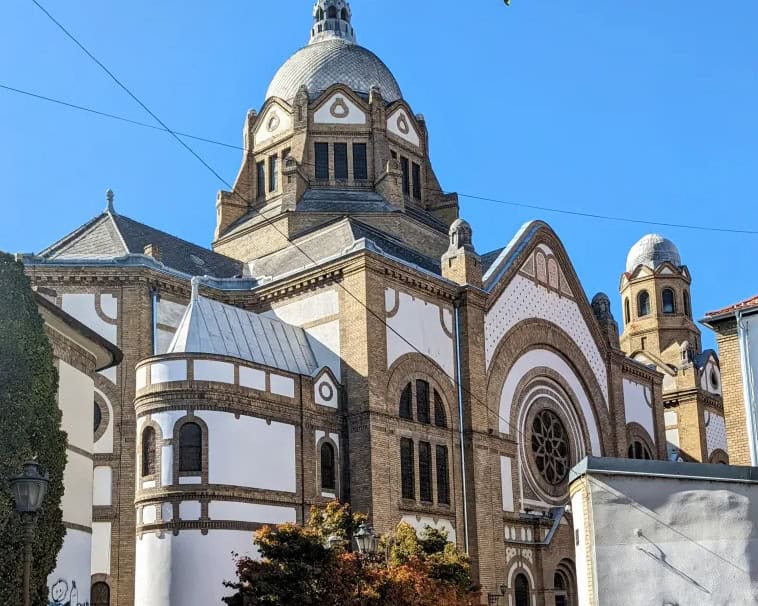
The Novi Sad Synagogue is on Jevrejska (Jewish Street in the Jewish quarter). It’s an impressive early-20th-century Art Nouveau building within a larger synagogue complex and is now primarily used as a concert hall. There may be an opportunity to go inside. It’s a powerful reminder of Novi Sad’s once-significant Jewish community.
4 Seek out Novi Sad’s hidden corners
If you’re paying attention, you’ll spot archways and hidden passageways dotted around the city centre, and you never quite know what you’re going to find when you explore them. We missed so many, but here are two.
Craft ale and pub cats in Škripa
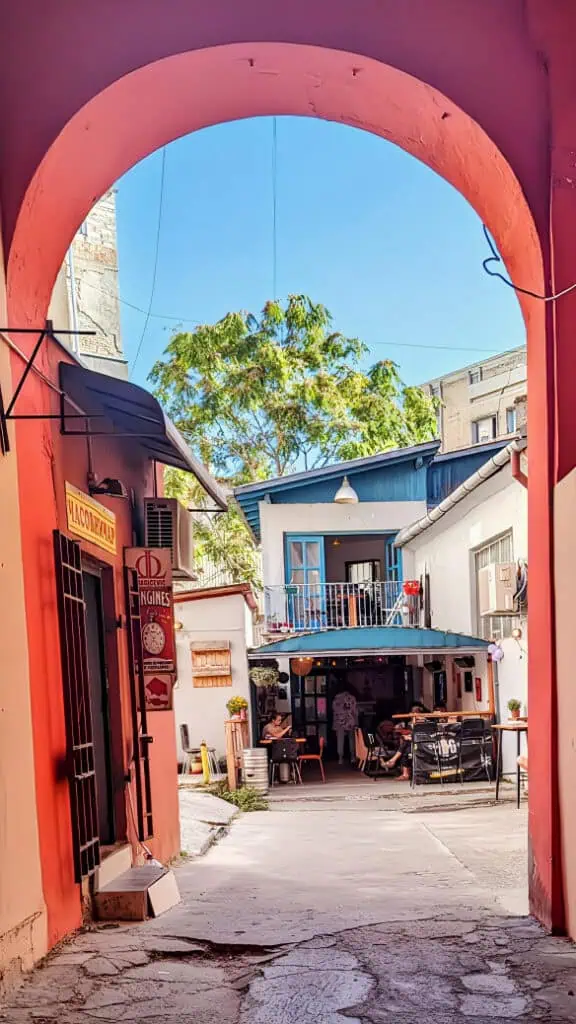
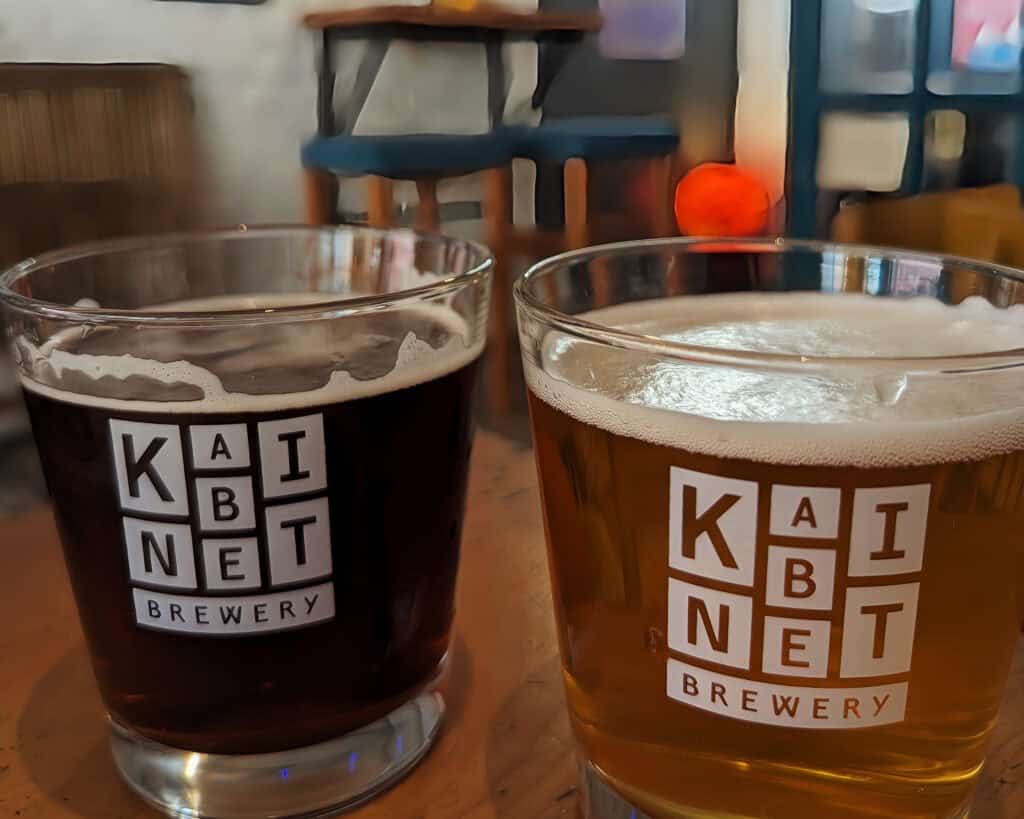
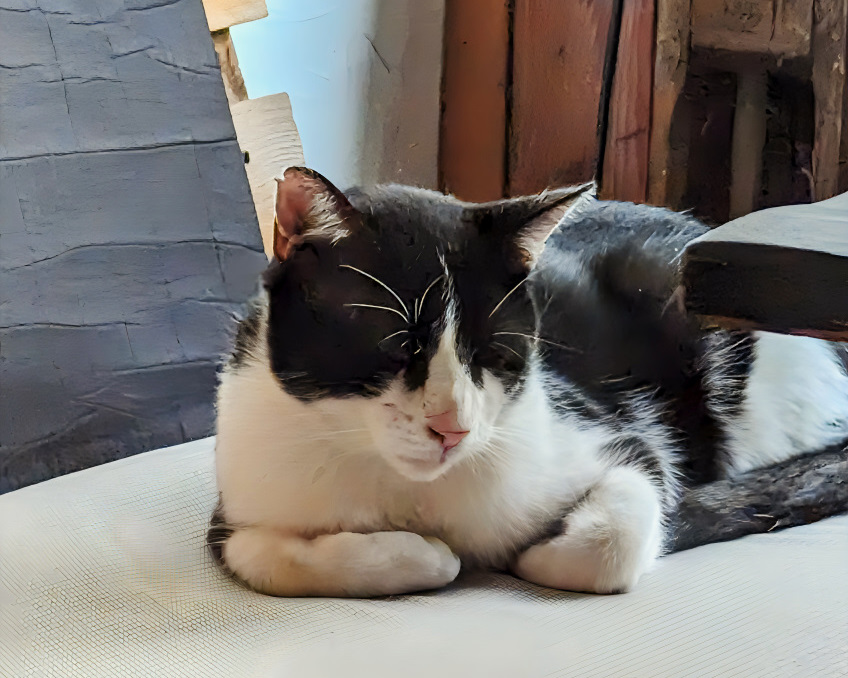
We discovered the characterful Škripa Pub, hidden behind an orange arch on Jevrejska, near the Jewish synagogue. As lovers of craft ale, it was very welcome after a pretty mammoth walk from our hotel in Belgrade to the ‘not so central’ rail station and then from Novi Sad rail station to the fortress and back. And made even better with the addition of several very friendly pub cats. What’s not to love?

Škripa Pub in Novi Sad, through a passageway near the Jewish Synagogue 
Craft ale from Kabinet brewery in Š
kripa Pub, Novi Sad
friendly pub cat I
n Škripa Pub Novi Sad-1
Wander through Futoška pijaca
At the other end of Jevrejska towards the station, amongst the shops and apartments, sits Futoška pijaca. It’s an everyday market with fruit and vegetables, local cheeses, and other fresh produce. Another ‘find’ if you’re like me and like to see what local people really eat and where they shop.
5 Dunav Park and the Museum of Vojvodina
Dunav Park is Novi Sad’s most central green space, neatly tucked between the old town and the Danube. It’s a formal yet relaxed park with landscaped paths, a small lake, and plenty of benches. Just beside it is the Museum of Vojvodina, which covers the history and culture of the wider Vojvodina region.
Things to do in Petrovaradin, Novi Sad
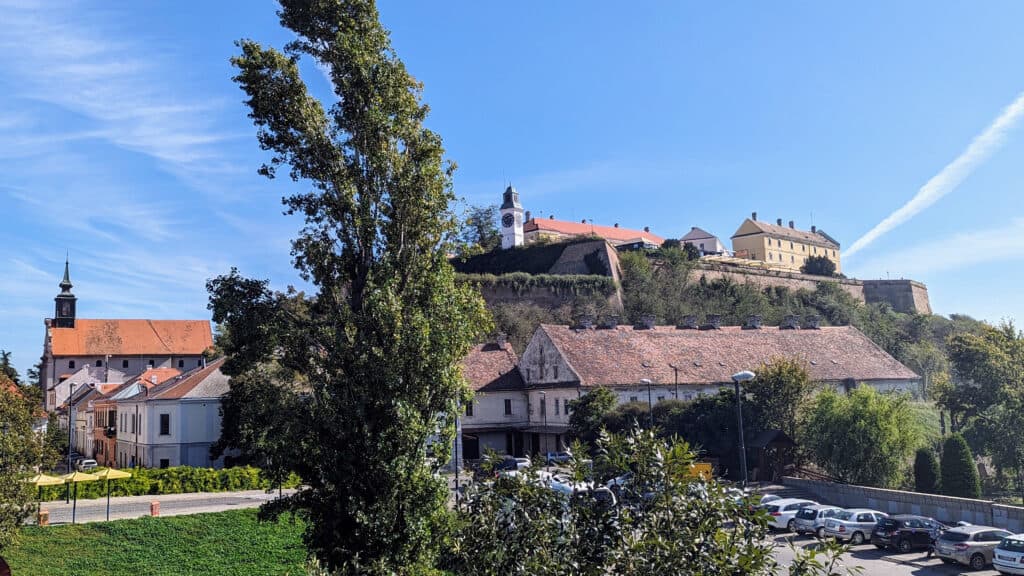
From the city centre, you can follow the river east and cross the Varadin Bridge to Petrovaradin. From here, you’ll get your first close-up view of the second most enormous fortress in Europe, dating back to the late 17th century. Initially built by the Austrians to defend against the Ottomans, it’s now more of a peaceful spot to wander and soak up the views. We found some of the main things to do in Novi Sad here.
6 Wander the streets of Petrovaradin
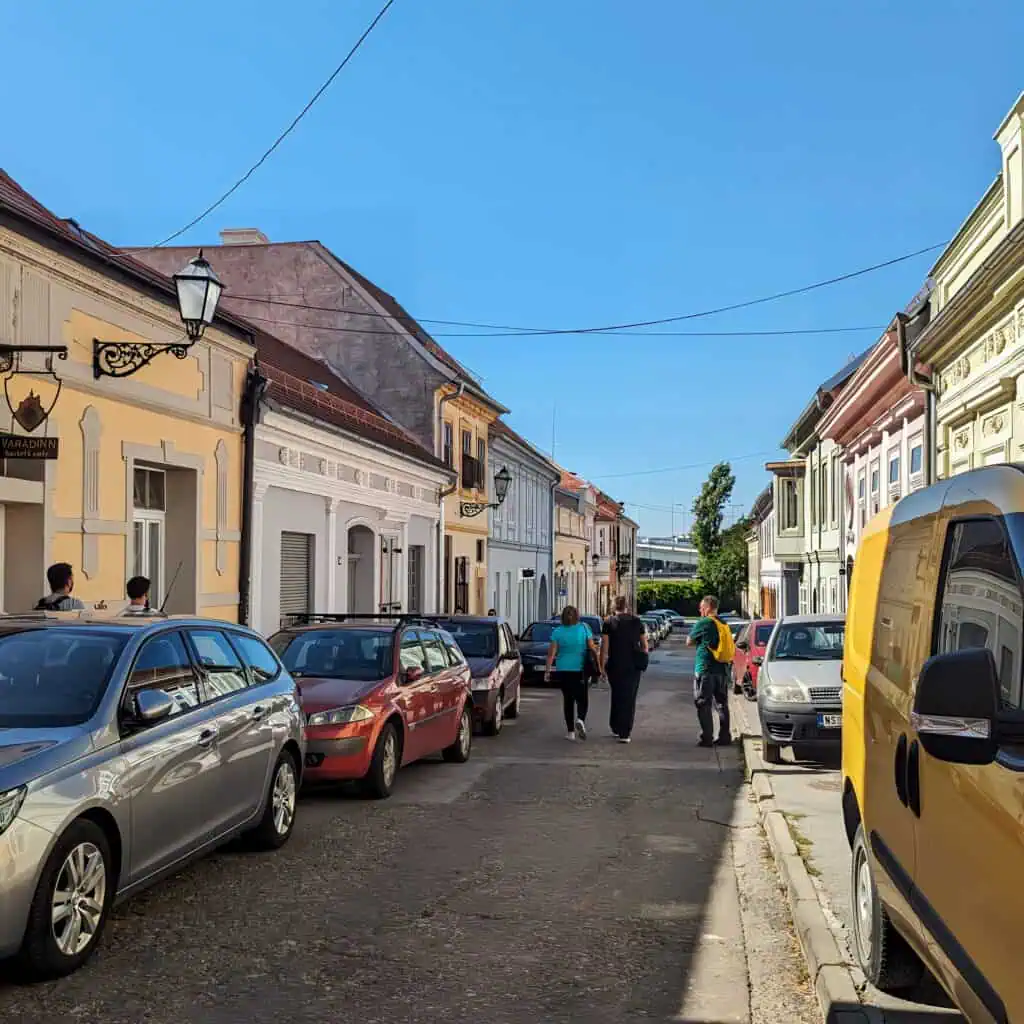
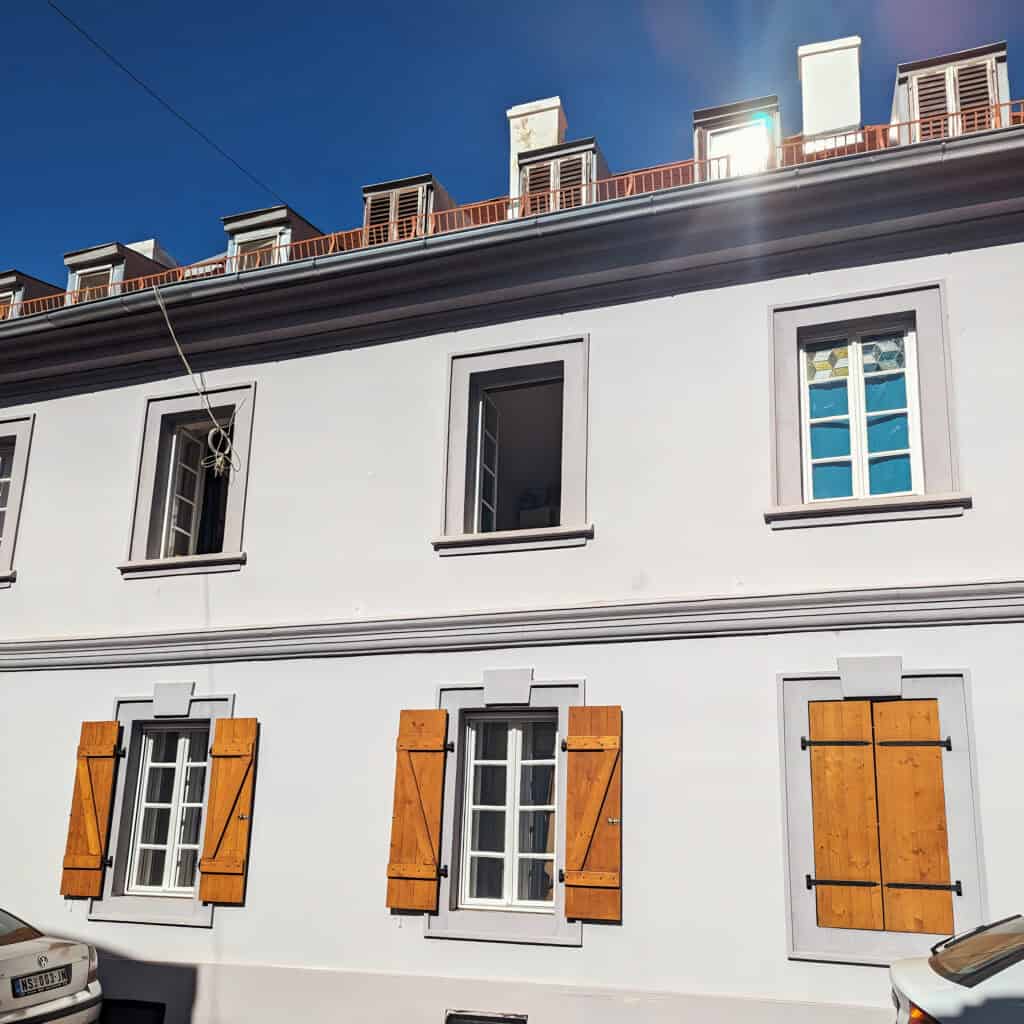
Before climbing up to the fortress, take some time at the base to explore the neighbouring streets filled with pastel coloured town houses and cute shuttered buildings. There are places to eat in these quiet lanes, too. The area feels untouched by time (well, if you pretend the cars aren’t there!).
Pastel coloured houses in the Streets around Petrovaradin shuttered houses in the streets around Petrovaradin
7 Take the winding path to the fortress
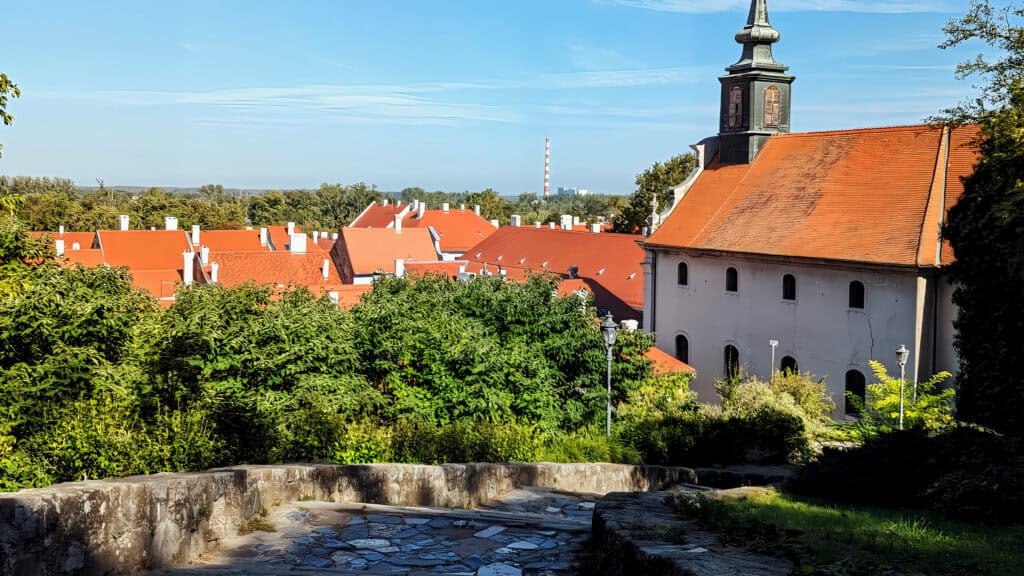
Take the cobbled path and steps up to the fortress and look back for the view over the red roofs of Petrovaradin.
8 Find the backwards clock
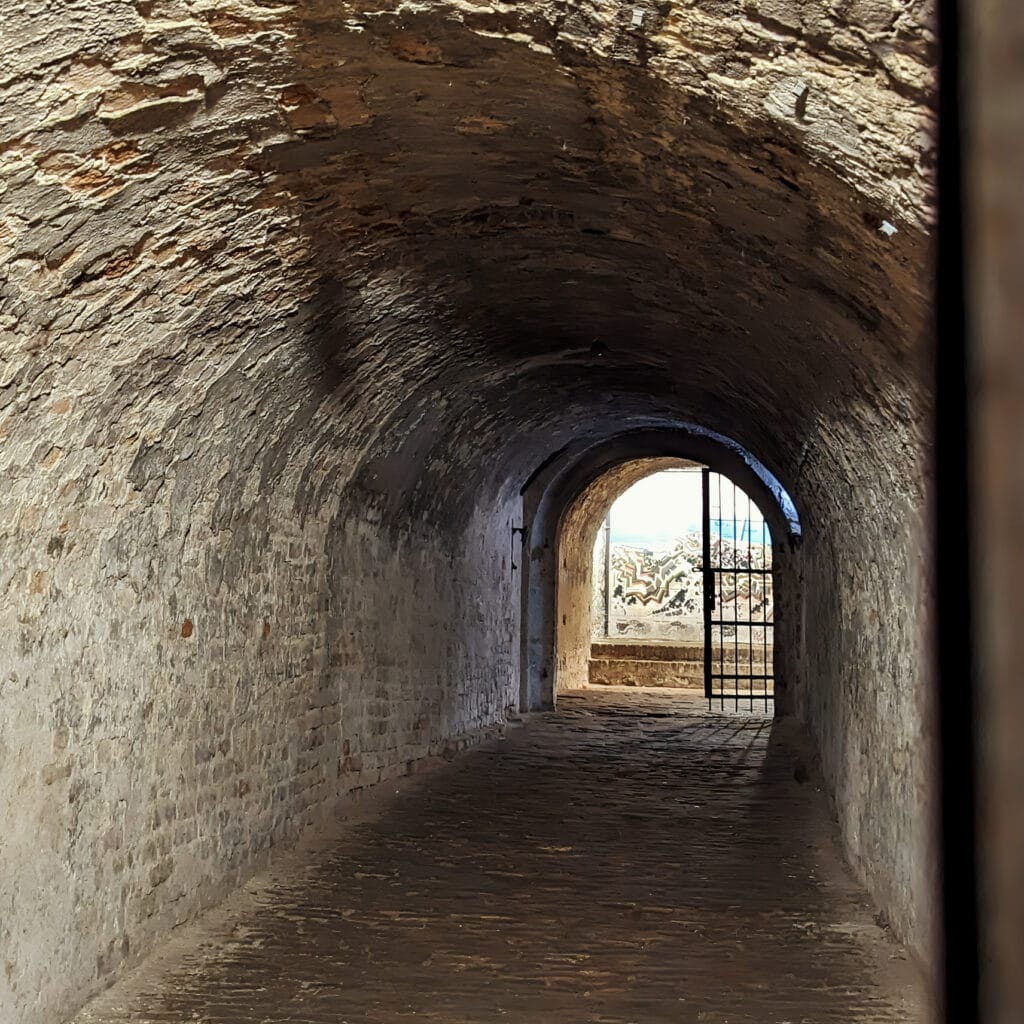
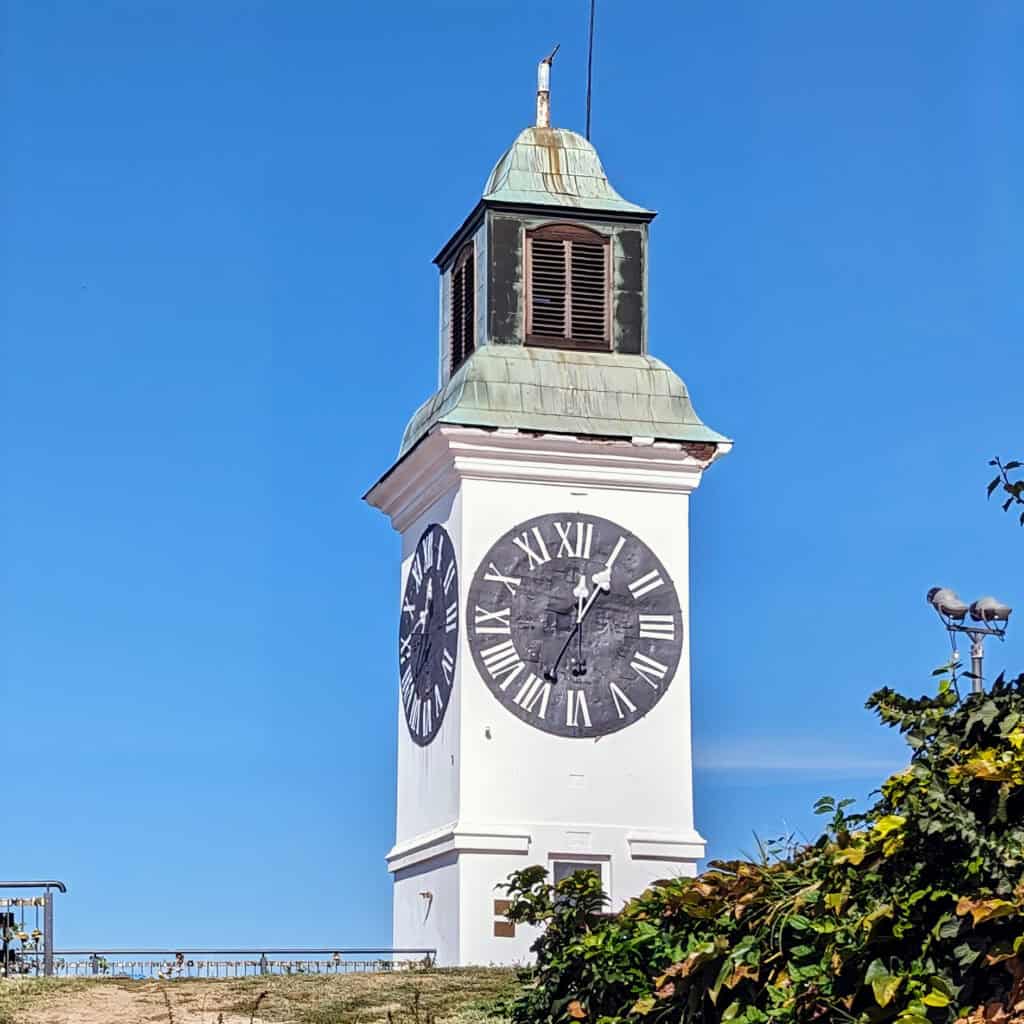
You’ll pass through a tunnel before enjoying your first views at the top. One of the first sights is also the best-known. The famous Novi Sad backwards clock is here. The large hand shows the hour, and the small one shows the minutes. Switching the hands makes it easier for passing boats on the river to read the time from a distance, apparently.
Tunnels at Novi Sad Fortress Backwards clock, Novi Sad
9 Enjoy the views from the fortress walls
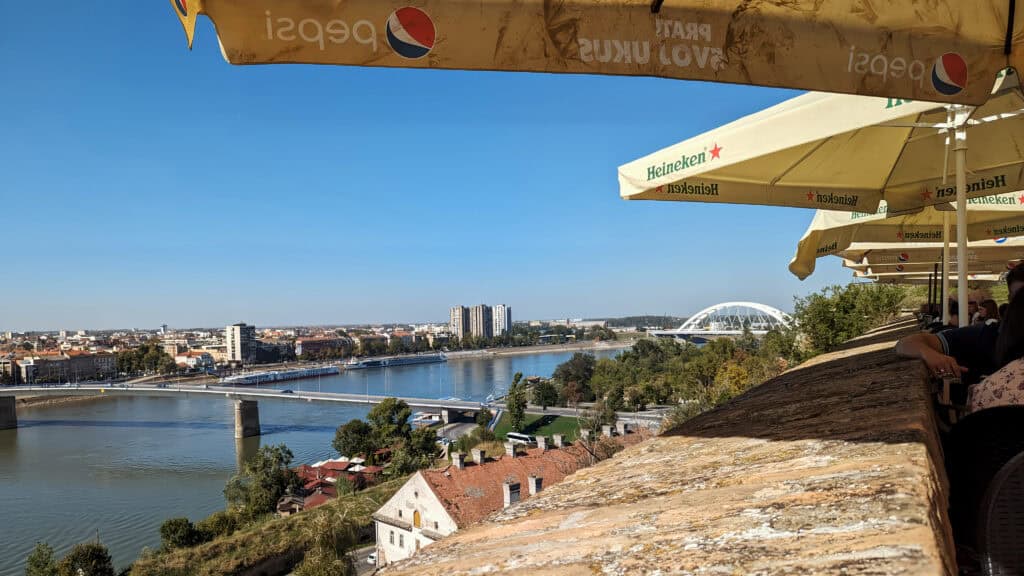
There’s a row of tables with seating and large umbrellas, the ideal spot to stop and enjoy a drink from one of the cafés, looking out over the Danube. That’s precisely what we did with glasses of homemade lemonade.
10 Explore the fortress area
There’s still more to see beyond the clock. Be sure to wander and find the bastions, barracks, and gates. There’s also a more formal restaurant as an alternative to the spot overlooking the walls with the umbrellas.
There’s more below the surface, too. The fortress has several kilometres of tunnels and catacombs, part of its original defence system. These aren’t open to exploration on your own, but guided tours are available if you plan.
11 Sunbathe at Strand Beach
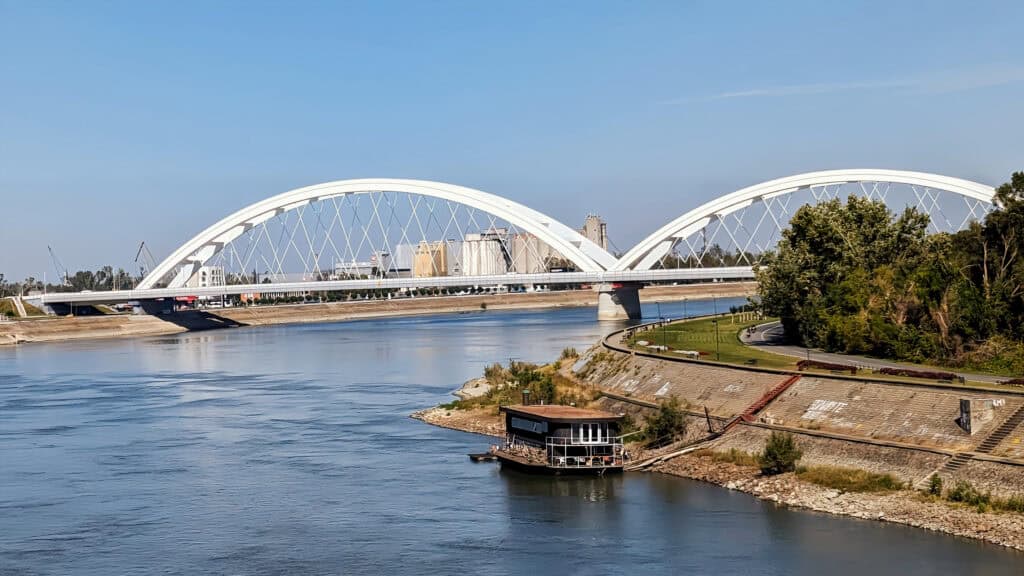
Look out for Strand beach, Novi Sad’s main city beach, stretching along the Danube below the fortress. In summer, it’s a fully fledged urban beach with umbrellas, sunbeds, cafés, and safe swimming areas, but outside the season, it’s mostly packed away. That’s how we found it. We did see a Splav, one of the city’s moored bars or restaurants, and a familiar sight along Serbian rivers.
Events at Petrovaradin Fortress
12 EXIT Music Festival
And if you’ve heard of Petrovaradin before, it might be thanks to EXIT Festival. Held here every July, EXIT is one of Europe’s most unique music festivals, with stages set up in the courtyards, tunnels, and along the fortress walls. The lineup typically features electronic, rock, indie, and hip-hop, drawing tens of thousands of festival-goers from across the Balkans and beyond.
13 Festival of Street Performers
Street performers, some from all over the world, gather in Novi Sad, at the foot of Petrovaradin, in late August. A joyful event full of colour, and the event is free.
Even if you’re not into festivals, it’s good to know about them – especially if visiting in summer when it’s best to book accommodation in advance.
So that covers some of the highlights of Novi Sad. Should you want to stay longer, there are some excellent options for exploring the province of Vojvodina beyond Novi Sad, including these daytrips:
- Fruška Gora National Park: A short bus ride from Novi Sad, Fruska Gora offers forest trails, hilltop monasteries, vineyards, and scenic viewpoints. A good choice for nature and history lovers, or anyone looking for a break from city streets. ➡️ From Belgrade or Novi Sad: Private Wine Tour in Fruska Gora
- Sremski Karlovci: On its northern border, Sremski Karlovci is a particularly attractive stop, known for its Baroque centre, wine cellars, and its role in Serbian cultural history. I’ve not been there myself, but I’ve heard it described several times as the prettiest place in Serbia. It’s also possible to book tours from Belgrade that combine it with a visit to Novi Sad. ➡️ From Novi Sad: Sremski Karlovci and Krusedol Monastery Tour
- Subotica: Further north, Subotica is one of the region’s real surprises, packed with exuberant Hungarian-influenced Art Nouveau buildings, including the city hall and synagogue, and often paired with a visit to nearby Palić Lake, a lakeside resort area. There’s a train service taking an hour from Novi Sad to Subotica.
Novi Sad doesn’t overwhelm you with must-see sights, but that’s exactly part of its charm, and I’m surprised it isn’t more popular. It’s my favourite Serbian city so far. What do you think? Does it appeal? Have you visited or are you planning a trip? Let me know in the comments. If you’d like more trip ideas from Serbia, the wider Balkans, and beyond, I do have a monthly newsletter. I’m also updating the blog with fresh content very regularly. Here are some more articles from the One Small Bag blog from Serbia: