Things to do in Monaco: The Complete Guide (Budget Tips Included)
Nestled at the eastern edge of the French Riviera, Monaco has a reputation: yachts, casinos, supercars and eye-watering prices. We arrived in February expecting to tread carefully. The plan was simple: see the spectacle, absorb the views, and retreat before our bank account noticed. Instead, we found a city engineered around gravity. Beautiful gardens, a traditional old town that felt welcoming and un-glitzy. Add to that affordable food and a surprisingly reasonable place to stay just minutes from the station.
We arrived in Monaco on a train from Genoa (Italy). I’ve covered how to get to Monaco by train, bus and ferry from both France and Italy here. We stayed one night and explored for a full day. Here’s what we learned, what we did and what we ran out of time for. I’ve added it all to a map for you to use and share.

This guide may include a few affiliate links. If you choose to buy something through one of them, I may earn a small commission (at no cost to you). Thank you for supporting One Small Bag and helping keep this resource ad-free and independent.
Things to Know Before You Go
Monaco in One Day – Quick Overview
I’ve listed the things to do in Monaco in the order we visited. Here’s an overview.
| Area | Highlights | Cost Level | Time Needed |
|---|---|---|---|
| Upper Monte Carlo | Casino Square, Hôtel de Paris, Metropole shopping centre, F1 Hairpin, Japanese Garden | Mostly free (premium if dining/shopping) | 2–3 hours |
| Larvotto & Avenue Princesse Grace | Public beach, residential Monaco, sea views | Free | 30–60 mins (season dependent) |
| Port Hercule & Harbour | Yachts, Promenade of Champions, waterfront walk | Free (high if eating harbourside) | 45–60 mins |
| Condamine | Market area, food court, local Monaco, | Budget-friendly | 30–45 mins |
| Monaco-Ville (Old Town) | Prince’s Palace, Cathedral, Oceanographic Museum, Saint-Martin Gardens | Mostly free (museum ticketed) | 1.5–3 hours |
We chose to visit Monaco-Ville at the end of the day to avoid the crowds around the palace waiting for the changing of the guard at 11.55 am. But if you want to see this, I’d suggest reversing the order.
Map of Things to do In Monaco
I’ve pinned all the highlights we found, and I’ll cover them in the article. It’s free for you to save and share.
The Vertical City (And Those Outdoor Lifts)
Monaco is dramatically vertical. That alone isn’t unusual; plenty of Mediterranean towns cling to hillsides. What is unusual is how effortlessly people move around. In Sheffield, where we live, steep hills are tackled with steely determination and sensible shoes. In Monaco, they’re tackled with infrastructure. Expect all manner of lifts: glass lifts, escalators carved into rock, pedestrian shortcuts and tunnels linking levels above and below. It feels as if there’s a second city layered inside the first, with tunnels and lifts.
Nobody told me this when I was researching Monaco, so I’m telling you now: look for the lifts and thank me later.

Monaco station deserves a mention here. It’s a warren; think Bank Underground in London, but more glamorous. You can exit at the harbour level, higher up near residential streets, or at several points in between.
We chose the first exit by the harbour, which was the wrong choice for dropping our bags off at our hotel at the top of Monaco. If we’d picked the station exit at the top, and not at the harbour, we would have been at our hotel in 10 minutes, with no climbing.

Climbing up the hill – the traditional 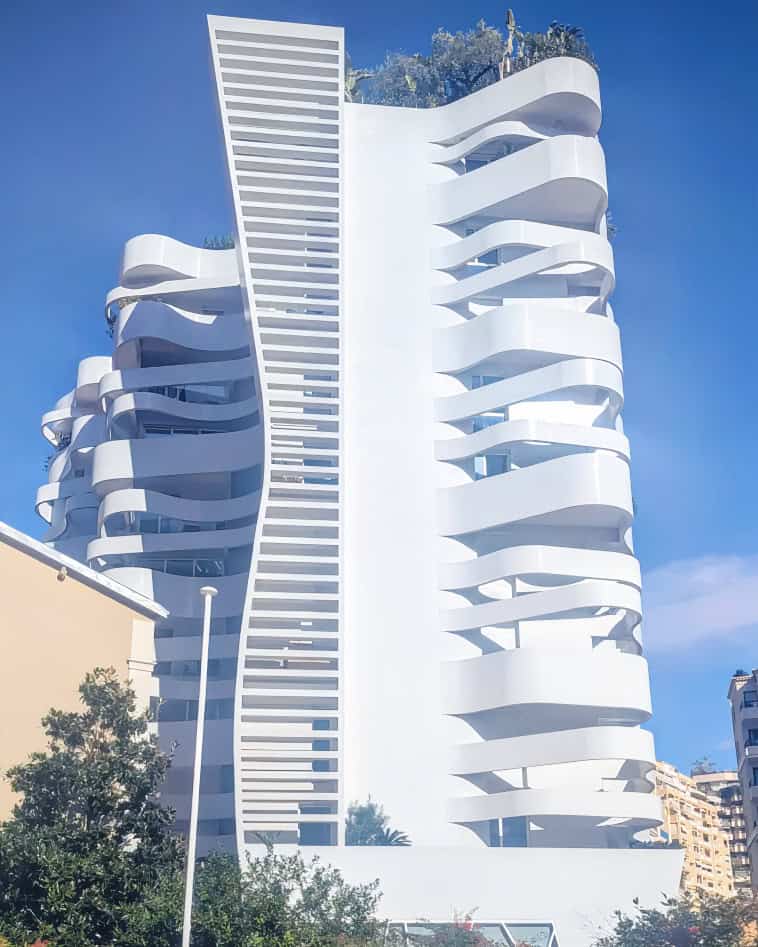
Climbing up the hill – the new
Still, the views on the way up were exactly what we’d come for, yachts below, hills filled with swanky pads rising behind, and that sharp Mediterranean light bouncing off everything.
Upper Monte Carlo is the polished, cinematic version we tend to hear about. Casino Square, grand hotels, opera, luxury cars, boutiques and the famous Formula 1 hairpin. It’s a compact area and easy to explore on foot.

1 Place du Casino and Casino de Monte-Carlo

Let’s start with Monaco’s main event, the Place du Casino, and the Monte Carlo Casino itself. During our visit (February 2026), there was significant scaffolding on the exterior, which is expected to remain for about 4 months. It didn’t affect access or events inside, or the ambience in the Place du Casino as a whole.
We did the typical tourist thing: photos outside, including the smart cars, and a visit to the glitzy atrium inside, which is free. Entry to the gaming rooms costs extra, but you can see plenty without paying. Enough to get a sense of the opulence.
There’s a clearly displayed dress code that varies by time of day. We would have ‘passed’ during the day. Evening would have been more of a negotiation. Something else to note: photos are not allowed in the gaming rooms. Worth knowing in case you were planning to pay for access to take pictures.

Time needed: 20–40 minutes (longer if you enjoy people-watching)
Cost: Free to enter lobby areas; gaming rooms ticketed with strict entry requirements and dress code.
Worth it? Yes – even if you don’t gamble. There’s plenty of spectacle outside in the Place du Casino and the atrium.
2 Hotel de Paris
You can’t really talk about Casino Square without mentioning the Hôtel de Paris Monte-Carlo – arguably the crown jewel of the square and a symbol of Monaco’s reputation for luxury. The building itself is gorgeous, and the terrace overlooking the square and supercar choreography is one of those “destination views” that’s worth photographing whether you stay or not.
Inside, there is top-tier high-end dining, including Le Louis XV – Alain Ducasse restaurant (Michelin 3 star) and the rooftop Le Grill, with a retractable roof. We didn’t stay, obviously – that’s a separate financial decision in Monaco. But we did wander past the terrace, admire the scene, and scan the drinks menu for the price of a pint of beer.
Spoiler: the price made our eyes widen almost as much as the cars outside.

Time needed: 5-10 minutes, more if you plan to go inside
Cost: Drinks and meals are premium (expect noticeably above average Riviera beer pricing). > €1,000 to stay per night
Worth it? Yes – for the view and atmosphere; optional for actual consumption.
3 Opéra de Monte-Carlo
The opera house sits within the same complex as the casino, and the exterior alone is worth a look. I really noticed the building for its ornate exterior.
Whenever possible, we like to attend a concert or event when visiting a place. It gives you a completely different perspective. If you’re organised and book early, this could be a truly memorable Monaco experience.
You can’t just wander in without a ticket for a performance. We couldn’t secure one at a price we were happy with that evening, but starting prices ranged from around €50, depending on the event. Less than you might expect for a world-class performance in such an ornate setting.

Time needed: Exterior 5-10 minutes; performance 2–3 hours
Cost: From around €50, depending on the event.
Worth it? Yes – if you genuinely enjoy live performances, book well ahead, especially for the lower prices
4 Metropole Shopping Centre

If you want to see Monaco’s wealth in concentrated form, walk through the Métropole Shopping Centre. I’m not sure I saw a single price, so that told me everything I needed to know!
We loved exploring the marble floors, polished storefronts, and immaculate lighting, and finding Valentine’s presents (joking!), but felt no inclination to participate. It’s a spectacle in its own right.
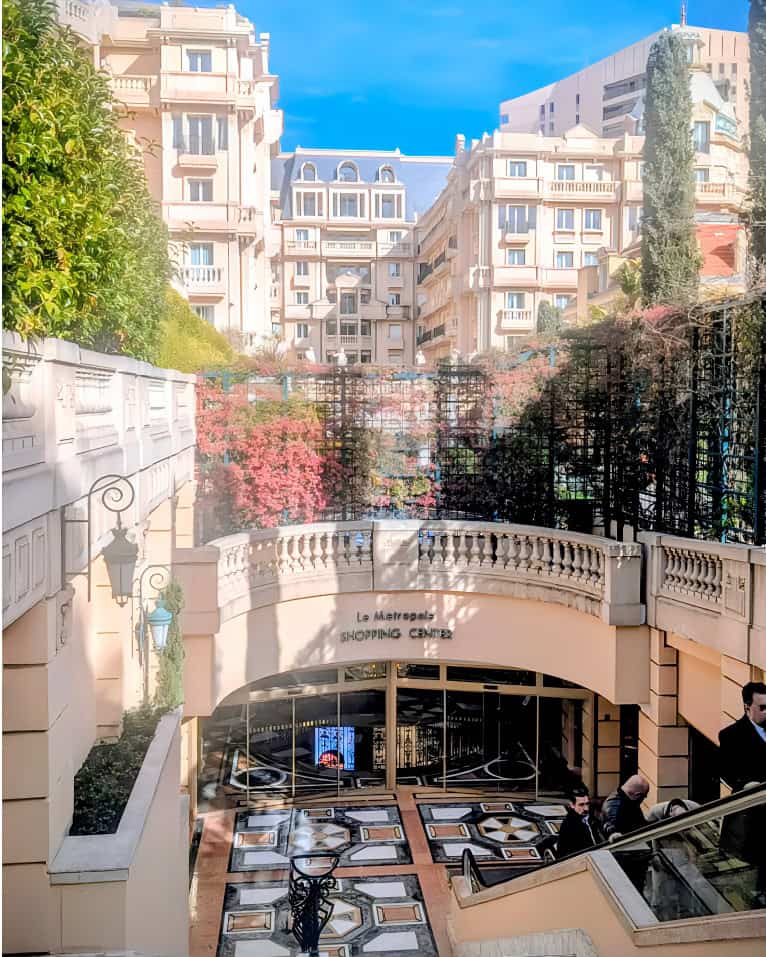

Time needed: 15–30 minutes
Cost: Free to browse (participation may be financially ambitious)
Worth it? Interesting to see – not essential unless you enjoy luxury retail theatre.
5 Jardins de la Petite Afrique & Views of the F1 Circuit
Just beyond Casino Square, the Jardins de la Petite Afrique are a beautiful space between the glamour, shopping and traffic. From here, you can start to spot parts of the Formula 1 circuit weaving through the streets below.
We walked the famous Fairmont hairpin near the Fairmont Hotel, one of the slowest and most photographed corners in F1. Without race cars, it’s slightly underwhelming. Just a tight bend in an otherwise ordinary road. And that’s what makes it interesting…
For most of the year, this is just a functioning city. Then, once a year, it becomes the centre of global motorsport. What struck me more was how the circuit weaves directly beneath the Fairmont Monte Carlo hotel, its rooftop pool curving above the road like a private balcony over motorsport history.

Time needed: 20–40 minutes, depending on how much of the circuit you walk
Cost: Free
Worth it? Yes. Though the famous hairpin is less glamorous at street level without race cars.
6 Avenue Princess Grace and Princess Grace Japanese Garden
Tucked between the sea and some of the most expensive real estate in Europe sits the Princess Grace Japanese Garden. It’s a small but beautifully maintained space, created as a gesture of friendship between Monaco and Japan. What struck me just as much, though, was the setting.
The garden runs alongside Avenue Princesse Grace, frequently described as one of the most expensive streets in the world. Behind discreet façades are apartments that sell for eye-watering sums, yet at street level the scene is almost disarmingly normal: parked scooters, joggers, residents walking dogs.
If you have time, walk through the gardens and along the avenue.

Time needed: 20–30 minutes
Cost: Free
Worth it? Yes — especially if you want a quieter pause after Casino Square.
7 Larvotto Beach
It’s slightly odd that Monaco’s public beach isn’t mentioned more often, perhaps because it doesn’t fit the yacht-and-casino stereotype? But it’s one of the easiest ways to experience the principality without spending anything at all.
Larvotto Beach lies just beyond the Princess Grace Japanese garden. The sand is largely artificial, the water beautifully clear. This time, we skipped the beach; our stomachs were making it clear we had other lunch plans. February isn’t prime sunbathing season anyway. But if you’re visiting in warmer months, this is an easy add-on, especially if you’re looking for a stop between Upper Monte Carlo and the harbour, or if you’re travelling with children.
I first saw this stretch of coast on a student Interrail trip decades ago and learned the hard way how strong the Mediterranean sun can be. I now embrace being pale and mysterious. While the beach has been redeveloped and modernized since then, it remains one of the easiest ways to experience Monaco without spending anything at all.
Time needed: 30 minutes to half a day (season dependent)
Cost: Free public access
Worth it? Yes, in warm weather; less compelling in winter

Monaco’s harbour, Port Hercule, looks simple on a map. In reality, it’s slightly awkward to access on foot depending on which level you’re on. Coming down from Larvotto and the eastern side, we initially found ourselves blocked by the imposing façade of the Monaco Yacht Club. It feels very private. Very exclusive. Not especially pedestrian-friendly.
There’s a pedestrian route via the Larvotto tunnel area that allows you to pass beneath the road and emerge closer to the main harbour promenade. It’s well signposted once you know you’re looking for it, but it’s not intuitive on first approach.
There’s also the Promenade of Champions, complete with Formula 1 driver footprints and statues. That’s roughly the area you’re aiming for if you want to reach the heart of Port Hercule on foot. Once through, the harbour opens up properly.
8 Port Hercule

This is another sport for the wealthy, and you realize you’re in the playground of the millionaires and billionaires. Rows of super yachts, immaculate docks and harbourside restaurants with prices to match the views.
We didn’t feel the need to participate to appreciate the scale. Walking the length of the harbour is enough to understand why Monaco’s reputation persists. But here’s the thing. You can do all of this for free. It costs nothing to walk the promenade. Nothing to admire the boats. Nothing to absorb the spectacle. And as we walked southwards, the feel became less extraordinary and more ordinary. The best views of Port Hercule are honestly from above in the old ville.
While we were hungry, we reserved our lunch stop in the Condamine area for our next stop.
Time needed: 30–60 minutes, depending on how far you wander
Cost: Free (unless you stop for lunch at yacht-adjacent pricing)
Worth it? Yes — for context and contrast
9 The Prince’s Car Collection
Housed in a large exhibition space near Port Hercule, the Prince’s Car Collection displays around 100 historic and modern vehicles owned by the Grimaldi family. Expect classic Rolls-Royces, vintage racing cars and Monaco Grand Prix memorabilia. It’s surprisingly substantial for a small principality and often appears on “top things to do” lists for Monaco, particularly for car enthusiasts.
Time needed: 45–60 minutes
Cost: Ticketed (moderate museum pricing)
Worth it? Yes, if you enjoy classic cars or motorsport history; otherwise, optional. We skipped as the sun was shining
10 Sainte-Dévote Chapel
Set back from the harbour, Sainte-Dévote Chapel marks one of Monaco’s most important religious sites. Dedicated to Saint Devota, the principality’s patron saint, it’s modest in scale but historically significant. It’s often included in walking itineraries because of its location near the train station and Port Hercule, making it an easy addition if you’re passing through the area.
11 Marché de la Condamine

From the harbour, we climbed towards Condamine, the more everyday side of Monaco. We were headed for Marché de la Condamine, which is currently undergoing renovation. When we arrived, it looked as though the market hall might have been closed entirely. Stalls are currently located outside while work continues inside. It would have been easy to turn back. I’m glad we didn’t.
We found market stalls selling fresh produce and everyday items, along with food stalls and food trucks. While there were a few tourists, the clientele was predominantly office workers, many of whom commute into Monaco on the train from neighbouring Italy and France.
We opted for Maison des Pâtes. This delivered a generous portion of fresh pasta from around €10, from a ‘build your own’ ,menu. Simple and excellent, but entirely at odds with the “Monaco will bankrupt you” narrative. Coffee prices were normal. Beer was normal. Supermarket dinner later that evening was normal.
We actually spent less on food than we had in Italy the day before. Monaco isn’t cheap, but it doesn’t have to be outrageously expensive either.


Time needed: 30–45 minutes (longer if eating)
Cost: Market pricing; pasta from around €9-€10
Worth it? Yes, but it’s not fancy. This is the real Monaco.

Perched on “Le Rocher” (the Rock), Monaco-Ville rises above Port Hercule and feels like a different country entirely. From Condamine, it’s a steep but manageable climb on foot. We walked, but there are buses too. They run every few minutes from Place d’Armes up to the hill. The service is quick, frequent and inexpensive.
But one of the best things about walking up the hill is the opportunity to stop and take photos. The views over the harbour from here are excellent, and cost nothing.
12 Prince’s Palace & Palace Square
The last part takes you through a tunnel before arriving in Palace Square, which is one of the most visited attractions in Monaco. The Prince’s Palace dominates the square and is the home of the Grimaldi family, the ruling family of Monaco, since 1297.

It’s possible to tour the State Apartments during the open season (typically reopening at the end of March). The palace is closed in winter. So for us, visiting in February, we admired it from the outside.
The Changing of the Guard takes place at 11:55 sharp. The soldiers wear white uniforms in summer, darker ones in winter. It’s one of the principality’s rituals and draws a crowd. We skipped the 11:55 changing of the guard and visited later instead. It saved jostling for position in the crowds. But if you’re a completist, reverse the order, start your day in Monaco-Ville and end in Upper Monaco, so you’re at the palace earlier in the day, in time for the daily spectacle.
Opposite the Prince’s Palace, there are more decorative buildings, pastel tones, ornate window and wrought-iron balconies. These are official civic buildings in Monaco, set against the high-rises of Monte Carlo and the mountains in the background.

Time needed: 20–45 minutes (longer if touring inside in season)
Cost: Exterior free; palace tours ticketed and seasonal
Worth it? Yes – for the setting and views; interior is worthwhile if open, and you enjoy royal history
13 Wandering the Old Town Streets
This was one of the most pleasant surprises. Monaco-Ville doesn’t feel glitzy. It feels Mediterranean. Orange and yellow façades, narrow cobbled streets, small cafés and souvenir stalls, more reminiscent of nearby Menton than the hyper-polished casino district.
We stopped at La Pampa for coffee and a drink. Bruschetta appeared alongside it, unannounced and free, and it didn’t feel especially touristy.
There’s also the Old Monaco Museum here if you’re interested in local history, but on one of the only good-weather days of our trip, sitting outside felt like the right choice.


Time needed: 30–60 minutes (longer if you linger)
Cost: Free to wander
Worth it? Yes — this is Monaco at its most human
14 Cathedral of Our Lady Immaculate
The Cathedral of Our Lady Immaculate is a short walk from the palace square and well worth stepping inside.
The Roman-Byzantine façade is striking, but the interior is a little more restrained. It’s also the burial place of Princess Grace (Grace Kelly). Entry is free, and photography is permitted respectfully.


Time needed: 15–20 minutes
Cost: Free
Worth it? Yes, it doesn’t take long to see inside
15 Musée Océanographique de Monaco
The Oceanographic Museum is one of Monaco’s most impressive buildings, perched dramatically on the cliff edge overlooking the sea.
Founded in 1910 by Prince Albert I, it combines marine science exhibits with large aquariums and a rooftop terrace offering panoramic views. It’s substantial and not a quick in-and-out museum.
We didn’t go inside on this visit, but even from the exterior, it’s worth walking around for the architecture and for the stunning cliffside setting. If you’re travelling with children or have a strong interest in marine life, this would likely be Monaco’s standout paid attraction.

Time needed: 1.5–3 hours
Cost: Ticketed (mid-range attraction pricing)
Worth it? Yes — if you enjoy aquariums and marine science; optional if time is tight
16 Jardins Saint-Martin & Princess Grace Statue
The Jardins Saint-Martin wrap around the cliff edge and provide some of the best views in Monaco. Palm trees, winding paths and dramatic drops to the sea below. It’s a scenic walk that connects naturally to the Oceanographic Museum. The Princess Grace statue is here, and the viewpoints over the Mediterranean and towards Fontvieille are excellent.


Time needed: 20–40 minutes
Cost: Free
Worth it? Yes — one of the most photogenic parts of Monaco
17 Théâtre du Fort Antoine & Panoramic Views
This is the view of the Quai Rainier III, and you can walk to the end for ocean views. Tucked behind, just out of sight, is the open-air Théâtre du Fort Antoine. It’s a restored fortress-turned-performance space, used for summer productions and cultural events.

Time needed: 15–20 minutes
Cost: Free (ticketed during performances)
Worth it? Yes to the views, and as far as the Théâtre du Fort Antoine
These are the places our legs didn’t make it to in a day, as they were a little more out of the way.
18 Jardin Exotique de Monaco
It’s slightly removed from the main Casino–Harbour–Old Town triangle, so you need to plan your visit rather than stumble upon it. But if you enjoy gardens with scale and perspective, this is arguably Monaco’s most striking green space. A botanical garden clinging to the steep rock with panoramic views over Monaco and the Mediterranean. The focus here is on succulents and cacti from around the world, many planted directly into the limestone cliffs
A little further south of Monaco Ville, the more residential area of Fontvieille might be a less tourist-heavy neighbourhood, but it still has several visitor attractions
19 Princess Grace Rose Garden
A peaceful public park dedicated to Grace Kelly. Hundreds of rose varieties bloom here in season, laid out in neat geometric beds with views towards the sea and the surrounding hills.
20 Monaco Museum of Stamps and Coins
Monaco has issued its own postage stamps and currency for generations, and this compact museum explores that history. Exhibits include rare stamps, historic coins, and displays that explain how Monaco’s sovereignty is reflected in its postal and monetary systems. It’s niche, but potentially interesting, especially if you arrive in Monaco on a rainy day.
How to Get to Monaco from France and Italy
Monaco has no airport, so unless you’re arriving by luxury yacht or the seasonal ferry from Nice, your route will be overland.
Most visitors arrive by train or bus from Nice to the west or from Italy via Ventimiglia. Services are frequent, inexpensive and easy to use, making Monaco ideal for a day trip or overland stop. If driving, use one of the large underground car parks; street parking is limited, and Monaco is busy, especially in summer.
Public Transport Options
| Route | Transport | Time | Frequency | Cost (approx.) | Notes |
|---|---|---|---|---|---|
| Nice → Monaco | Regional train | 18–25 mins | Every 10–20 mins | €5.90 | Fastest option. No seat reservations. Buy before boarding and validate paper tickets. |
| Menton → Monaco | Regional train | 12 mins | Up to every 10 mins | ~€3–€4 | Very quick hop along the coast. |
| Nice → Monaco | Bus 600 | ~50 mins | Every 15–30 mins | €2.10–€2.50 | Scenic coastal route via Villefranche, Beaulieu, Eze & Cap-d’Ail. Slower but excellent views. |
| Genoa → Monaco | Train (usually changes at Ventimiglia) | ~2.5–3 hrs | Hourly-ish | Varies (€15–€25 typical) | Easy cross-border journey. No border checks. Good coastal scenery. |
A Few Practical Notes
- Trains between Nice and Monaco are run by regional operators (SNCF/Zou). Tickets are interchangeable and don’t require reservations.
- Monaco station is underground and vertical with multiple exits. Expect escalators and lifts rather than a quaint arrival.
- The bus is slower but far cheaper and genuinely scenic. Ideal if you’re not in a rush.
- From Italy, most routes require a simple change at Ventimiglia. It’s straightforward and well-signposted.
Monaco – Frequently Asked Questions
How Expensive is Monaco?
We spent €95 on a luxury apartment for the night, at prices similar to those in neighbouring Menton. We spent €10 each on lunch and another €12 each on coffee, beer, supermarket supper, and sundries. Of course, you can spend considerably more, and it is known for its luxury and high prices.
Getting Around Monaco
Buses are frequent and inexpensive. We took one back uphill to the hotel rather than lift-hopping at the end of the day. There is a hop-on-hop-off bus too.
Where to stay in Monaco
We stayed at Aparthotel Adagio Monte Cristo. Technically, we were on the French side of the road, with Monaco on one side and France on the other. Ten minutes from Monaco station (if you use the correct exit).
We paid €95 in February and were upgraded to a spacious, luxury one-bedroom apartment. An excellent base, and definitely a better decision than rushing through as a day trip.
How Long Do You Need in Monaco?
One full day of exploring. One night stay. If you are visiting during Grand Prix season or spending time at the casinos, museums, or the beach, you may want to spend longer.
Monaco is small. That much is obvious. What isn’t obvious, until you walk it, is how much it changes in character within such a compact footprint. In a single day, you can enjoy the polished Casino Square and Formula 1 corners, through yacht-lined harbour promenades, into a working market neighbourhood, and up again to a traditional old town perched above the sea. While it’s wealthy, in places, it felt more normal than the headlines suggest.
We spent one full day exploring and one night staying nearby, and that felt right. You could easily extend your time if you want to tour the State Apartments, spend several hours in the Oceanographic Museum or attend an evening performance at the opera. But you don’t need multiple days to understand or enjoy Monaco. What you do need is a plan and an awareness that this is a vertical city best tackled logically. Use the lifts strategically, and don’t overlook the old town.
Have you been to Monaco or any other European micronations? Are you planning a trip? Let me know in the comments.
If you found this useful and would like to receive more articles like this, I have a monthly newsletter where I share ideas for European holidays, often to places people might not have thought of. I’d love you to join the list.
Thank you for reading my little blog.




The affordability of Monaco surprised me, too.
That gorgeous, unfussy pasta for 10 euros, the generosity of the free snacks with a beer, free entry to the sculpture gardens and lobby of the casino, cheap buses and free elevators etc.
That hotel we stayed in was 2 minutes walk from a French carrefour mini-supermarket with quality food at UK prices. You could self-cater very well.
Yes! Of course there are luxury shops, cars, yachts, hotels and casinos, but behind the shiny veneer life goes on as normal! I liked that about Monaco.