Chisinau to Bucharest Sleeper Train: Europe’s most unusual rail journey
A Practical Guide to Europe’s Best Value Sleeper Train between Moldova and Romania
Ever wondered what travelling on a sleeper train in Europe is like? I’ve travelled on a few, and let me tell you, this is the one that has surprised and enchanted me the most! Forget those clickbait YouTube titles talking about the worst train in Europe. I’ll take you through everything you need to know about the Chisinau-to-Bucharest sleeper, a unique journey connecting two of Europe’s most underrated capitals.
This guide may include a few affiliate links. If you choose to buy something through one of them, I may earn a small commission (at no cost to you). Thank you for supporting One Small Bag.
So first up, here’s a rare photo of me, Chris, author of One Small Bag, after a night on the Chisinau-Bucharest sleeper train. I brought my husband, Martin, on this trip; he’s just getting on the train in the photo. So now you know who we are; the rest of the post will be just pictures and content. This post is all about the journey and not about us!

Me, arriving in Bucharest after a night on the sleeper train from Chisinau 
Boarding the sleeper train at Chisinau Station
So first, some background to this very special train. The night train has been running between Bucharest and Chișinău for decades. Originally, it linked Bulgaria with the USSR, passing through Romania. Now it’s called the Prietenia (friendship) line to reflect the close relationship between Moldova and Romania, the only two countries it currently serves.
One claim to fame for the Prietenia is the wheel change at Ungheni, on the border between Romania and Moldova. A throwback to when Moldova was part of the USSR, when Soviet rails were a wider gauge than European ones. It’s also a very famous train in Moldova and the subject of the country’s 2022 folk-punk entry for the Eurovision Song Contest. Warning here, ‘Trenuletul’ could be your next ‘earworm’!
You may also be interested in
- Best Things to Do in Chișinău: A Complete Guide to Europe’s Least Visited Capital City
- Transnistria Day Trip from Chișinău – Worth It?
- 23 Best Things to Do in Bucharest – and One I’d Avoid Right Now
- Best Day Trips from Bucharest: Castles, Mountains, the Black Sea, and Cross-Border Adventures
- Bucharest to Transylvania: A Point-to-Point Trip by Public Transport
Is It Worth Travelling on the Chisinau – Bucharest Train?
At 14 hours, it’s not the quickest route between the two countries, but travelling while you sleep is such an efficient way to travel, and I love doing it if I can. It also saves on a night’s accommodation. We also couldn’t pass up the opportunity to ride on this piece of Soviet history. There is nothing else in Europe quite like it, and it is still operating in 2025.
Read on, hopefully I have provided useful information to help you with your decision.
Route Details
Train number 401 departs Chișinău at 17.05 and arrives in Bucharest Nord some 13-14 hours later at around 06:35. There is a stop in Calarasi (Moldova) before arriving at Ungheni at approximately 19:00. This is an extended stop of around 2 hours. The border formalities take place here, but the time-consuming part is the wheel changeover. The train is lifted (with the passengers inside), and the wheels are swapped over! Now for the train terminology: The undercarriages of trains, including the wheels, are also called bogies. I’ve used these terms interchangeably. Once the wheel/track situation is sorted, the train then continues into Romania, which uses narrower European-width tracks. More on that later.
There are 4 more brief stops. These are Iasi: 22:18, Pascani: 23:49, Bacau: 01:21 and Ploiesti Sud: 05:10.
The train finally arrives in Bucharest Nord Rail Station at approximately 06:35. Our train arrived a few minutes early, but be warned, trains can run very late.

If you want to ride from Bucharest Nord to Chișinău, then the train is number 402 and departs at 19:08 and arrives in Chișinău at 08:44. There is a catch, though. If you travel this way, the border crossing happens between 03:00 am and 05:00 am. During this time, things get ‘busy’, and you probably won’t get much sleep.
As an alternative, if you want the quickest overland route between Romania and Moldova, I’d consider catching the bus from Iasi. Here’s my trip report on Iasi, with the bus details in.
How to Buy Tickets
Booking tickets is simple through the Moldovan train website. They can be booked online up to 30 days in advance. They are E-Tickets, so there is no need to collect them from the station. We took printed copies, but they didn’t seem necessary. Tickets were also available for purchase from the ticket office at Chișinău station.

Tickets can also be purchased from the Romanian Rail website. Take care when using this website, though. If you are starting in Chisinau, don’t select the option to pick up from a Romanian rail station. There’s an option for E-tickets.
While we booked our tickets together, our seat numbers weren’t consecutive. Non-consecutive seat numbers are normal on this service. You can check the compartment plan when you book by clicking the seat numbers you have been allocated. The seat plan for the carriage will then pop up, and you can adjust your seats if you prefer, so you don’t get split up.

First Class or Second?
A First Class sleeper cabin for 2 from Chișinău to Bucharest costs 1,909 MDL (96 EUR) in total. It’s arguably Europe’s cheapest full-service sleeper train, at less than 50 EUR per person for a bed in a first-class compartment. Also, an astonishing value for a trip covering around 370km. We chose this option so we could have a compartment to ourselves. If you want to travel in second class, a 4-berth compartment costs even less at 852 MDL / 43 EUR per person.
Travelling Solo
If you’re travelling solo and want to secure your own first-class compartment without sharing, it’s probably best to book both seats when booking online on the Moldovan site. There’s no other way to book the whole compartment on the website. We saw people who had been booked together spread out into unbooked compartments so that you could take your chances with this. While our train wasn’t full, others may be, so I wouldn’t 100% rely on this option.
Planning a trip to Moldova and Romania? Questions about apps, eSIMs, and more? I have a free toolkit for you.
FREE Travel Tech Toolkit
The exact apps, eSIMs, and tools I use to travel smarter – covering transport, translation, money, connectivity, and more. Tested over years of actual travel.
Chișinău Station
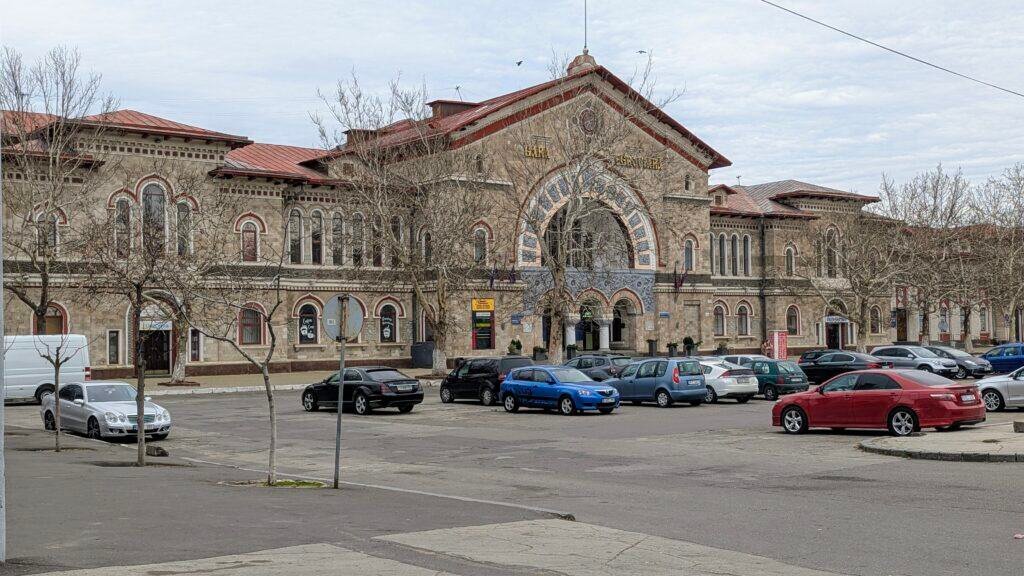
This is one beautiful station, both inside and out. It’s begging for more trains, though. Apart from the night service and a shorter twice-daily service to Ungheni, there is little else.
The original station was destroyed during World War II, and what stands today is its 1948 Stalinist neoclassical rebuild.
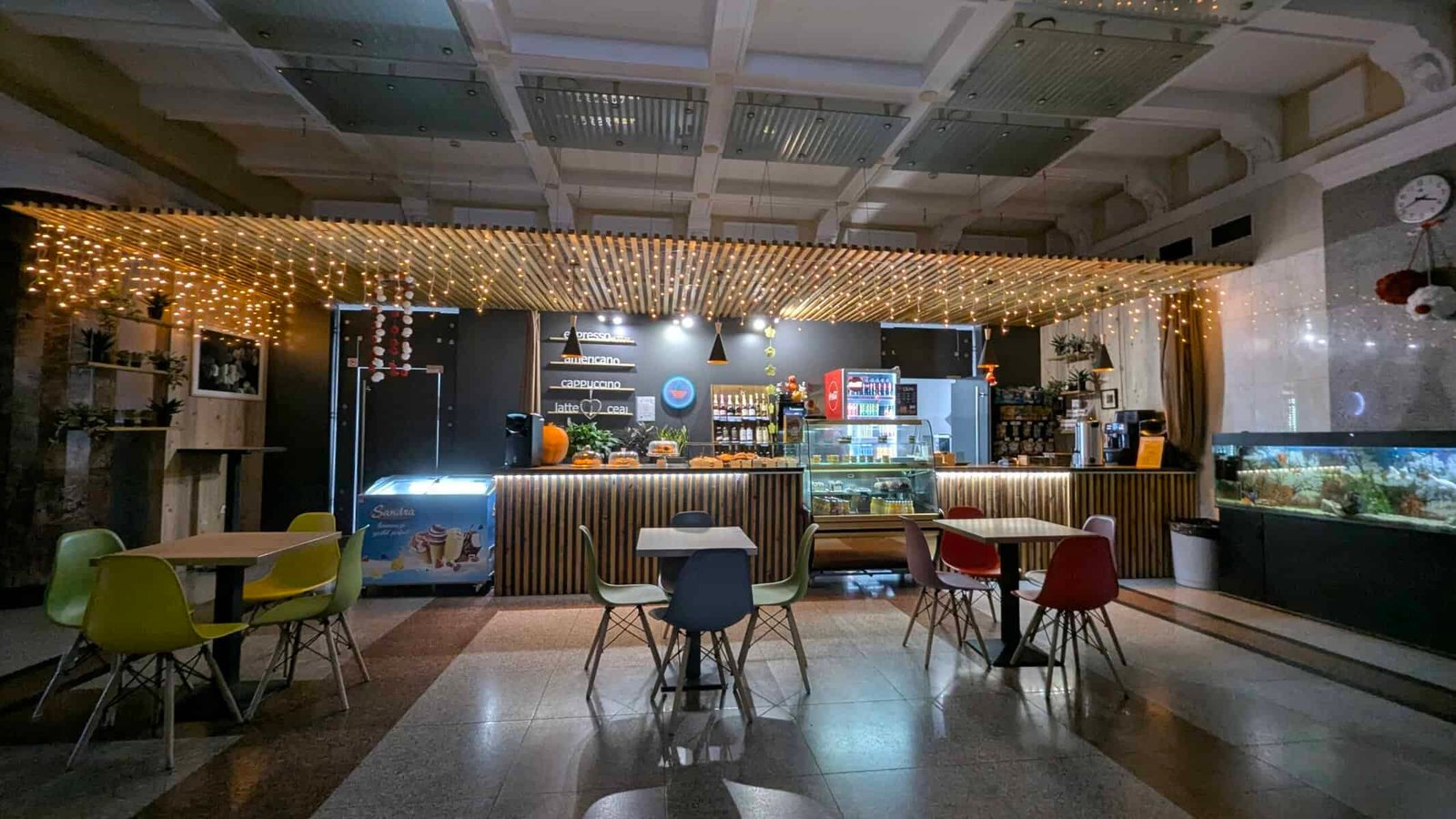
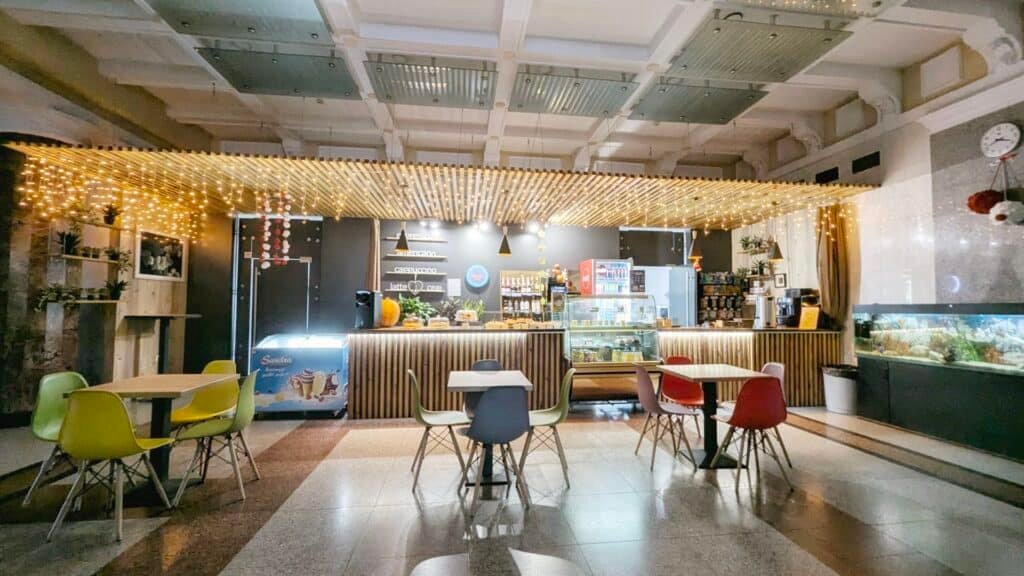
Inside, look out for chandeliers, high ceilings, and a grand staircase leading to a balcony where you’ll find a charming miniature railway display. There’s also a well-stocked café in the main hall, plenty of seating, and, oddly, a remarkable number of fish tanks, probably enough to start an aquarium.
Everywhere was impressively clean, except for one notable exception: the toilets on the platform. If you can wait until you’re on the train, please do! These were easily located from a distance by scent alone. They’re squat toilets, and it was clear the 2 Leu fee wasn’t contributing to the cost of cleaning services.
Just beyond them is a steam locomotive monument on display and well worth a quick look if you’re early.

We arrived at the station well ahead of departure and found the train already in situ. Reaching it involved walking across several tracks (no high-tech platforms here). Our tickets were checked by a guard who pointed us toward our carriage and welcomed us aboard. It was a touch of nostalgia which we welcomed.
On Board the Chișinău to Bucharest Sleeper
The first impression of the sleeper carriage was unexpected: carpeted corridor, curtains tied neatly back, and yes, hanging pot plants. A homely touch.

corridor of first class compartment, Chisinau to Bucharest Sleeper Train 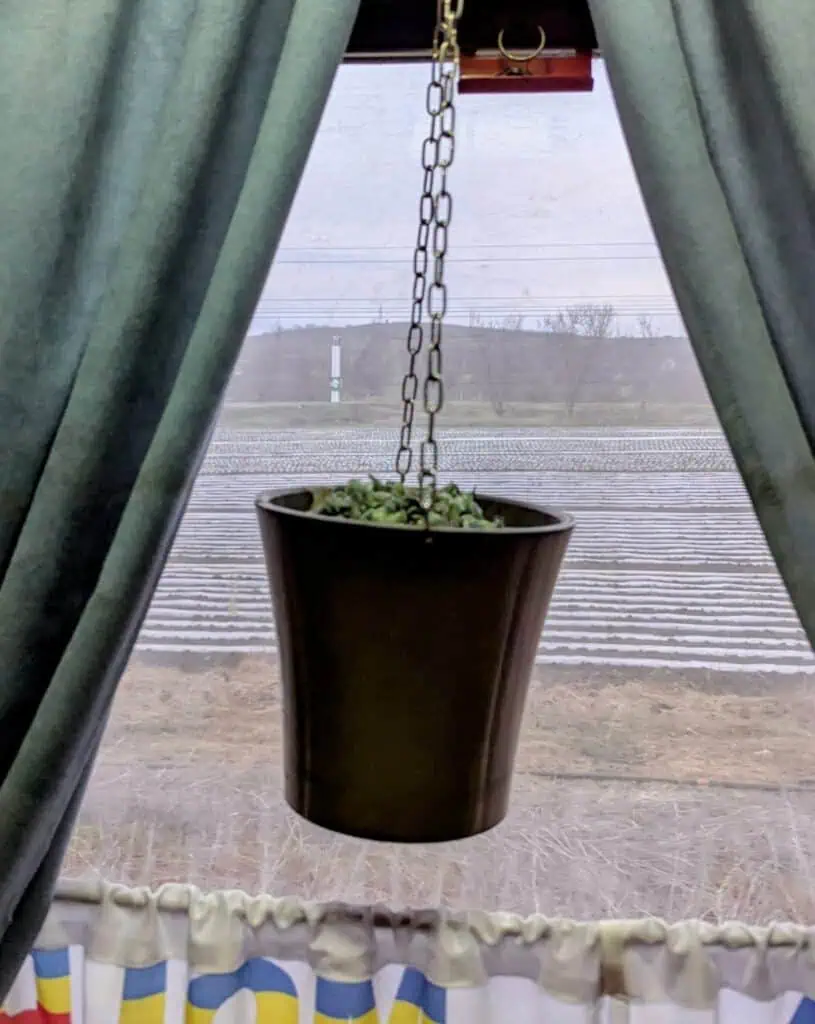
hanging pot plants – Chisinau to Bucharest Sleeper Train
Despite the odd seat numbering, we were put together in our own compartment. Inside, there were two comfy bench seats, a table with a clean tablecloth, coat hooks and windows that opened to combat the rather toasty heating. Everything felt solid – old, yes, but high quality. Even the door locks and light fittings had a sense of durability. It may not have been modern, but it had aged well. While we had seen some pictures online of gold-coloured soft furnishings, on our train, the furnishings were definitely blue. Patriotic ‘Moldova’ net curtains adorned every window.
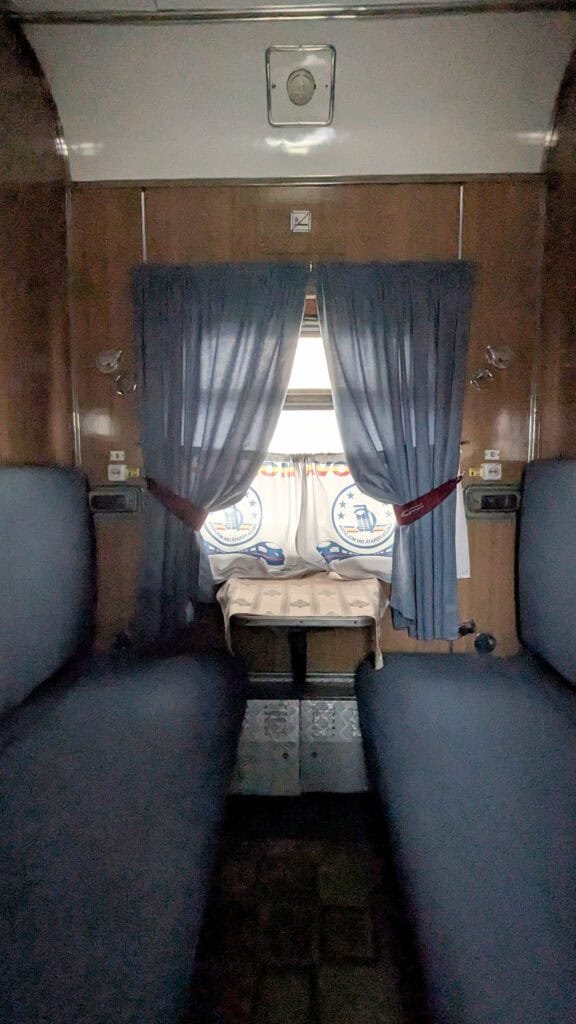
First-class train compartment on the Chisinau-Bucharest Sleeper Train 
110V Volt Sockets – 2 per carriage Chisinau Bucharest Sleeper (may or may not work)
While most of the updates over the years have been relatively minor, one welcome addition has been power sockets. Each side had its own, and there were extra ones along the corridor, complete with little fold-down seats next to them. And yes, there was Wi-Fi. Between the comfortable padded seating, sockets, table space, and working heating, this train already had more creature comforts than many of the much newer services I travel on in the UK!
Sleeping Arrangements
This was a DIY affair. Under each bench was a box containing a thick mattress and a large pillow. As soon as the train departed, the guard appeared with a plastic-wrapped bundle: a fresh pillowcase and sheets. Blankets were stored in an overhead cupboard, although it turned out we didn’t need them.

Blanket and Pillow Store under the bed 
Bed linen provided on departure from Chisinau Station
Bathrooms
Given the state of the platform toilets, I was wary, but pleasantly surprised. Old? Yes. Dimly lit? Yes. But clean, with running water, toilet paper, soap, and even an open window for ventilation. There was a toilet at each end of the carriage, no need to queue, and both stayed pretty clean for the entire journey.
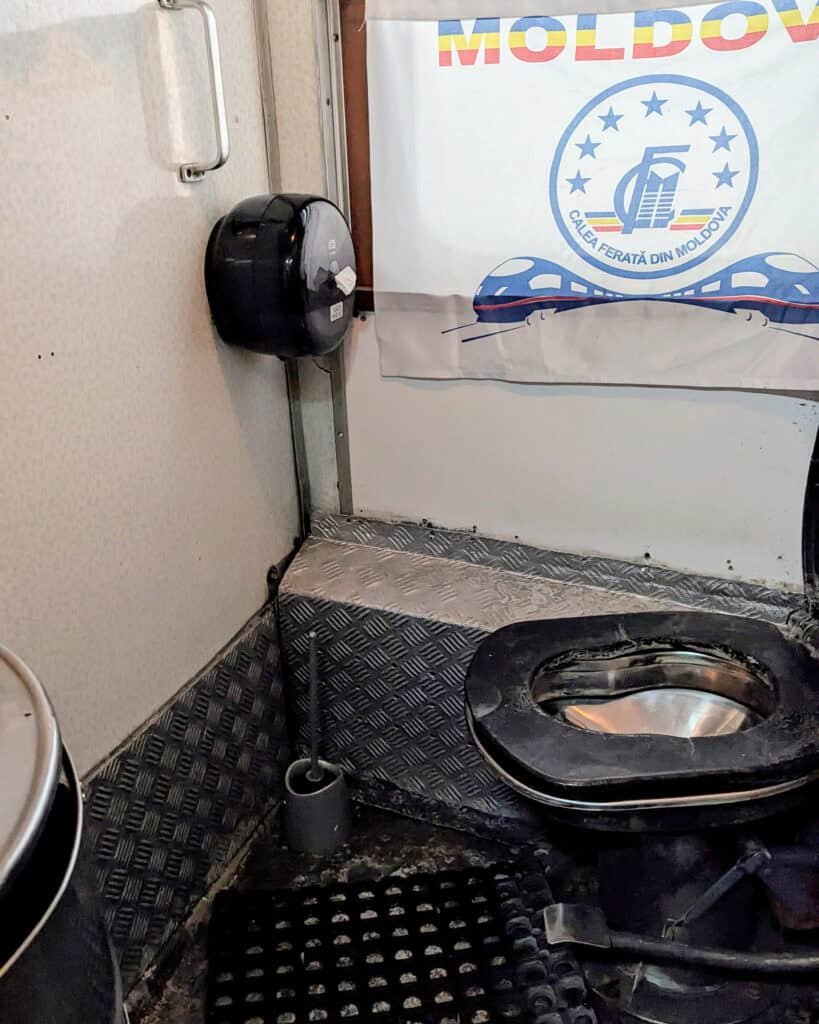
Drop toilet on the Chisinau to Bucharest sleeper train 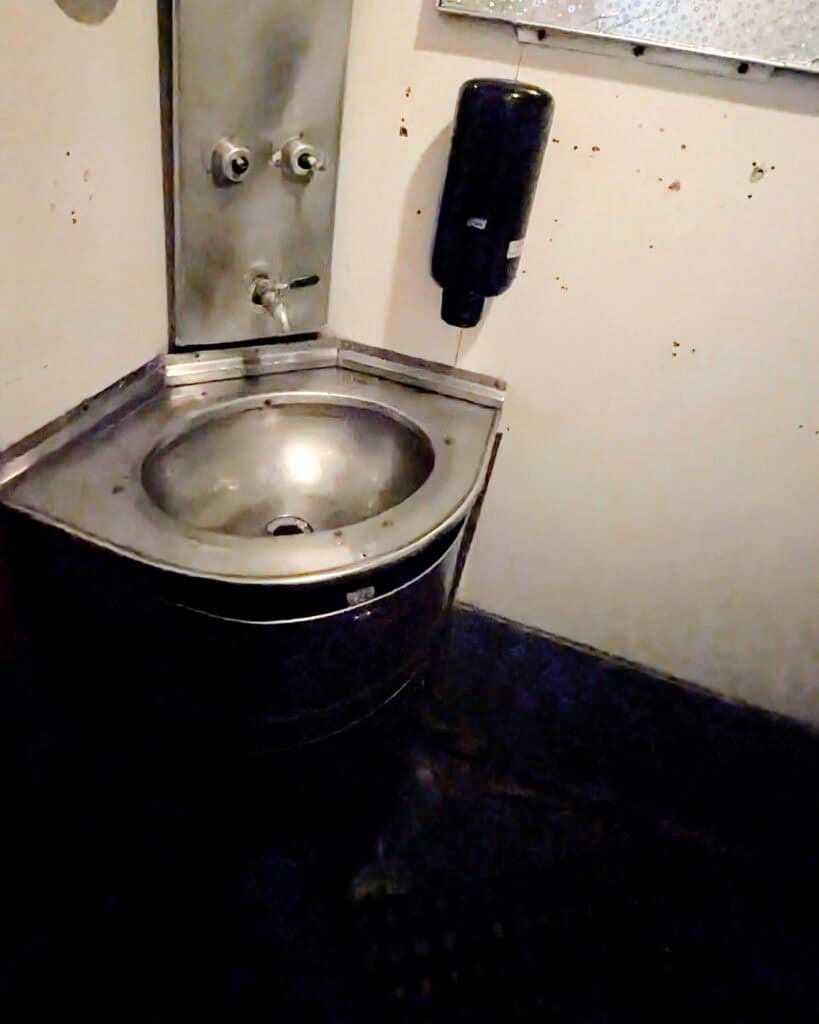
Wash basin on the Chisinau to Bucharest sleeper train
These were old-school “drop toilets”, the kind where everything exits directly onto the tracks. Largely phased out in Europe now, but I do remember them from my student Interrail days, a long time ago.
Buffet Car
With sleeping and sanitation covered, we turned our attention to food. Getting to the buffet car meant navigating a dark, slightly wobbly passage between carriages and manhandling some very heavy doors. Not for the faint-hearted, especially if laden with contents from the buffet.
Inside, the buffet car felt more like a staff common room than a canteen. A big table was piled with takeaway containers, and there was a definite feel of a party going on, train staff enjoying a meal and drinks together. They were happy for us to interrupt them and be served at the buffet counter. There were no hot or cold meals to buy, but there was an array of snacks, mostly chocolate and crisps. For drinks, there was an array of alcoholic options.

Buffet Car On Board the Prietenia 
Onboard Picnic, complete with Crivola sparkling wine from the buffet car
We picked up a half-bottle of Cricova sparkling wine (which we’d sampled at the winery earlier that week). around €5 and available in three varieties. Armed with our own bread, cheese, and ham, we returned to our compartment for a full-on champagne picnic.
Tip: Do bring your own food and drinks, and plenty of them, as they will need to last 14 hours and potentially longer if the train is delayed. The only thing you might not need to pack is alcohol. There’s plenty of that on board.
Ungheni: Borders, Wheel Changes & Toilet Lockdown
A short while before arriving at Ungheni, the guard passed through the corridor yelling “toilet!” It didn’t sound like a suggestion – it was a warning. We stepped outside our compartment, a bit confused, and wandered toward the guard and the toilet. He shouted ‘toilet’ again. Then he locked the toilet door from the outside. Suddenly, it all made sense! Remember, I said these were ‘drop toilets’? People would soon be underneath the train, changing the wheels. Enough said.
The next thing that happened was that Moldovan Border Control officers boarded, collected the passports, and returned them about 30 minutes later—polite, efficient and drama-free.
Still on the Moldovan side, preparations for the wheel (bogie) change started. During this process, each carriage was decoupled, moved into place, lined up with the jacks, lifted, and the bogie swapped. Then shunted back again and recoupled to the train. On board, it just felt like various clanks and groans, and while we looked intently out of the window for much of the time. It was very dark outside and really difficult to see exactly what was going on.
Depending on the position of your compartment in the carriage, you may be asked to vacate it while the wheels are fixed to the carriage through a hole in the compartment floor. We missed out on this excitement.

Bogie Change at Ungheni – Wheels all Ready 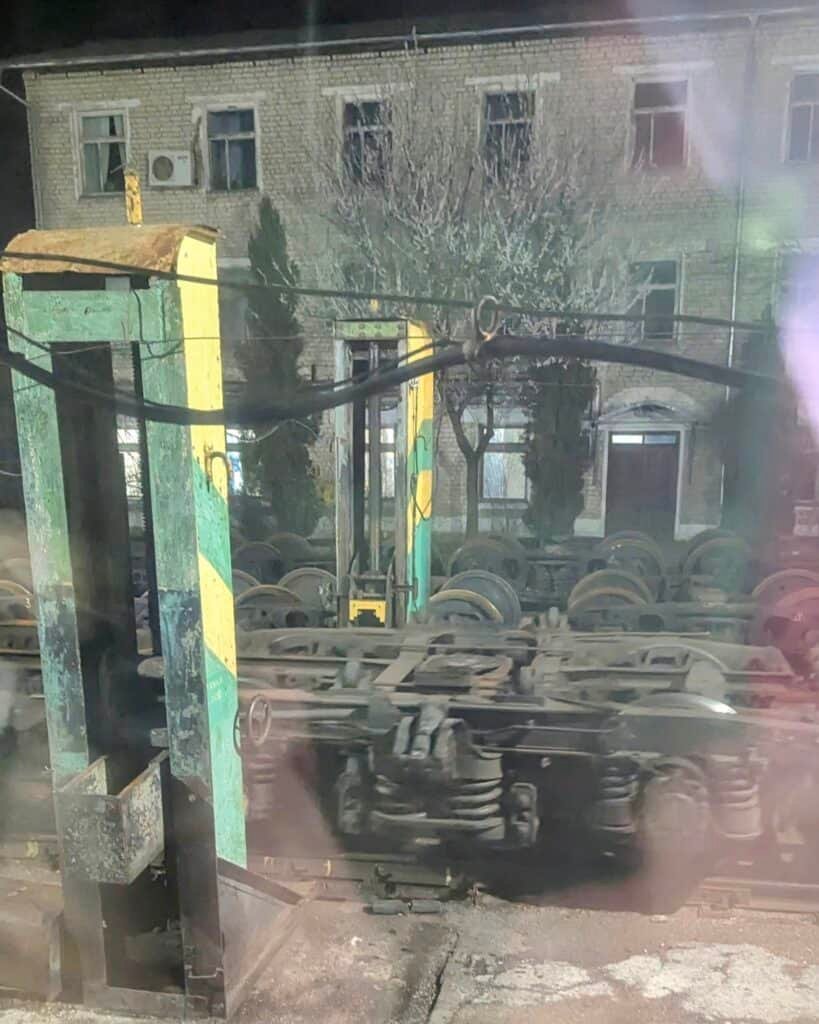
Train tracks and Wheel Change at Ungheni
After about an hour and a half, the train picked up speed and stopped again. Romanian Customs officers boarded the train. We were entering the EU. This job was taken seriously. They asked us questions about how much cash we had and any alcohol, drugs and cigarettes we were taking across the border. They were a lot less interested in us when they saw all we had with us were small backpacks. If you’re carrying a lot more, I would be prepared for your bags to be searched.
Border control staff also came on board. Like the Moldovan border control, they took our passports away again. Ours came back with a smile and a stamp. Eventually, the train pulled away, crossed the river Prut, and headed deeper into Romania.
Sleeping on the Train
Once all the Ungheni excitement was over, and with the sparkling wine from Cricova long gone, we turned in for the night.
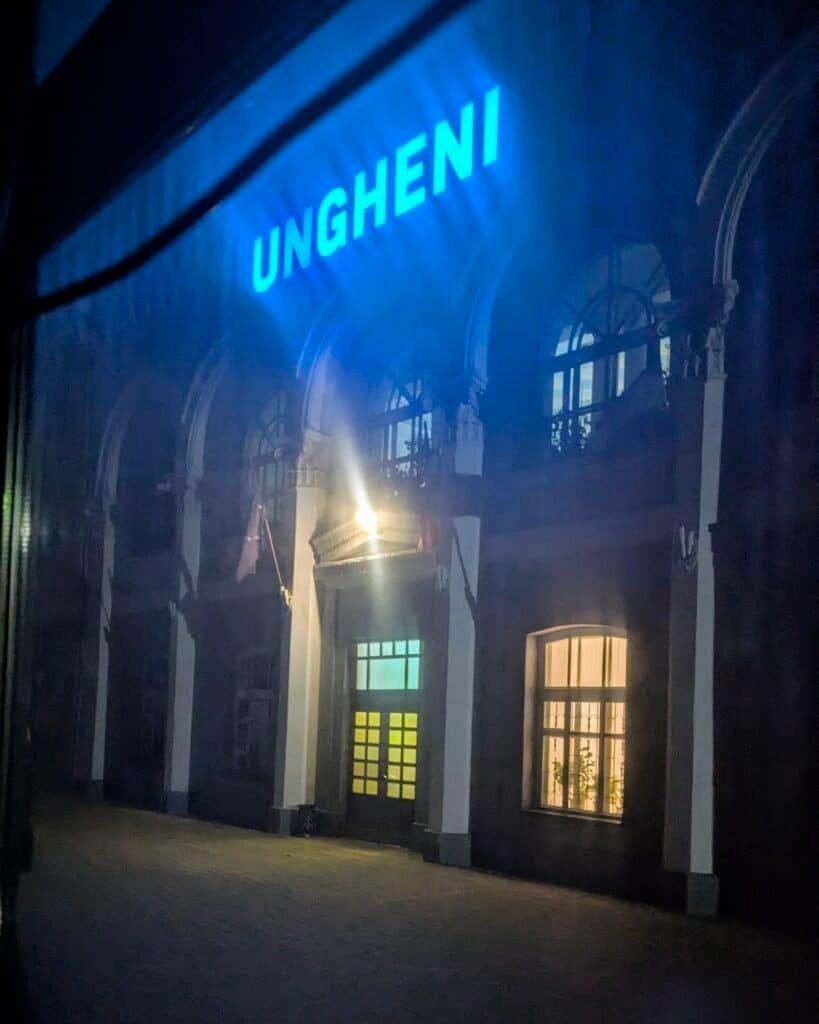
Ungheni Station at Night – Border Crossing on Prietenia 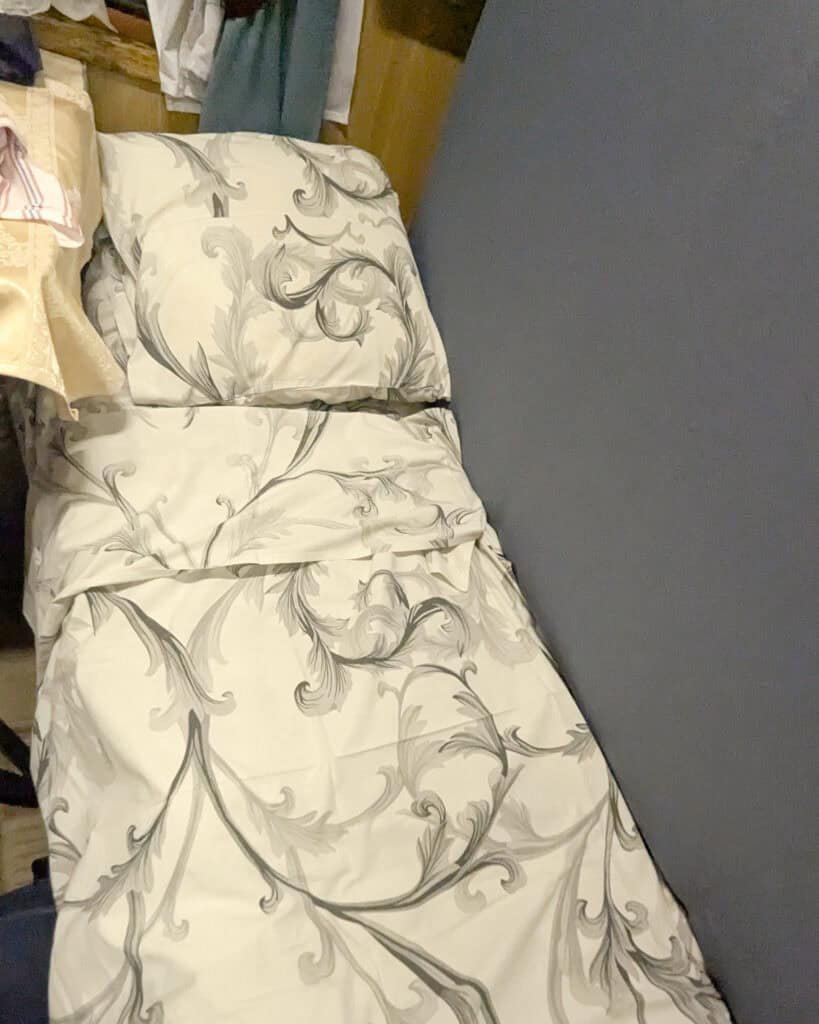
Ready for Bed on Prietenia Sleeper Train
The bench seating was pretty comfortable to sleep on, especially with the added mattress and plenty wide enough too. If you’re very tall, you might need to curl up a bit, but it was certainly plenty long enough for me.
We both slept pretty well. It was bumpy and rocky in quite a few places, but no more so than the Caledonian Sleeper in the UK, which we are familiar with. And that one is many times more expensive. If you’re a light sleeper, you may get woken up by some of the jolting, but you may also find the movement of the train quite conducive to sleep. The compartment was plenty dark enough for sleep, and there was, reassuringly, an internal lock on the door.
Arrival in Bucharest & Onward Travel
We arrived at Bucharest Nord a few minutes early. Compared to Chișinău station, Bucharest Nord is large, busy, scruffy and unwelcoming. I’ll be honest, it’s not my favourite.

Inside Bucharest Nord Rail Station 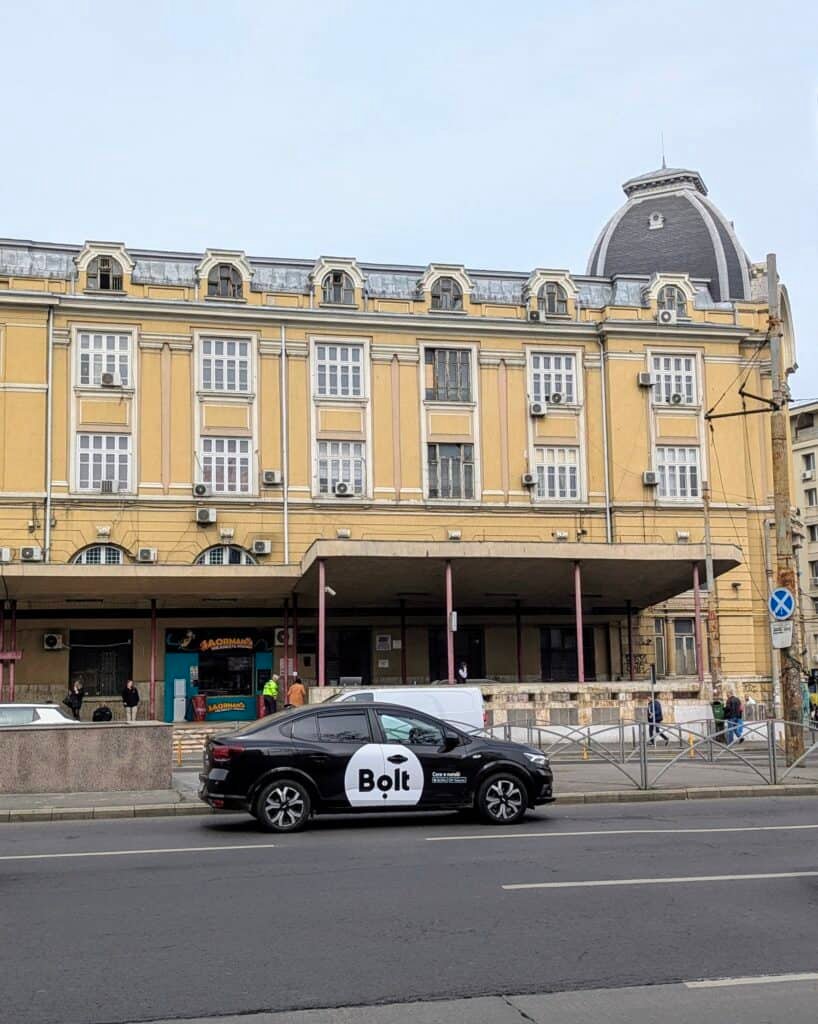
Bucharest Nord Rail Station
We’d planned to buy the Bucharest Public Transport Tourist Card (“Card Călătorie Turist”). Cost: 20 lei / 24-hour card and 40 lei / 72-hour card. It includes trams, trolley buses, and trains, including the airport train, but after trying several machines, desks, and counters at both metro and rail stations, we gave up. I suspect these cards are mostly aimed at people arriving via the airport and are more easily available there.
Instead, we walked into the city centre and found a lovely café and had an excellent breakfast, possibly the best decision of the morning.

Breakfast in Bucharest – L-Opera Bistro 
Bucharest Café for Breakfast L-Opera Bistro
There are plenty of things to do in Bucharest, and some great day-trip options from the city. I’ve visited Bucharest a few times now, and each time I have warmed to it more.
Crossing the border with Moldova and Romania: Alternatives to the Sleeper Train
While we were keen on the sleeper train experience, there were alternatives we could have used.
Day Train: There are two day trains per day running between Iasi and Chisinau, so this will get you across the border. Then you could travel onwards to Bucharest or elsewhere in Romania.
Bus: The cheapest option between the two capitals is by bus, at around 8–9 hours, but it’s not ideal, making the sleeper train more attractive. There’s a quicker border crossing from Iasi, a city in Eastern Romania and a much more. manageable 3 hours on the bus to Chisinau, bookable in advance on Autocare MD. There’s also a handy app. All in English. We arrived in Chisinau via this route from Iasi. It’s a beautiful city, and I definitely recommend a visit. There are also attractively priced International flights between Iasi and London, UK, and a few other European cities.
Flights: TAROM, HiSky, and Wizz Air Malta all offer 1h15m direct flights. Prices are variable, so shop around for the cheapest deal, which can be as low as €20. All flights land at Bucharest Otopeni (OTP), about 17km from the city centre.
Places to Stay near Bucharest Nord
Looking for accommodation near the rail station can make onward travel easier. We stayed here recently in a modern, well-equipped self-service room with a kitchenette and bathroom just off Piața Romană. It turned out to be a great location near the M1 metro line.
So to sum up, if you’re heading from Moldova to Romania, I recommend the sleeper train. It’s old-school in all the right ways, surprisingly comfortable, and full of character. You’ll travel overnight, save on a hotel, and arrive (mostly) refreshed. What’s not to love?
If you’re going the other way, from Bucharest to Chișinău, I’d think twice. The 3 am – 5 am border stop is brutal unless you’re planning on partying all night or don’t mind being interrupted while in bed on multiple occasions. I’d consider alternatives, a short flight, the bus or splitting your journey in Iasi.
Either way, it’s an experience you won’t forget. Pot plants, chandeliers, wheel changes, and everything else,
If you want to travel onward from Bucharest by train into Transylvania, I have an itinerary: Bucharest to Transylvania: A Point-to-Point Trip by Public Transport. If you’re curious about other itinerary guides in Europe, I have more point-to-point trips by train and long-distance bus. Or check out the rest of my content on Moldova and Romania.
I hope you’ve found this trip report useful. I’d love to hear about your experiences on this or other sleeper trains in Europe, and I’d be happy to help with any questions or if you’re planning a trip. And if you enjoy practical, real-world travel tips for journeys in Europe, I’d love you to join my monthly newsletter.
Thanks for reading.