Best Things to Do in Iași: Discover Romania’s Cultural Gem
Iași sits in the eastern corner of Romania, just an hour from the border with Moldova and about 3 hours from Ukraine. We booked budget flights from London, Luton, to Iasi to travel onwards to Moldova, and I’m so glad we gave ourselves some time to explore the city first.
This gem of a city is a former capital and one of the country’s great cultural centres. It’s the birthplace of the national poet Mihai Eminescu, who lived and worked here. Iași takes its literary history seriously, and with a large student population, you can expect a vibrant, youthful energy. We found a city full to the brim with history and a fun place, too. And with direct budget flights from several European cities to Iași, I’d be surprised if the city stays off the tourist trail for much longer.
In this guide, you’ll find a map and a walking route taking you past the main sites. Whether you’re visiting for a day or making Iasi a base for a longer holiday, I’ve got some suggestions for your Itinerary.
And one more thing: I picked Iași as one of my top recommendations for places to go in Europe that aren’t that obvious. Here’s the full list.
This guide may include a few affiliate links. If you choose to buy something through one of them, I may earn a small commission (at no cost to you). Thank you for supporting One Small Bag.
Iași Essentials
- Luxury: Grand Hotel Traian
- Midrange: Hotel Select
- Budget: Iassium Residence Iasi
- Tour guide in Iasi, Romania
- Adventure trip from Iasi: Hiking in the Carpathian Mountains
- Day trip to the UNESCO Painted Monasteries from Iasi
- Day trip to Moldova – visit Chisinau and Cricova Winery
- Discover Cars (Car Hire: Best Regional aggregator deals)
- Welcome Pickups (Hassle-Free Airport Transfers & Personal Drivers)
Map of Things to Do In Iași
Here’s a map I made of recommended places to see and things to do in Iași. It includes a walking route with the cultural highlights, plus food and drink to help you plan your visit. You’ll also find some suggested itineraries for one, two, three, or more days in the city further down.
You may also be interested in
- Romania: Know before you go
- Best Things to Do in Brașov, Romania – Plus My Favourite Day Trips
- Visit Sinaia: Home to Peleș, Romania’s Most Spectacular Royal Castle
- 15 Best Things to Do in Sighisoara: Dracula’s Birthplace in Transylvania
- 23 Best Things to Do in Bucharest – and One I’d Avoid Right Now
- Best Day Trips from Bucharest: Castles, Mountains, the Black Sea, and Cross-Border Adventures
- Chisinau to Bucharest Sleeper Train: Europe’s most unusual rail journey
- Bucharest to Transylvania: A Point-to-Point Trip by Public Transport
- Visiting Libearty Bear Sanctuary: Is It Worth It?
Exploring Iași’s City Centre
If you cover this route, you will see many of the landmarks that define Iași and cover a whole range of experiences from beautiful churches, squares, and parks, to markets and modern shopping and entertainment areas. It’s around 6km if you return to the centre by tram. A little longer with the optional extension to the Alexandru cel Bun district. I would allow a day to explore it all at a fairly leisurely pace, with stops along the way.
1 Palas Garden and Palace of Culture
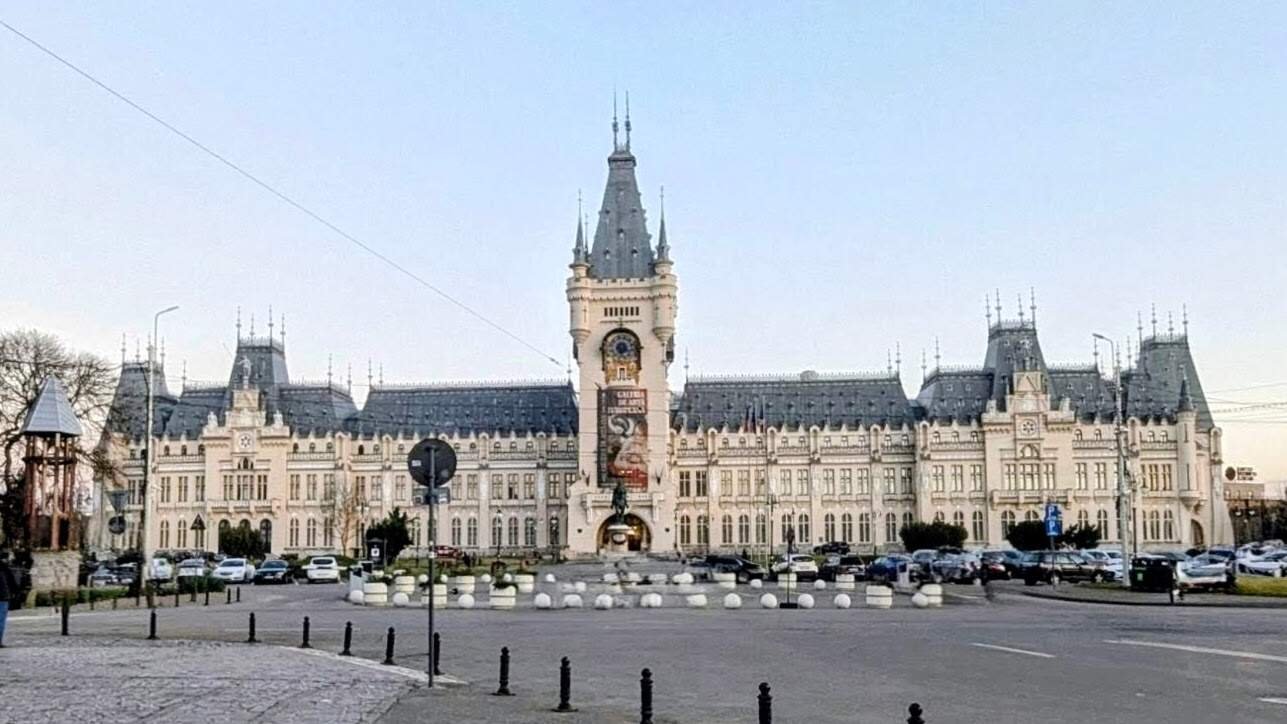
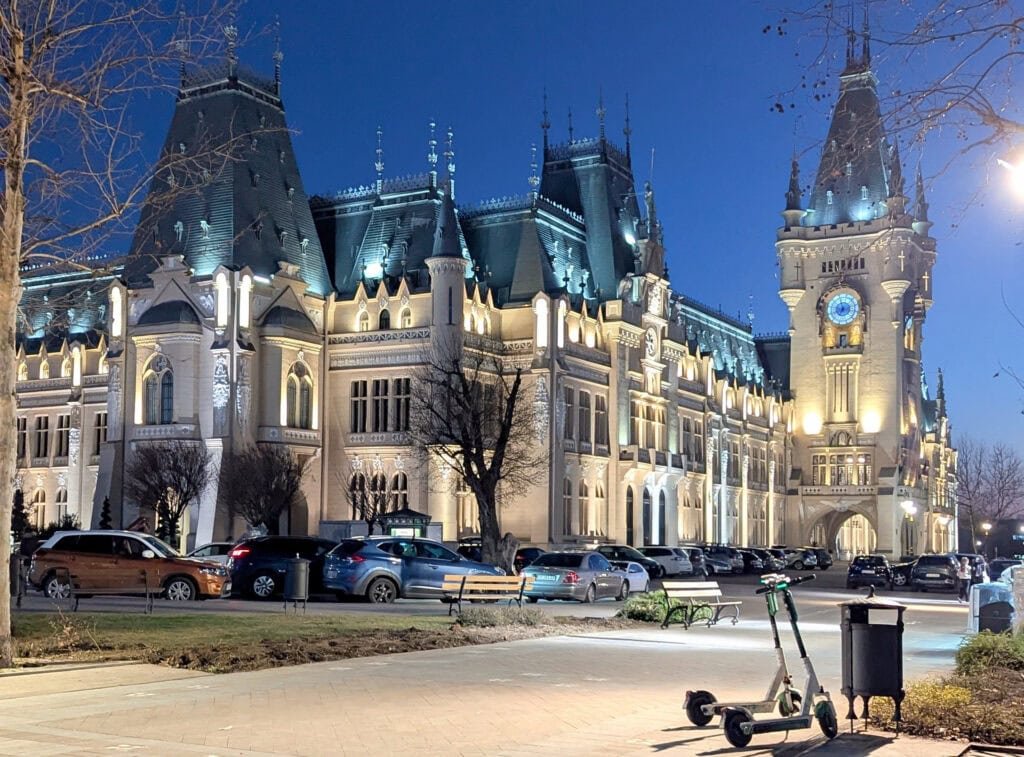
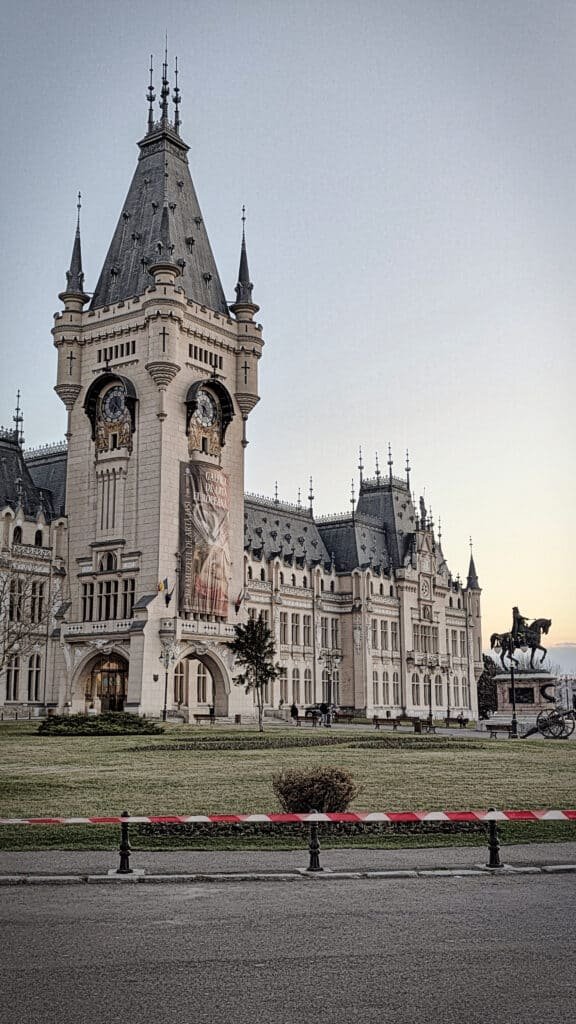
Your walk begins at Iași’s most striking landmark, the Palace of Culture. This vast neo-Gothic building dominates the skyline with its spires and clock tower. And although it looks centuries old, it was only completed in the 1920s on the site of the medieval princely court. Today it houses four different museums under one roof – art, history, ethnography, and science – so you could easily lose a morning inside. Even if you don’t step through the doors, the gardens and the building’s fairytale exterior are worth exploring.
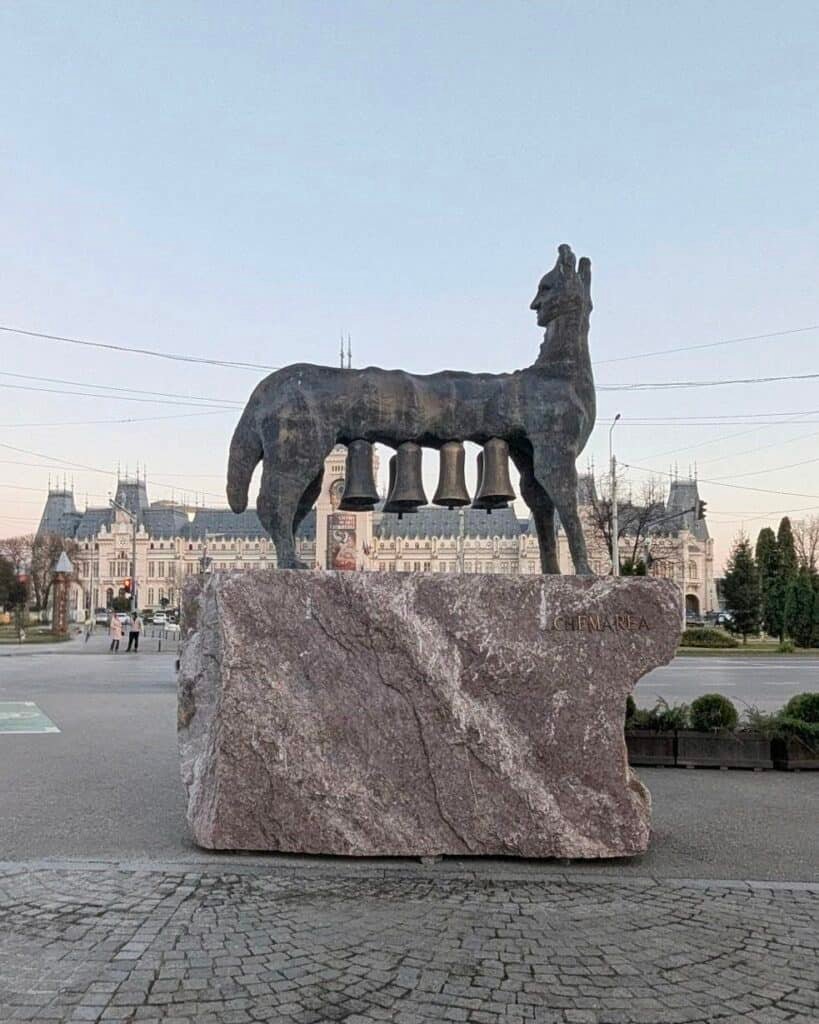
Around the square, you’ll find several other landmarks clustered close by. There’s Chemarea (The Call), a striking bronze sculpture of a she-wolf with bells suspended beneath her body, a nod to the Roman myth of Romulus and Remus.
Look out for Casa Dosoftei, a handsome brick house now serving as a literary museum, dedicated to one of Romania’s earliest printers.
Moving further on, Iași is sometimes called “the City of 100 Churches,” and for this next stretch, you’ll see why.
2 St Nicholas
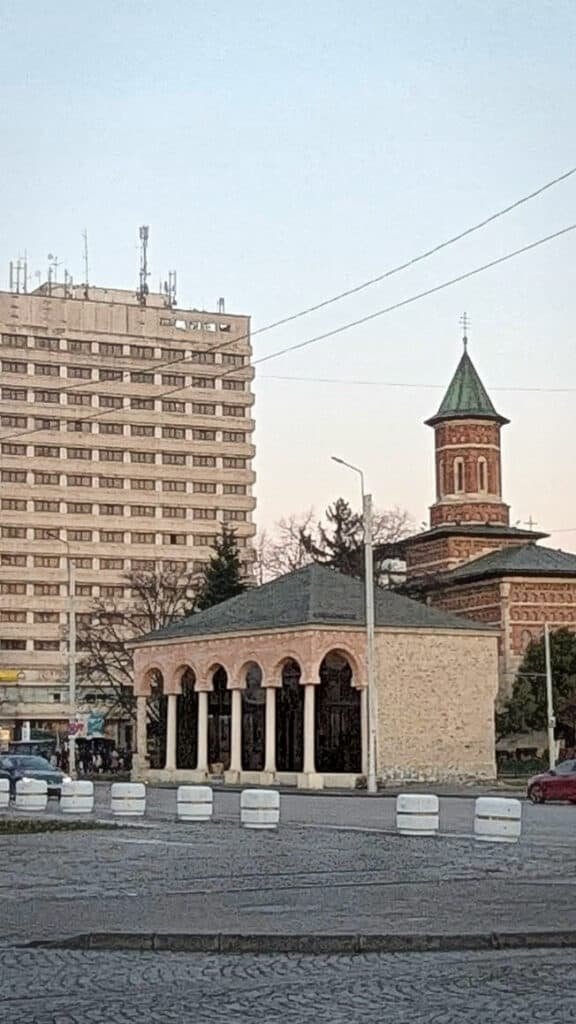
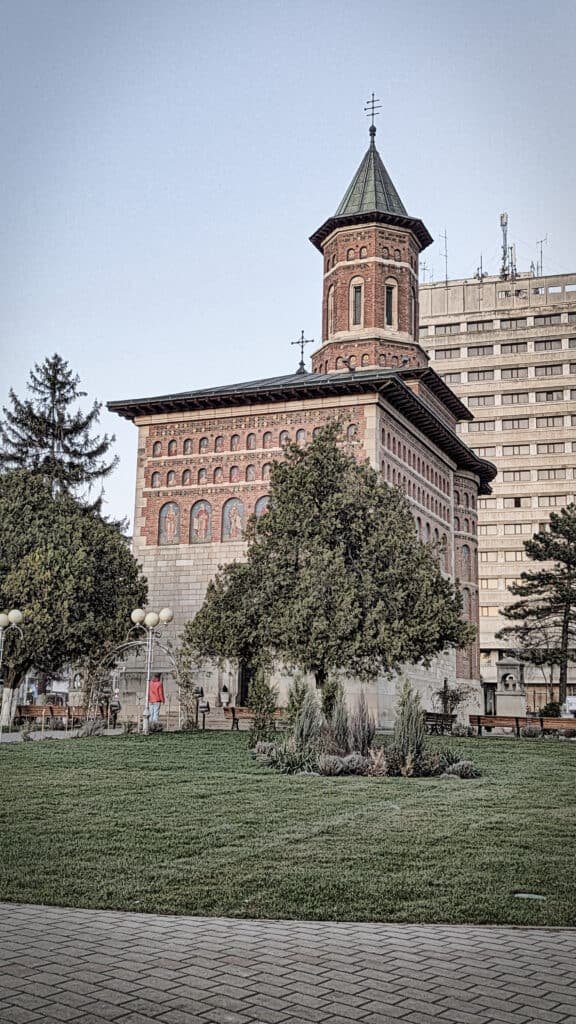
First, there’s the small but significant Biserica Sfântul Nicolae Domnesc (St Nicholas Princely Church), built in the 15th century by Stephen the Great and one of the city’s oldest surviving churches.
Then we head north along Bulevardul Ștefan cel Mare și Sfânt, Iași’s grand central boulevard.
3 The Three Hierarchs Monastery
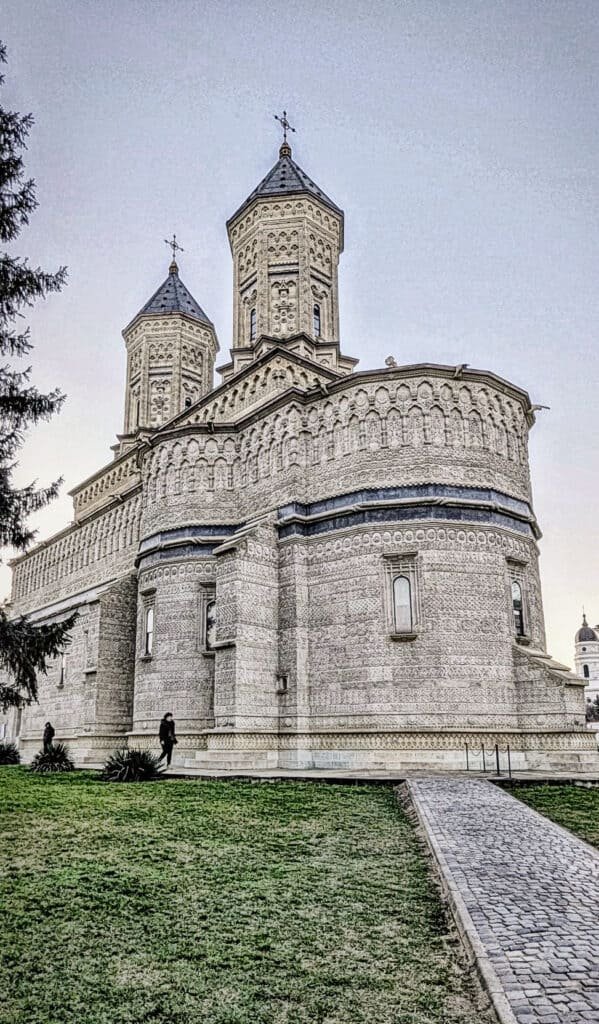
Next, on the left, Mănăstirea Sfinții Trei Ierarhi (Monastery of the Three Hierarchs) immediately stands out. Built in the 17th century, it has an exterior covered in intricate stone carvings, floral motifs, and geometric patterns. It’s one of Iași’s true architectural gems and is recognised by UNESCO. It’s worth stepping inside if you can. It’s dark, and photography is discouraged, but you will find a sacred space, still very much in use, full of grand, beautiful gilded iconography.
4 Our Lady Queen of Iasi (Roman Catholic) Cathedral
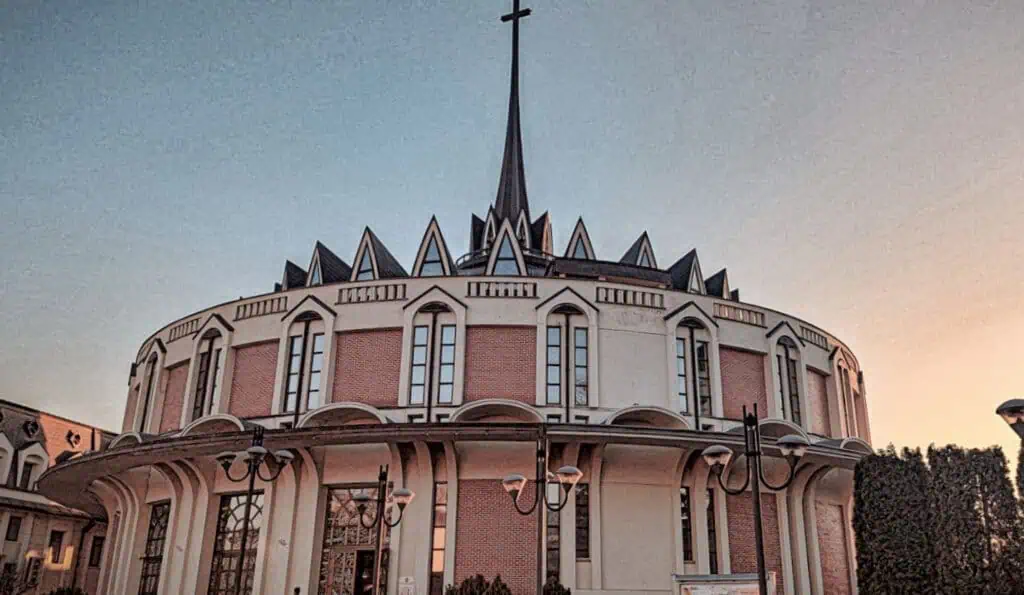
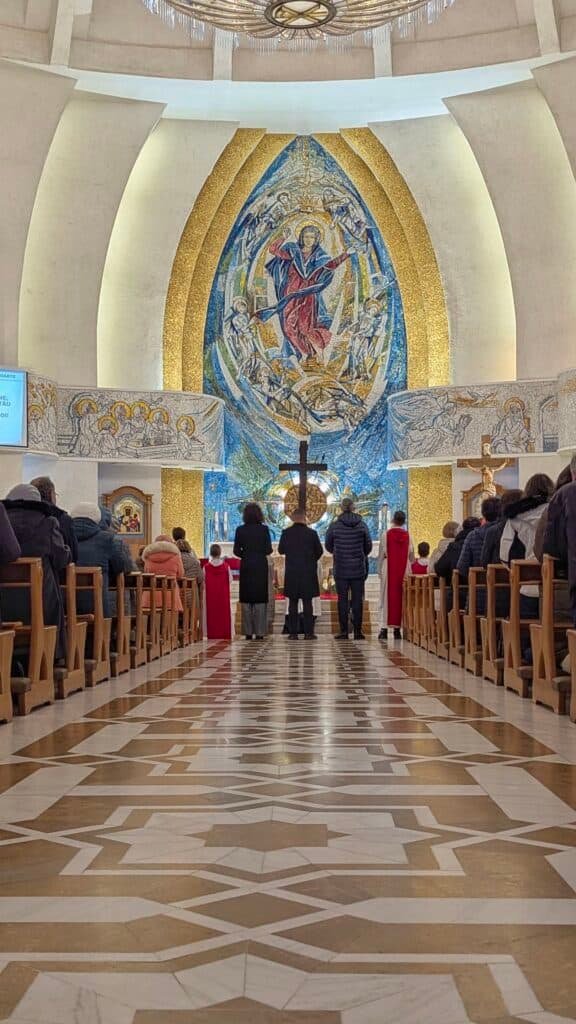
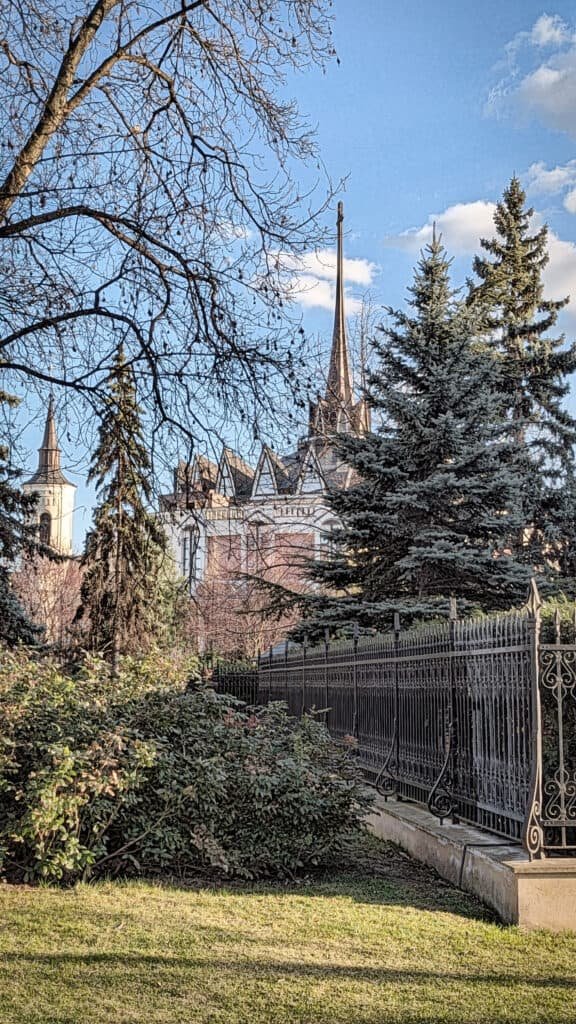
Nestled between the monastery and the Orthodox Cathedral, there’s the striking Our Lady Queen of Iași Cathedral, the main Roman Catholic church in the city. Its modernist design contrasts strongly with the Orthodox buildings around it. But inside you’ll find soaring white arches and colourful stained glass.
5 Metropolitan (Orthodox) Cathedral
Further on, we have the Metropolitan Cathedral, the largest Orthodox cathedral in Romania and the spiritual heart of the city. A neo-classical design with twin towers on the outside and highly gilded on the inside.
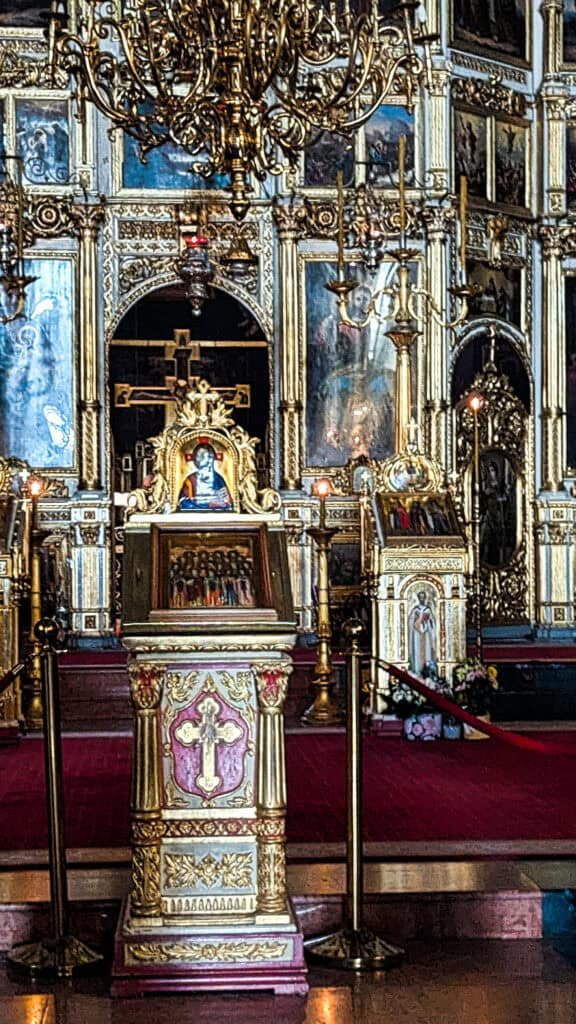
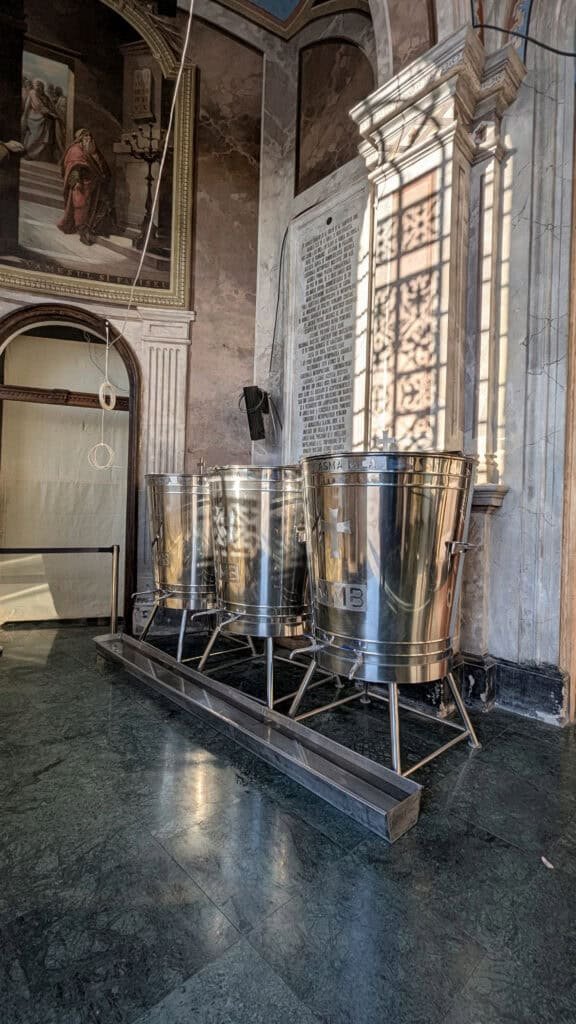
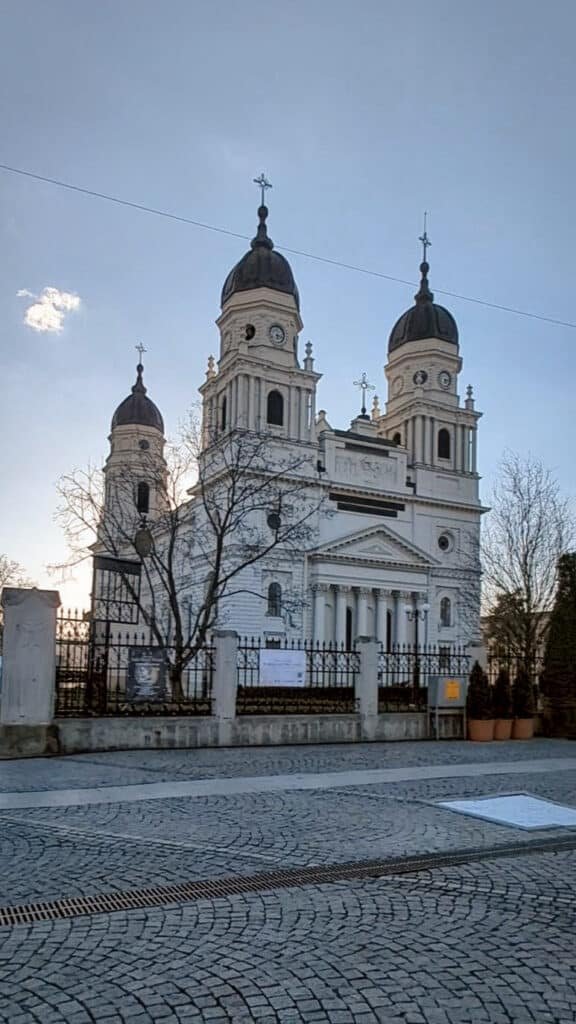
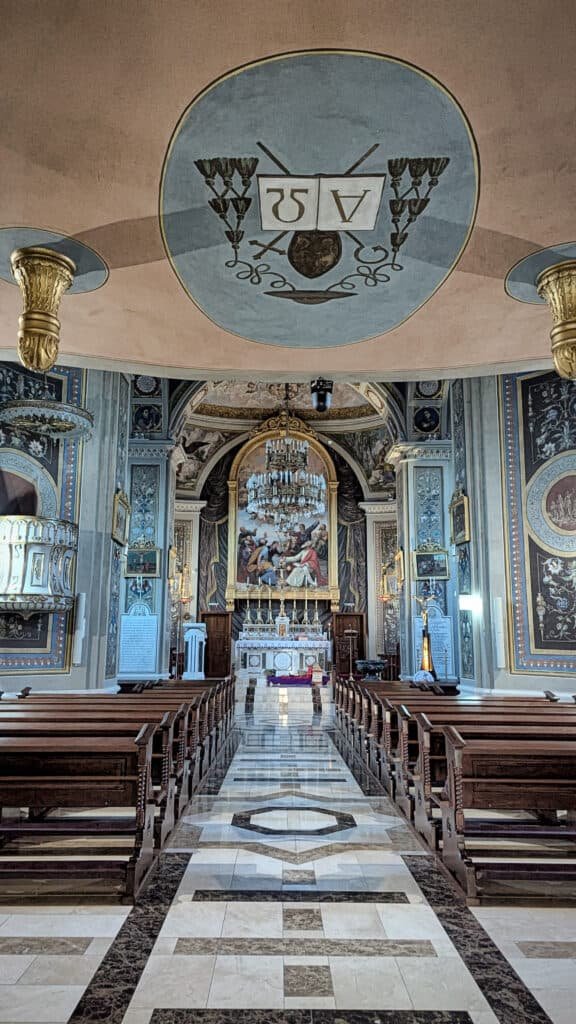
Don’t miss another church in the grounds of the Metropolitan Cathedral. The old Metropolitan Cathedral (Biserica Veche a Mitropoliei Iasi) is a little less golden on the inside, but the intricate painted walls and ceilings are exquisite. I think this was my favourite.
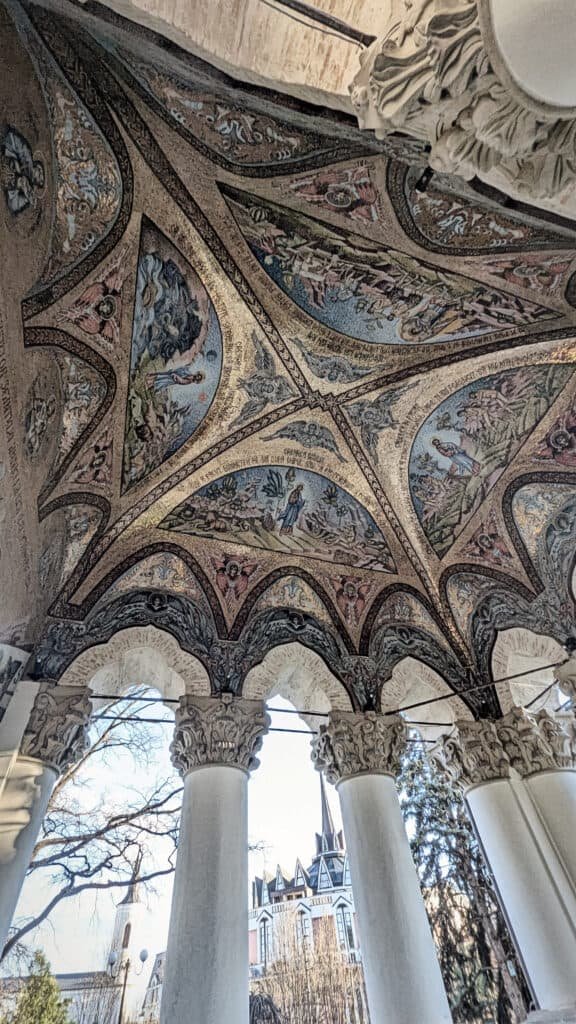
6 Parcul Teatrului Național
On the right side of the boulevard, the elegant Palatul Roznovanu now serves as Iași’s City Hall. It was once the residence of the powerful Roznovanu family and has hosted royalty, politicians, and diplomats over the centuries.
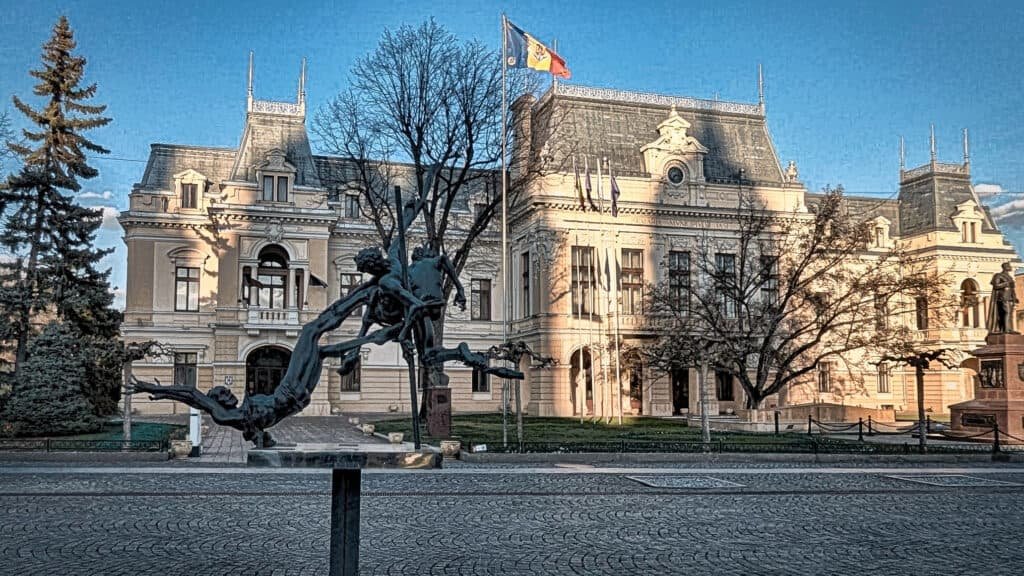
Just beyond lies Parcul Teatrului Național, a small but beautifully kept park that frames the Vasile Alecsandri National Theatre. The theatre itself, with its ornate façade and red-roofed domes, is one of Romania’s most beautiful playhouses.
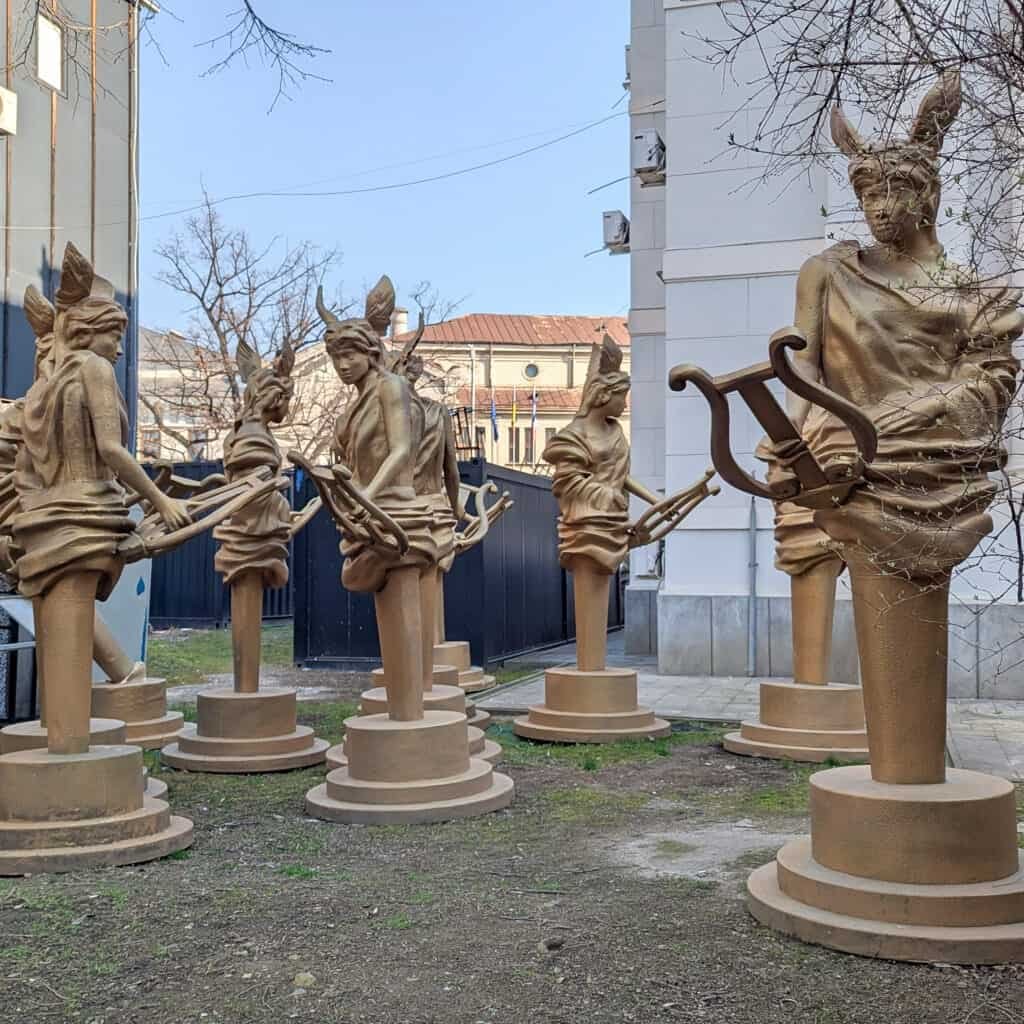
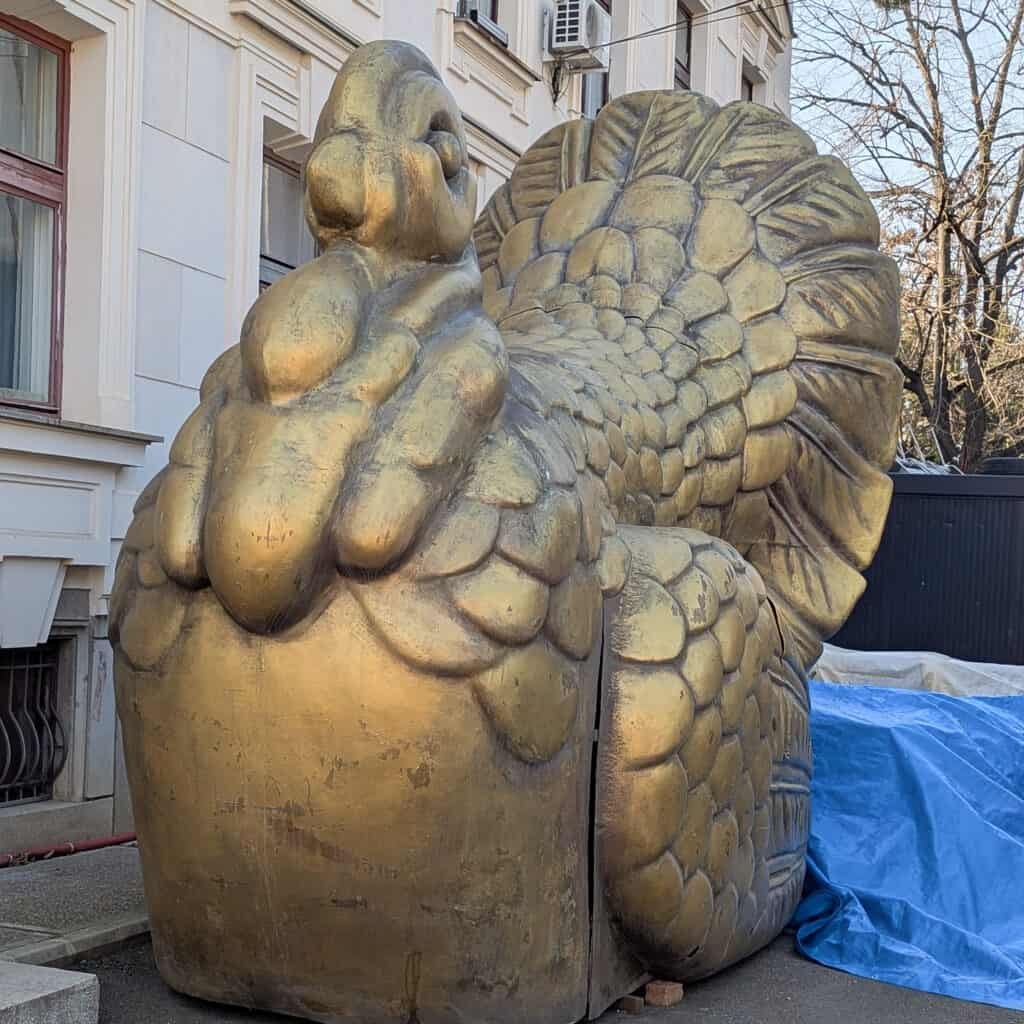
I think it was the day to ‘sort out’ the props when we walked this stretch!
Planning a trip to the Balkans and Romania? Questions about apps, eSIMs, and more? I have a free toolkit for you.
FREE Travel Tech Toolkit
The exact apps, eSIMs, and tools I use to travel smarter – covering transport, translation, money, connectivity, and more. Tested over years of actual travel.
7 Strada Cuza Vodă
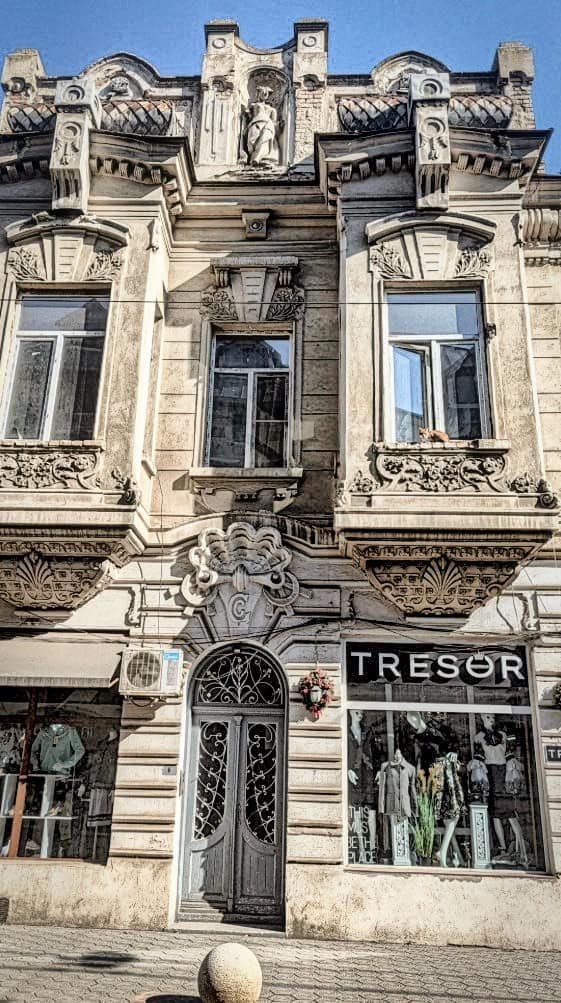
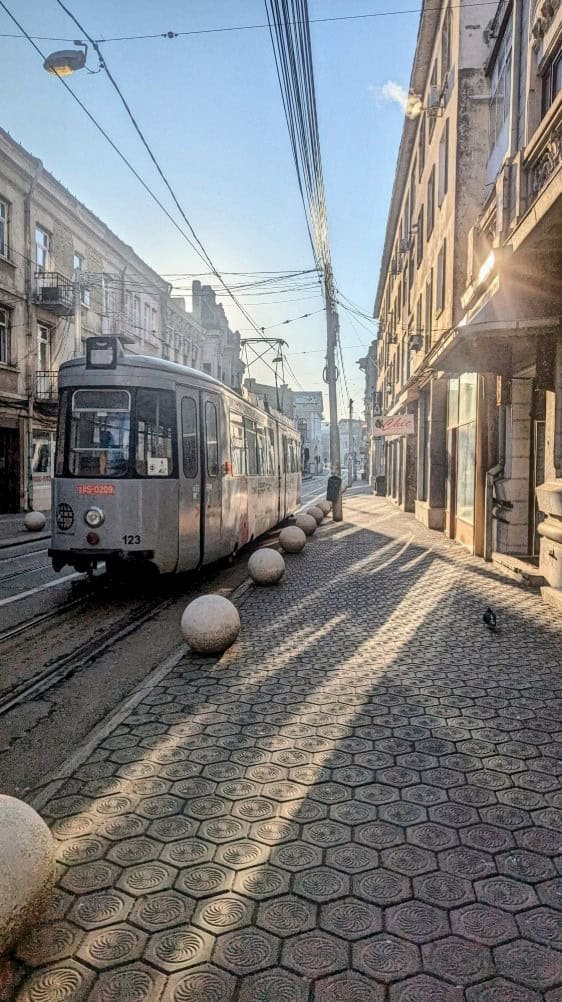
Cut across the park and join Strada Cuza Vodă, one of Iași’s most photogenic streets. It’s a lovely mix of old façades and everyday life: vintage trolleybuses rumble past, shopfronts wear their age well, and there’s an easy café culture to enjoy. Keep an eye out for the details – iron balconies, hand-painted signs, and beautiful windows and doorways.
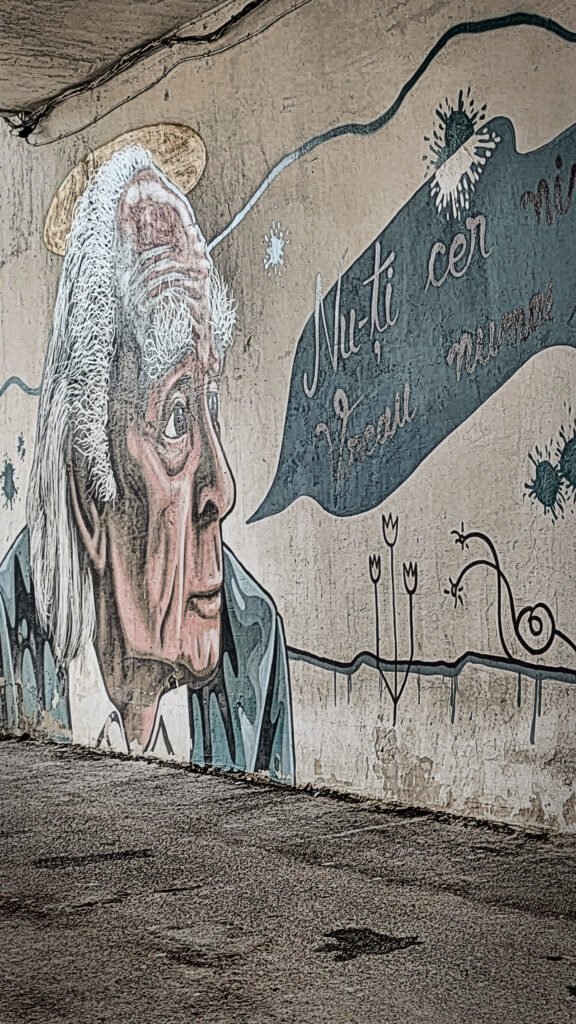
About halfway up, look left for Pasajul Emil Brumaru, a small passageway, brightened by a mural: a quick detour and a nice contrast to the boulevard’s grand architecture.
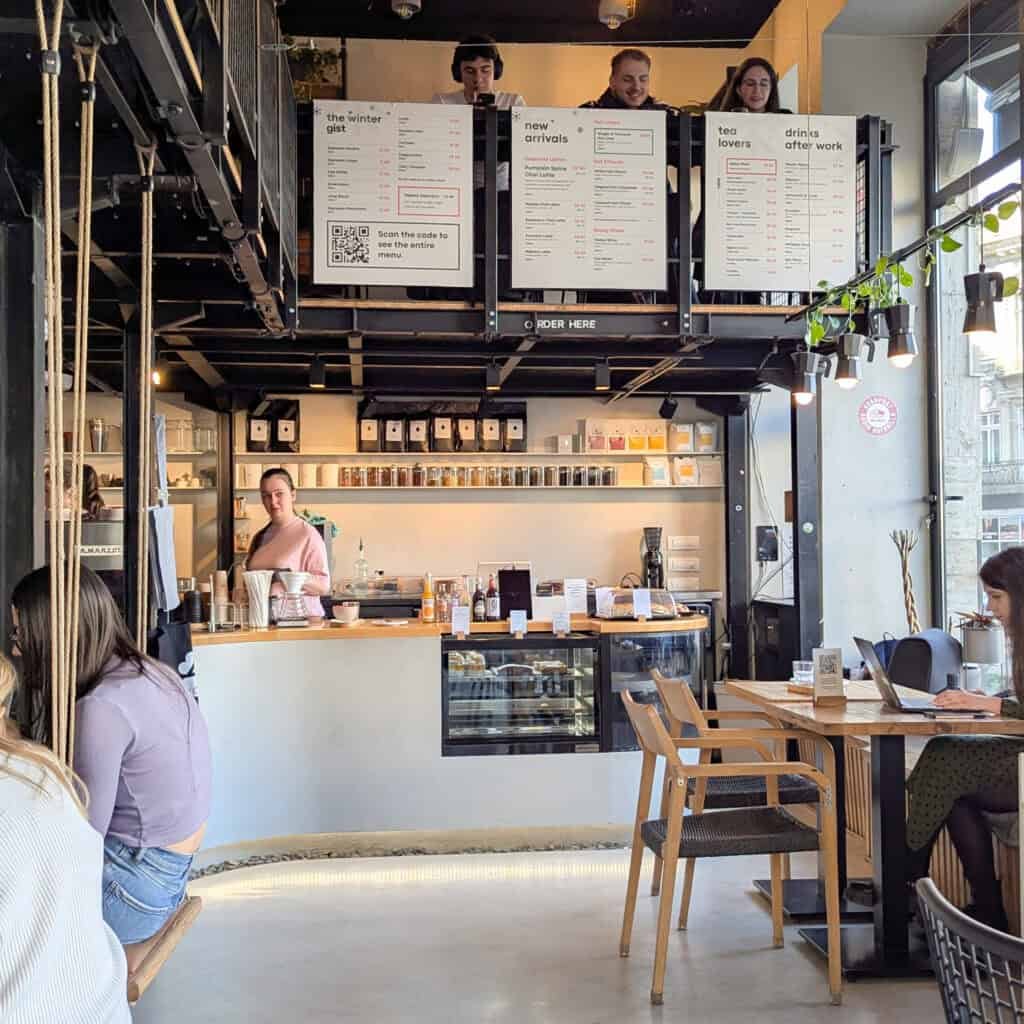
If you are looking for a good coffee stop, with cakes and tasty sandwich rolls, I recommend Gist Speciality Coffee Shop at the end of the street, on the corner.
8 Union Square
Your walk naturally leads into Union Square (Piața Unirii), one of Iași’s busiest crossroads and a natural gathering place. The square has a lively, slightly chaotic energy – trams and trolleybuses, traffic, and a meeting place in the city centre.
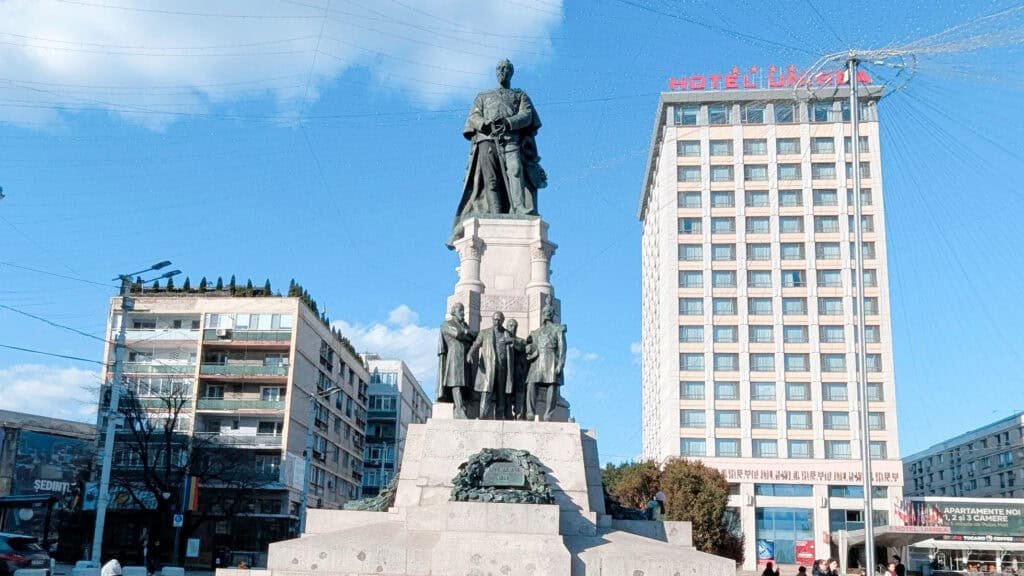
In the middle stands the Monumentul Unirii, commemorating the 1859 union of Moldavia and Wallachia, a key moment on the path to modern Romania. Locals often leave flowers here on national holidays, and it gives the square its name.
9 Independence Square
From Union Square, continue along the boulevard towards Independence Square (Piața Independenței), where the grand Independence Monument rises at the centre.
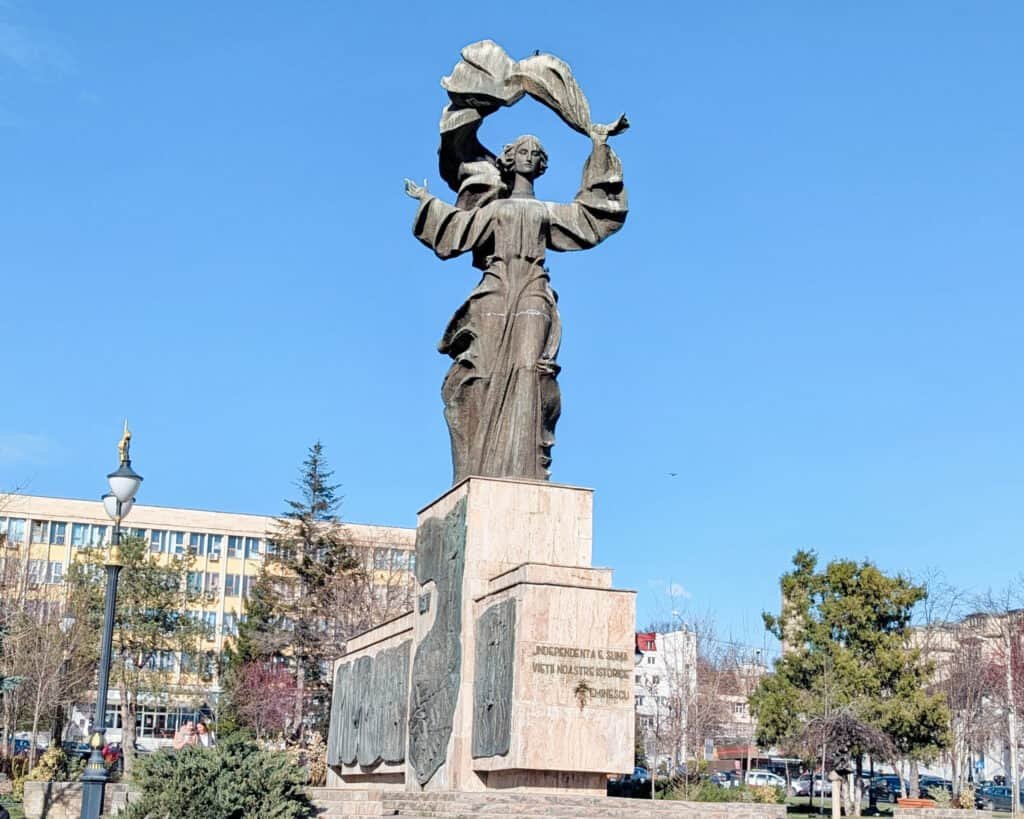
This is one of Iași’s most recognisable landmarks – a 17m-high statue of a lady commemorating Romania’s independence in 1877–78. It’s a focal point for civic ceremonies, but on our visit, on an ordinary day, it was busy with city residents cutting through and stopping to relax and chat on the benches and steps.
10 Strada Alexandru Lapusneanu
To get to your next stop, take a detour via Alexandru Lăpușneanu Street, a historic street in Iași and a pedestrianised one too. It’s the location of the Union Museum, the former residence of Alexandru Ioan Cuza, the first ruler of the United Principalities, and the place to learn about Romanian history.
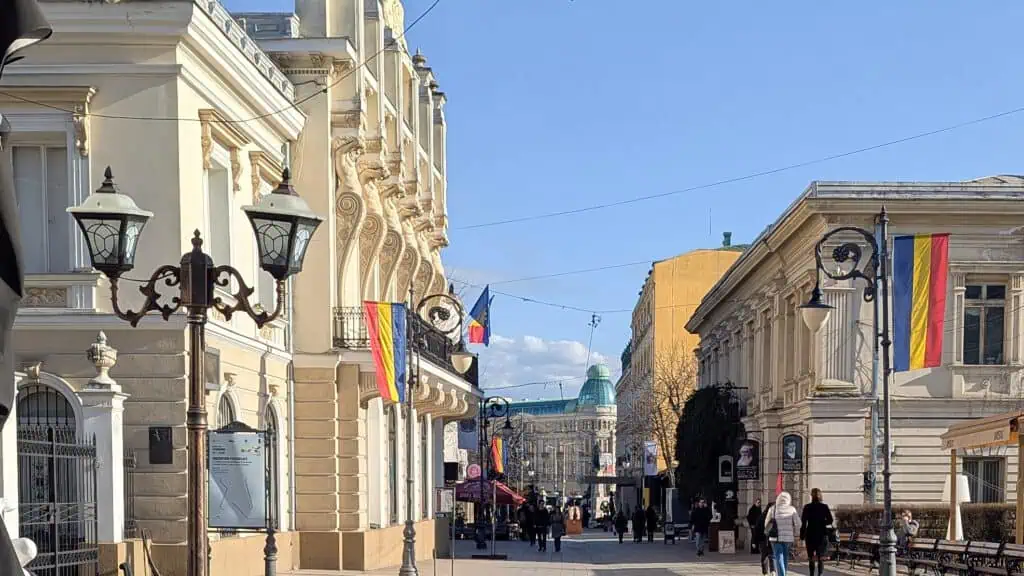
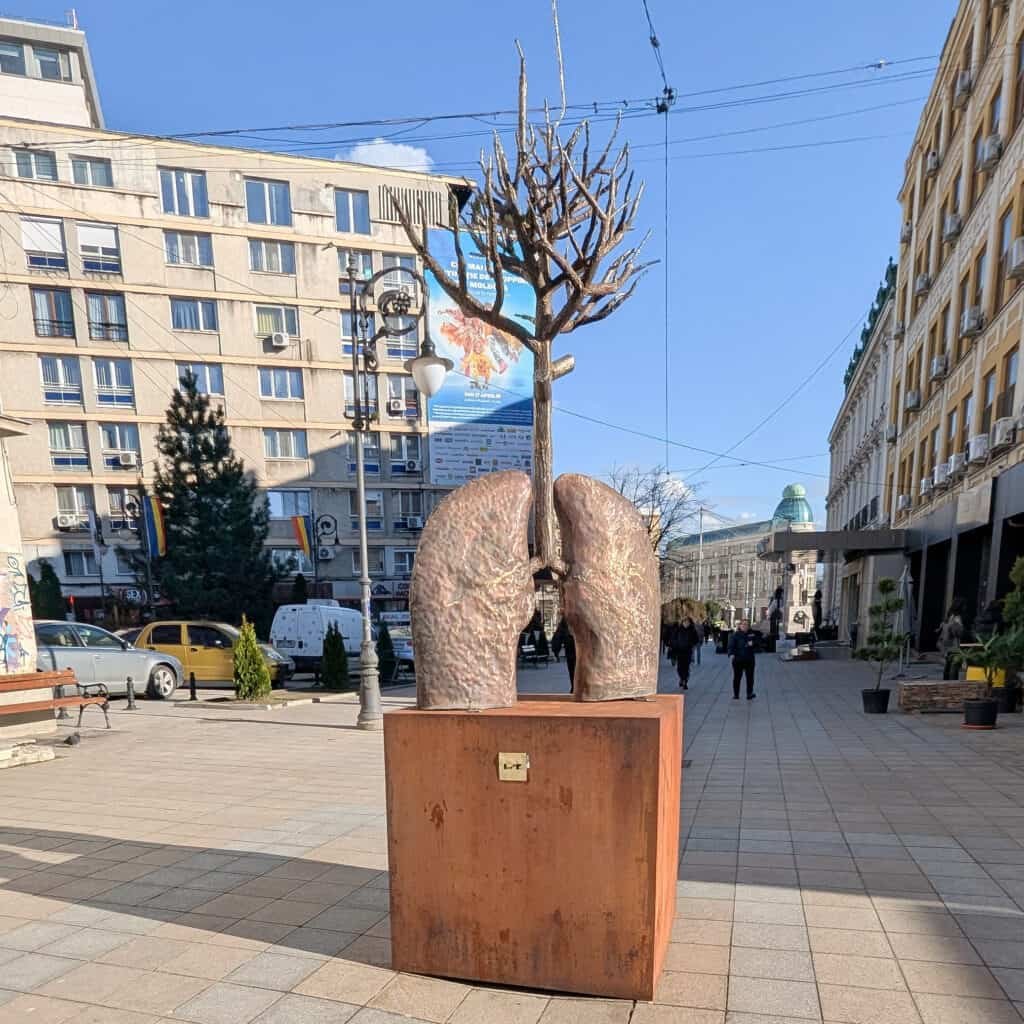
The street is picture-perfect, lined with shops, bookstores, cafés, eateries, and a beautifully preserved Sweeper Tram. But it was the little sculptures which caught my eye. I’ve added just two of them.
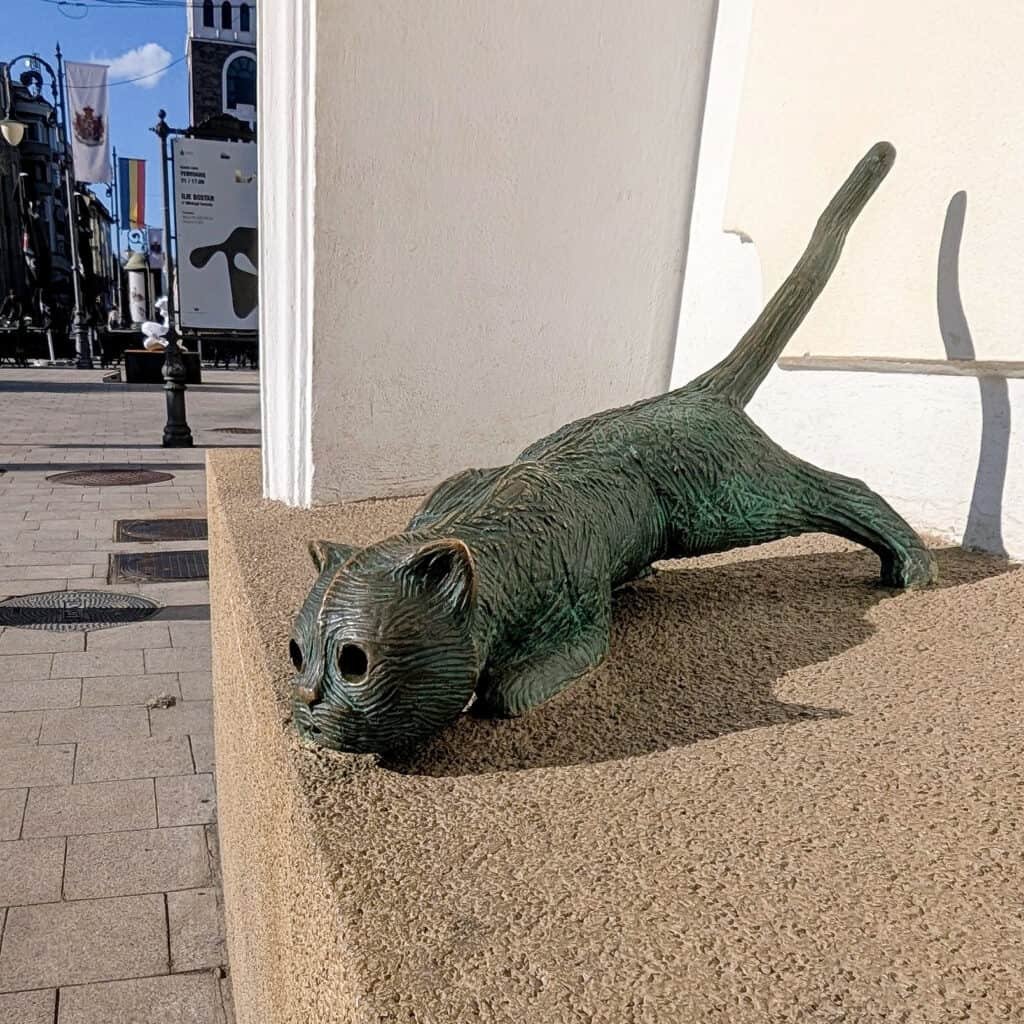
If you like grand sweeping staircases, make sure you check out the Yellow Precipice too, across the road on the way to our next stop.
11 Alexandru Ioan Cuza University
A short walk further brings you to Alexandru Ioan Cuza University, Romania’s oldest modern university and still one of its most prestigious.
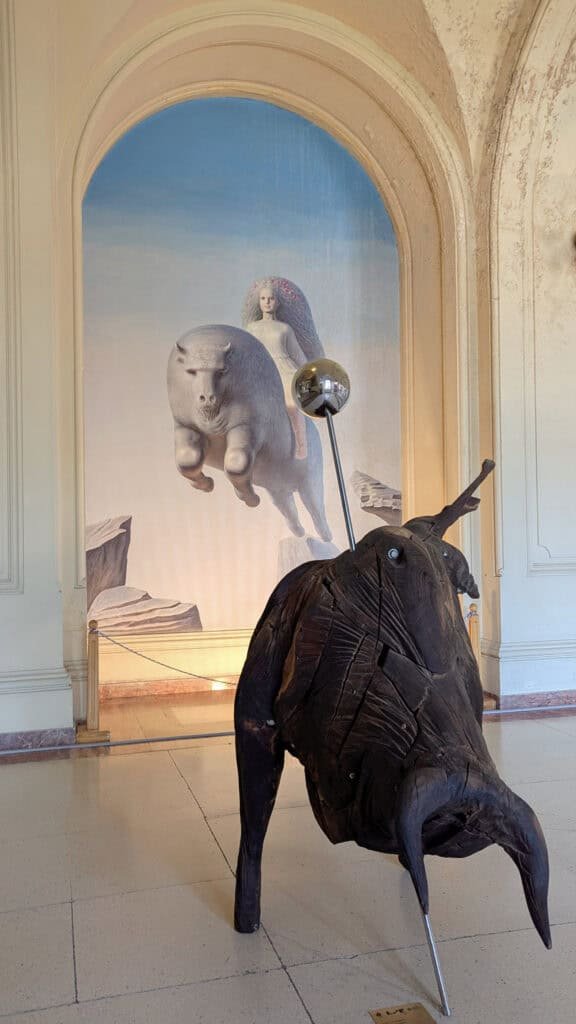
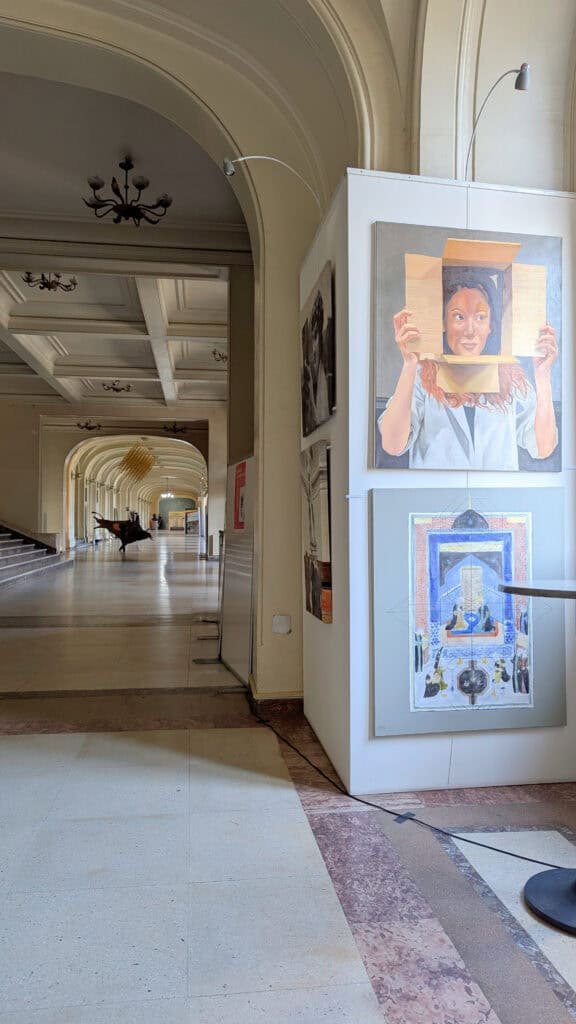
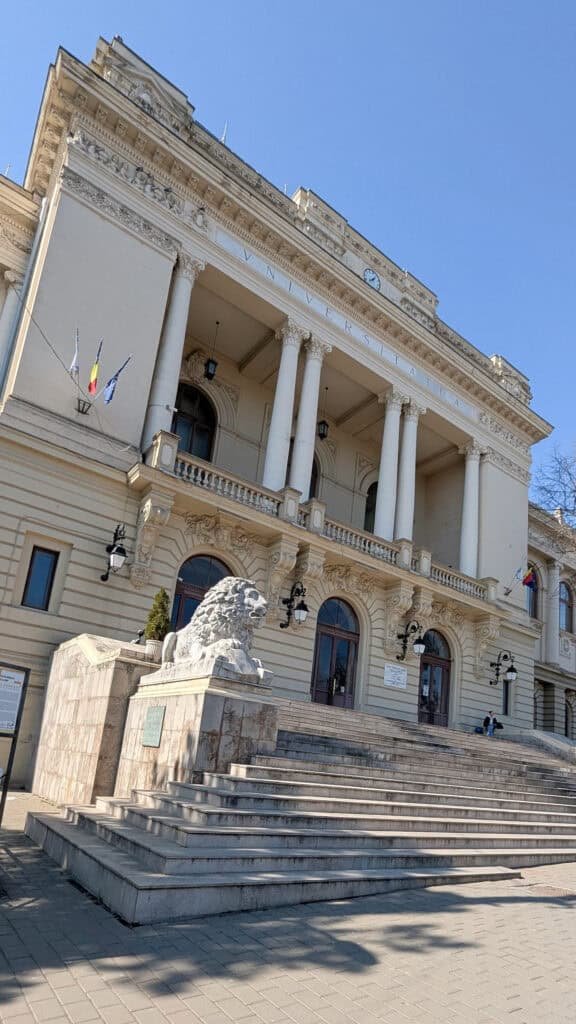
The main building is impressive from the outside, but it’s worth stepping inside if the doors are open. Corridors are lined with murals, sculptures, and decorative details that celebrate the university’s long academic tradition. With its leafy courtyards and academic air, it’s easy to see why Iași is known as Romania’s “student city.”
12 Copou Park & Eminescu’s Linden Tree
Carry on to Copou Park, one of Romania’s oldest public gardens and a gentler, leafier side of Iasi. Tucked inside the park is the city’s icon, Mihai Eminescu’s linden tree. Romanians call Eminescu their national poet; his 19th-century verses shaped modern Romanian language and identity. The story goes that he often sat and wrote beneath a linden in Copou. So this venerable tree (now supported by braces) has become a living monument to literature and the city’s soul. If you have time, pop into the small Mihai Eminescu museum nearby for context. There are prints and displays covering Romania’s history in a stunning building. I’m sorry I missed the inside of this one. The park is spotless; there was a whole team working on it when we were there. It was a particularly nice place to be.
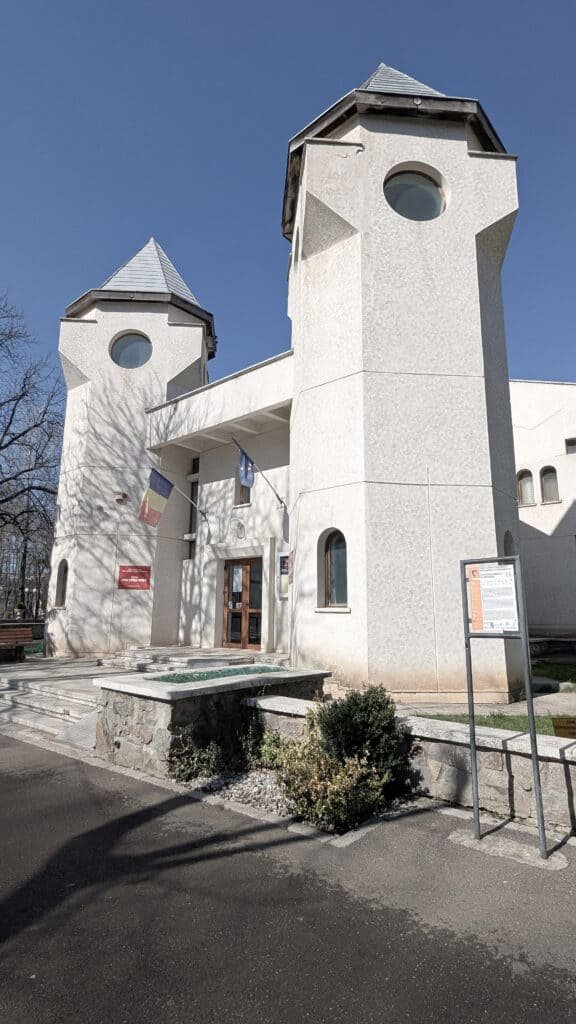
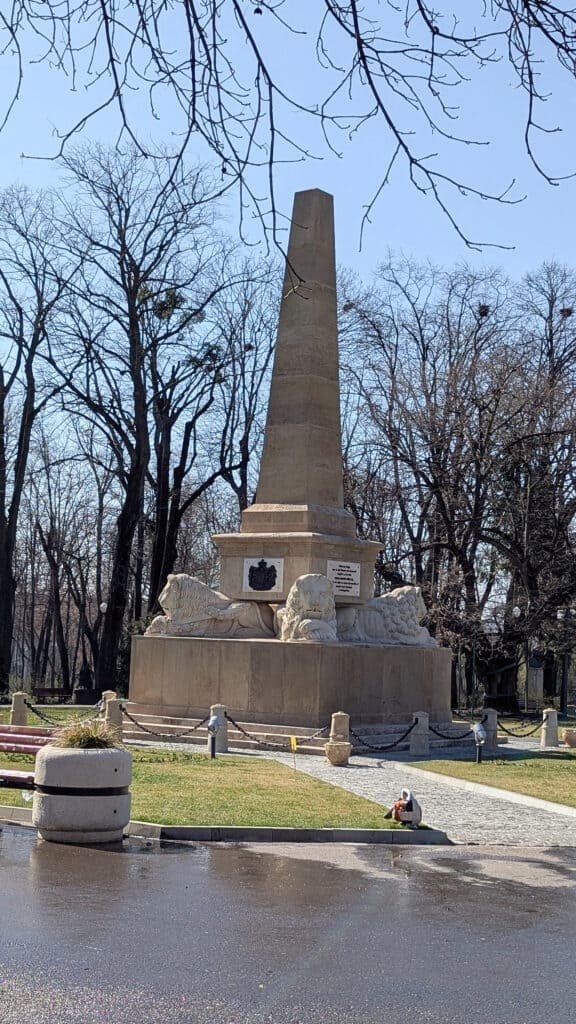
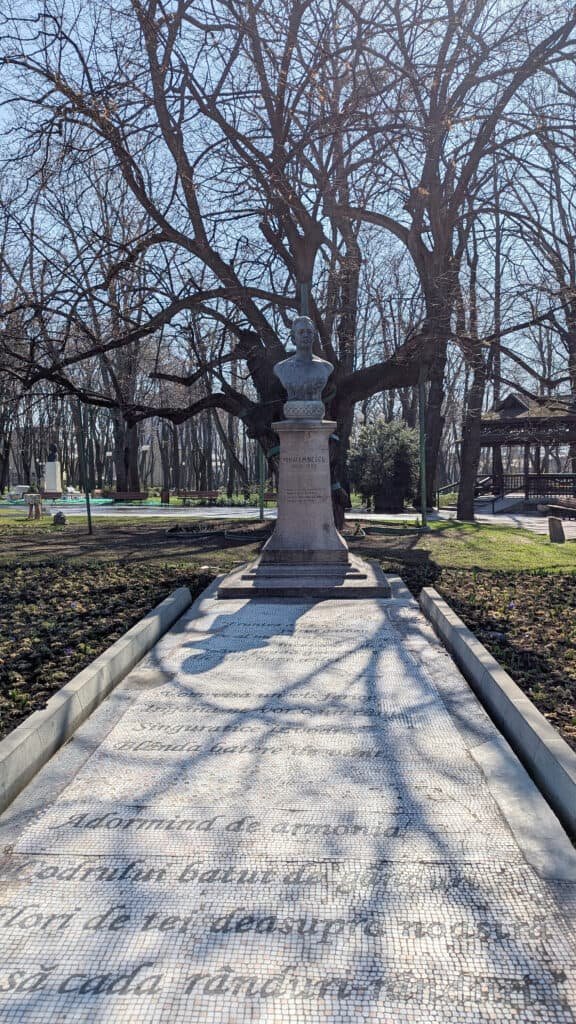
Now we’ve finished the main route of the walk. You have options, you could walk back, along the same road into the city centre, or you could take the tram back from the Tram stop at the north end of the park. From here, trams 8, 9 or 13 all head back down Bulevardul Ștefan cel Mare, stopping at the University and Piața Unirii, right in the centre.
13 Alexandru cel Bun district
If you are ready for more, instead of taking the tram, look for Bus 52 (signed for Piața Alexandru cel Bun). This takes you to the Alexandru cel Bun district and market. It’s huge and colourful.
From here, you can cross the road to visit Biserica Sfântul Nectarie, another beautiful church. Or you could head over the covered bridge, which crosses the railway line, to see Iași Rail station, a real landmark in the city with its Venetian-Gothic Revival architecture.
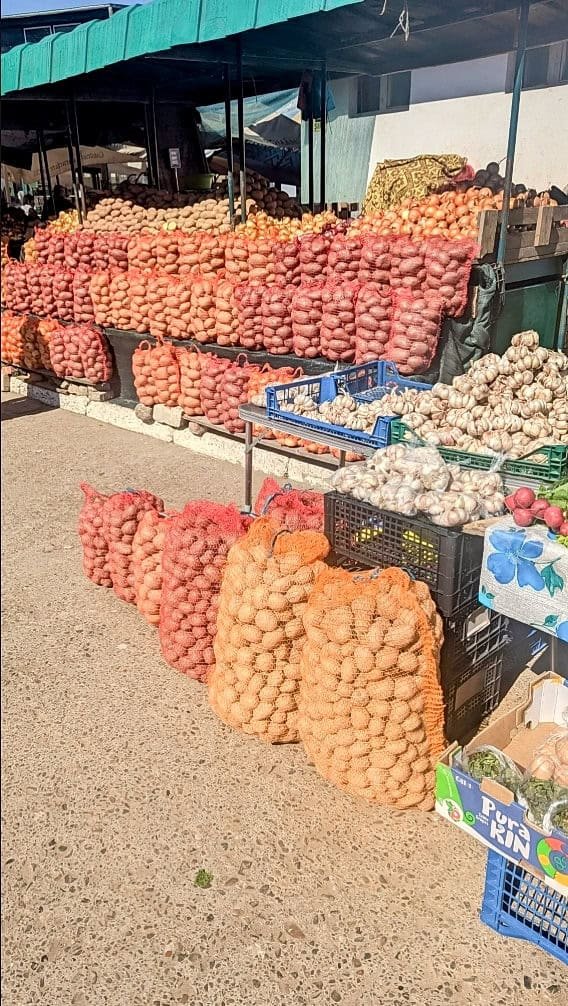
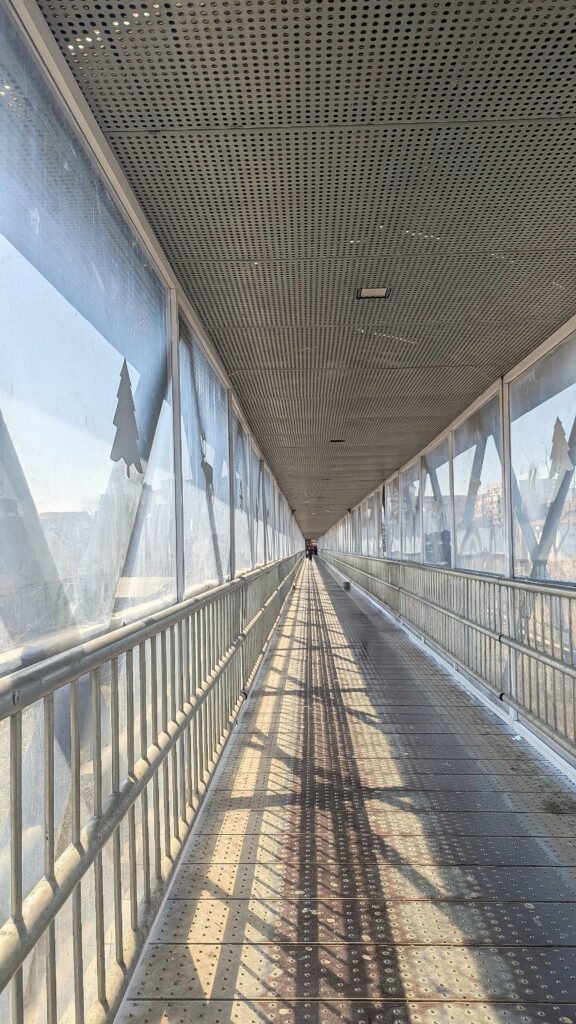
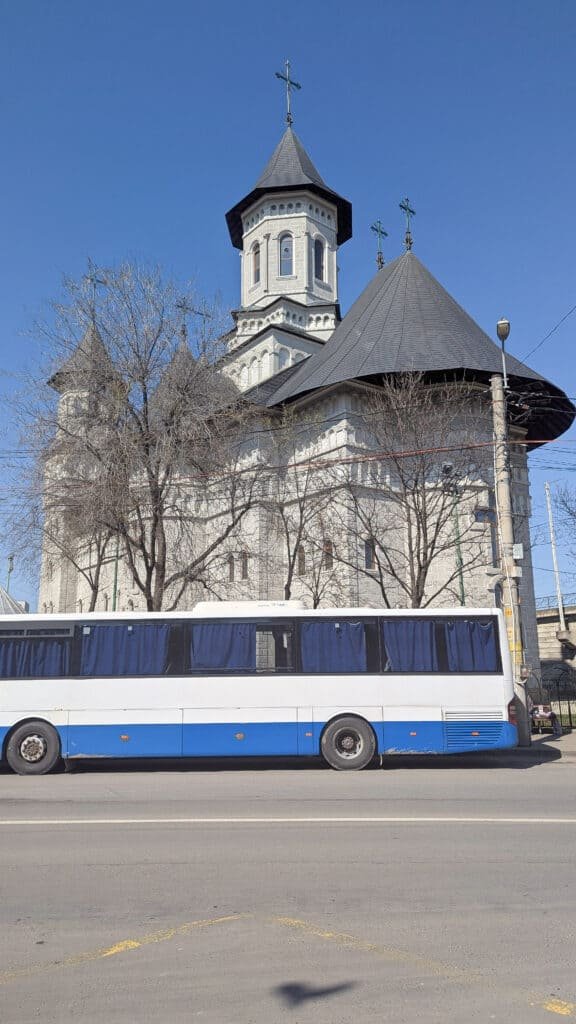
The bus will also take you back to the centre, bringing you full circle to the beginning.
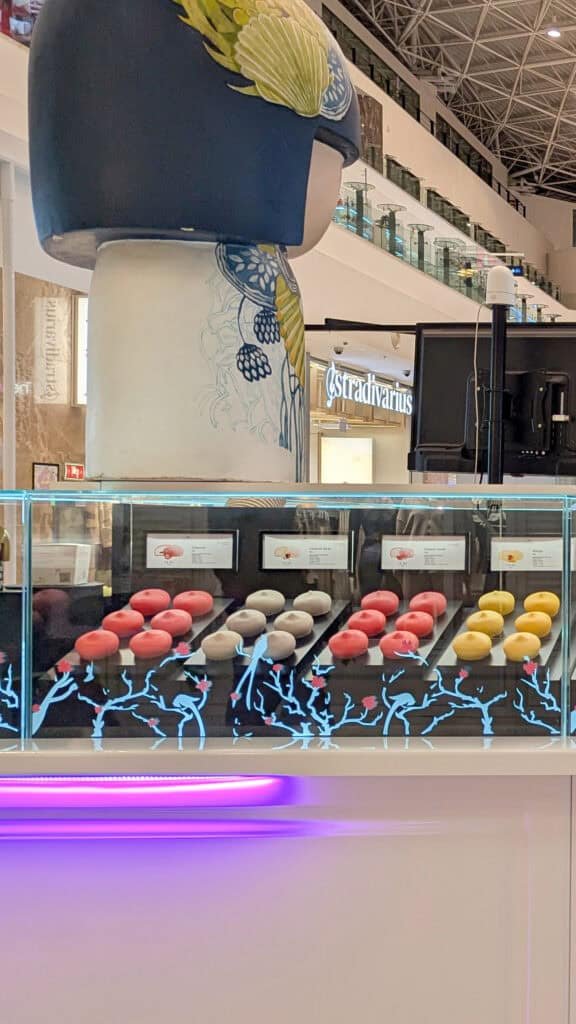
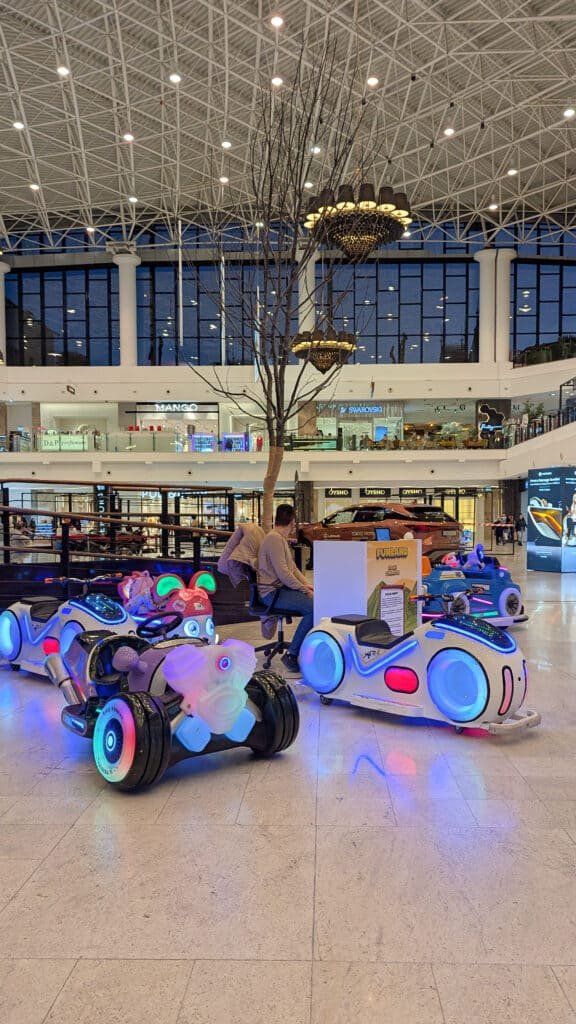
If you are looking for evening options, the Palas Iași is busy. It’s the city’s modern shopping and entertainment complex just beyond the Palace of Culture. There are plenty of restaurants and bars close by, too.
More Landmarks in Iași
I’ve marked a few more places on the map, which you could also visit if you have more time. These places are all fairly close together, so you could easily combine them in one walk.
- Palace of Justice – Handsome civic architecture and a quick scene-setter for this part of town. Grab a façade shot and keep moving — the atmosphere on the surrounding streets is the story here.
- Golia Monastery – A walled monastery complex right in the centre; the contrast between bustling streets and quiet courtyards is lovely. The tower sometimes opens for views — if it’s your day, go up; if not, the gates and frescoes are photogenic from ground level.
- Great Synagogue – One of the oldest surviving synagogues in Romania and a poignant stop. Even if closed, the exterior and memorial plaques are worth a respectful pause. Your shots of doors/windows will carry this.
- Bărboi Bell Tower (Clopotnița Bărboi) – A distinctive stand-alone bell tower beside Bărboi Church; it’s an easy landmark to spot on Cuza Vodă’s side streets. (If access is open, it’s a nice perspective; if not, it still makes a strong photo stop.)
- Armenian Church (Iași Armenian Church) – Tucked on a side street, this small brick church hints at the city’s old merchant past. The façade is simple; the charm is in the details — stonework, crosses, and a quiet courtyard that photographs beautifully.
Here are some options farther out of town that are popular with tourists and locals alike.
- Anastasie Fătu Botanical Garden – A sprawling, peaceful garden on the Copou side; one of the oldest in the country. Greenhouses, seasonal beds, and city views in places.
- Cetățuia Monastery – Hilltop monastery with defensive walls and wide panoramas; great golden-hour light. (Quicker by Bolt/taxi; buses run, but you’ll save time by ride-hailing.)
Food & Drink in Central Iași
Restaurants and Romanian Food
Look out for Romanian dishes including sarmale (stuffed cabbage rolls), plăcinte (stuffed pies), andciorbă (sour soups). Romanian food is hearty and filling, with tasty stews on the menu too.
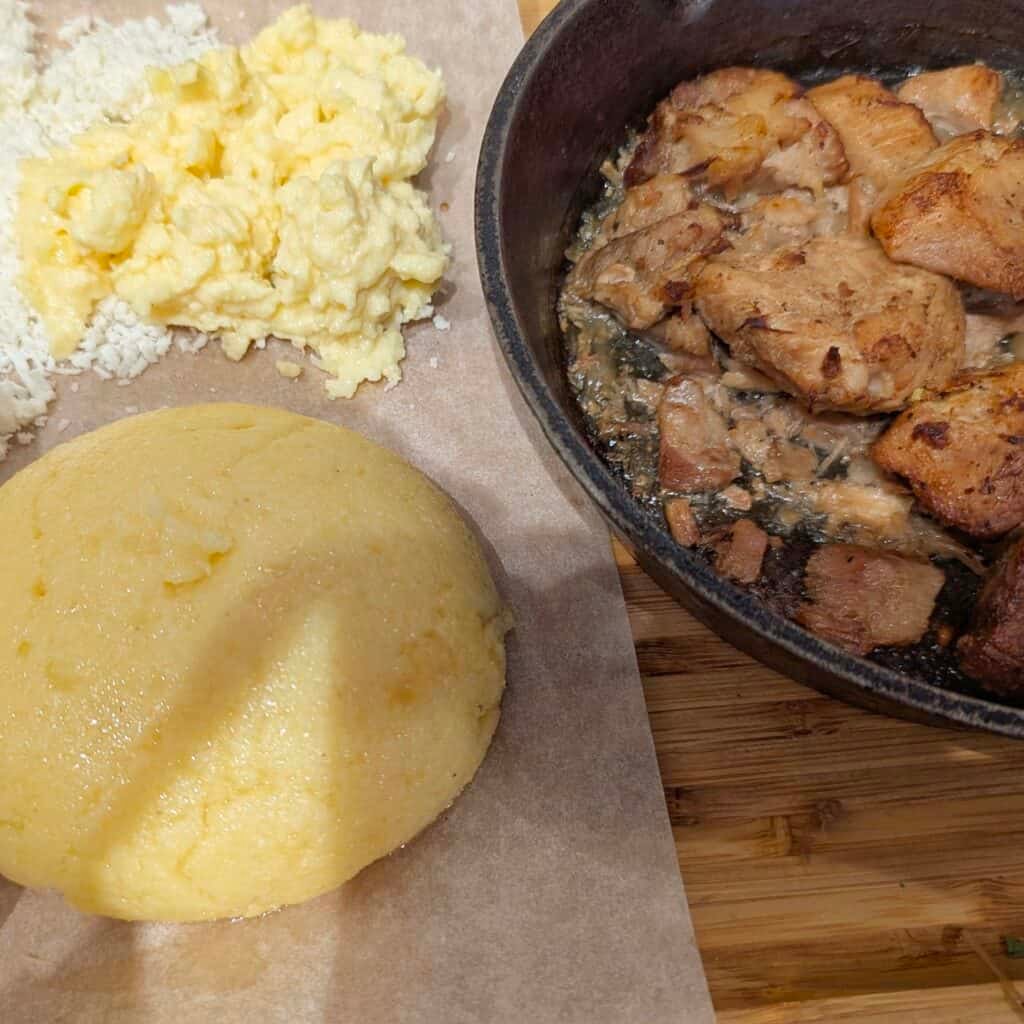
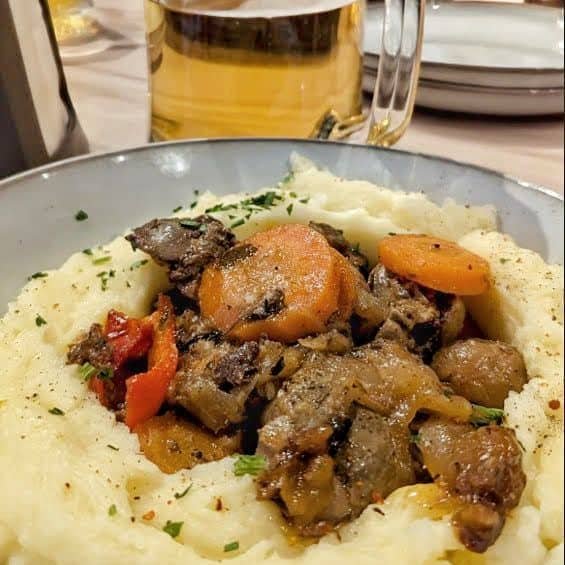
Pictured: (1) mămăligă cu friptură de porc, (fried pork with polenta, egg, cheese and sour cream) ficăț, ei cu piure (chicken livers with mash)
The food pictured is from the chain restaurant, La Placinte (the pie), which is popular in Romania and Moldova. Romanian and Moldovan cuisines share some dishes and flavours. mămăligă (polenta and cornflour) is a staple of both cuisines.
Most of the restaurants in Iasi serve International cuisine. Expect plenty of burgers, pizza, pasta, and even sushi and Indian dishes. You will find everything from casual student cafés to formal dining restaurants.
Try the area around Palas Iasi for some of the city’s best restaurants and bars. There are also plenty of options along Alexandru Lăpușneanu Street and Strada Cuza Vodă.
Coffee Shops
Gist Specialty Coffee Shop was close to our hotel. The clientele were mainly students, either working in the upper-level seating area or relaxing on the swing seating downstairs. Coffee, cakes and sandwiches are all excellent, and the surroundings are very modern and stylish.
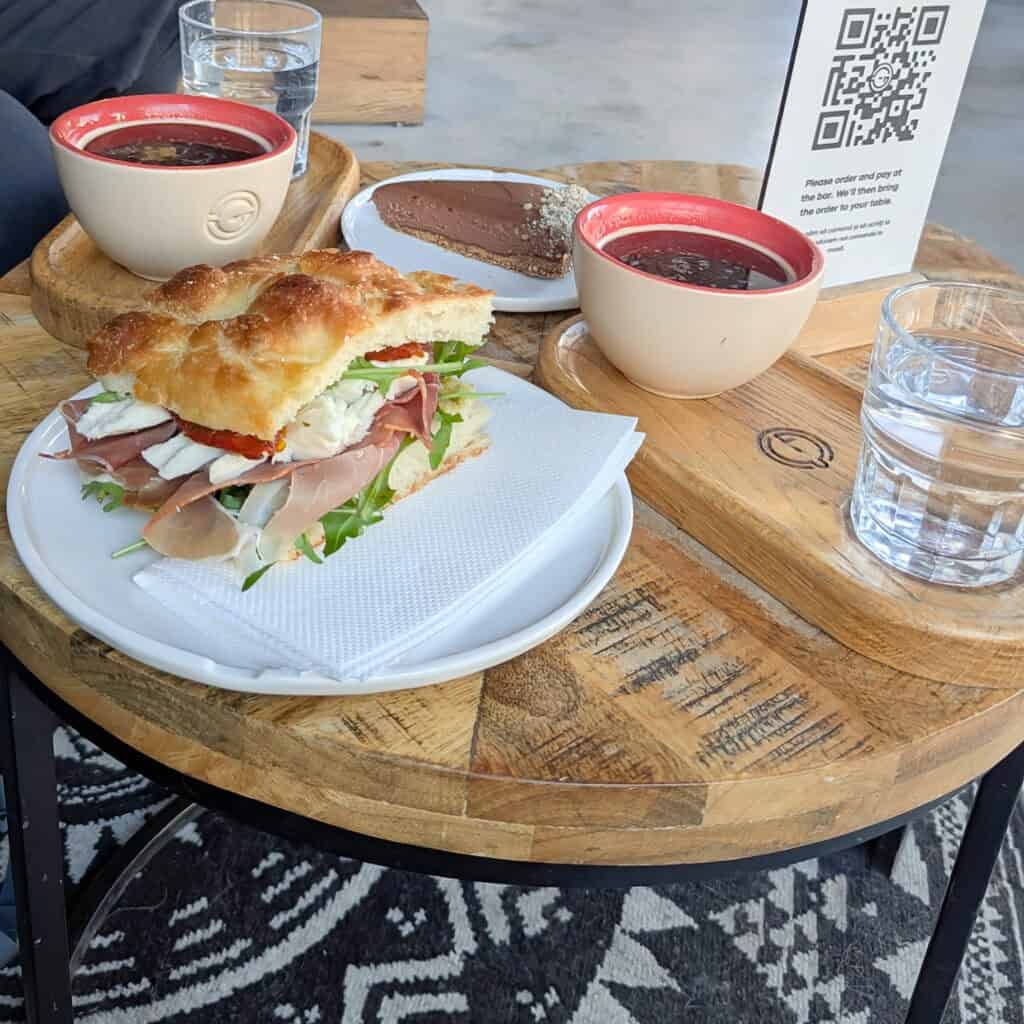
There were plenty of other lovely coffee shops, too. Try Alexandru Lăpușneanu Street for more options.
Craft Beer Bars
There are a few in Iași, and since my beer-blogging husband was with me, it was inevitable that we would end up seeing what Iași had to offer! These were my top two!
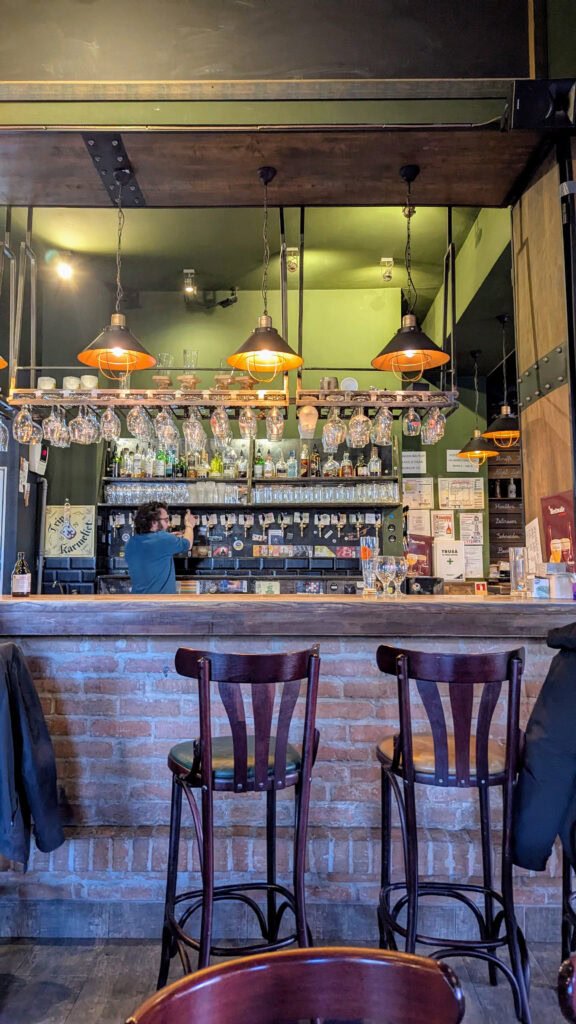
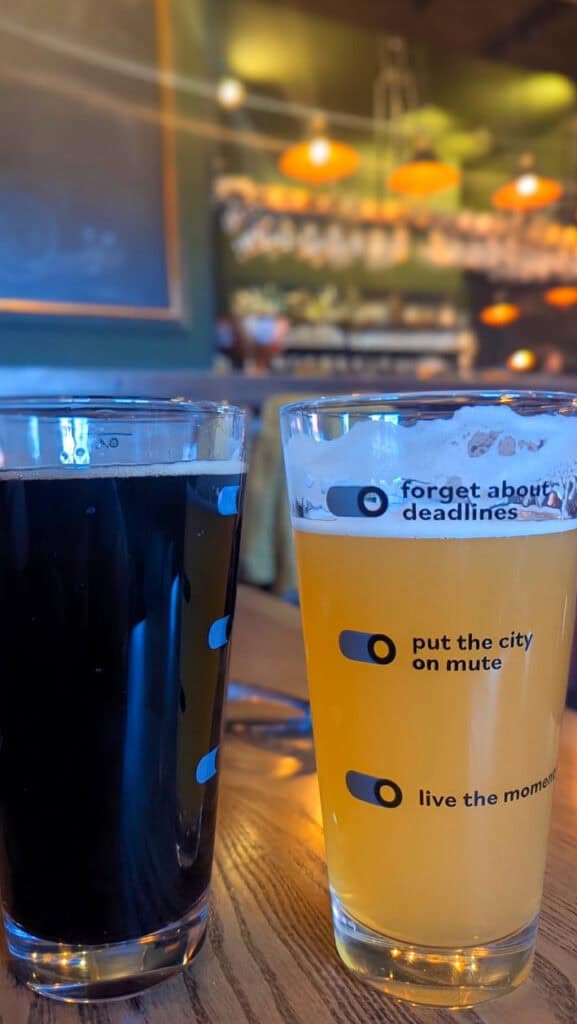
First up, Beer Zone, and my pick, as it was the first place I saw after jumping off the airport bus in central Iasi. A Cearfisa’s 8% Imperial Stout and some local hazy murk with motivational slogans on the glass is a good way to start your holiday. The bar is pretty, the beer is exceptional, and our attempts at Romanian met with confusion.
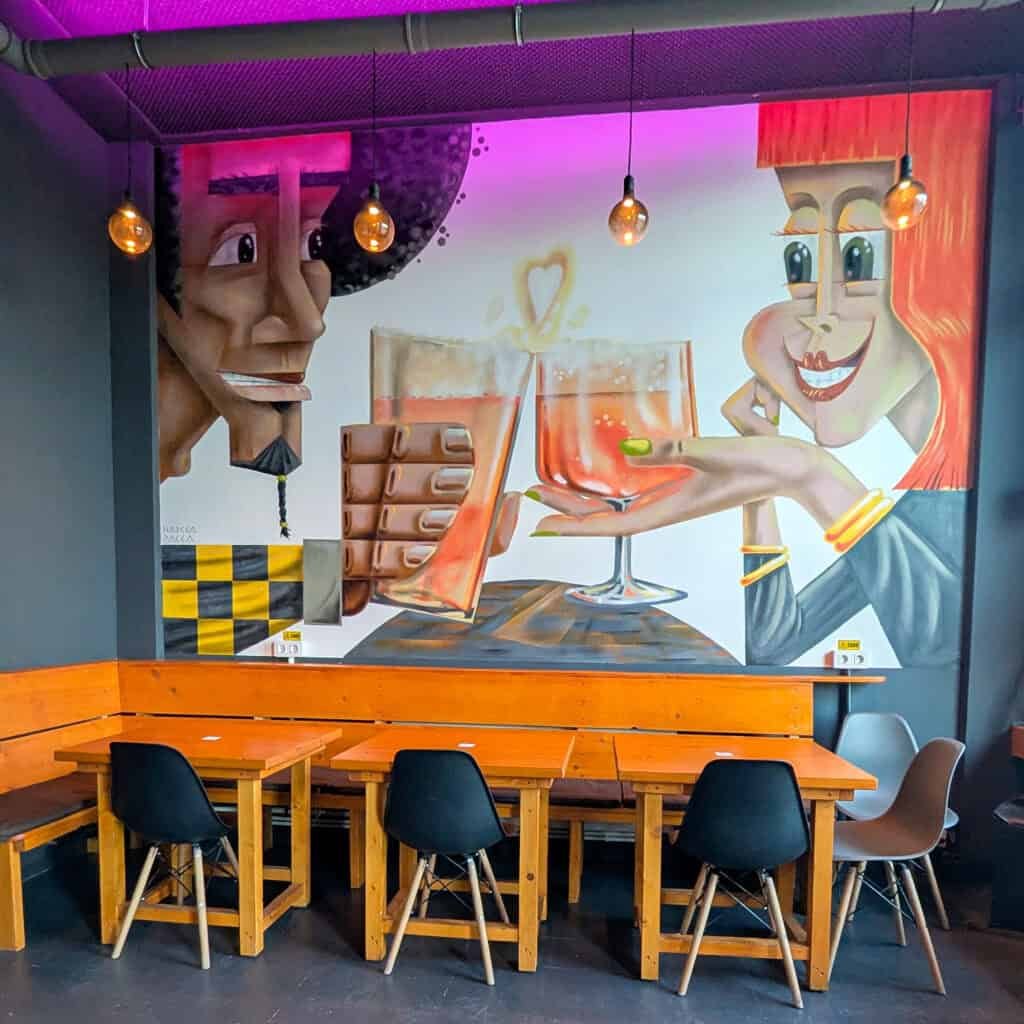
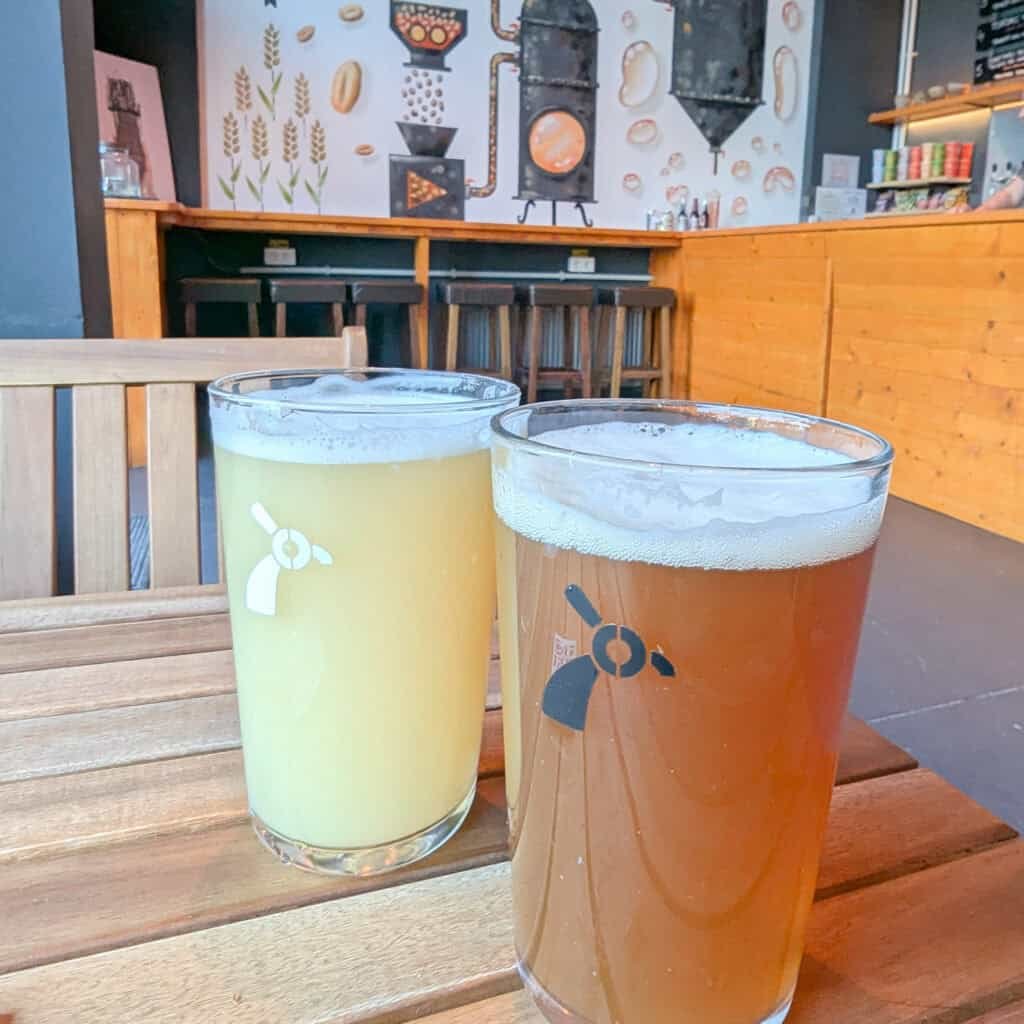
And for something more modern, we have Kaze Taproom, a minute or two away from the Metropolitan Cathedral. Two murky beers – a grapefruit one from Maktoob (this brewery describes itself as a North African nomad brewery exiled in Bucharest) and a Tomesti Hill beer, which is a microbrewery based in Iasi. Again, both are excellent and way more interesting than the standard lager offerings you find in Iasi (Timișoreana and Ursus are the popular brands you will see everywhere).
Day Trips from Iași
There are options for day trips from Iasi. We didn’t make it to the Painted Monasteries, but they are definitely on my list for next time.
- UNESCO Painted Monasteries (Bucovina) – The painted monasteries of Bucovina are remarkable. But they are fairly remote and not easy to get to. Iași is the closest major city to see the beautiful monasteries with frescoes, inside and out, set amongst courtyards and forested hills.
- Hiking in the Carpathians – Choose a guided hike in the nearby ranges (day trips follow well-marked trails to scenic viewpoints).
- Neamț Fortress + Bison Reserve (Vânători-Neamț) – Pair medieval ramparts and forest walks. The reserve offers a chance to see European bison in a semi-wild habitat; the fortress brings history. Pair medieval ramparts and forest walks. The reserve offers a chance to see European bison in a semi-wild habitat; the fortress brings history.
- Cross the Border into Moldova – for sightseeing and a wine tour. Wine tours are possible at Crama Micesti, but you might want to stay over!
Where to Stay in Iasi
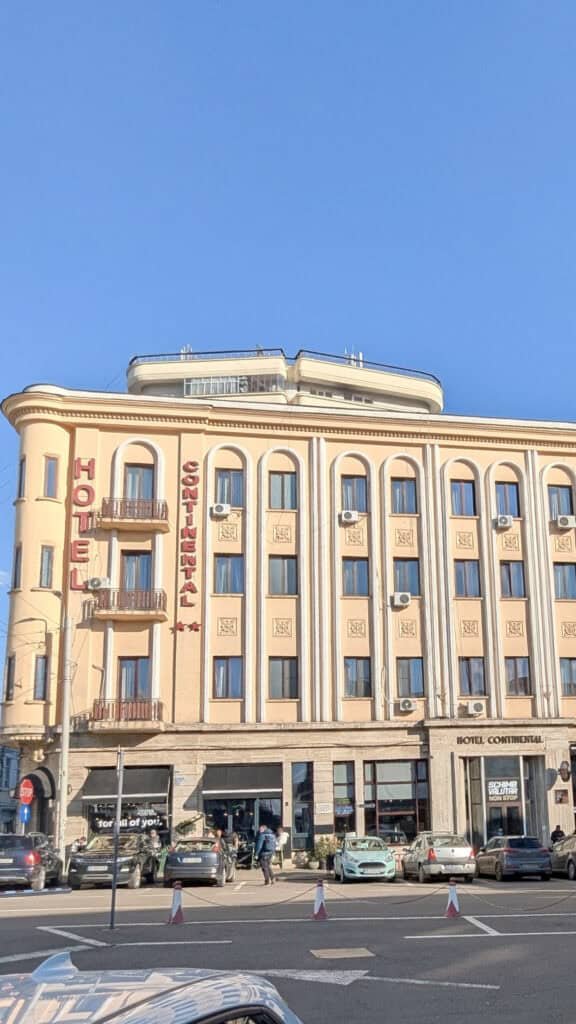
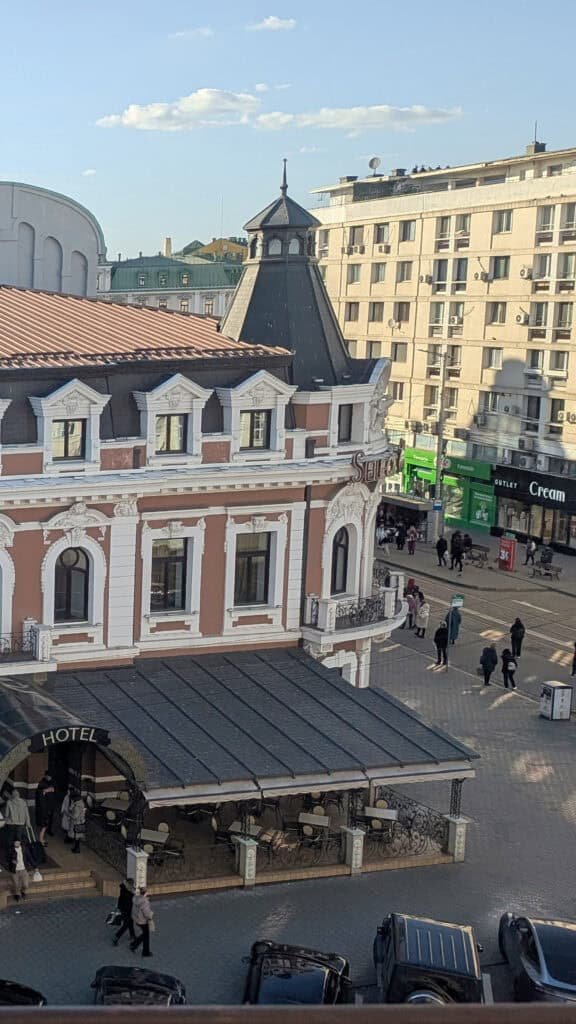
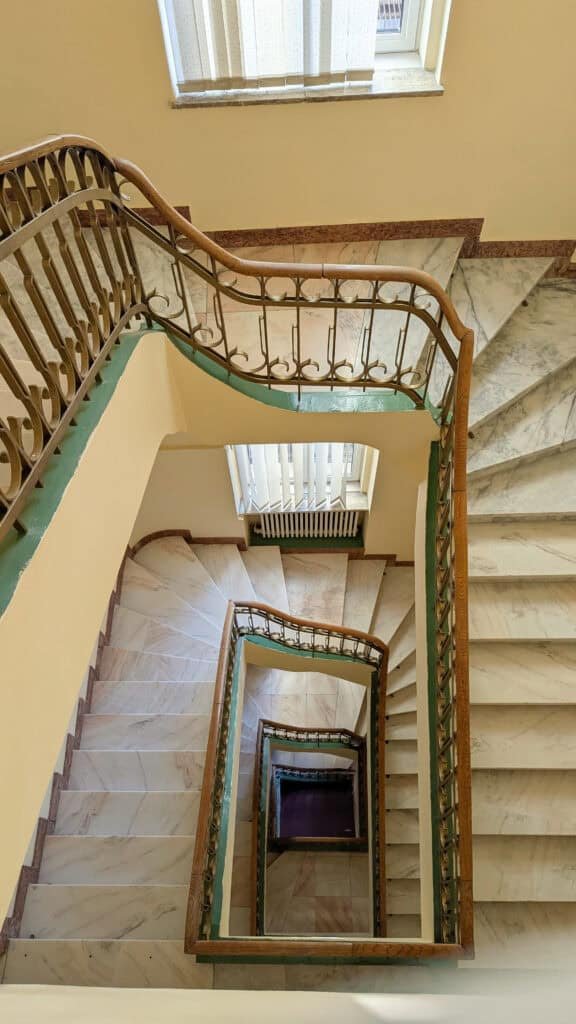
We stayed in the centrally located Continental Hotel on the corner of Strada Cuza Vodă—a traditional hotel, with a large, clean and spacious room and a friendly welcome. With a very old lift, with no internal door, it probably wasn’t for everybody. But let’s pause a moment to celebrate that wonderful staircase. which also serves as a useful reminder for us of why we pack light!
Our room’s balcony proved to be an excellent spot to see daily life in the city centre. We could have been in any number of cities across Europe.
There are plenty more options on the map, with double rooms starting from around £30 a night. A little cheaper than Bucharest and other Romanian cities, it is more popular with tourists.
Suggested Itineraries for Iași
Whether you’ve got a single day in Iasi or a week to explore, here are some suggested itineraries to help you make the most of your time.
One Day in Iași
Two Days in Iași
- Day 1 – My Iasi Walking Route
- Day 2 – Other Landmarks in the City
Three Days or More in Iași
- Day 1 – My Iasi Walking Route
- Day 2 – Other Landmarks in the City
- Day 3 or more – Day Trips from Iasi
International Routes to Iași
To Iași By Air (International Airport)
- International flights from airlines such as Wizz Air, Ryanair, Tarom, Turkish Airlines, KLM, Lufthansa, and Air France.
- Airport → city centre: Easy on the bus. No. 50 runs between the airport and the city centre. Single ticket 3.50 RON (£0.60 / €0.70), valid 120 min (Urban Zone 1). Journey 20–30 min. Buy from the driver or machines; contactless is supported.
- Ride-hailing/taxis: Uber and Bolt operate in Iași; local taxi apps exist (e.g., Iași TAXI). Fares are generally lower than in Western Europe.
To Iași By Rail from Chișinău (Moldova)
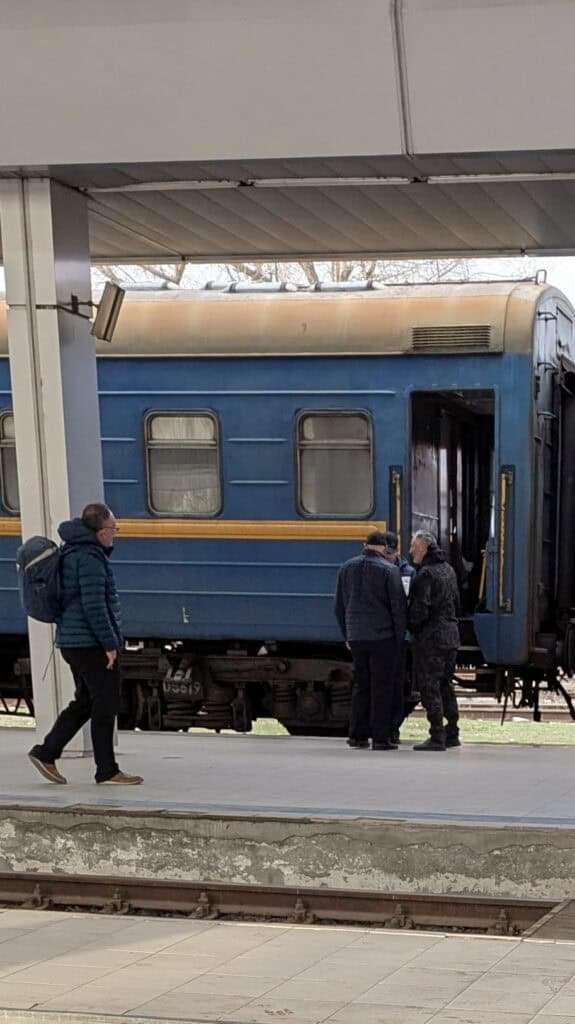
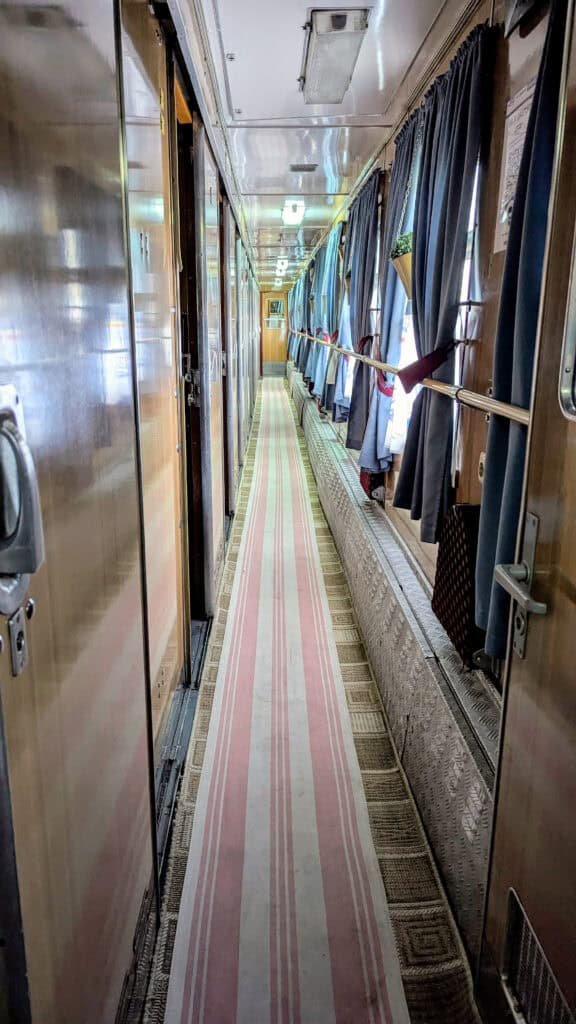
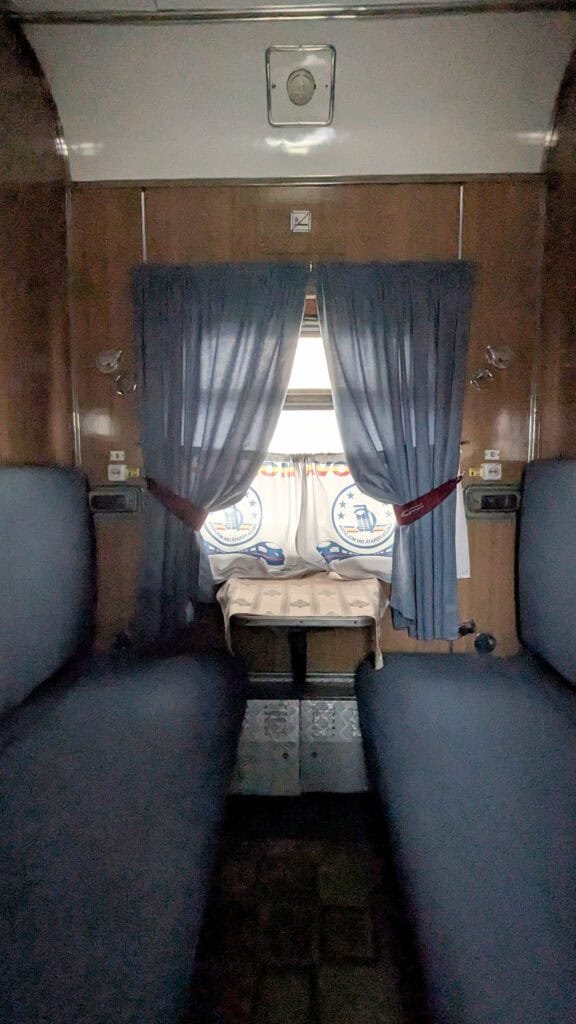
You can join the Pretenia sleeper service, which runs between Bucharest North and Chisinau at Iasi.
To Iași By Bus from Chișinău (Moldova)
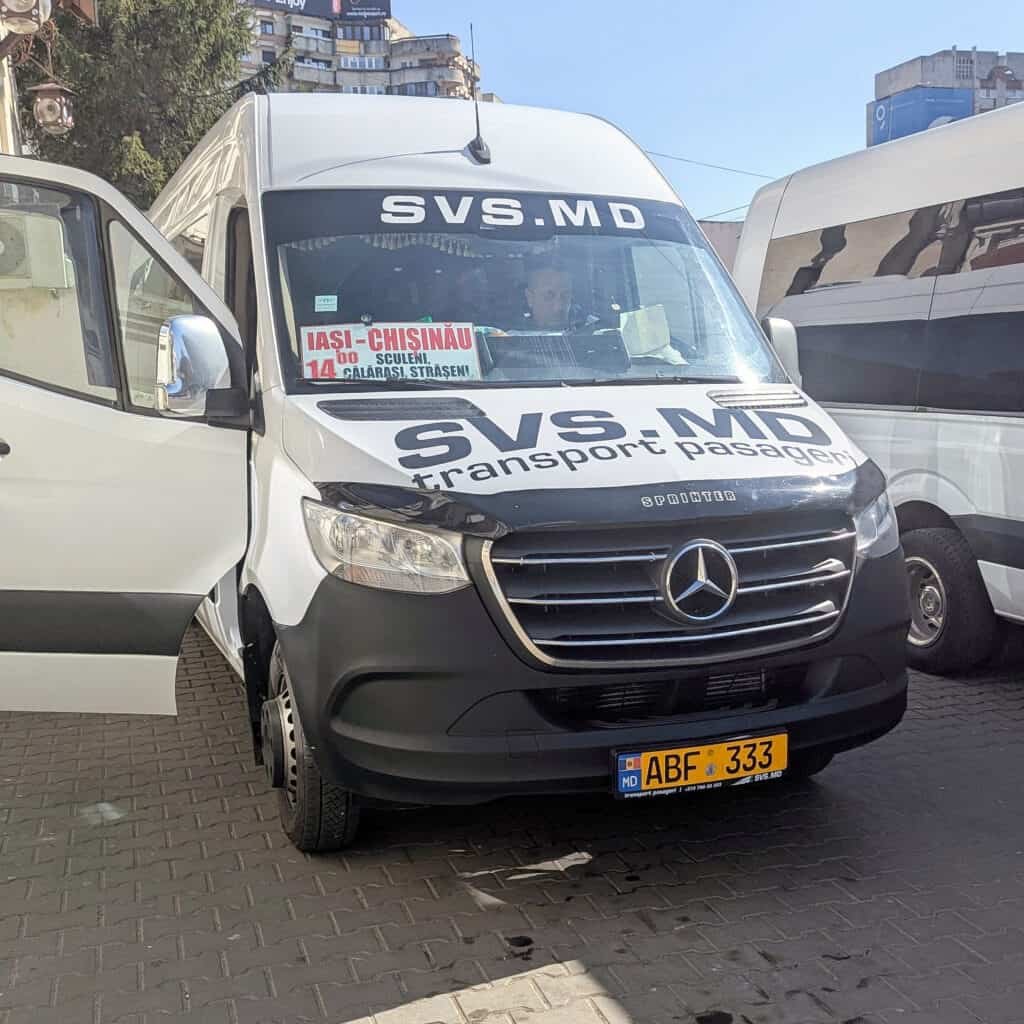
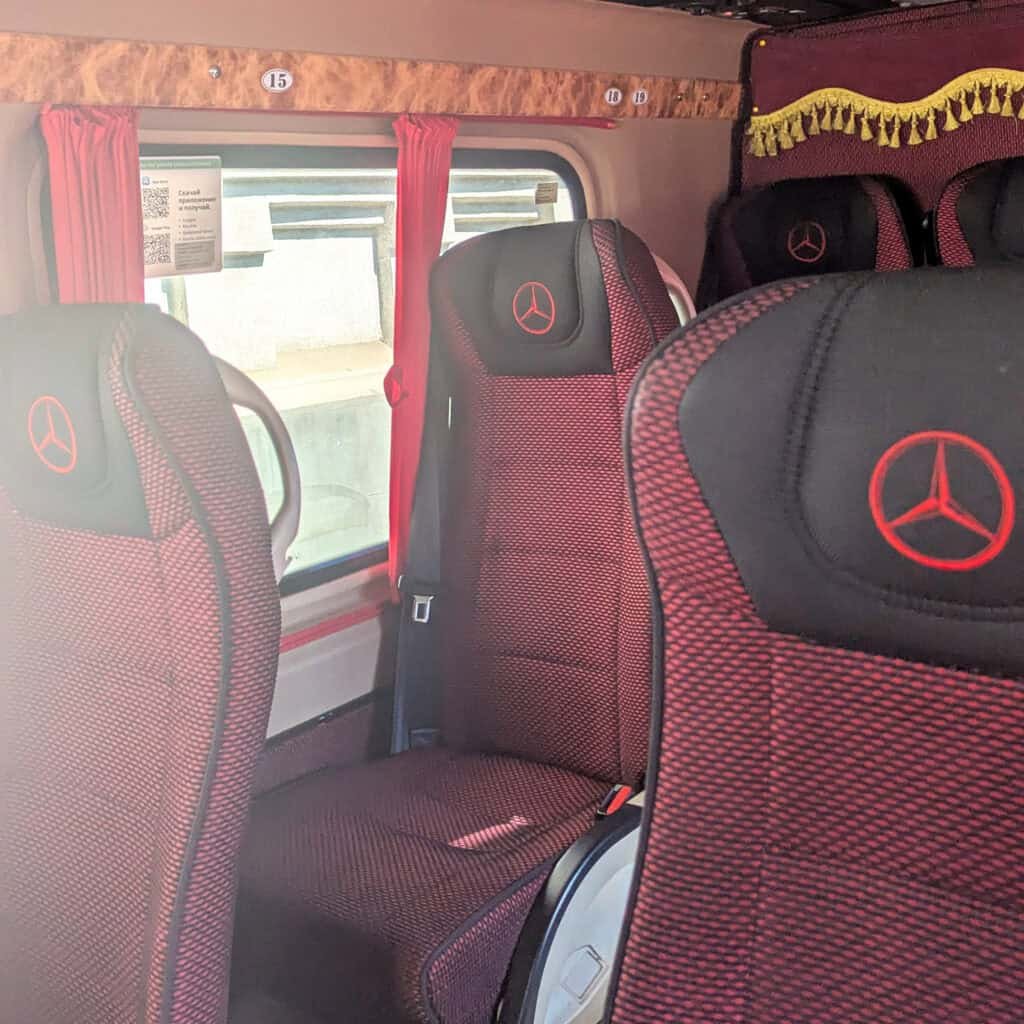
Buses to Chișinău (Moldova) depart from SC Transbus Codreanu SRL. It took us around 4 hours and was very straightforward. Tickets can be purchased from the bus driver (in cash). We booked online in advance on the Travelling App (formerly GetByBus). This app has helped me find online booking options I couldn’t find on Rome2Rio or Google Maps. Some options are also bookable on Omio.
Car Hire
Check here for the best Car hire rates. A valid driving licence (an International Driving Permit is recommended if your licence isn’t in Romanian/Moldovan or another EU language), plus a passport, and a credit card for the deposit. Special permission is normally required, along with additional charges. to take a hire vehicle over an International border.
Travel In And Around Iasi
- Train: CFR Călători runs multiple daily trains to Bucharest (București Nord); typical journey time ~6.5-7 hrs. Tickets from about 100 RON (£17 / €20) upwards, depending on train type and class. We’ve also taken the International sleeper service from Chisinau to Bucharest, definitely a unique experience, and it stops in Iasi.
- Long-distance coaches and buses: Long-distance coaches connect Iași with regional hubs across Romania. Fares are usually 60–80 RON (£10–14 / €12–16) one way to/from other Romanian cities. This includes services by FlixBus.
- Trams + buses cover the city. Standard 120-min ticket 3.50 RON (£0.60 / €0.70); 180-min urban+metro area ticket 8.00 RON (£1.35 / €1.60). Contactless bank card payment is available onboard; QR code/app and ticket machines are also supported.
- Ride apps: Uber and Bolt are widely used.
Commonly Asked Questions
Where to next
If you are thinking of heading over the border into Moldova, do check out my guide to riding the Prietenia Sleeper Train, which runs between Bucharest and Chisinau, Moldova’s capital. I also have a guide to things to do in Bucharest, plus more content from Romania and Moldova.
If you’d like a monthly update, subscribe to be notified when new guides go live. Don’t worry, I won’t bombard you; I’ll typically email once a month.
Thanks for reading.